
How to Stop Living Paycheck to Paycheck
How to Stop Living Paycheck to Paycheck & Finally Get Ahead
▶ Listen to the full episode More from The Mel Robbins Podcast
The brief
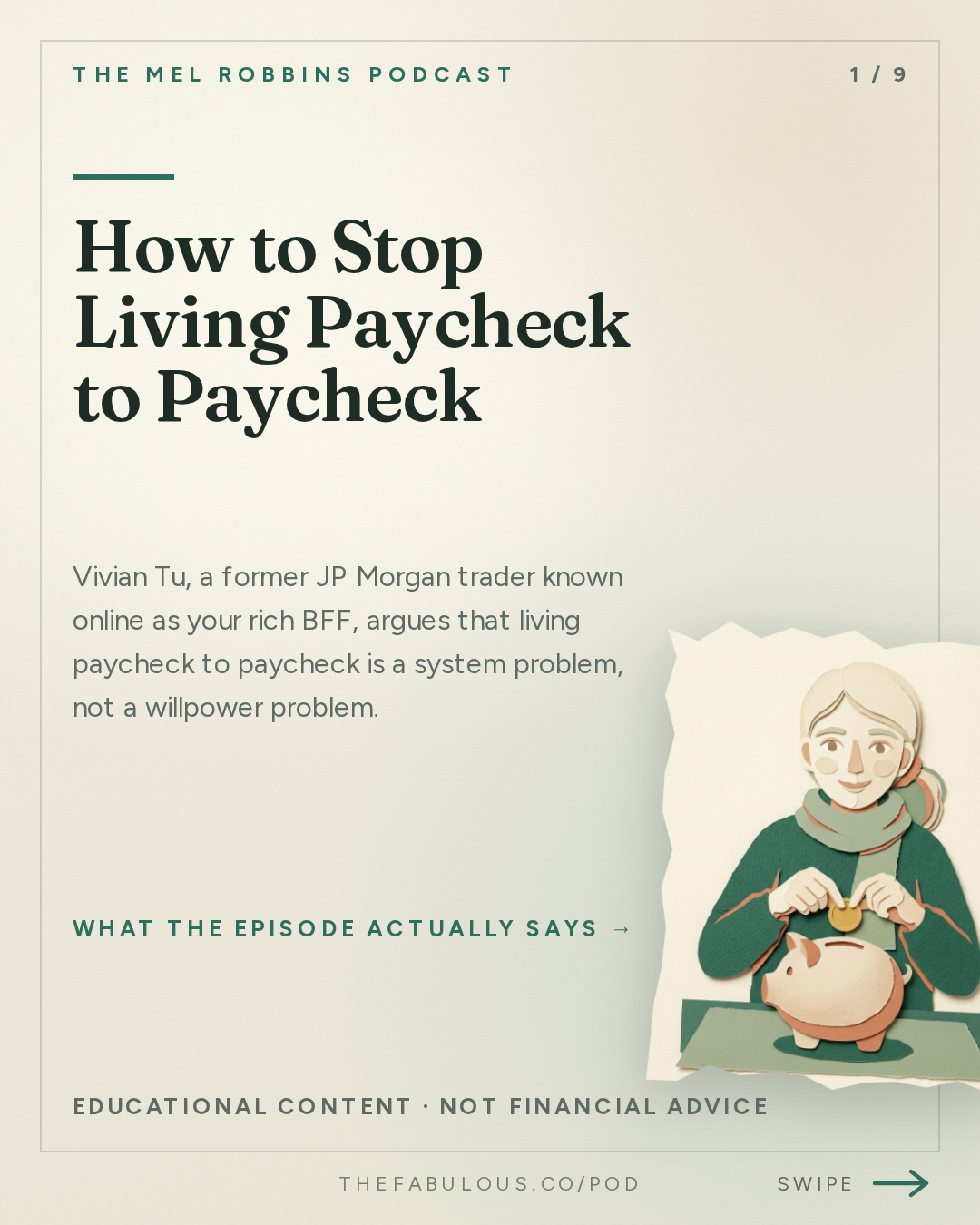
Vivian Tu, a former JP Morgan trader known online as your rich BFF, argues that living paycheck to paycheck is a system problem, not a willpower problem. She lays out a pay-yourself-first savings rule, the avalanche method for debt, a formula for calculating financial independence, and why automating money beats relying on discipline.
Ask this episode anything
Pod's AI answers from the episode itself, with the minute mark so you can hear it yourself.
Or start with one of these
Ask this episode
Pod's AI listens to the whole episode to answer, and points you to the minute it comes from.
The rest of this answer, and any question after it
Answers come from the episode itself, never from a summary of it.
Continue
Key takeaways
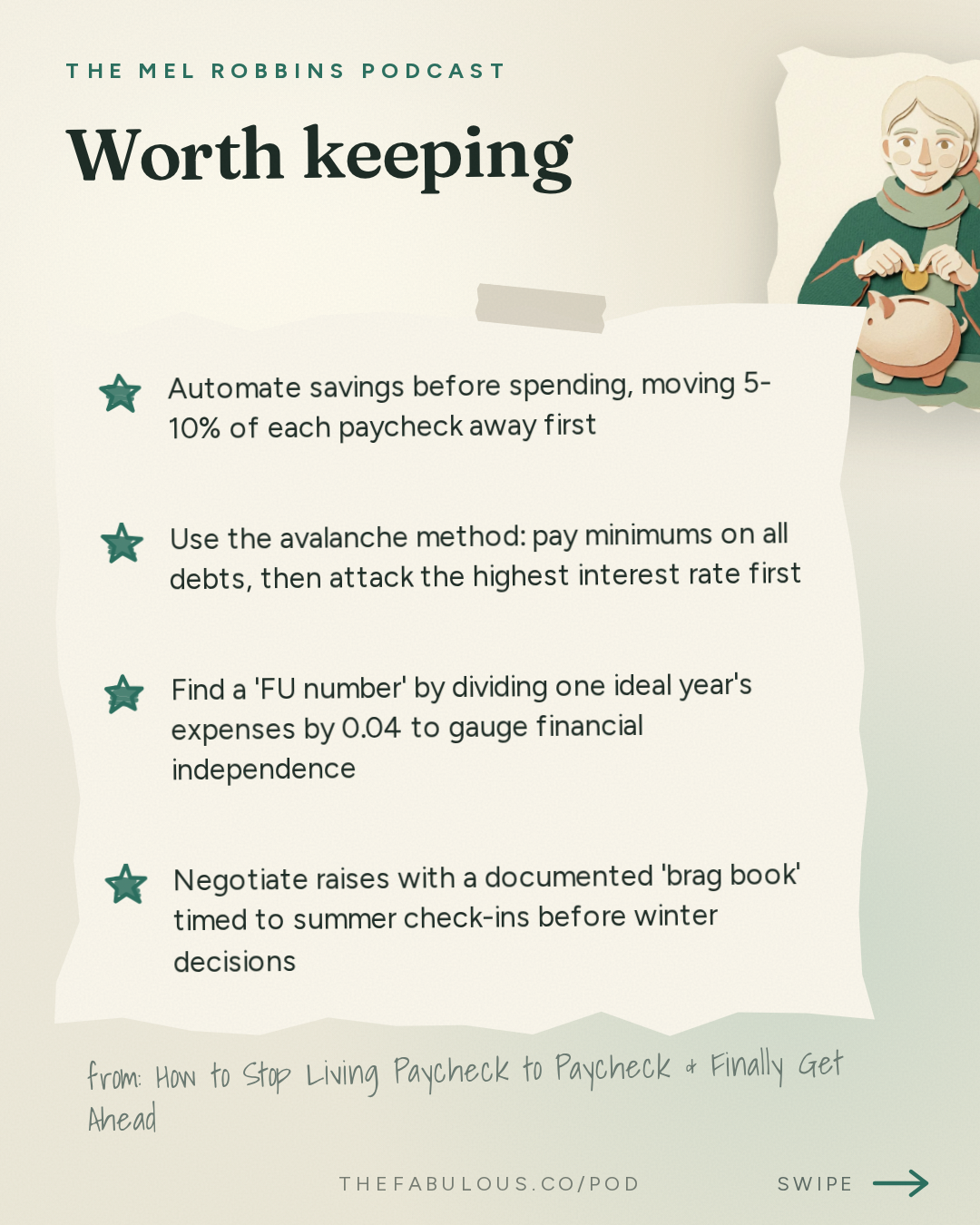
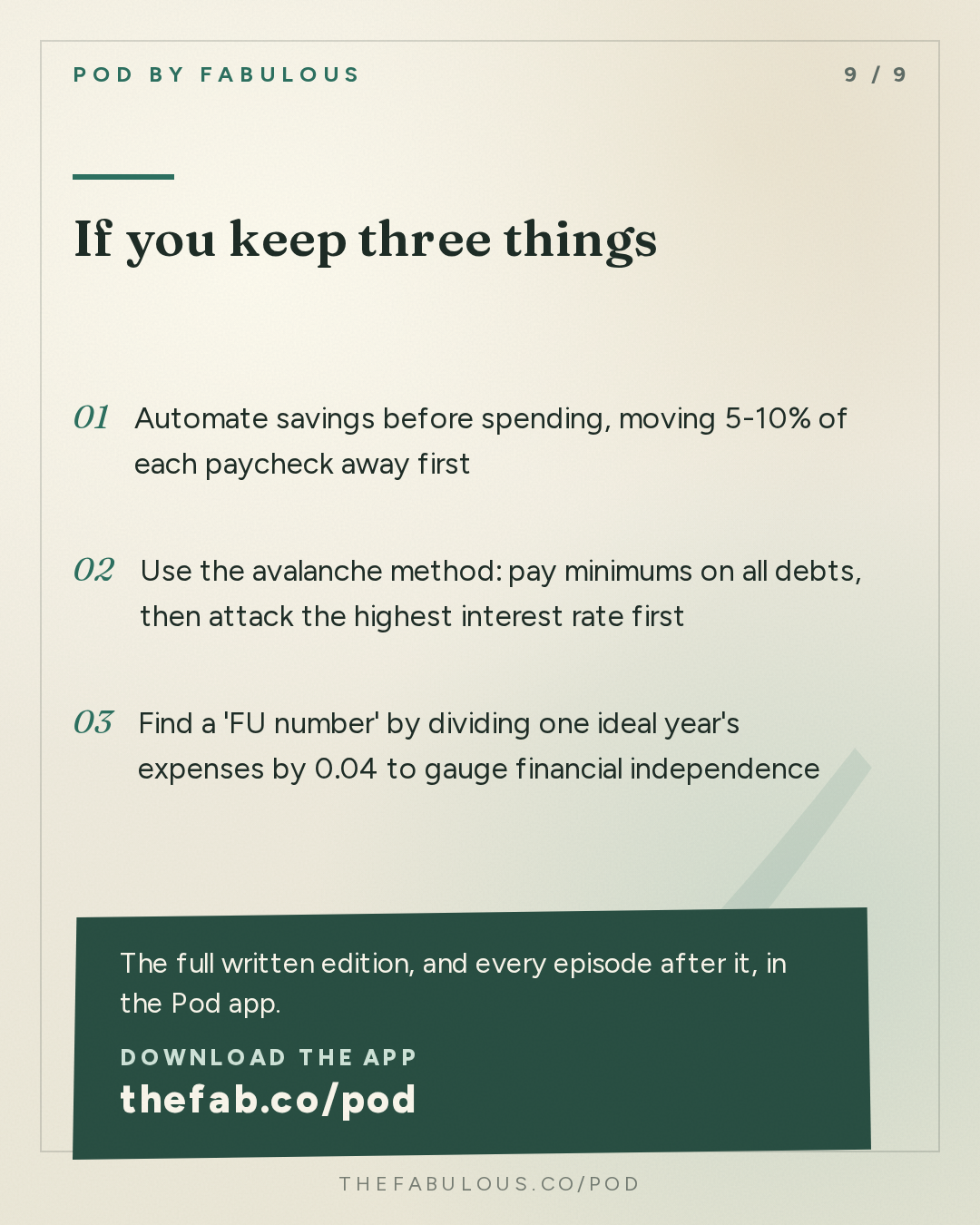
- Automate savings before spending, moving 5-10% of each paycheck away first
- Use the avalanche method: pay minimums on all debts, then attack the highest interest rate first
- Find a 'FU number' by dividing one ideal year's expenses by 0.04 to gauge financial independence
- Negotiate raises with a documented 'brag book' timed to summer check-ins before winter decisions
- Request an itemized bill and call the hospital directly, since many medical bills contain errors
The episode in cards
A cockroach infestation once taught a Wall Street trader more about money than her finance degree did. Vivian Tu had just signed a lease on a tiny SoHo apartment, her bed touching three walls, when German cockroaches moved in. Breaking the lease cost her every dollar she had saved in her first full year of work (12:12). She calls it her belt-tightening, come-to-Jesus moment, the point where she stopped trying to look rich and started trying to become rich. A decade later she has more than 10 million followers as your rich BFF, a former JP Morgan trader turned two-time New York Times bestselling author, and she spent an episode of the Mel Robbins Podcast translating that transformation into something anyone can copy (03:54).
The premise of the conversation is blunt: the economy is not currently built to reward patience. Wages have not kept pace with the exponential rise in housing, education, and the general cost of living (08:11). Tu does not dispute that the deck is stacked. What she resists is the idea that this makes people powerless. She distinguishes between an external locus of control, the belief that things happen to you, and an internal one, the belief that things happen because of you (09:05). Only one of those framings lets a person act.
The System, Not the Willpower
Tu's central move is to replace willpower with automation. Telling someone to just spend less, she says, is close to useless advice, because financial behavior is not primarily a discipline problem. Her fix: as soon as a paycheck lands, route 5 to 10 percent of it straight into a savings account before it ever touches a checking account (21:43). She calls this paying broke you forward to rich you, a phrase that reframes saving as a transaction between two versions of the same person rather than a sacrifice.
"Smart decision after smart decision compounds the same way bad decision after bad decision does." — Vivian Tu [13:09]
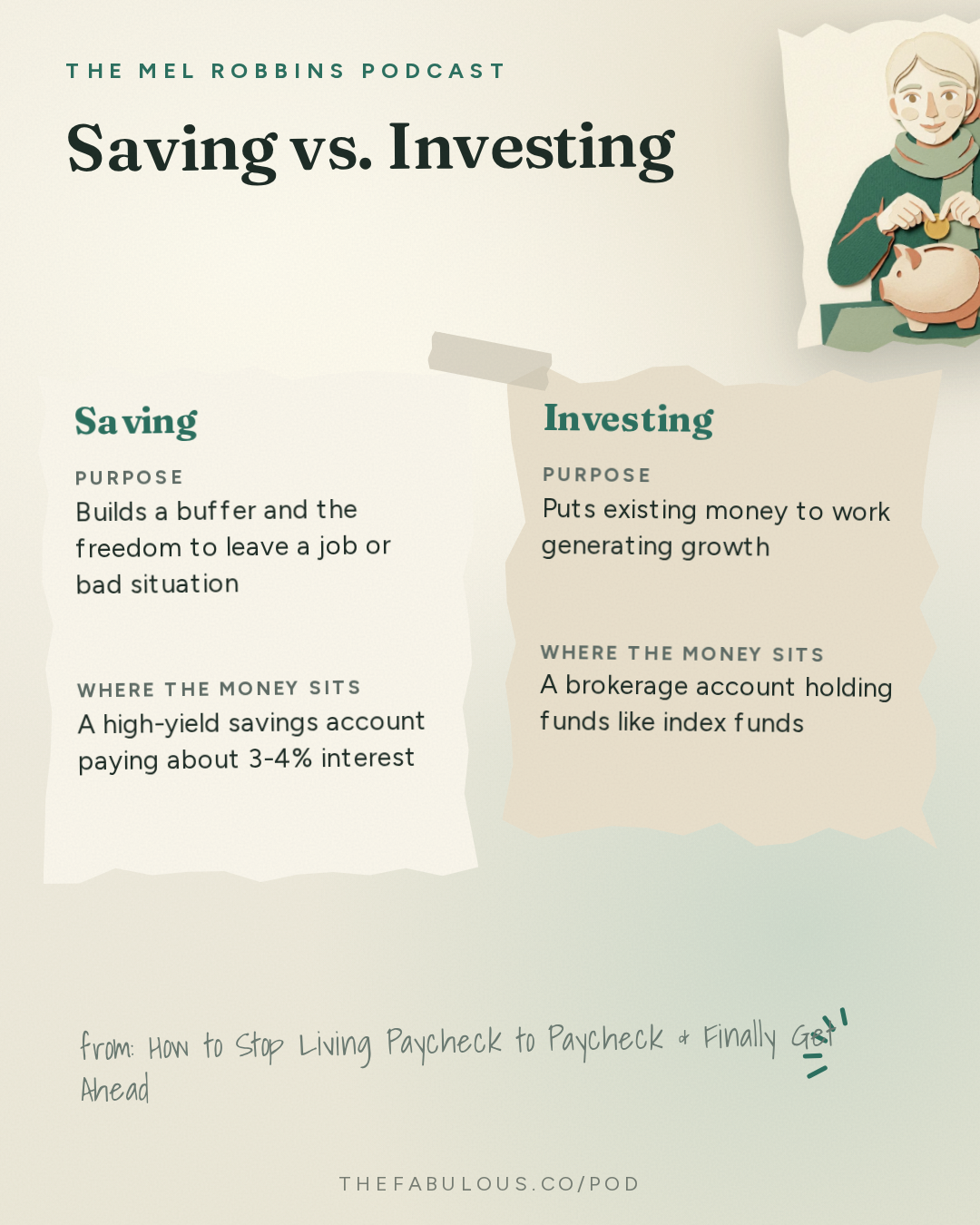
The mechanics matter here. A typical brick-and-mortar bank pays an average of 0.37 percent interest, meaning 100 dollars left alone for a year earns 37 cents (23:42). A high-yield savings account, by contrast, currently pays 3 to 4 percent, turning that same 100 dollars into 103 or 104 dollars (23:42). It is a small gap that compounds into a real one, and it costs nothing to close.
Tu applies the same audit logic to spending. She recommends a blunt gut check before any discretionary purchase: would I still buy this if I couldn't tell anyone about it? (17:59). The question exposes purchases made for status rather than use, the shoes bought for the label rather than the comfort. She admits to failing her own test more than once, including a laser hair removal subscription she forgot to cancel for months (19:31). Her fix was not shame but a system: check the bank statement every month, on purpose, so nothing slips through again.
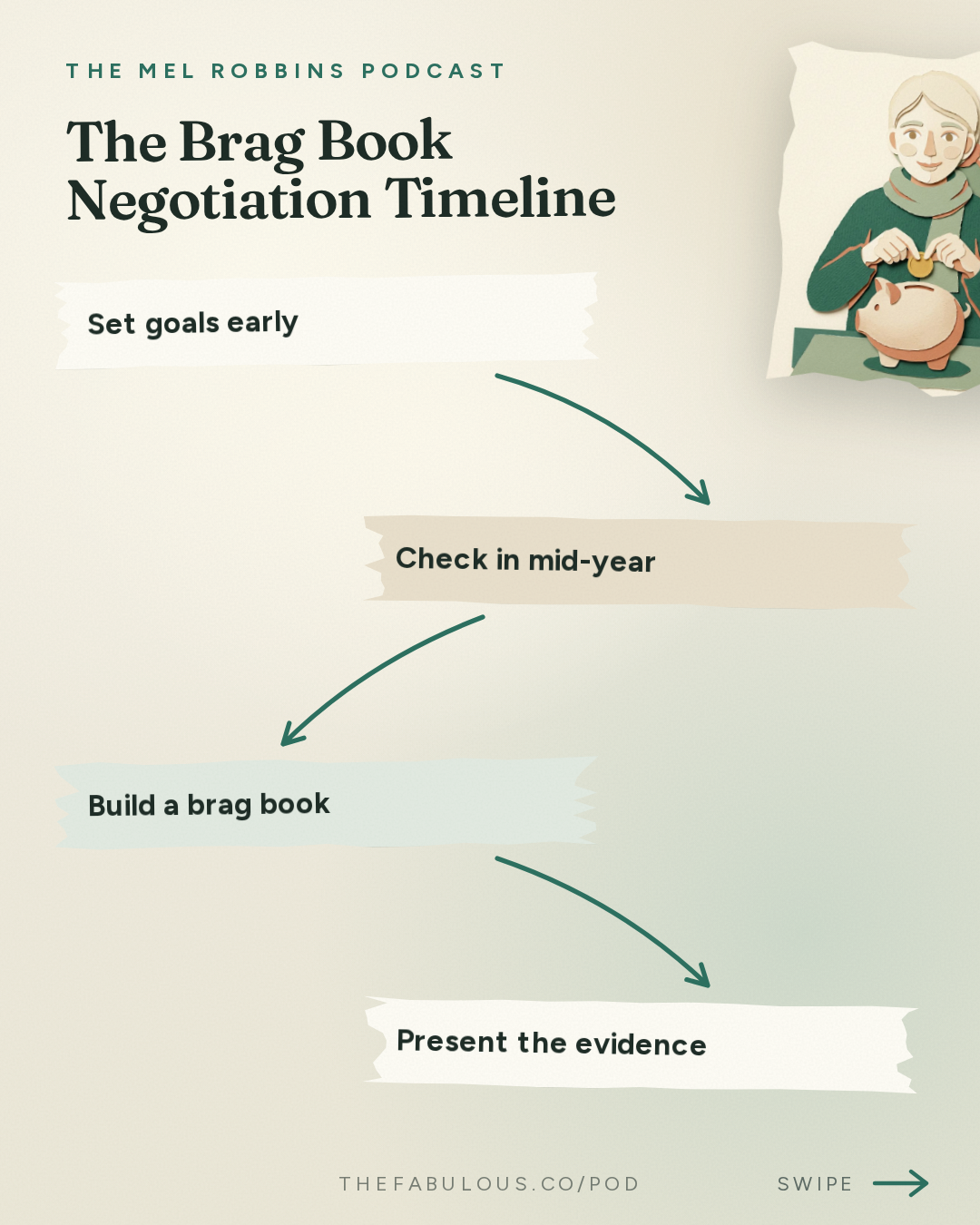
When income itself is the bottleneck rather than spending, Tu's advice shifts to negotiation. She points out that winter raises and promotions are effectively decided in the preceding summer (36:37). Her method is to set goals with a manager in January or February, check in around June or July with a progress report, then keep what she calls a brag book, a running file of finished projects and unsolicited compliments (37:30). In the fall, that evidence gets presented before naming a specific number and then, critically, going silent. Tu learned this the hard way in her own first negotiation, when she undercut her own ask by adding, unprompted, that it was fine if the answer was no (38:34).
Debt, Independence, and the Question of a Spouse
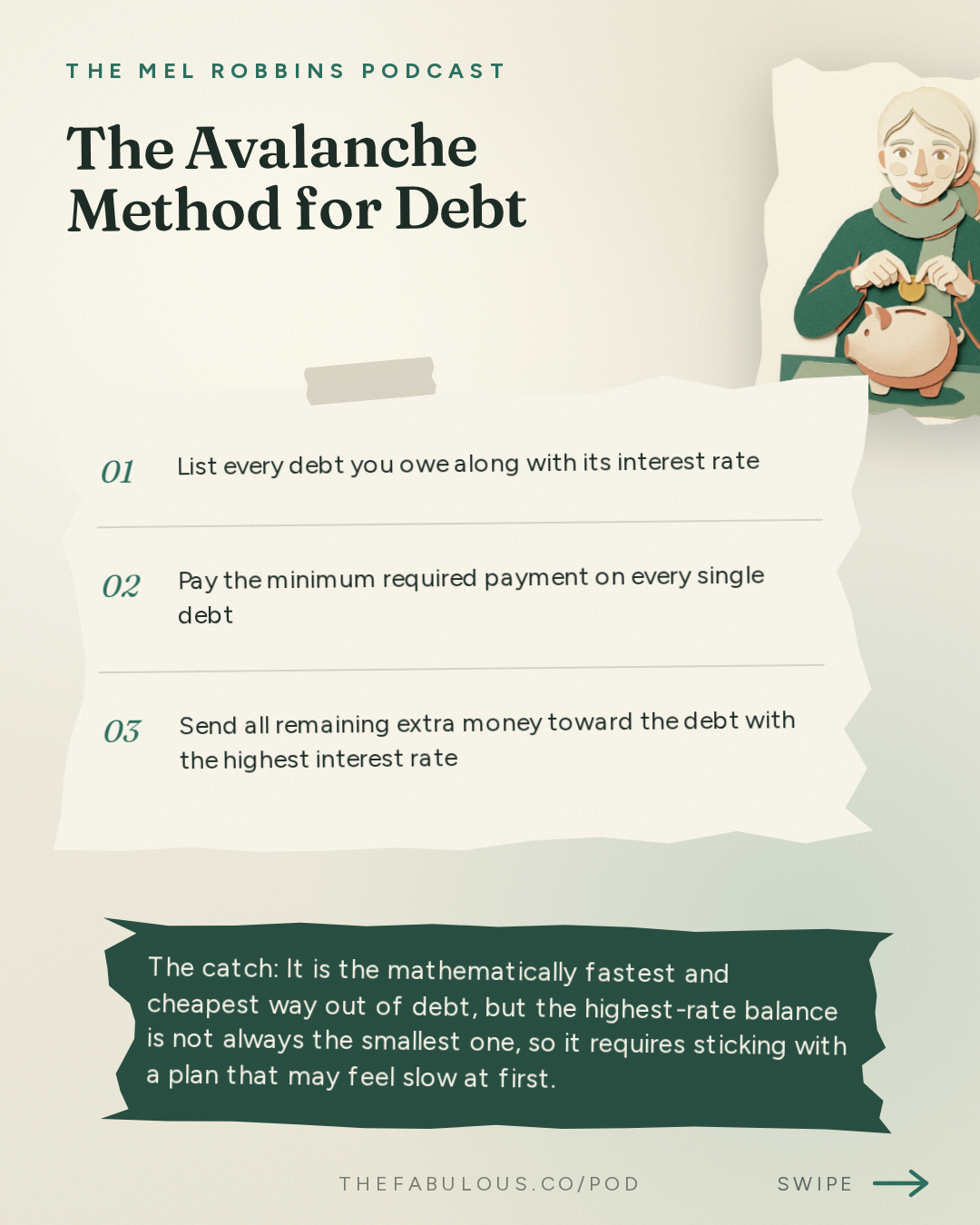
For debt, Tu favors what is known as the avalanche method: make the minimum payment on every debt, then send all remaining extra cash toward whichever balance carries the highest interest rate until it is gone, then move to the next (40:30). It is the mathematically fastest and cheapest way out of debt, though it takes discipline since the highest-rate balance is not always the smallest one. She adds a smaller, sharper tip for anyone staring at an unexpected bill: request an itemized statement, since roughly 80 percent of medical bills contain errors, then call, not email, the provider to ask about discounts for paying in full (41:13).
The most abstract idea in the conversation is also the most useful: the FU number. Picture one ideal year of life in detail, then estimate what that year would cost. Divide that figure by 0.04, and the result is the amount that would need to be invested for the return alone to fund that life indefinitely (43:27). A million dollars invested, for instance, throws off roughly 40,000 dollars a year at that rate. The number is meant less as a retirement target than as a measure of leverage: the point at which paid work becomes optional rather than required.
"You are not a good money-making machine, no matter how much money you make. You know what's a better money-making machine? Your money." — Vivian Tu [50:23]
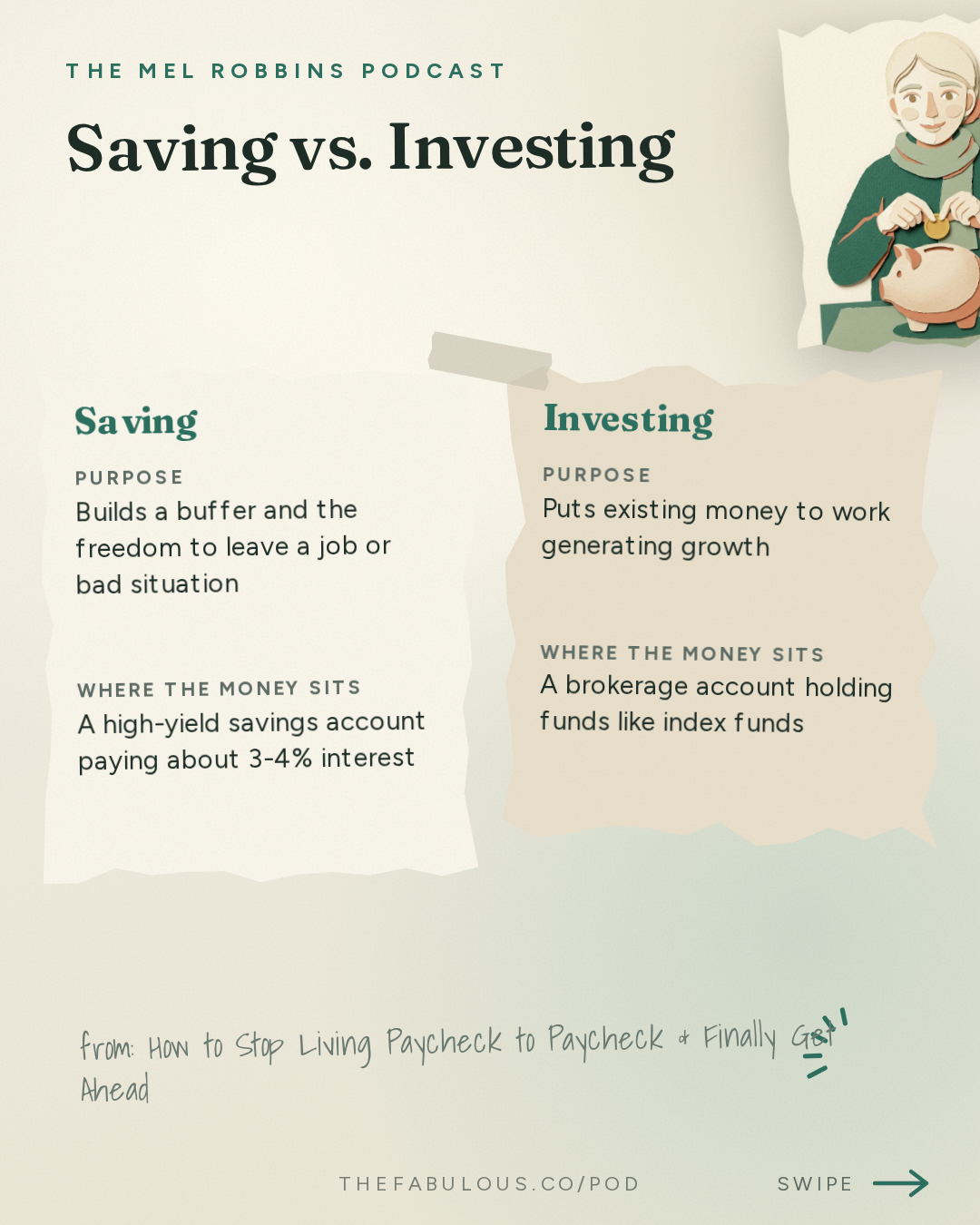
Investing, in her framing, is distinct from saving. Saving buys the buffer and the freedom to leave a bad job or a bad apartment. Investing puts that buffer to work (51:09). For anyone intimidated by picking stocks, she points to robo-advisors, automated portfolios that can be set up in about 45 minutes after answering a short questionnaire about income, debt, and risk tolerance (54:00).
On housing, Tu resists the idea that buying is automatically the right goal. She suggests planning to stay in a home for at least five to seven years before the math of buying beats renting (55:35), and she flags less familiar mortgage paths, including a VA loan that lets eligible veterans buy with no down payment and no mortgage insurance (59:22). She also reframes an arrangement many young adults feel embarrassed by. Nearly half of Americans under 30 currently live with a parent, according to Federal Reserve data (60:40), and Tu calls that its own form of generational wealth: free rent, a grandparent's spare car, family childcare, all of it money that would otherwise be spent.
Perhaps her boldest claim is a personal one: the single biggest financial decision most people make is who they marry (62:17), because money and sex are the two most common causes of conflict between couples. She recommends asking questions about money as early as a first date, framed around values rather than numbers, such as what someone would do for work if money were no object.
The episode closes on a myth Tu wants retired. Popular culture, she argues, has sold women a story about being bad with money, when the data says otherwise: more single women than single men own homes in every state, women carry less debt outside student loans, and a Fidelity analysis found women's investment portfolios have historically outperformed men's (72:08).
"Money is a tool. It does not get to shame you. It does not get to define you." — Vivian Tu [72:33]
None of this erases the structural pressures Tu names at the start: stagnant wages, a housing market that has outpaced income for a century, a cost of living that keeps climbing. But her argument is that inside that unfair system, a short list of specific moves, an automatic transfer, a ranked list of debts, a documented case for a raise, still changes where a person ends up. The apartment with the cockroaches was real. So was the decision to leave it.
By the numbers
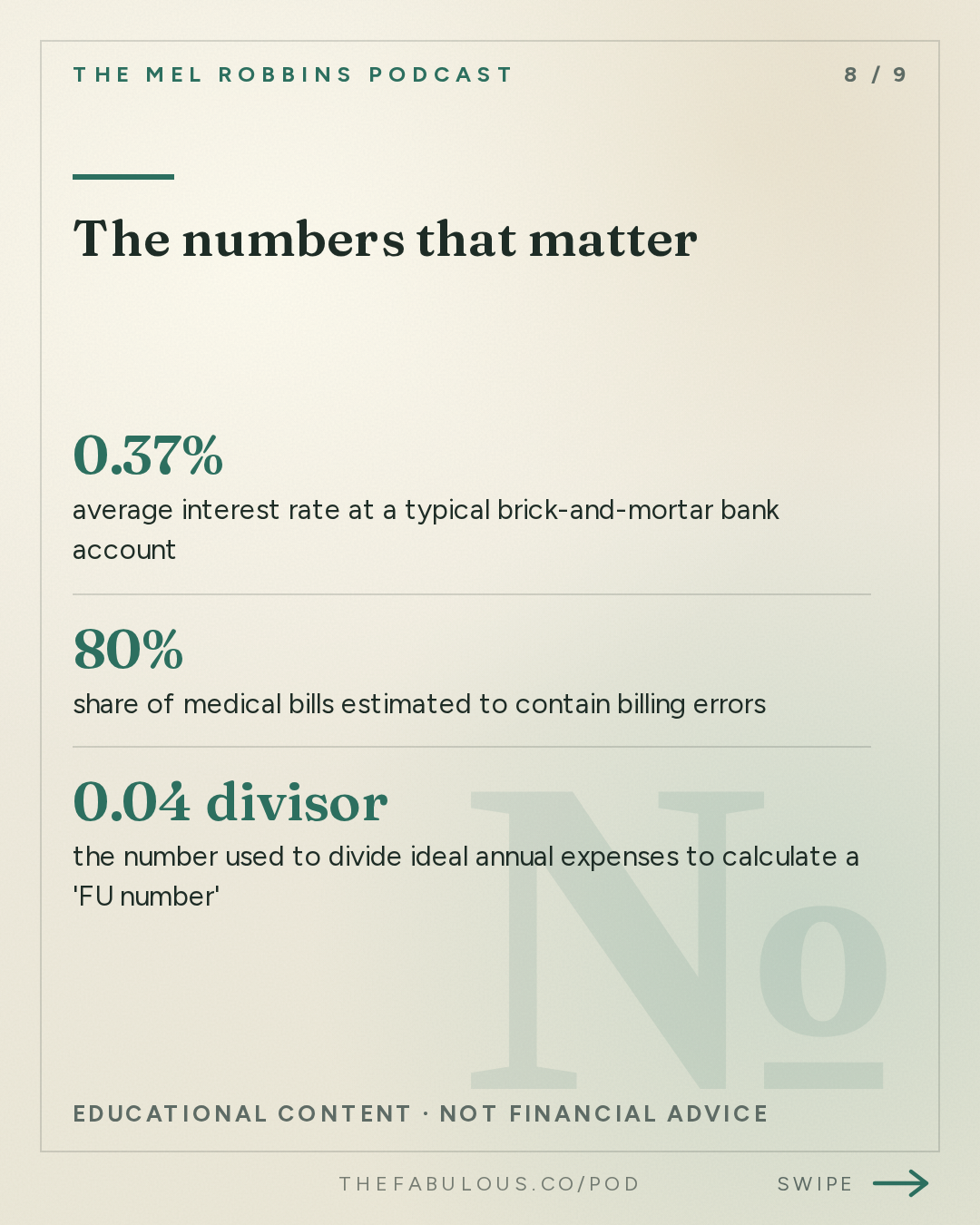
- 0.37% percent average interest rate at a typical brick-and-mortar bank account
- 80% percent share of medical bills estimated to contain billing errors
- 0.04 divisor the number used to divide ideal annual expenses to calculate a 'FU number'
In their words
“We should want money because when you have money, you have the power, you have the freedom. You get to be the captain of your own ship.”
“Smart decision after smart decision compounds the same way bad decision after bad decision does.”
“You are not a good money-making machine, no matter how much money you make. You know what's a better money-making machine? Your money”
“Money is a tool. It does not get to shame you. It does not get to define you.”
Protocols
-
Pay Yourself First
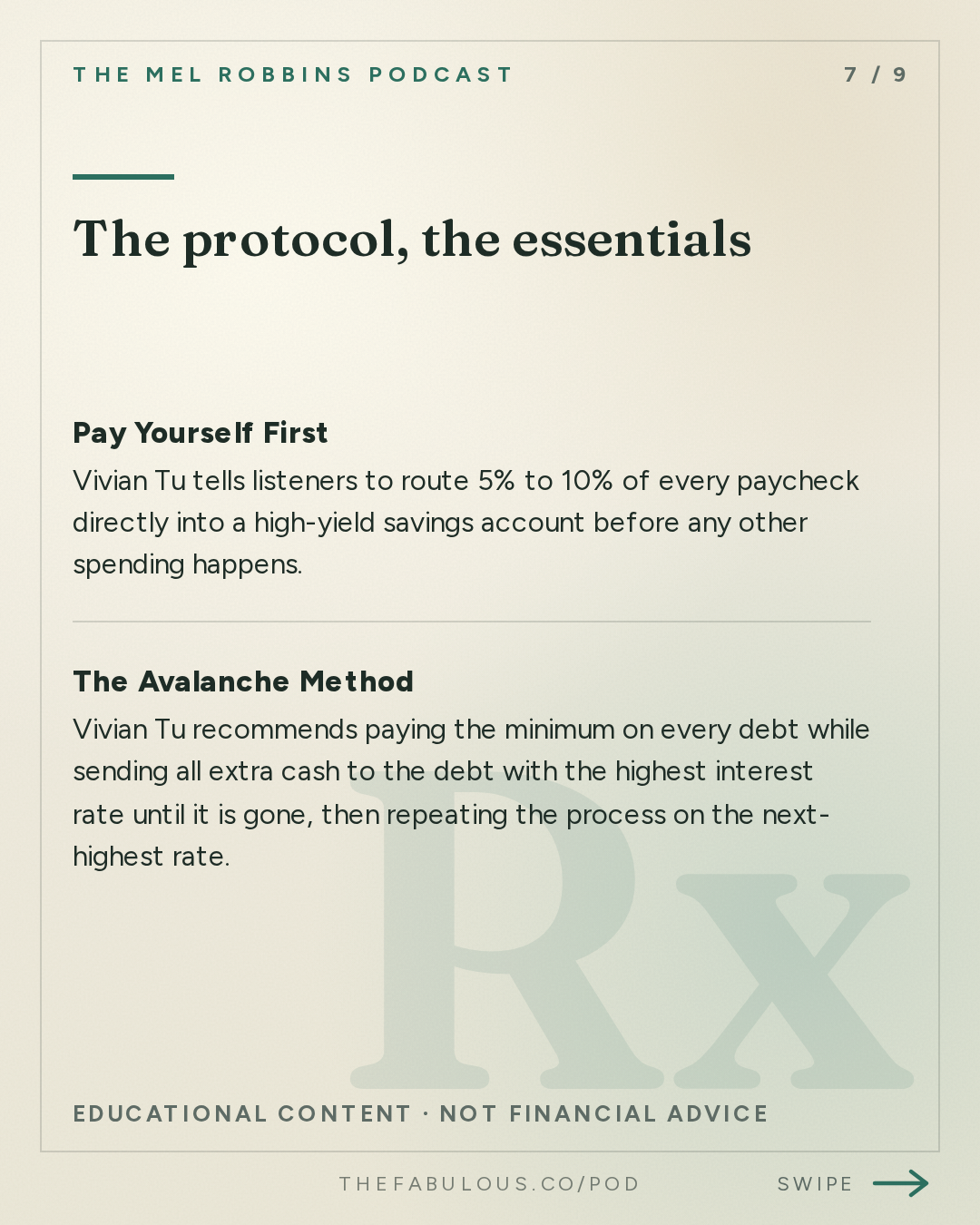
Vivian Tu tells listeners to route 5% to 10% of every paycheck directly into a high-yield savings account before any other spending happens.
every payday
-
The Avalanche Method
Vivian Tu recommends paying the minimum on every debt while sending all extra cash to the debt with the highest interest rate until it is gone, then repeating the process on the next-highest rate.
monthly, until debt-free
-
The Brag Book Raise Strategy
Vivian Tu has people set goals with a manager in January or February, log every win and compliment in a running file called a brag book, then present that evidence in the fall before naming a specific raise or promotion and staying silent afterward.
annually, timed to the review cycle
-
Calculate the FU Number
Vivian Tu has people estimate what one ideal year of living would cost and then divide that figure by 0.04 to find the total amount that needs to be invested for the returns to replace a paycheck.
one calculation, revisited as goals change
-
Dispute a Medical Bill
Vivian Tu advises requesting an itemized bill, checking charges against a site like Fair Health Consumer, then calling rather than emailing the hospital to ask about discounts, waivers, or a reduced rate for paying in full.
whenever a bill arrives
Questions this episode answers
How do I stop living paycheck to paycheck?
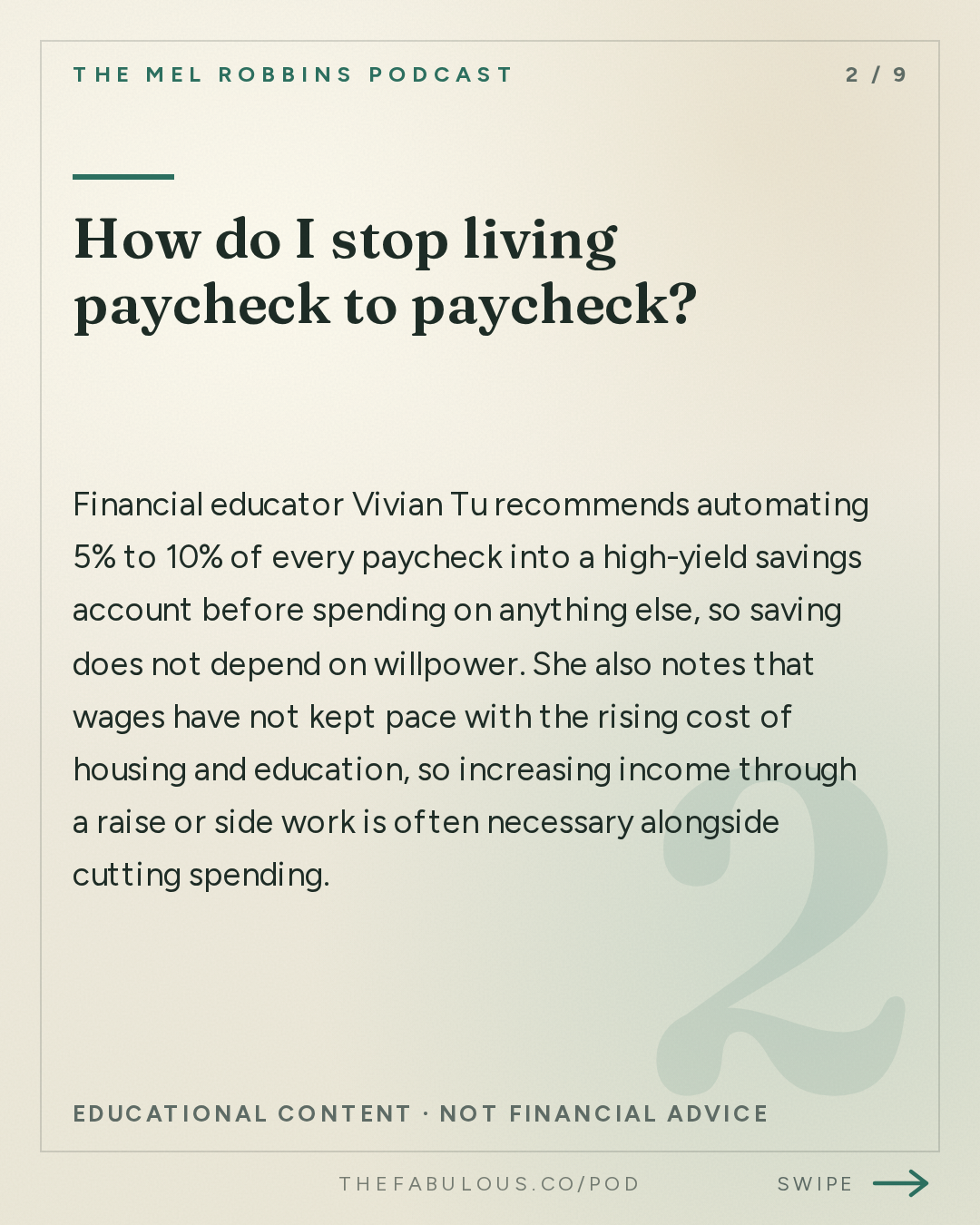
Financial educator Vivian Tu recommends automating 5% to 10% of every paycheck into a high-yield savings account before spending on anything else, so saving does not depend on willpower (21:43). She also notes that wages have not kept pace with the rising cost of housing and education, so increasing income through a raise or side work is often necessary alongside cutting spending (08:11).
What is the avalanche method for paying off debt?
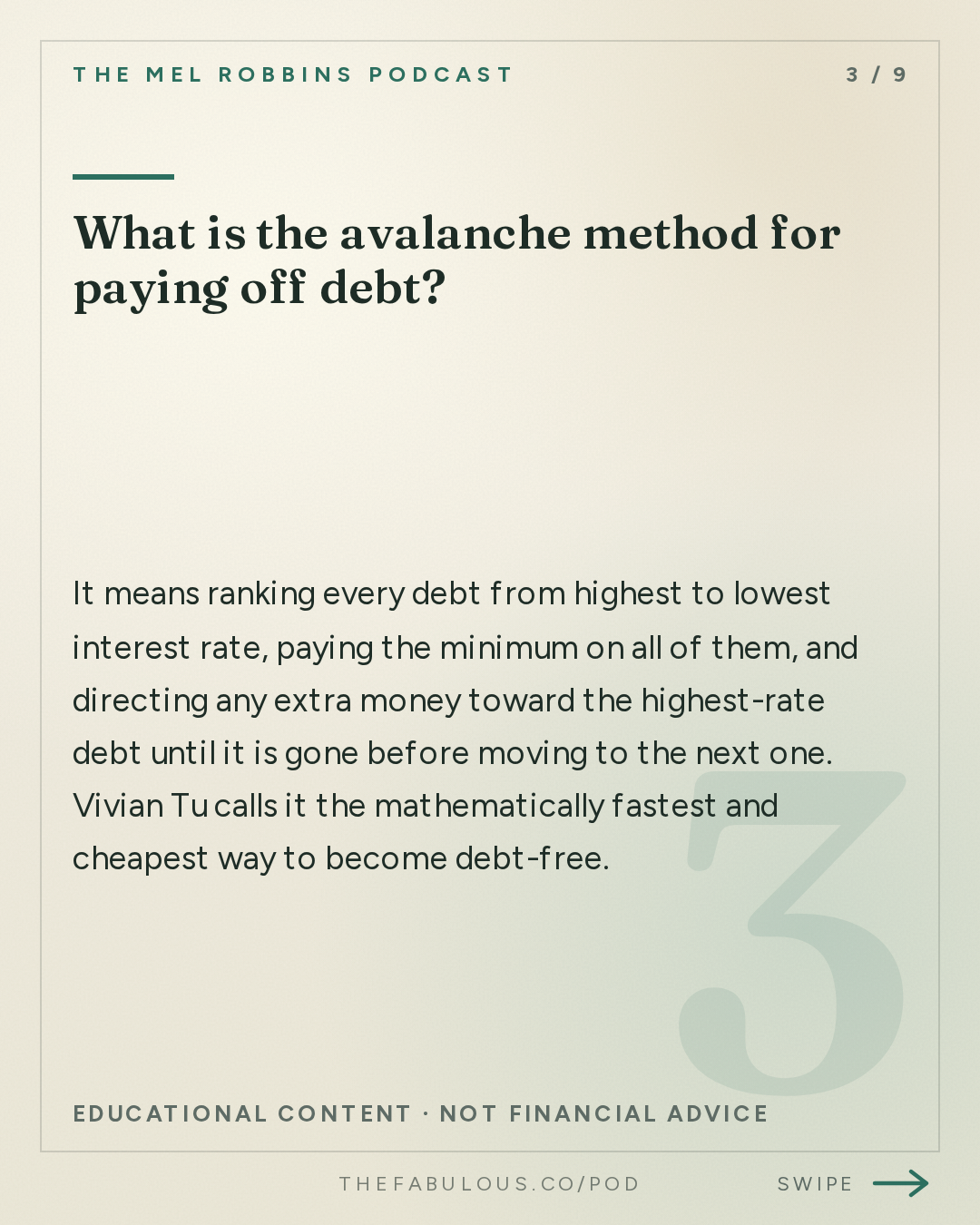
It means ranking every debt from highest to lowest interest rate, paying the minimum on all of them, and directing any extra money toward the highest-rate debt until it is gone before moving to the next one (40:30). Vivian Tu calls it the mathematically fastest and cheapest way to become debt-free.
What is a 'FU number' and how do I calculate it?
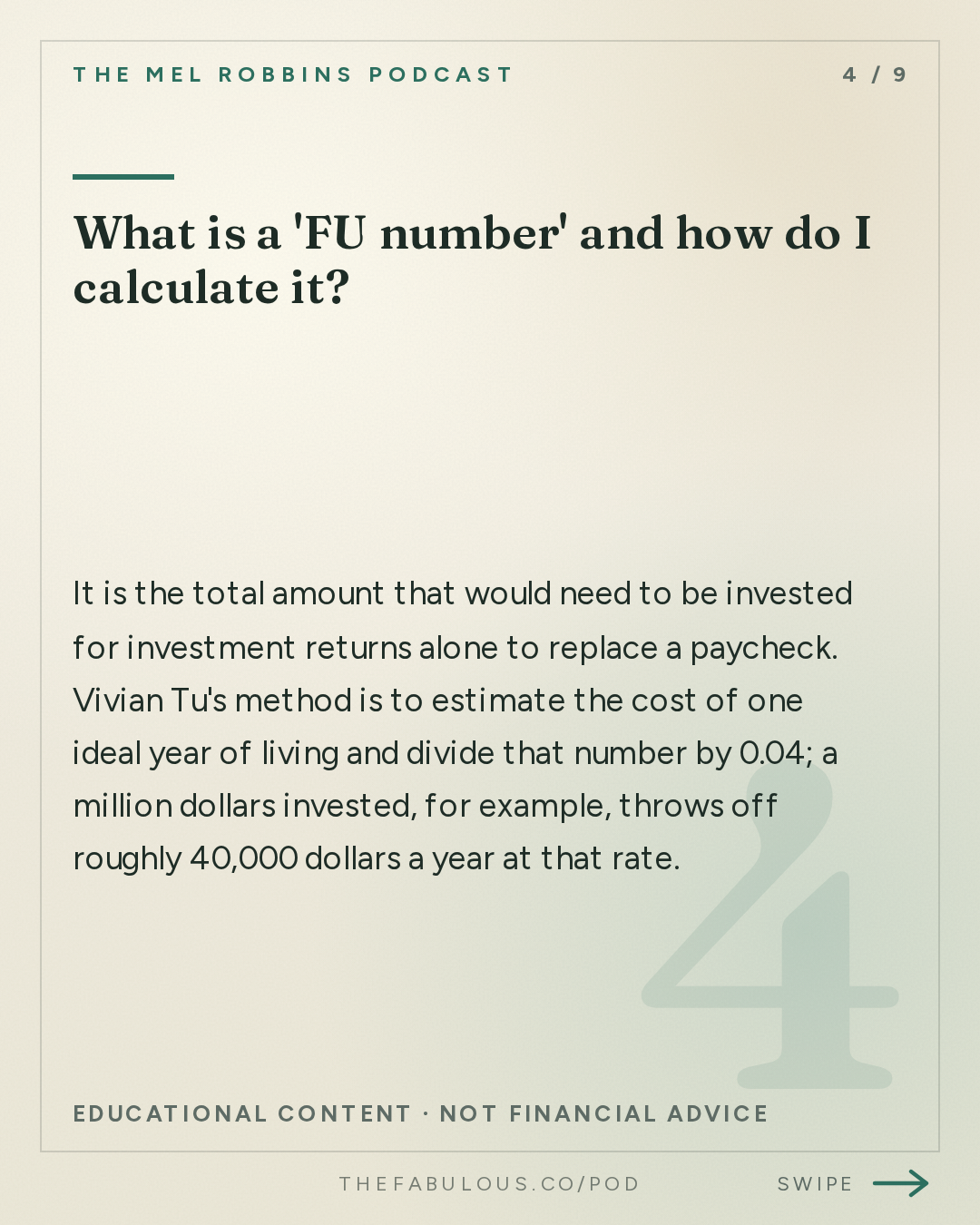
It is the total amount that would need to be invested for investment returns alone to replace a paycheck. Vivian Tu's method is to estimate the cost of one ideal year of living and divide that number by 0.04 (43:27); a million dollars invested, for example, throws off roughly 40,000 dollars a year at that rate.
Is it better to save or invest first?
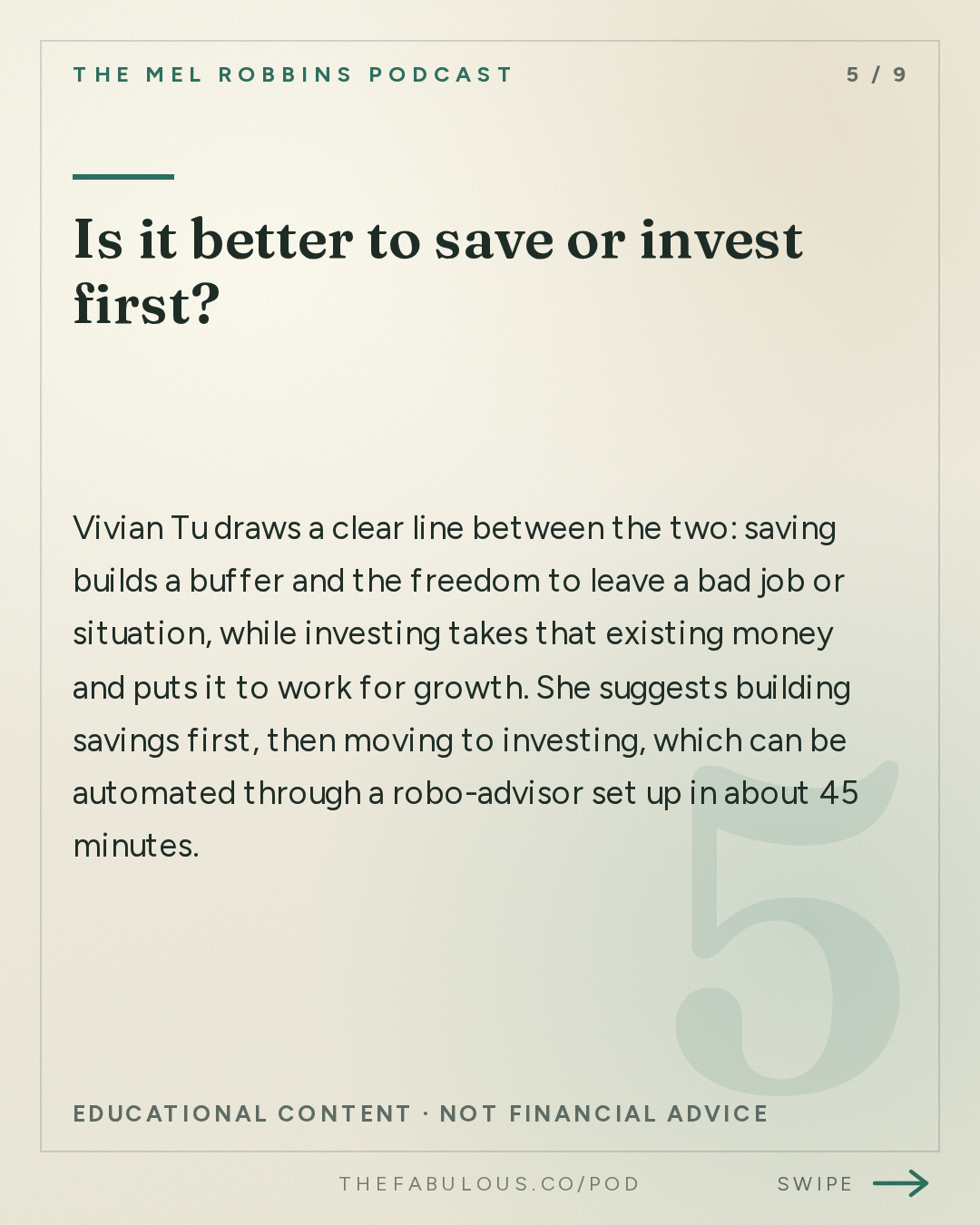
Vivian Tu draws a clear line between the two: saving builds a buffer and the freedom to leave a bad job or situation, while investing takes that existing money and puts it to work for growth (51:09). She suggests building savings first, then moving to investing, which can be automated through a robo-advisor set up in about 45 minutes (54:00).
How do I negotiate a raise?
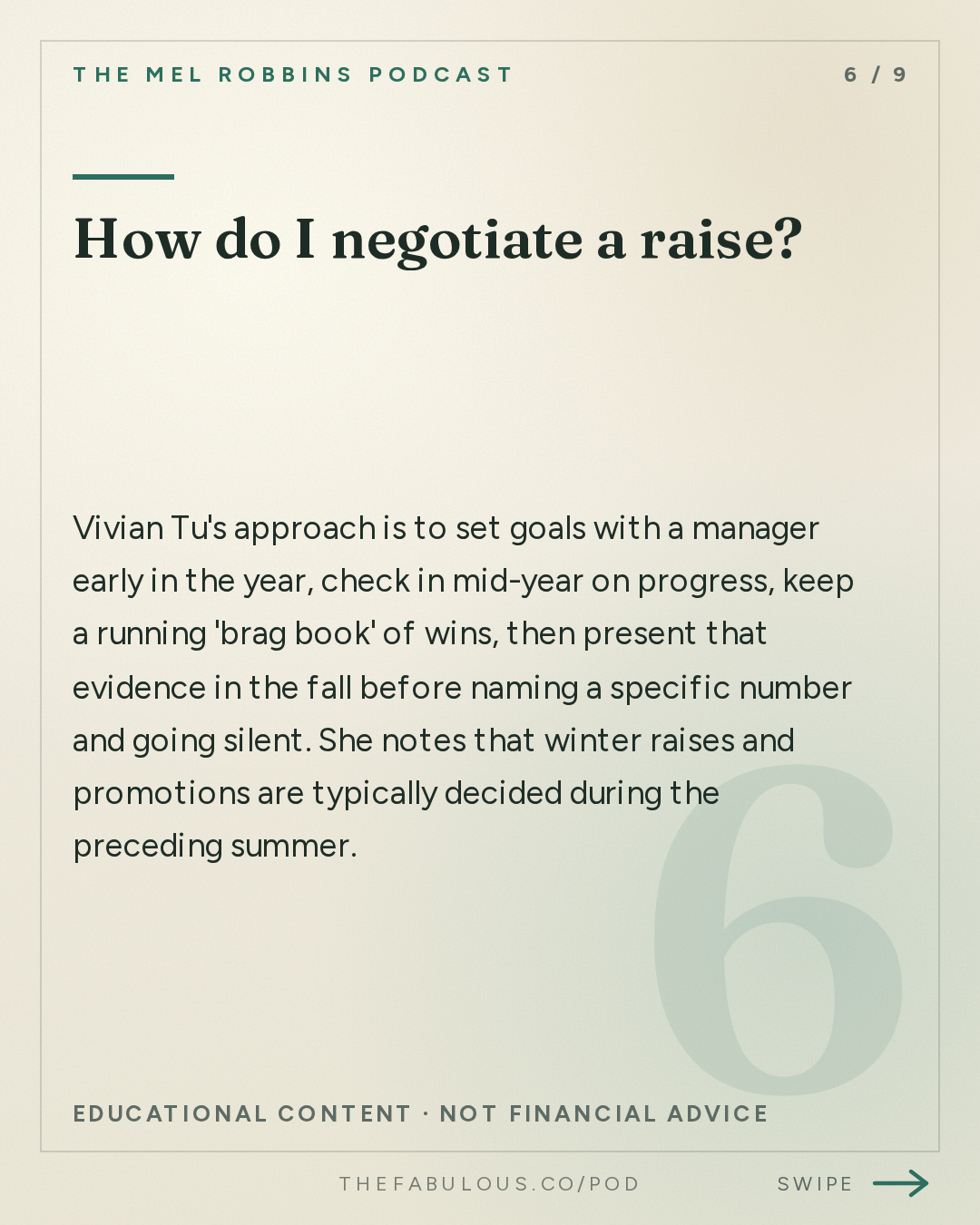
Vivian Tu's approach is to set goals with a manager early in the year, check in mid-year on progress, keep a running 'brag book' of wins, then present that evidence in the fall before naming a specific number and going silent (37:30). She notes that winter raises and promotions are typically decided during the preceding summer (36:37).
Should I buy a home right now?
Vivian Tu suggests planning to stay in a home for at least five to seven years before buying makes more financial sense than renting, given the costs of a down payment, maintenance, and property taxes (55:35). For veterans, she points out that a VA loan allows a home purchase with no down payment and no mortgage insurance (59:22).
The full read, in cards
Go deeper
- Vivian Tu's bestselling book, page 49 — contains the spending test 'would I still buy this if I couldn't tell anyone about it'
- Fair Health Consumer — an online tool cited for checking whether a medical charge matches a typical cost
- Fidelity portfolio analysis — found that women's investment portfolios historically outperformed men's
- Federal Reserve data on young adults living at home — found that nearly half of Americans under 30 live with a parent
Mentioned
Vivian Tu · Mel Robbins · JP Morgan · Time 100 Creators · Fair Health Consumer · Mount Sinai Emergency Department · Fidelity
More from this show and category
Body Language Tricks for Instant Confidence
Behavioral researcher Vanessa Van Edwards explains how tiny, testable body-language and language cues (ear-to-shoulder distance, hand steeples, priming words) shift how confident and likable people perceive us, and how an A-B-C-D task audit stops burnout by clarifying which work and relationships actually deserve energy.
Mel Robbins' Let Them Theory for Difficult People
Mel Robbins' Me, We, Them framework redirects relationship stress toward the one variable anyone can control: their own reaction. She names three habits that wreck relationships (expecting others to change, letting their behavior dictate your mood, assuming they 'should' know what you need) and offers a script from therapist Terry Real for saying the hard thing without blame.
James Sexton's Guide to the Six Stages of Divorce
Divorce attorney James Sexton maps the six stages of divorce and gives scripts for telling a spouse and a 48-hour safety plan. He explains why an avoided conversation gets more expensive with time, why grief means the love was real, and how to actually help someone else going through it.

How to Share the Mental Load With Your Partner
Mental load coach Zach Watson says men often confuse doing a chore with owning it, and that sharing the mental load makes men happier too. He recommends the Fair Play card system, weekly 'build meetings,' and naming emotions precisely to cut defensiveness and split invisible labor fairly.
