Tim Ferriss on Networking, Focus, and Mental Health
Essentials: How to Learn Better & Create Your Best Future | Tim Ferriss
The brief
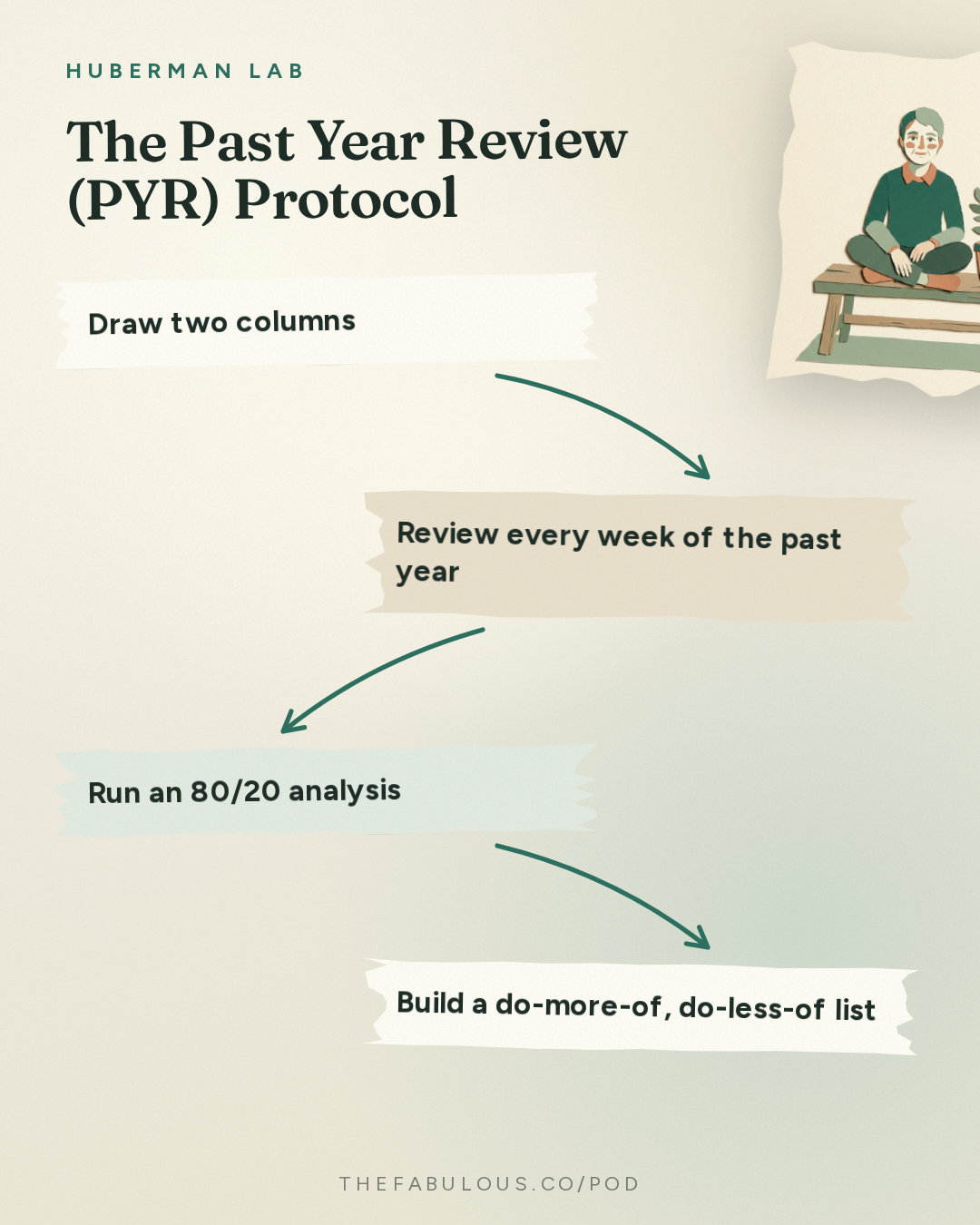
Tim Ferriss explains how he spots emerging trends, builds a network from zero, and runs an annual Past Year Review instead of New Year's resolutions. He also describes a near-suicide at Princeton and childhood abuse, and how he turned both into public stories that have helped other people.
In 2008, a professional race car driver strapped on a continuous glucose monitor, a sensor that tracks blood sugar in real time, not because he had diabetes but because he wanted an edge behind the wheel. Tim Ferriss heard about it and asked a simple question: if this works for a race car driver, what might it do for anyone else? That question became the engine behind The 4-Hour Body, and in a conversation with Stanford neuroscientist Andrew Huberman, Ferriss explains that chasing odd, unproven ideas before anyone else notices them isn't a trick reserved for biohackers. It's a repeatable method, and he lays it out alongside hard lessons on networking, time management, and surviving depression.
Ferriss's method starts with suspicion of certainty.
"If anyone says always, never, should, I pay attention and take note of that. They may very well be right, but if anything is said in absolutes, I like to stress test." Tim Ferriss, [01:54]
That instinct sent him toward wearable sensors and old Soviet-era doping literature with the same curiosity, because both sat outside what experts considered worth studying. He attended the first gathering of what became the quantified self movement, a loose community devoted to tracking personal health data, at technology writer Kevin Kelly's house around 2009. Twelve people showed up (02:49). The continuous glucose monitors in use then were almost exclusively for type 1 diabetics (02:24). Within a decade the same technology would be marketed to anyone curious about their blood sugar after breakfast.
The questions Ferriss asks to find these seeds are simple: what are technical people doing on nights and weekends, what are rich people doing now that millions might do in ten years, and where are people cobbling together awkward workarounds because no good solution exists yet. He borrows a line from science fiction writer William Gibson to describe the logic: the future is already here, it's just not evenly distributed (05:36). Ferriss isn't predicting anything. He's noticing what has already sprouted in a small patch of ground.
Where luck gets a surface to stick to
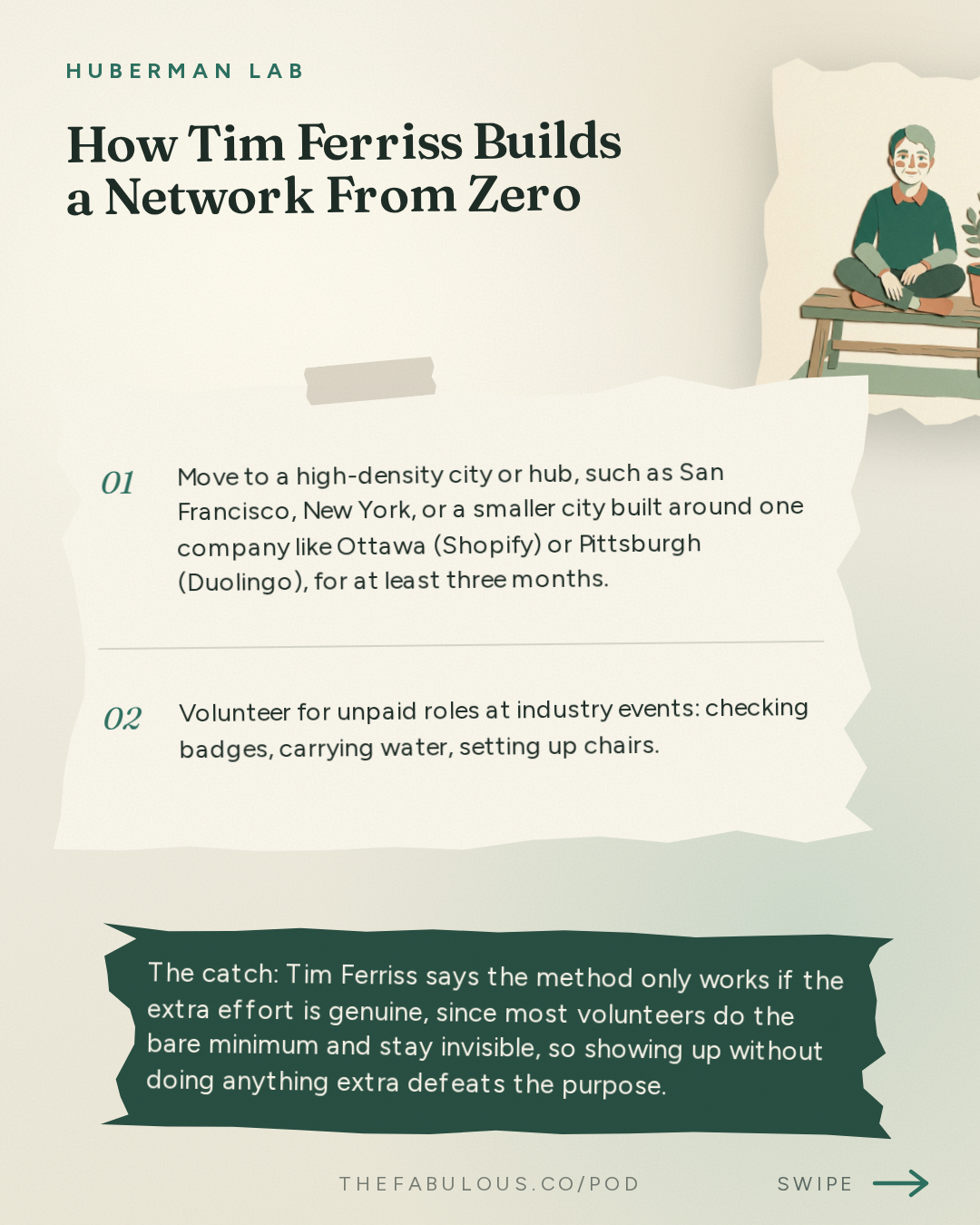
Much of the conversation turns out to be about geography, which is a strange thing for a productivity writer to care about, until Ferriss explains the mechanism. He credits his move to the Bay Area with generating what he calls a high surface area for luck. "There's just a high surface area for luck to stick to because you have so many serendipitous encounters," he says (08:50). His advice for anyone trying to build a career fast is to consider moving to a dense environment such as New York or San Francisco, or a smaller hub built around one company, like Ottawa around the e-commerce company Shopify or Pittsburgh around the language app Duolingo, for at least three months (11:28).
Density alone doesn't open doors, though. Ferriss arrived in San Francisco knowing almost no one, so he volunteered for startup events, doing the unglamorous jobs nobody else wanted: checking name badges, carrying water, hauling out the garbage. The point wasn't the labor. It was doing more than the job required. "When you are volunteering, a lot of folks who volunteer do the absolute bare minimum because they are not getting paid. This is not gonna get you noticed," he says (13:07). By fixing problems before anyone asked, he got pulled into planning meetings, then into recruiting speakers, which eventually connected him to Chicken Soup for the Soul co-creator Jack Canfield and, years later, his first book agent.
A smaller trick: at conferences, skip the panelist everyone else is mobbing and talk to the moderator instead. Moderators rarely get rushed the way headline speakers do, and a genuine thank-you plus a clear statement of what Ferriss was working on often led to an introduction to someone else worth meeting (14:23). None of this required charisma so much as patience and follow-through.
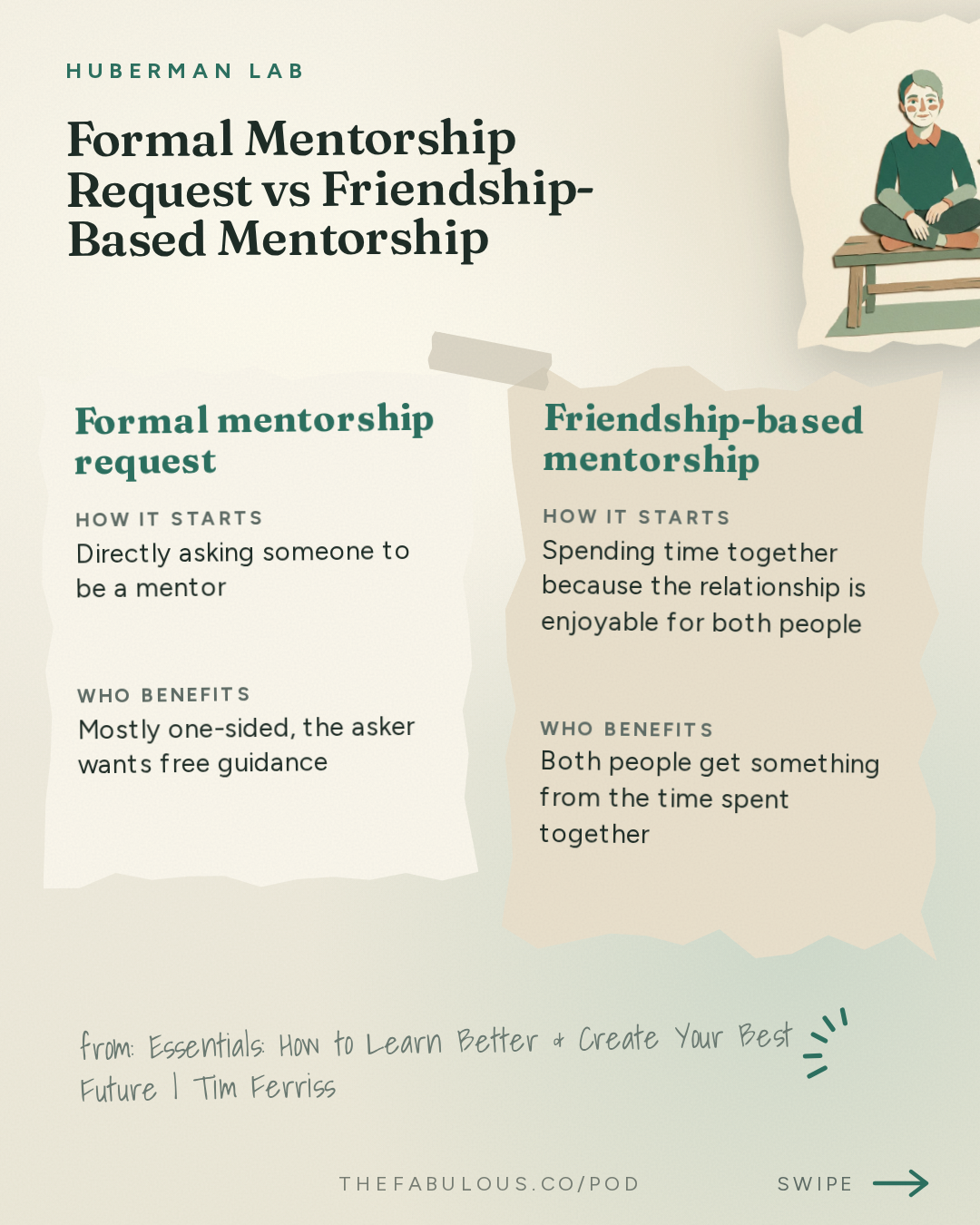
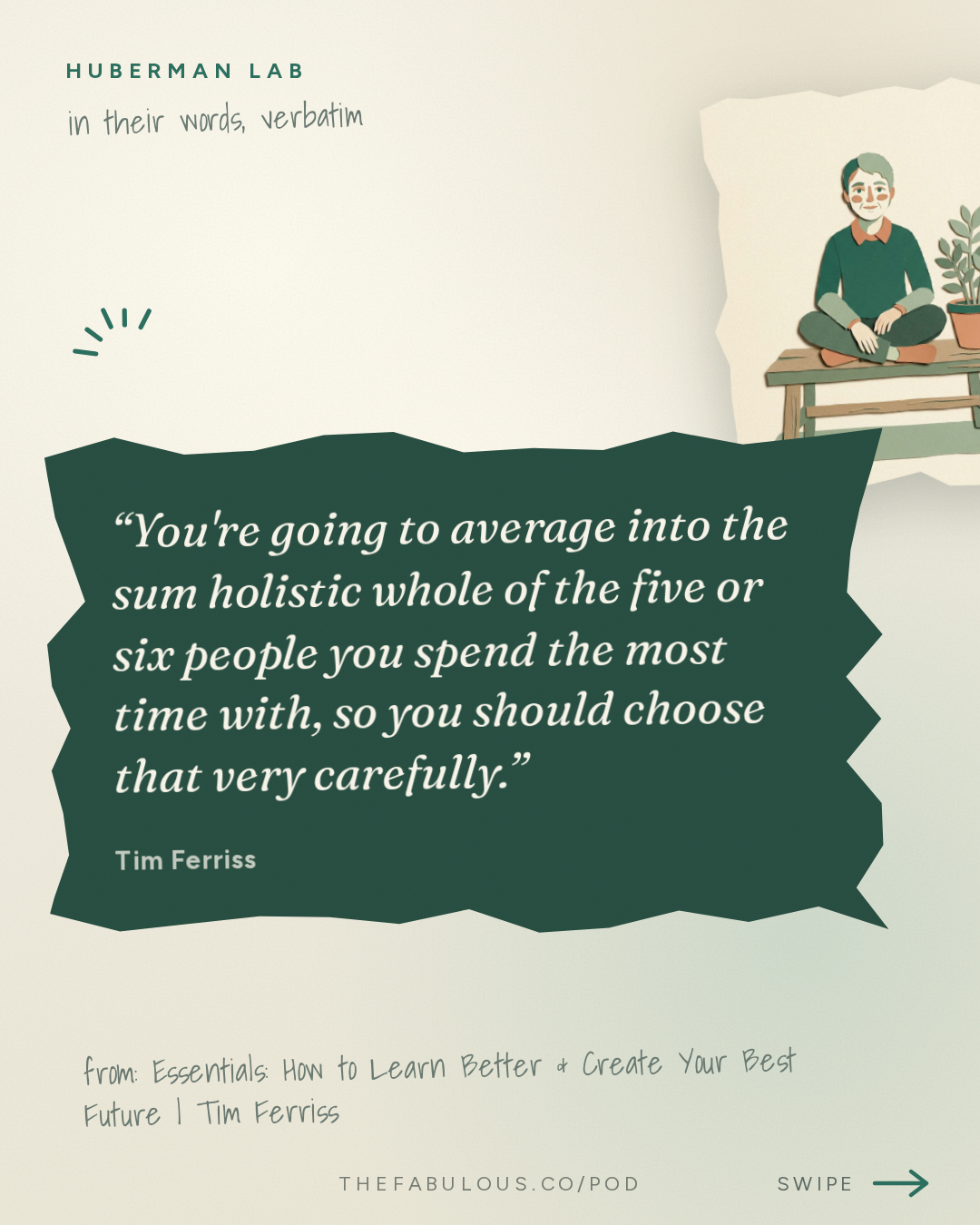
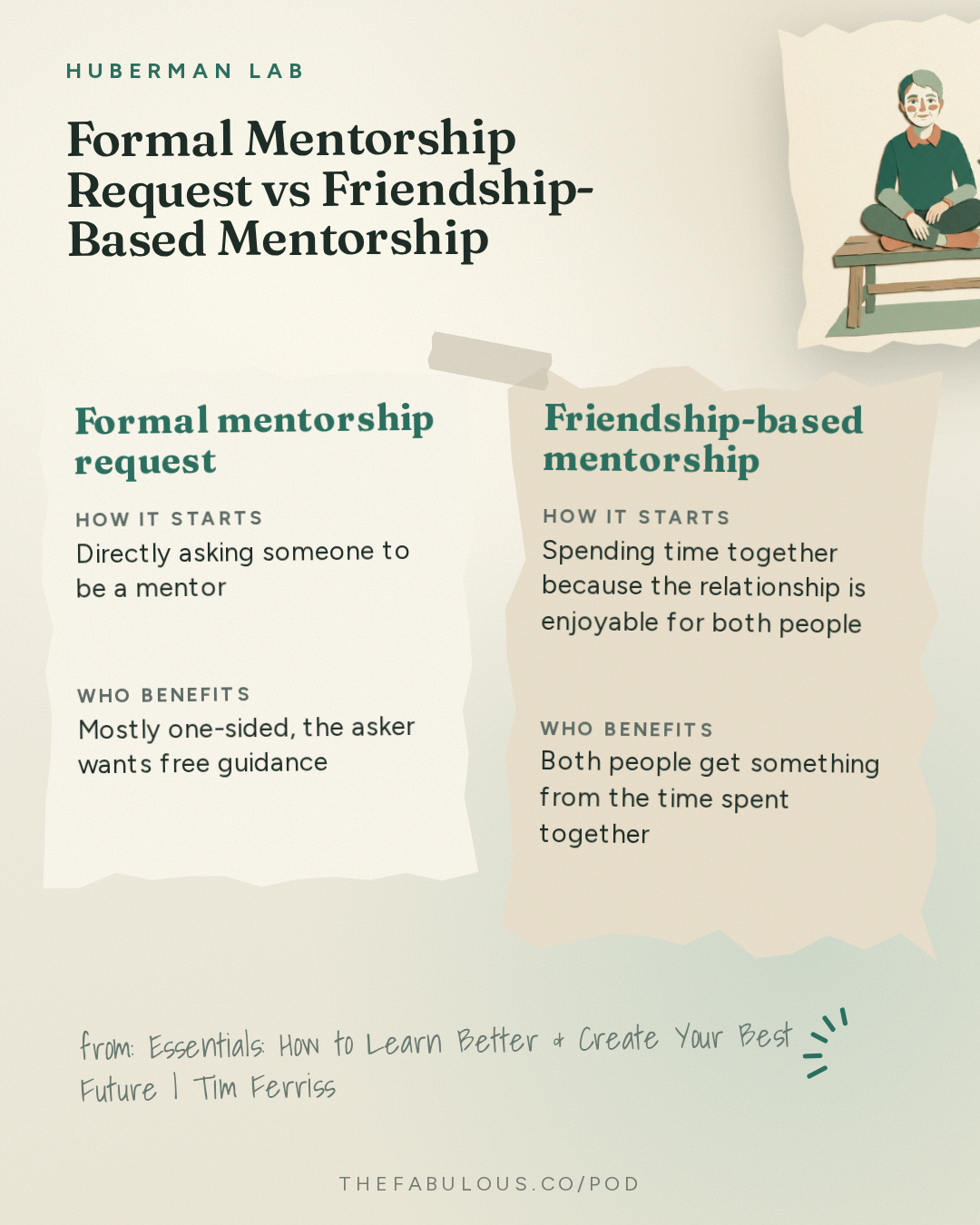
Ferriss extends the same logic to mentorship, though he resists the word itself, because it implies an open-ended obligation that makes people flinch. "It's like, 'Would you like to be my free life coach forever?'" he says of formal mentorship requests, explaining why they usually get turned down (18:51). What works better, in his account, is treating potential mentors as friends: people he spends time with because the relationship is mutually enjoyable, not transactional. He extends the familiar claim that a person becomes the average of the five people closest to them, stretching it to six and including the people whose podcasts or books someone consumes for hours a week. "You're going to average into the sum holistic whole of the five or six people you spend the most time with, so you should choose that very carefully," he says (17:55).
A review instead of a resolution
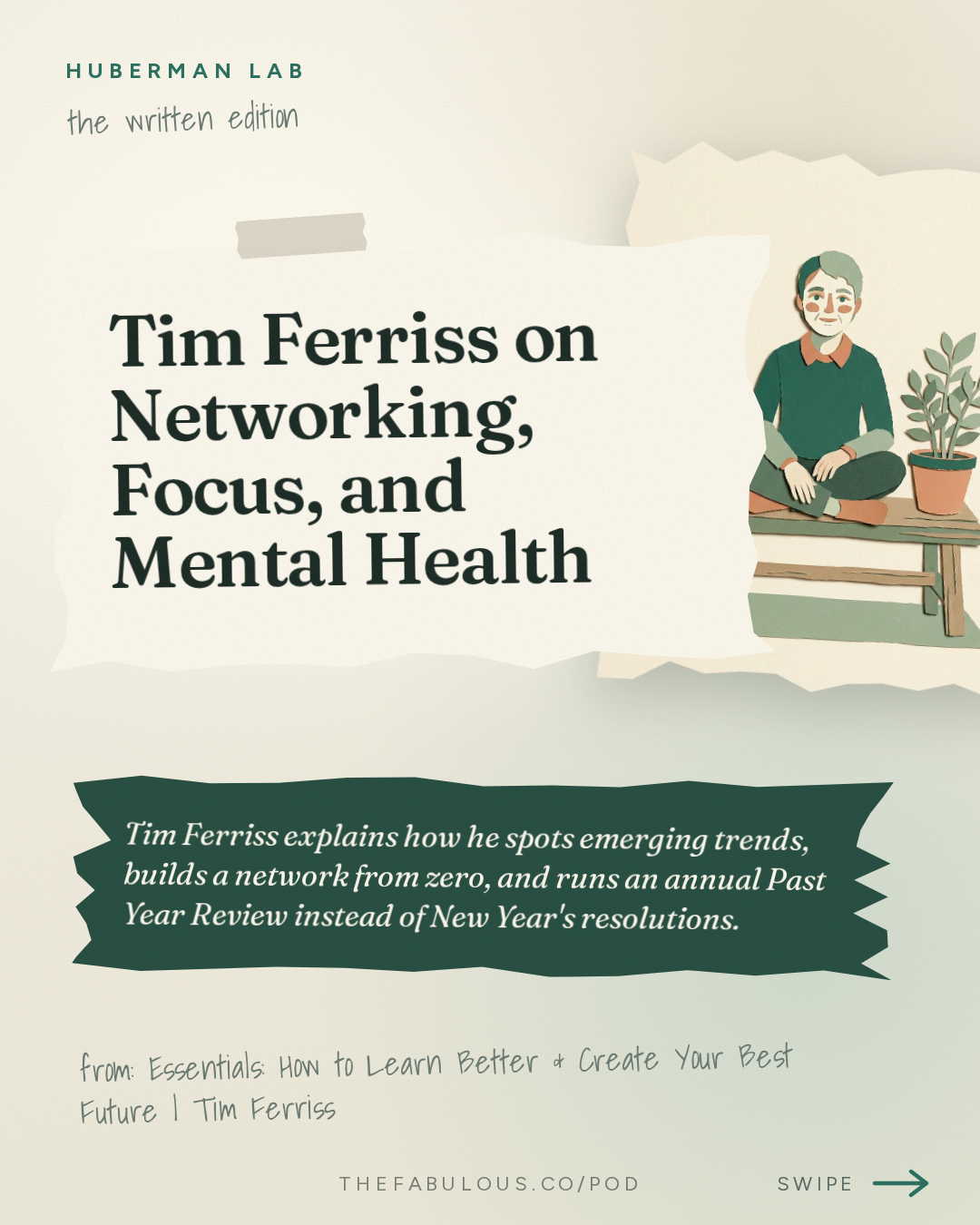
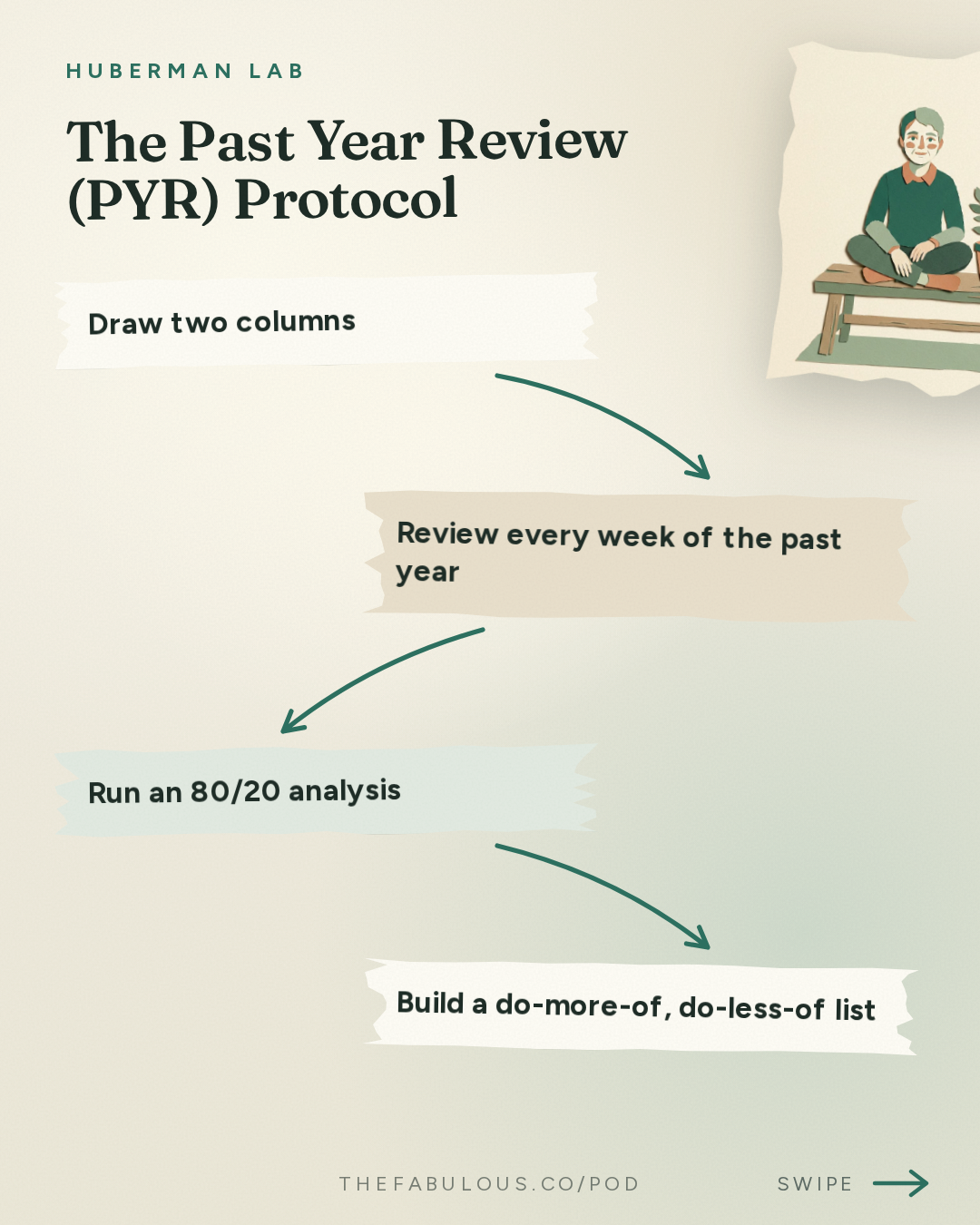
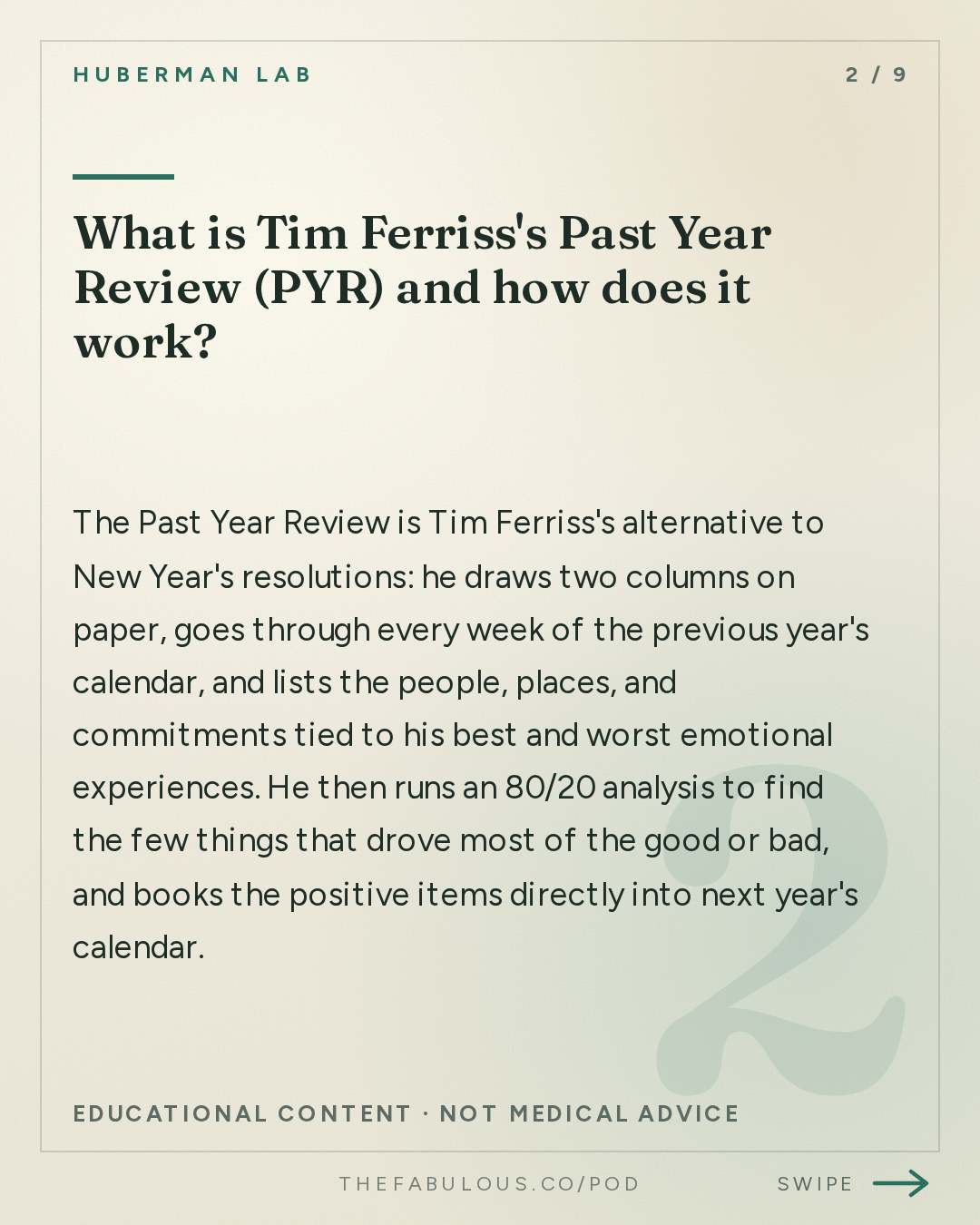
Ferriss's answer to New Year's resolutions is a ritual he calls the Past Year Review, or PYR. Around New Year's, he takes a sheet of paper, draws a line down the middle, and labels the two columns positive and negative. Then he goes through every week of the previous year's calendar and writes down the people, places, and commitments that produced his best and worst emotional states (21:38). The result is an 80/20 analysis, a way of finding the small number of things that accounted for most of his satisfaction or dread (22:18), and it produces two lists: do more of, and do less of. The positive list only matters if it gets scheduled. "Unless you schedule these things that you claim are important, they're gonna get crowded out by bullshit," Ferriss says. "The urgent will crush the important." (23:02)
He applies the same scheduling logic within a week, not just a year, because he believes switching between unrelated tasks all day carries a real cost to mental performance. His fix is to batch similar work: Mondays go to administrative odds and ends, exercise gets scheduled for after lunch so it doesn't eat into peak focus hours, and writing, when he was deep in a book, happened almost exclusively at night. Ferriss says he does his best writing between 10 PM and 4 AM, hours he calls his witching hours, and that most writers he knows who eventually broke through did their defining work at similarly unusual times, when the rest of their social world had gone quiet (10:01).
The second half of the conversation leaves productivity behind. Ferriss describes a period in college at Princeton University when he had a specific plan to end his life, including the method and the location, and says the only reason it didn't happen was a clerical accident: a library hold on a book about assisted suicide arrived at his parents' house instead of his own, because he'd forgotten to update his address, and his mother's panicked phone call snapped him out of what he calls a trance (27:43). He is candid about how disconnected a depressed person's internal state can be from their external circumstances.
"For a lot of depressed people they say, 'Yeah, I know. I look at that and I can't fix my state because I am broken.'" Tim Ferriss, [28:37]
He compares suicide to detonating a bomb inside a room full of the people who love you most (29:21), an image he says reoriented him enough to survive. Years later, prompted by a stranger at an event whose brother had died by suicide after following his work, he wrote publicly about that near-death experience, and says he knows for a fact it has saved dozens of lives (29:54). He later disclosed childhood sexual abuse, which happened between ages two and four (30:52), in a podcast conversation with designer and educator Debbie Millman, after deciding he didn't want to carry the story alone. He avoided reading any public reaction for weeks afterward to protect his own stability, and found, unexpectedly, that roughly half of his high-achieving male friends later told him their own stories of abuse for the first time. His read on that pattern is plain: achievement can work like medication for old trauma, but, he says, it doesn't come with lifetime reliability (33:25). What he offers instead, borrowing advice from a psychedelic facilitator he once worked with, is a different relationship to the pain itself: take it, he says, and make it part of your medicine (34:25). It's a strange line to land on after a conversation that began with blood sugar sensors and conference badges, but it fits the logic running through the whole hour. Ferriss keeps looking for the thing hiding in plain sight, whether it's a technology nobody has noticed yet or a story nobody has said out loud, and he keeps betting that naming it early is worth the discomfort.
Ask this episode anything
Pod's AI answers from the episode itself, with the minute mark so you can hear it yourself.
Or start with one of these
Ask this episode
Pod's AI listens to the whole episode to answer, and points you to the minute it comes from.
The rest of this answer, and any question after it
Answers come from the episode itself, never from a summary of it.
ContinueKey takeaways
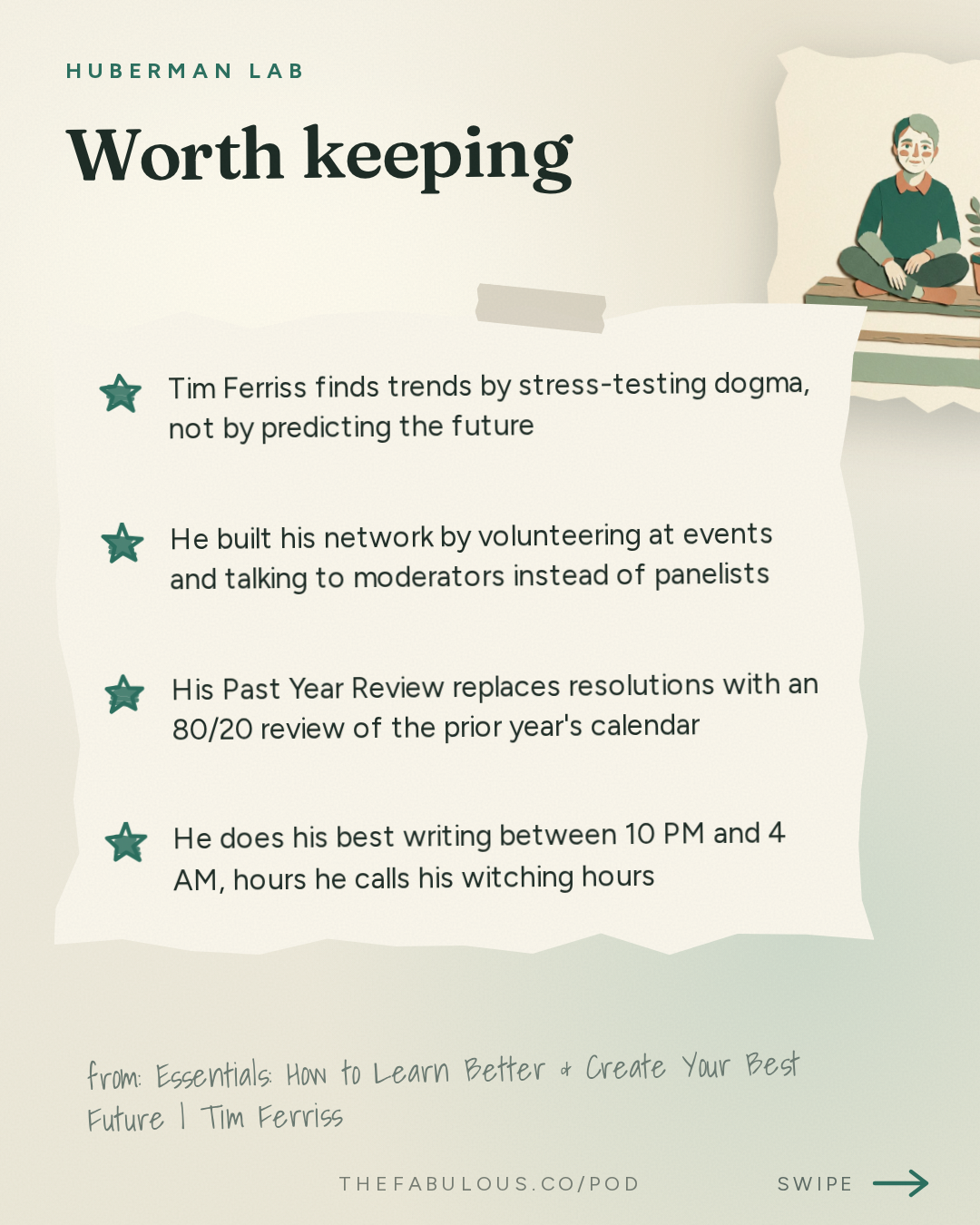
- Tim Ferriss finds trends by stress-testing dogma, not by predicting the future
- He built his network by volunteering at events and talking to moderators instead of panelists
- His Past Year Review replaces resolutions with an 80/20 review of the prior year's calendar
- He does his best writing between 10 PM and 4 AM, hours he calls his witching hours
- He turned a near-suicide at Princeton and childhood abuse into public stories that help others
The episode in cards
By the numbers
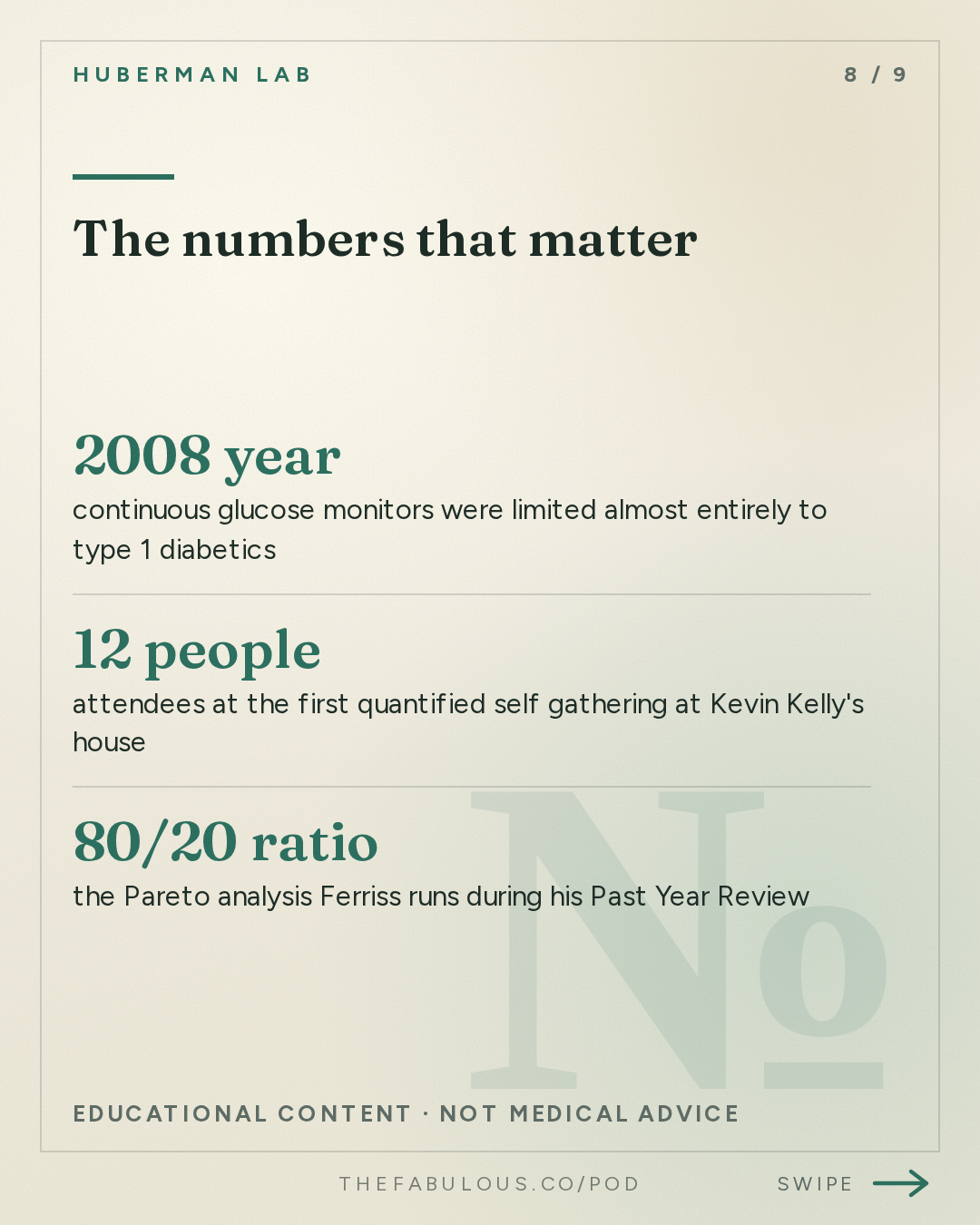
- 2008 year continuous glucose monitors were limited almost entirely to type 1 diabetics
- 12 people attendees at the first quantified self gathering at Kevin Kelly's house
- 80/20 ratio the Pareto analysis Ferriss runs during his Past Year Review
In their words
“If anyone says always, never, should, I pay attention and take note of that. They may very well be right, but if anything is said in absolutes, I like to stress test.”
“You're going to average into the sum holistic whole of the five or six people you spend the most time with, so you should choose that very carefully.”
“The urgent will crush the important.”
“For a lot of depressed people they say, "Yeah, I know. I look at that and I can't fix my state- Mm-hmm ... because I am”
“Take the pain and make it part of your medicine.”
Protocols
-
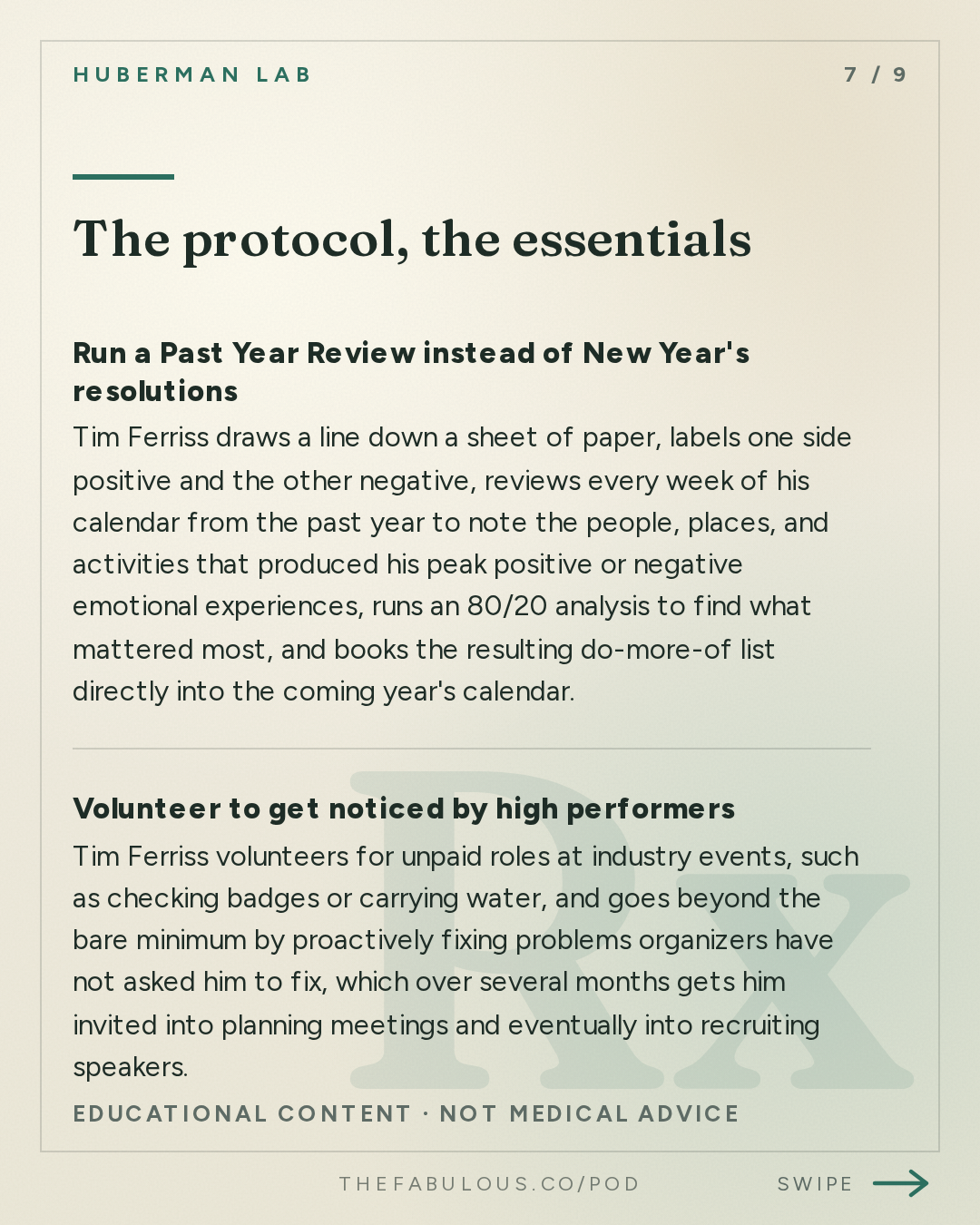
Run a Past Year Review instead of New Year's resolutions
Tim Ferriss draws a line down a sheet of paper, labels one side positive and the other negative, reviews every week of his calendar from the past year to note the people, places, and activities that produced his peak positive or negative emotional experiences, runs an 80/20 analysis to find what mattered most, and books the resulting do-more-of list directly into the coming year's calendar.
Once a year, around New Year's
-
Volunteer to get noticed by high performers
Tim Ferriss volunteers for unpaid roles at industry events, such as checking badges or carrying water, and goes beyond the bare minimum by proactively fixing problems organizers have not asked him to fix, which over several months gets him invited into planning meetings and eventually into recruiting speakers.
Repeated volunteering over several months
-
Approach the moderator, not the panelist
Tim Ferriss skips the panelists who get rushed after a talk and instead introduces himself to the moderator, thanks them genuinely, explains what he is working on, and asks if there is anyone else at the event worth meeting, which the moderator is usually willing to arrange.
At each conference or panel event
-
Protect important work by scheduling it first
Tim Ferriss blocks Mondays for administrative tasks and miscellaneous obligations, schedules focused work for the rest of the week, and puts exercise after lunch, because he believes unscheduled important tasks get crowded out by urgent but less meaningful ones.
Weekly
Questions this episode answers
What is Tim Ferriss's Past Year Review (PYR) and how does it work?
The Past Year Review is Tim Ferriss's alternative to New Year's resolutions: he draws two columns on paper, goes through every week of the previous year's calendar, and lists the people, places, and commitments tied to his best and worst emotional experiences (21:38). He then runs an 80/20 analysis to find the few things that drove most of the good or bad, and books the positive items directly into next year's calendar (22:18).
How does Tim Ferriss recommend building a network with no connections?
Ferriss says to move to a high-density city for at least three months, then volunteer for unpaid roles at industry events and do more than the job requires by fixing problems nobody asked about (11:28, 13:07). He also suggests approaching panel moderators instead of panelists after a talk, since moderators are rarely mobbed and are often willing to make introductions (14:23).
When does Tim Ferriss do his best writing?
Ferriss says his peak writing performance happens between 10 PM and 4 AM, hours he calls his witching hours, and that most writers he knows who eventually broke through did their defining work at similarly late or early times when their social world had gone quiet (10:01).
What happened during Tim Ferriss's near-suicide at Princeton?
Ferriss has said he had a specific plan to end his life while at Princeton University, and it was interrupted only because a library hold notice for a book on assisted suicide was mailed to his parents' house due to an address mix-up, prompting a phone call from his mother that snapped him out of it (27:43). He later wrote publicly about the experience and says it has helped save lives (29:54).
Why does Tim Ferriss say formal mentorship requests usually fail?
Ferriss argues that asking someone directly to be a mentor sounds like asking them to be an unpaid, permanent life coach, which makes people uncomfortable and often leads to rejection (18:51). He says mentorship works better when it grows out of a mutually enjoyable friendship rather than a formal, one-sided request (17:32).
What age was Tim Ferriss when he experienced childhood sexual abuse?
Ferriss has said the abuse happened between roughly ages two and four, carried out by a babysitter's son, and that he kept it private for decades before discussing it publicly in a podcast conversation with designer and educator Debbie Millman (30:52).
The full read, in cards
Go deeper
- The 4-Hour Body — Ferriss's book applying self-experimentation and emerging tracking technology, like continuous glucose monitors, to physical performance
- The 4-Hour Workweek — Ferriss's earlier book on lifestyle design, whose breakout success in tech he traces to relationships built through in-person networking in San Francisco
Mentioned
Tim Ferriss · The 4-Hour Body · The 4-Hour Workweek · Kevin Kelly · Dexcom · William Gibson · Shopify · Duolingo · Jack Canfield · Matt Mullenweg · Debbie Millman · Princeton
More from this show and category
Eckhart Tolle's Power of Now Explained
Eckhart Tolle tells Andrew Huberman that presence starts with sensory attention, which quiets thought and opens a deeper self beneath the ego. Tolle argues the ego forms from childhood naming and conceptualizing, and he offers a simple protocol: listen to silence in a room to shift from thinking into awareness, the source of mastery, flow, and resilience.
How Nicotine Affects the Brain and How to Quit
Nicotine itself is not a carcinogen; it is a cholinergic molecule that spikes dopamine, acetylcholine, and norepinephrine, producing a brief window of alert-but-relaxed focus (24:55). The brief lays out why vaping is more addictive than smoking and why cold turkey fails 95% of the time, then walks through hypnosis, bupropion, and staggered nicotine replacement as evidence-backed ways to quit.
Paul Stamets on Mushrooms, Immunity and Psilocybin
Mycologist Paul Stamets argues that mushroom mycelium, the thread-like network fungi use to digest food, can upregulate human immunity and brain plasticity. He cites COVID trials where Agarikon and Turkey Tail tripled antibody levels (34:37) and cut symptom duration by 5.1 days (38:19), plus psilocybin data on addiction and depression.

Mary Helen Immordino-Yang on Emotion and Learning
Psychologist Mary Helen Immordino-Yang says emotion is the substrate of thought, not a distraction from it. What a student feels about a topic, not just the grade, determines what actually gets learned, and she traces this from infant attachment through cultural perception to a call for project-based schooling over standardized tests.
