How Nicotine Affects the Brain and How to Quit
Essentials: Nicotine's Effects on the Brain & Body & How to Quit Smoking or Vaping
The brief
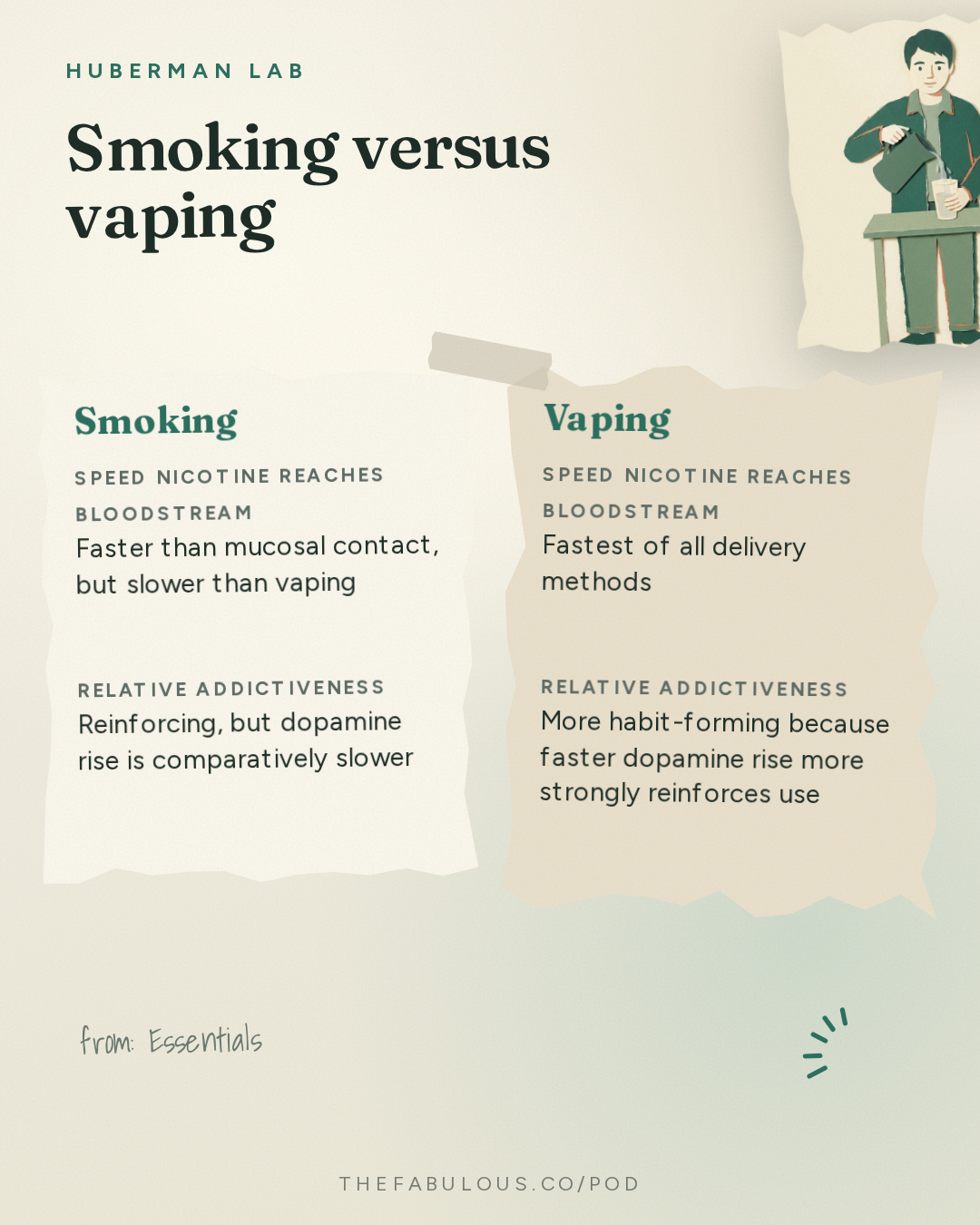
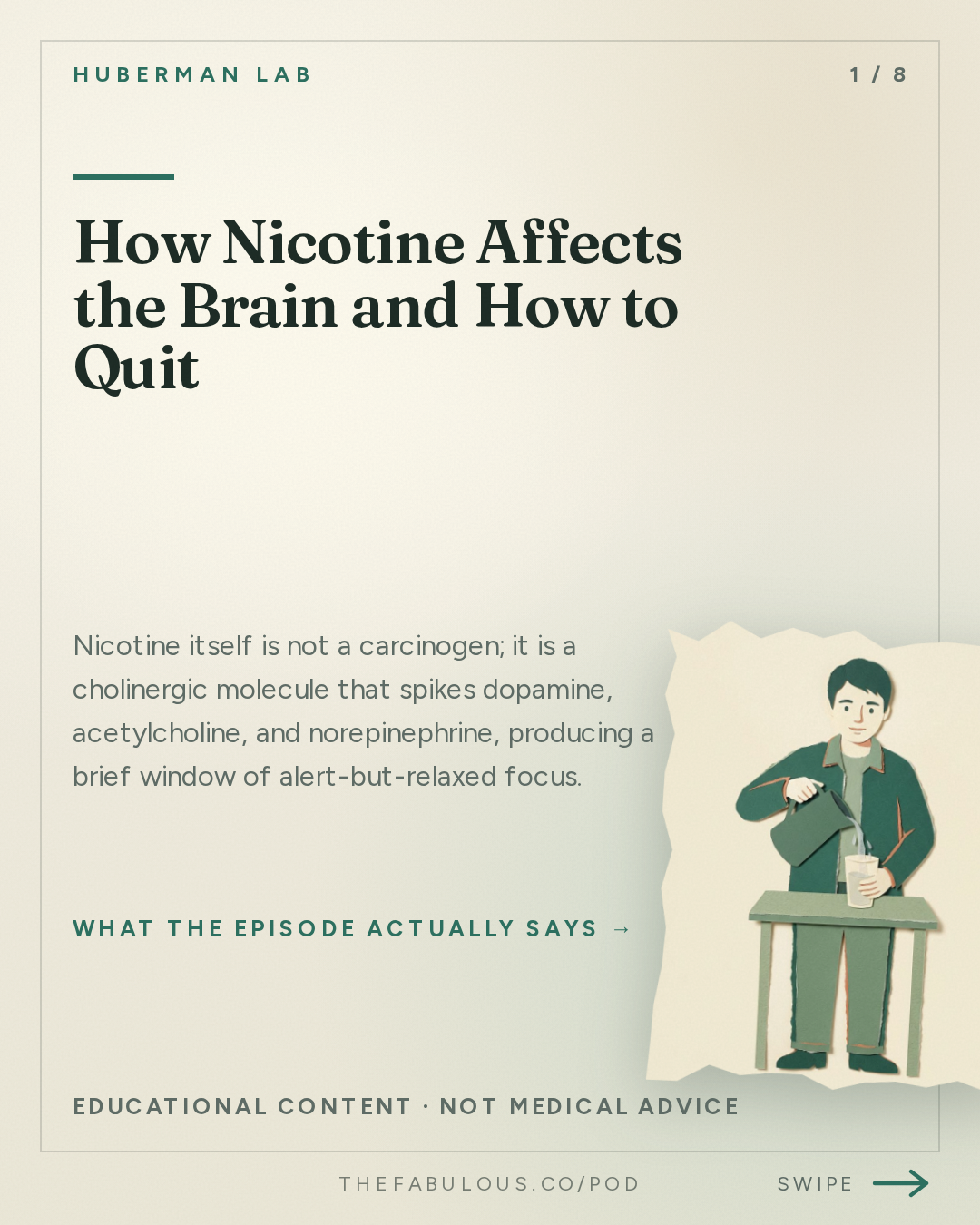
Nicotine itself is not a carcinogen; it is a cholinergic molecule that spikes dopamine, acetylcholine, and norepinephrine, producing a brief window of alert-but-relaxed focus (24:55). The brief lays out why vaping is more addictive than smoking and why cold turkey fails 95% of the time, then walks through hypnosis, bupropion, and staggered nicotine replacement as evidence-backed ways to quit.
Before there were cigarettes, there were tomatoes. Eggplants and sweet peppers carry trace nicotine too, and the receptors that nicotine binds to in the human brain were not built for tobacco. They were built for acetylcholine, a signaling chemical the body makes on its own. Stanford neurobiologist Andrew Huberman makes this point early and returns to it often: the molecule and the delivery device are two separate stories, and conflating them is how most popular discussions of nicotine go wrong (01:15).
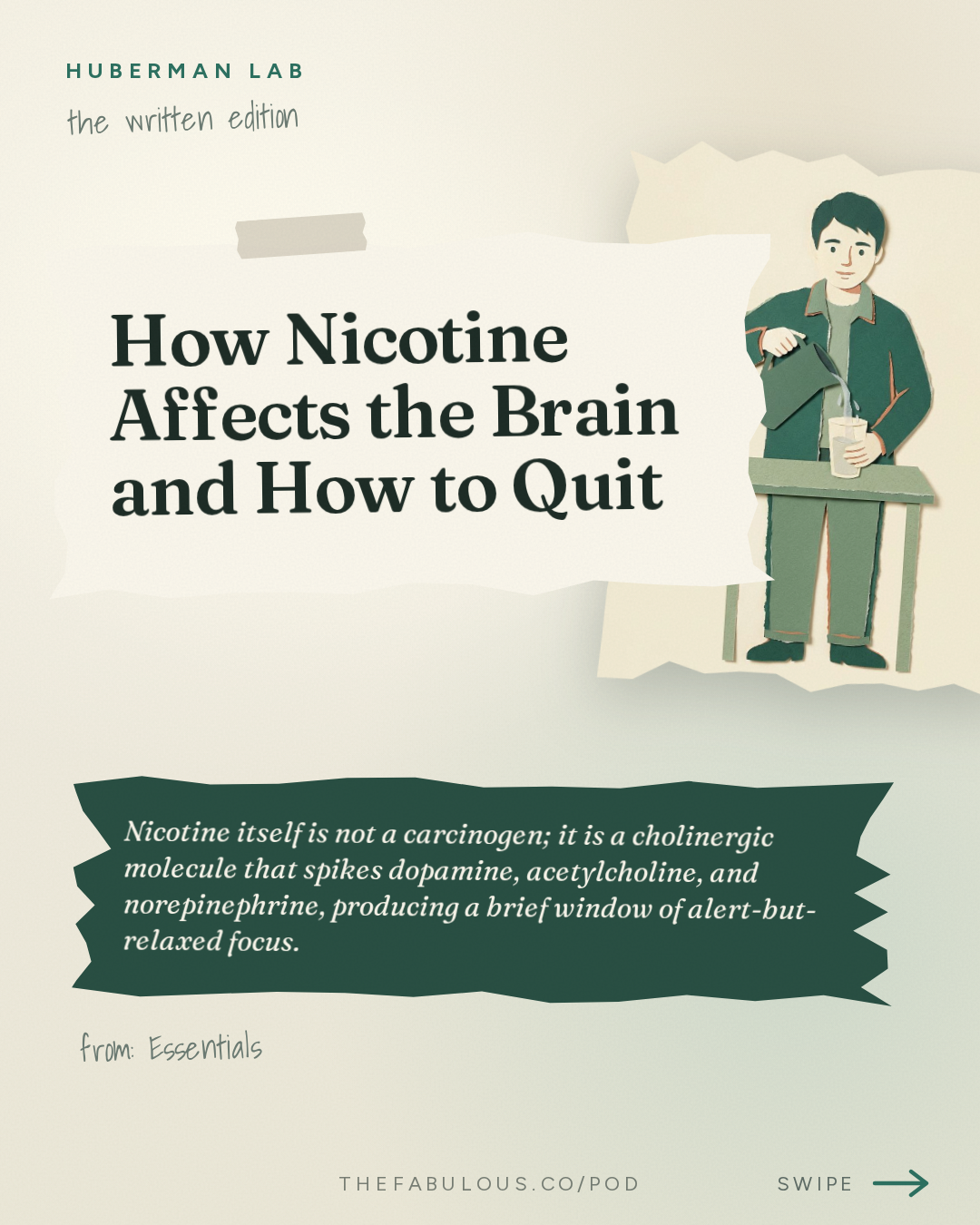
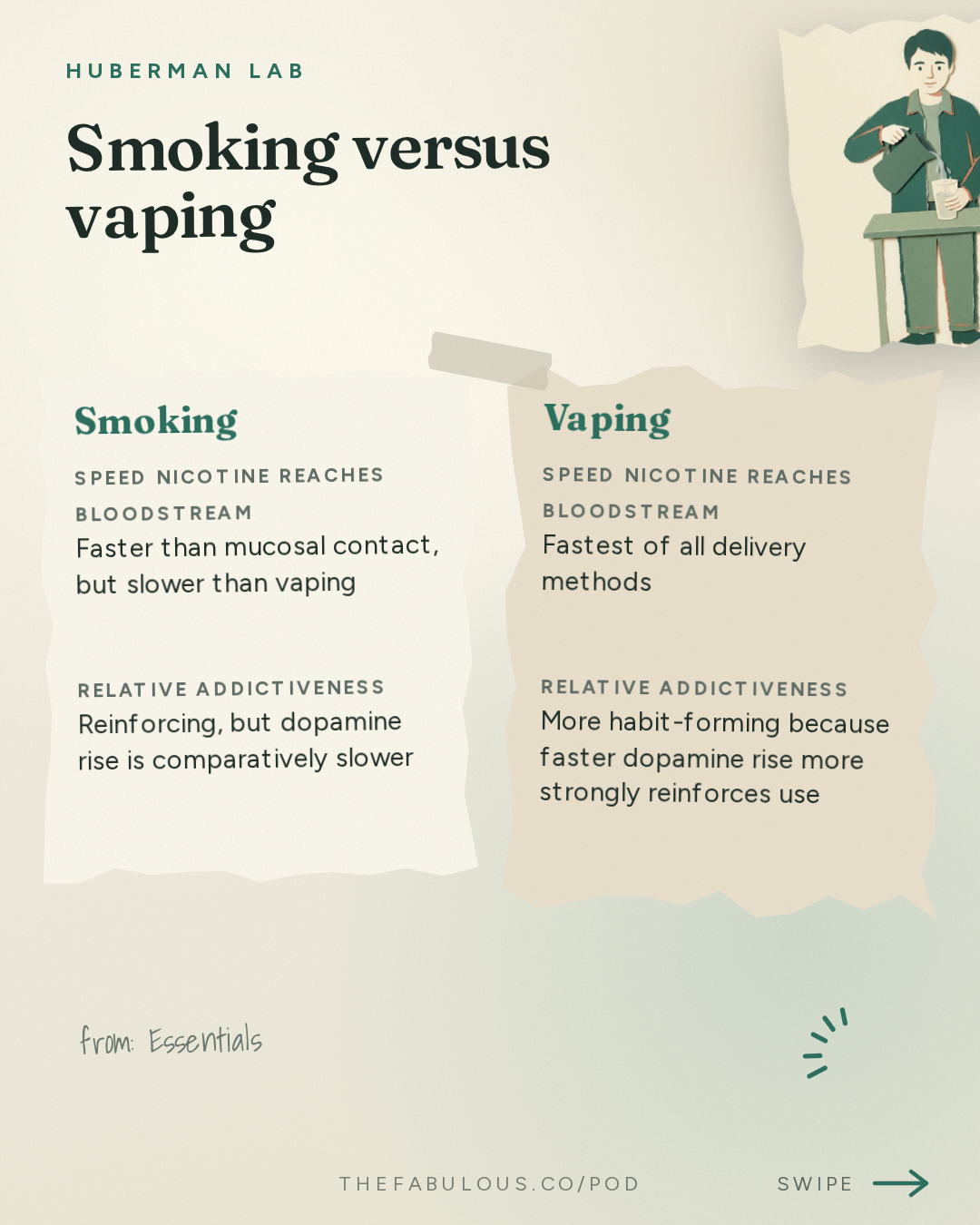
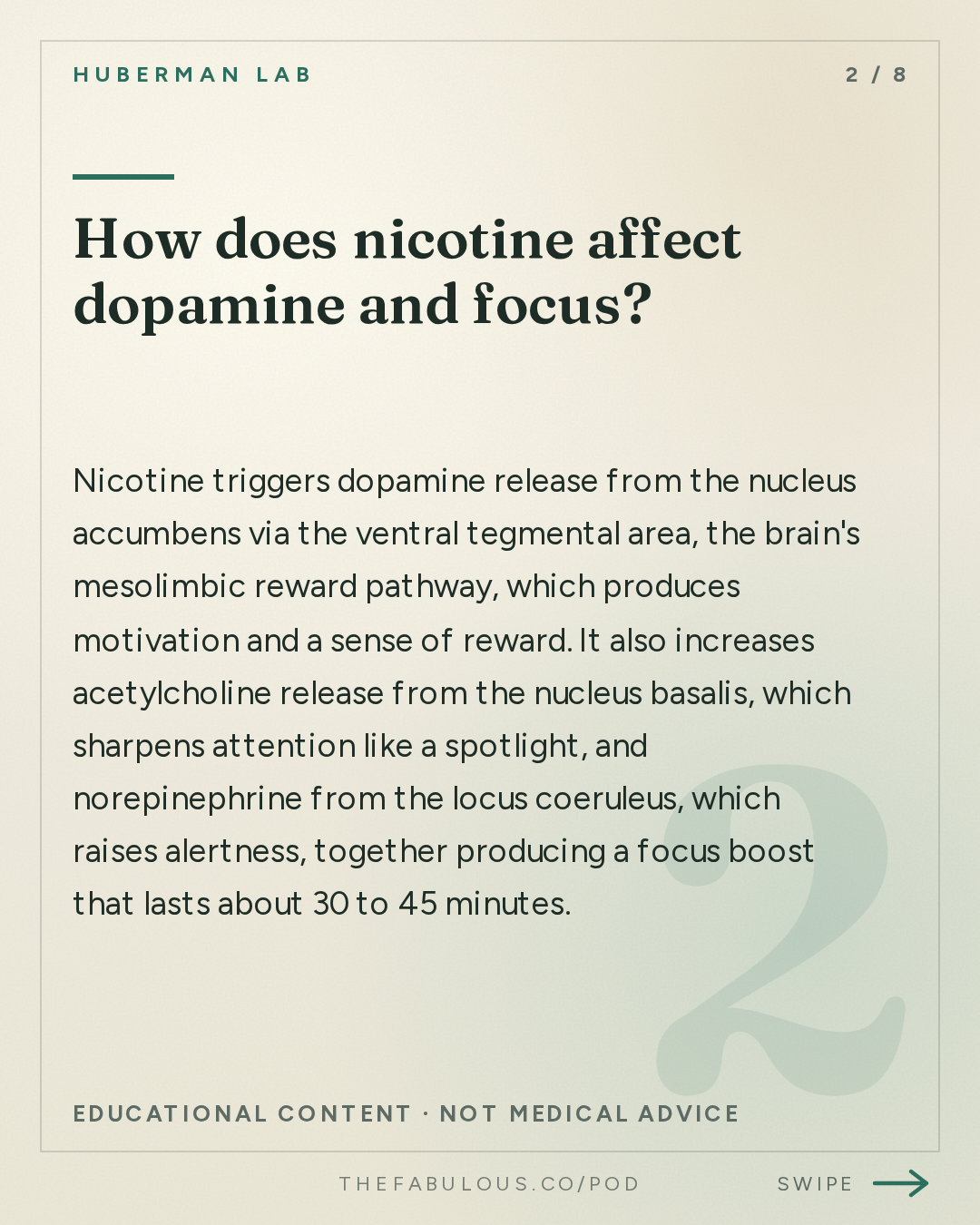
The molecule's story starts with a single receptor type. Nicotine's main effects in the brain run through the alpha four beta two nicotinic receptor, and depending on how it arrives, by smoke, vapor, or contact with mucosal tissue, it reaches the bloodstream in two to fifteen minutes, with vaping the fastest route and direct mucosal contact the slowest (03:54). Once there, it sets off three distinct neurochemical cascades. The first is dopamine, released from the nucleus accumbens via the ventral tegmental area, the circuit known as the mesolimbic reward pathway. This is what makes nicotine feel rewarding and motivating within moments of use (04:49). The second is acetylcholine, released from a cluster of neurons called the nucleus basalis, which Huberman describes as a kind of attentional spotlight: it does not create new neural activity so much as sharpen and highlight whatever circuit is already engaged (07:32). The third is norepinephrine, released from the locus coeruleus, a small brainstem structure that governs arousal and alertness. Together, these three systems explain why nicotine can make someone feel focused, motivated, and awake almost simultaneously (08:54).
That cognitive lift is real but short. The enhancement in attention and concentration lasts roughly thirty to forty-five minutes, tracking nicotine's own fast pharmacokinetics (08:00). What makes the state unusual is the mismatch between mind and body: the brain is alert while skeletal muscle relaxes, a combination Huberman calls close to ideal for mental work and close to the opposite of ideal for physical performance.
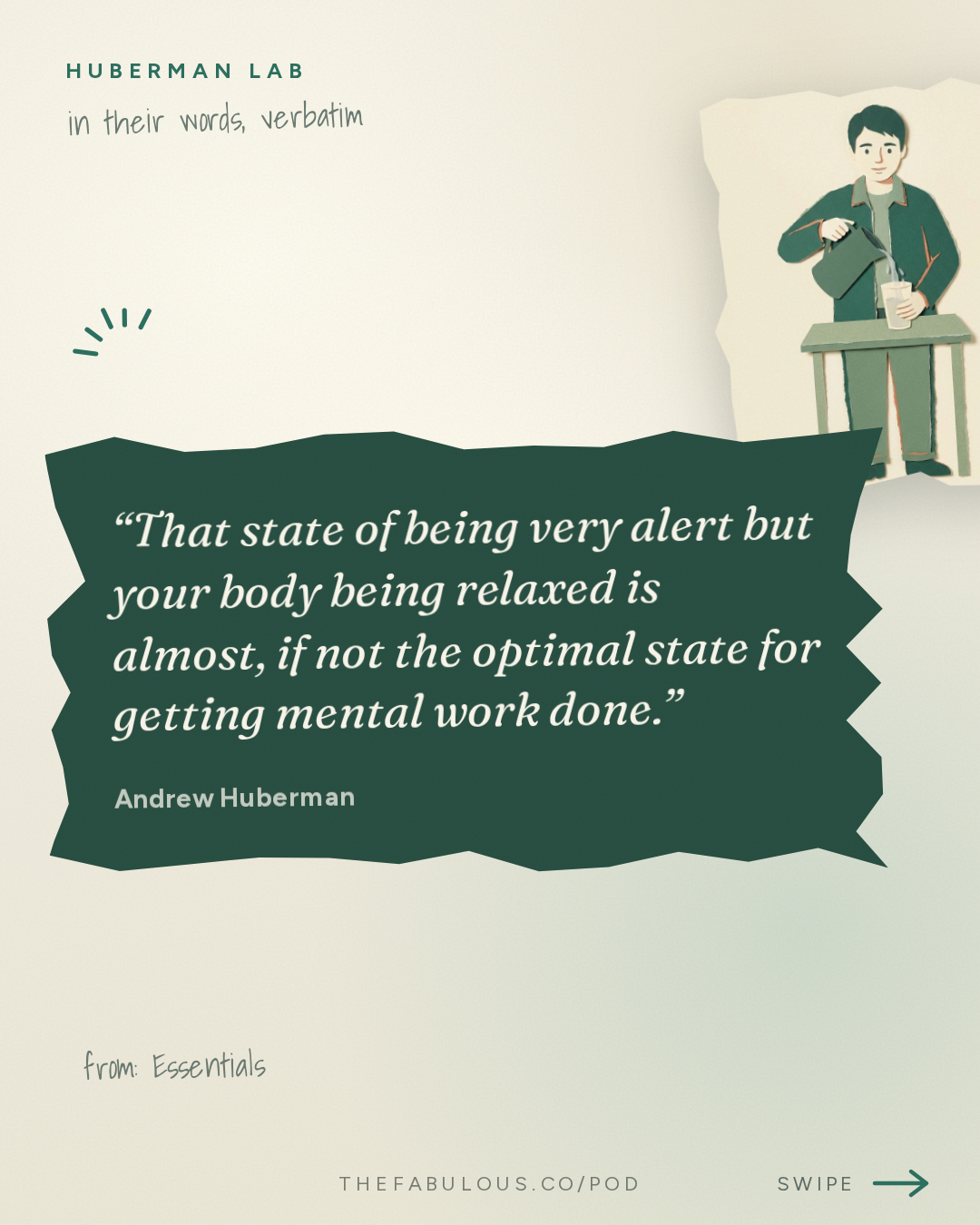
"That state of being very alert but your body being relaxed is almost, if not the optimal state for getting mental work done." — Andrew Huberman [13:13]
There is a fourth, smaller effect worth naming because it explains a common side effect of quitting: appetite suppression. Nicotine binds receptors on POMC neurons in the hypothalamus, increasing their activity and curbing hunger, while also nudging metabolism up by roughly two to five percent, a transient and modest bump rather than a weight-loss mechanism (11:20). This is why so many people who quit smoking report gaining weight: the appetite brake nicotine was applying simply releases.
The Body's Invoice
Nicotine raises heart rate, blood pressure, and the force of each heartbeat by activating the sympathetic nervous system, the body's readiness system. It also constricts blood vessels, which is why smoking and vaping are linked to reduced penile girth and damage to the endothelial cells that line blood vessels throughout the body (12:17). Those same endothelial cells, when damaged broadly, raise the odds of peripheral vascular disease, heart attack, stroke, and measurable cognitive decline, the last of which is almost paradoxical given nicotine's short-term cognitive benefits. The explanation is that the brain is the body's most metabolically demanding organ, and chronic vascular damage from smoking or vaping starves it over time, producing working-memory lapses that offset any momentary focus boost (19:28).
The numbers around delivery devices are stark. Cigarettes contain an estimated four thousand to seven thousand distinct chemical toxins, including tar, ammonia, formaldehyde, and carbon dioxide, several of which are established carcinogens (18:03). Dipping or chewing tobacco carries a fiftyfold increase in mouth cancers (14:34). And the mortality math is blunt: every pack of cigarettes smoked per day corresponds to roughly fourteen years of reduced lifespan (18:25). Huberman is careful to separate cause from vehicle here.
"Nicotine is not the cause of cancer. Nicotine is not the carcinogen. It's the other things in tobacco or associated with the nicotine delivery device." — Andrew Huberman [21:29]
Vaping does not burn tobacco, so it avoids some of the combustion toxins in cigarettes, but it introduces a different problem: speed. Nicotine from a vape pen enters the bloodstream faster than from a cigarette, and that speed, not just the peak amount of nicotine, is what drives dopamine release in the mesolimbic pathway. A faster rise in dopamine makes a substance more habit-forming, which is why Huberman draws an unflattering comparison.
"Vaping and crack cocaine are so similar because of the speed of entry of nicotine into the bloodstream." — Andrew Huberman [22:31]
He frames addiction itself in functional terms:
"A progressive narrowing of the things that bring you pleasure." — Andrew Huberman [23:59]
That narrowing is not abstract. More than one billion people globally consume tobacco, and in surveys of cigarette smokers, seventy percent say they want to quit (20:14). Given the brain chemistry involved, wanting to quit and succeeding are very different problems. Huberman also flags an age threshold: because the brain continues developing circuitry related to motivation and attention into the mid-twenties, he suggests avoiding nicotine entirely before age twenty-five, with any cognitive-enhancement use reserved for adults whose developmental plasticity has largely settled (15:25).
Quitting Is a Dopamine Problem
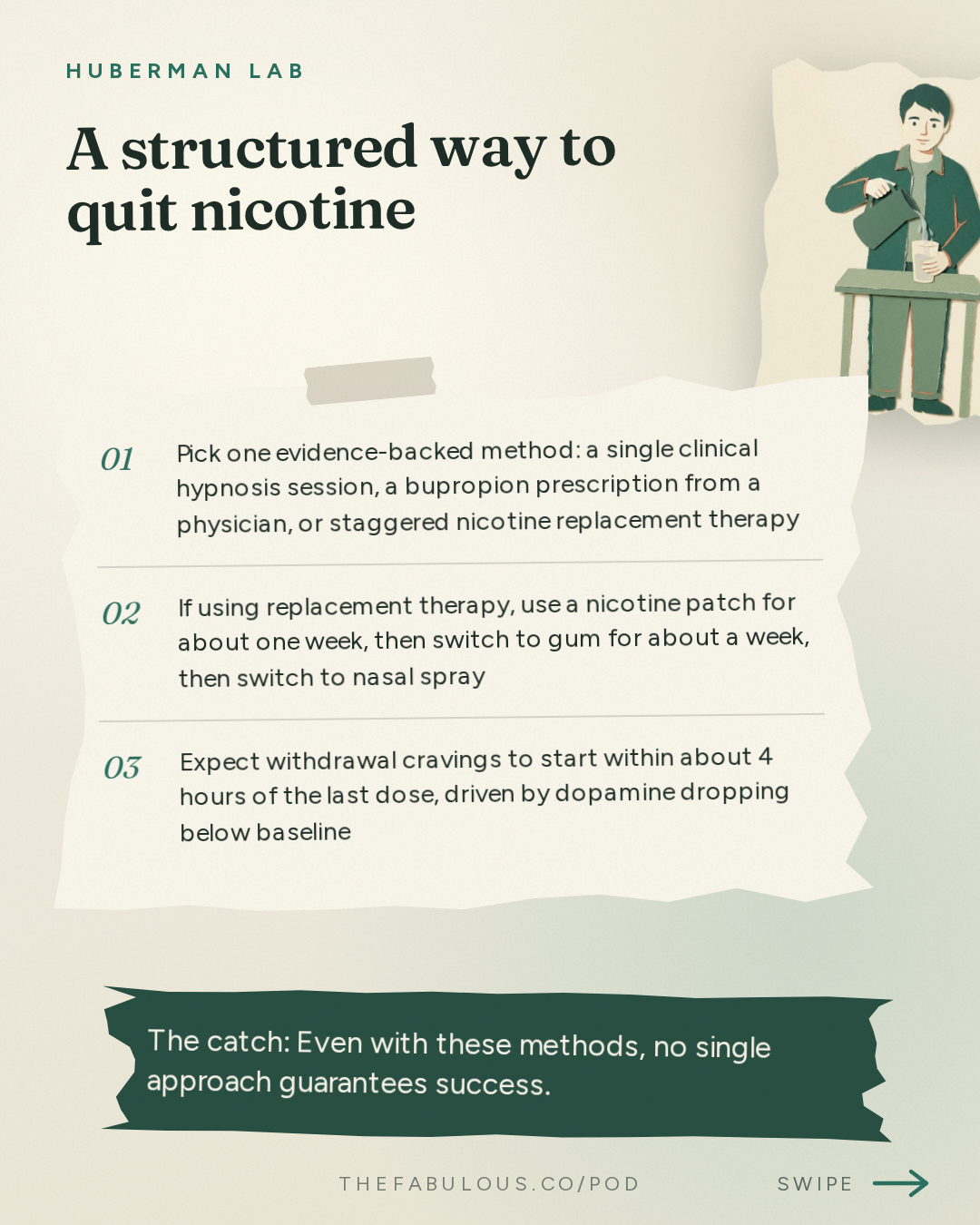
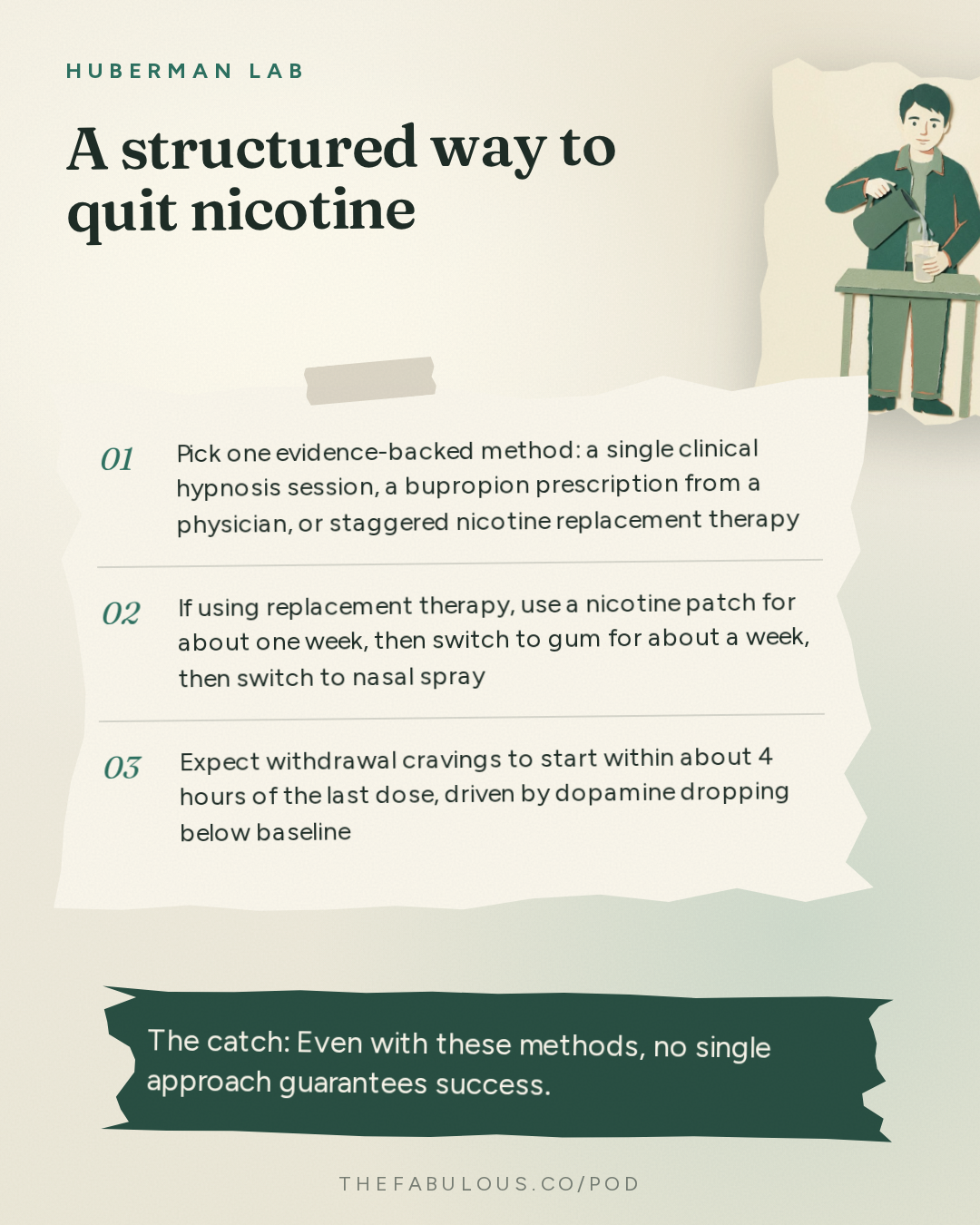
Withdrawal is not vague discomfort. It has a clock. Agitation and craving can begin as soon as four hours after the last dose of nicotine, driven by dopamine levels dropping below their normal baseline, not just failing to rise (20:43). Over days or weeks of regular nicotine use, the brain's homeostatic systems quietly lower baseline mood and arousal to compensate for the artificial boosts. The day someone quits, that lowered baseline is still in effect, nicotine is not there to lift it, and the net result is feeling worse than before ever starting. Relapse rates reflect this: seventy-five percent of people who quit relapse within the first week, and overall unassisted quit attempts fail ninety-five percent of the time, with about sixty-five percent of the rare successes relapsing again within a year (24:55).
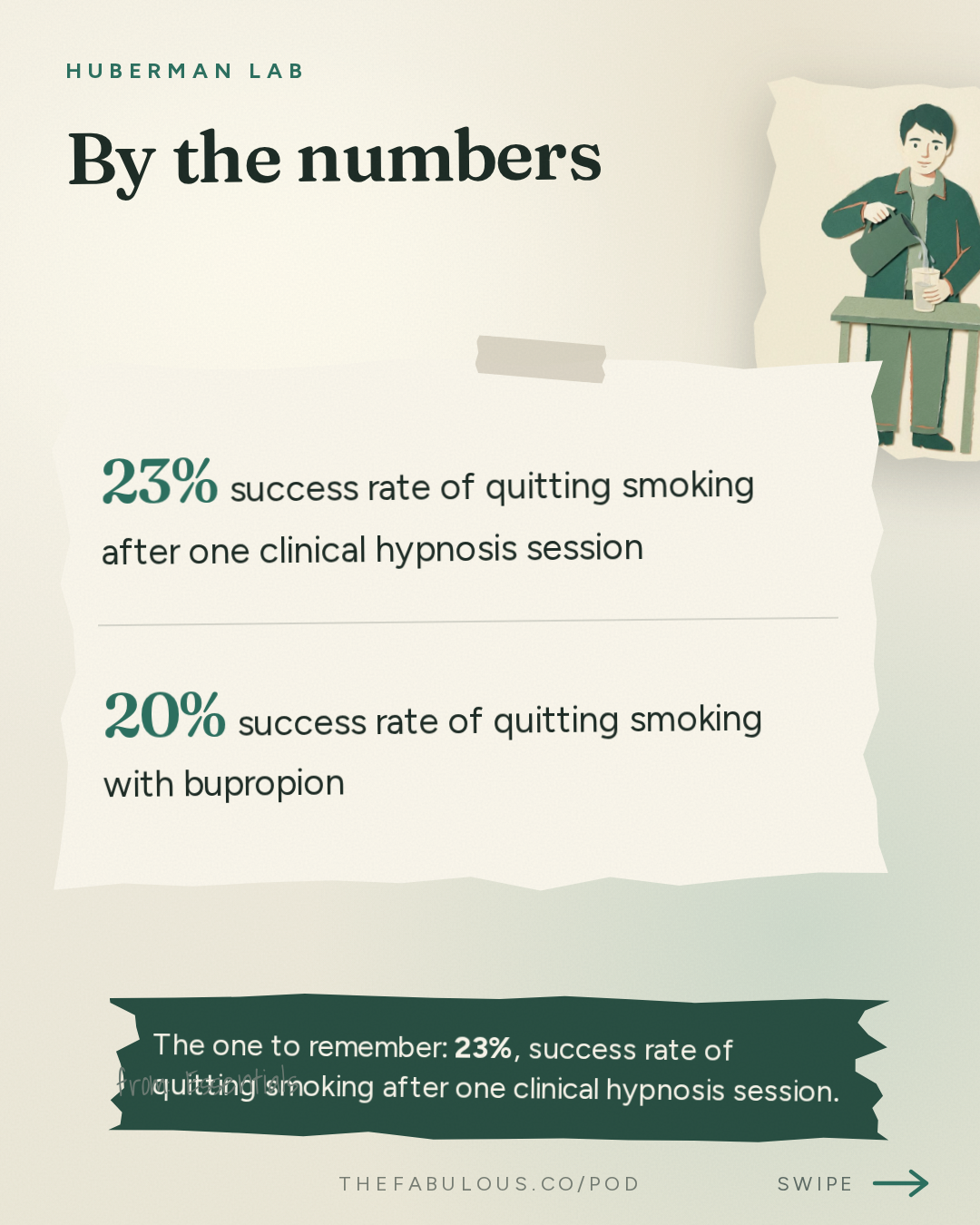
Against that backdrop, a handful of approaches do measurably better than cold turkey. One is clinical hypnosis developed in research led by David Spiegel, a Stanford psychiatrist and the university's associate chair of psychiatry, dating to a 1993 study and replicated many times since. A single hypnosis session brought the success rate for quitting smoking to twenty-three percent, more than four times the five percent baseline, and Huberman notes there is no reason to think the effect would not carry over to vaping (27:40). A second option is bupropion, sold under the brand name Wellbutrin, which raises dopamine and, to a lesser degree, epinephrine, helping offset the withdrawal-driven dopamine drop. It moves success rates to roughly twenty percent, comparable to hypnosis, but it carries a real seizure risk and requires a prescribing physician (29:25). A third is nicotine replacement therapy itself, delivered through patches, gum, or nasal spray rather than smoke or vapor. Rather than picking one method and sticking with it, Huberman points to evidence that rotating through patch, then gum, then nasal spray, roughly a week on each, keeps the body from settling into a single predictable pattern of nicotine absorption, which seems to improve outcomes (31:39).
Because the first week carries the highest relapse risk, Huberman suggests pairing any of these methods with simple, non-nicotine ways to raise dopamine during that window, including cold showers, ice baths, exercise, and positive social contact (33:55). None of these replace nicotine's dopamine spike outright, but they give the nervous system something to work with while its own baseline readjusts. He adds one caution worth remembering for anyone who has quit: drinking alcohol substantially raises the odds of relapsing back into smoking or vaping, a detail easy to overlook amid talk of patches and hypnosis.
What emerges across the whole discussion is not a morality tale about willpower but a fairly precise map of a molecule's effects on three separate brain circuits, and the predictable, almost mechanical way withdrawal unfolds once that molecule is removed. Treating a quit attempt like an engineering problem, with a known timeline, known failure points, and tools matched to each, looks far more promising than simply deciding not to smoke again and hoping that decision holds.
Ask this episode anything
Pod's AI answers from the episode itself, with the minute mark so you can hear it yourself.
Or start with one of these
Ask this episode
Pod's AI listens to the whole episode to answer, and points you to the minute it comes from.
The rest of this answer, and any question after it
Answers come from the episode itself, never from a summary of it.
ContinueKey takeaways
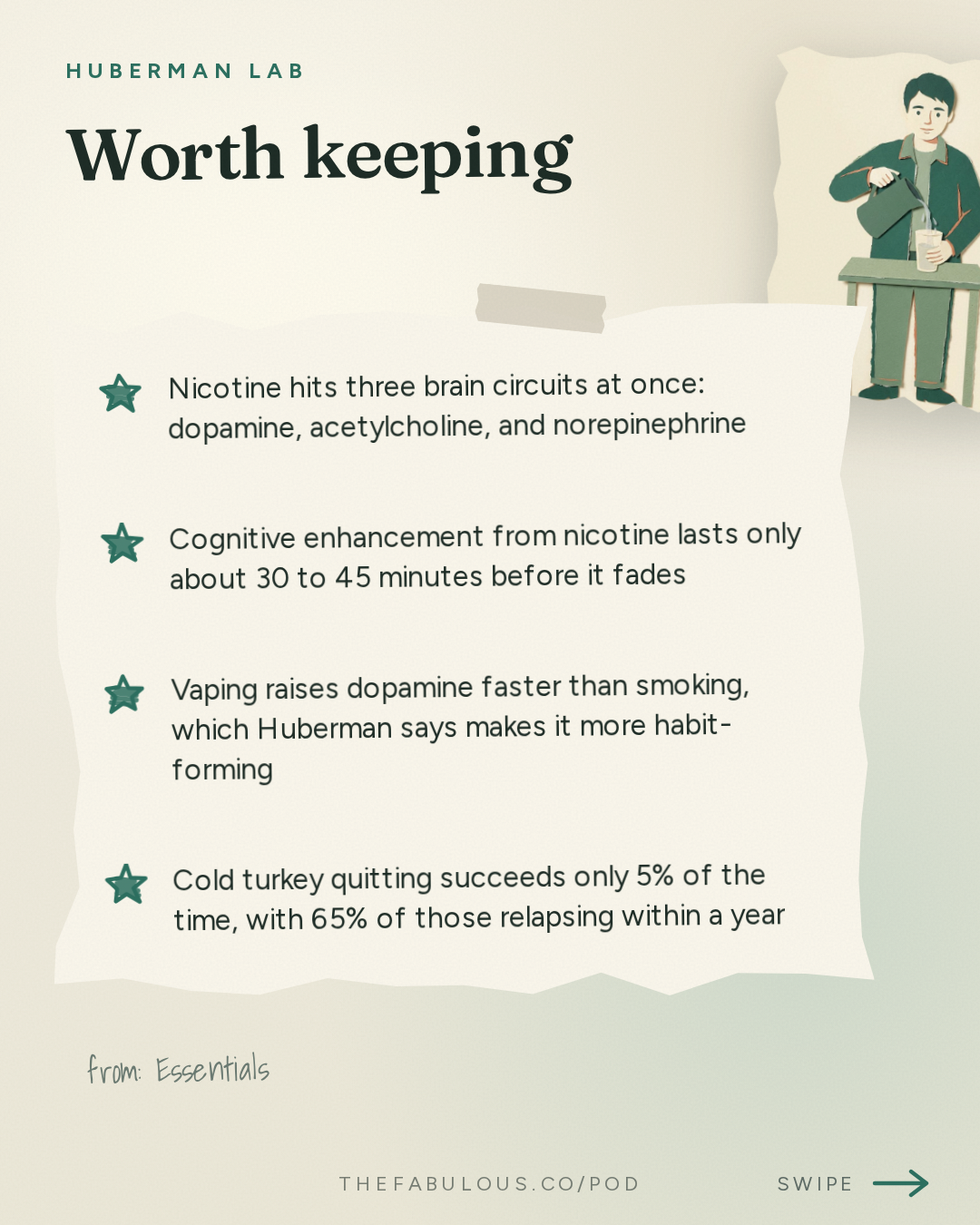
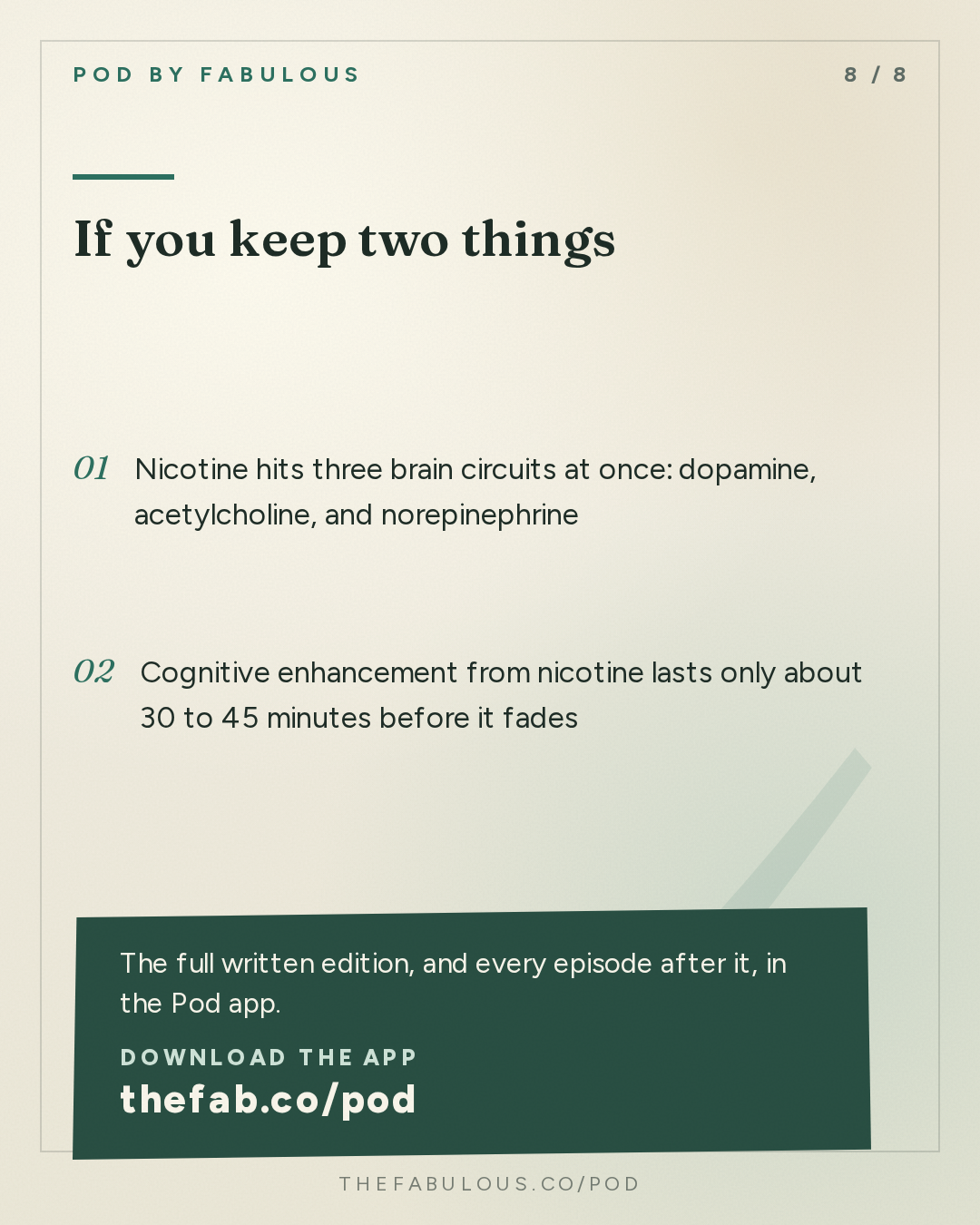
- Nicotine hits three brain circuits at once: dopamine, acetylcholine, and norepinephrine (04:49)
- Cognitive enhancement from nicotine lasts only about 30 to 45 minutes before it fades (08:00)
- Vaping raises dopamine faster than smoking, which Huberman says makes it more habit-forming (22:31)
- Cold turkey quitting succeeds only 5% of the time, with 65% of those relapsing within a year (24:55)
- A single clinical hypnosis session from Stanford psychiatrist David Spiegel lifts quit success to 23% (27:40)
The episode in cards
By the numbers
- 23% percent success rate of quitting smoking after one clinical hypnosis session
- 20% percent success rate of quitting smoking with bupropion
In their words
“Vaping and crack cocaine are so similar is the speed of entry of nicotine into the bloodstream. Both”
“Definition of addiction: a progressive narrowing of the things that bring you pleasure.”
“Nicotine is not the cause of cancer. Nicotine is not the carcinogen. It's the other things in tobacco or associated with the nicotine delivery device.”
“That state of being very alert but your body being relaxed is almost, if not the optimal state for getting mental work done.”
Protocols
-
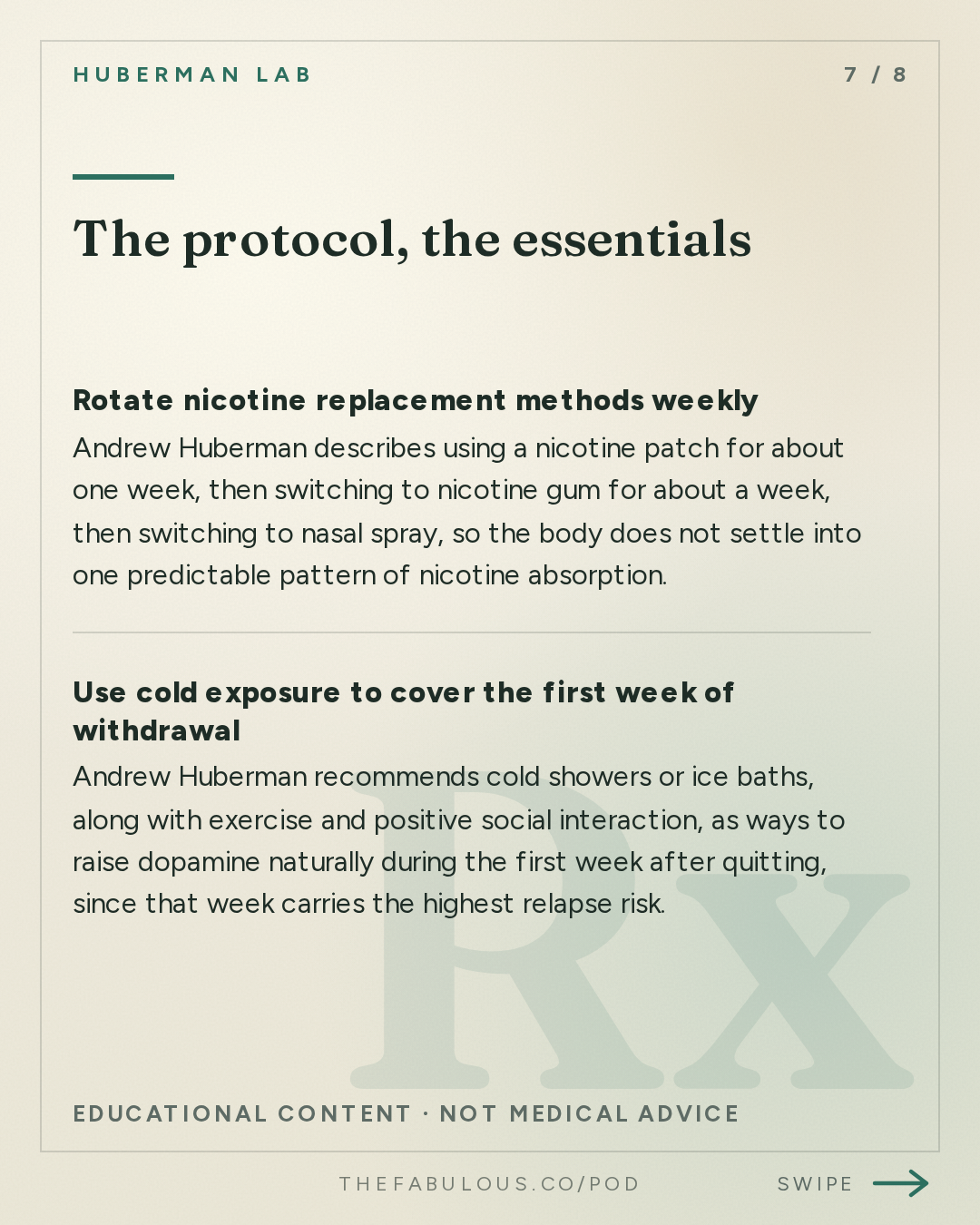
Rotate nicotine replacement methods weekly
Andrew Huberman describes using a nicotine patch for about one week, then switching to nicotine gum for about a week, then switching to nasal spray, so the body does not settle into one predictable pattern of nicotine absorption.
Switch delivery method roughly every week
-
Use cold exposure to cover the first week of withdrawal
Andrew Huberman recommends cold showers or ice baths, along with exercise and positive social interaction, as ways to raise dopamine naturally during the first week after quitting, since that week carries the highest relapse risk.
During the first week after quitting, as needed
-
Consider a single hypnosis session for cessation
Andrew Huberman points to Stanford psychiatrist David Spiegel's clinical hypnosis protocol, which raised smoking cessation success to 23% after just one session, and notes that the same method likely applies to vaping, though it requires finding a qualified practitioner of this specific technique.
One session, with optional monthly or weekly follow-up sessions to maintain the effect
-
Avoid nicotine before age 25
Andrew Huberman advises against nicotine use before age 25, roughly, because brain development and plasticity are still active, and nicotine can interfere with that process.
Ongoing avoidance until approximately age 25
Questions this episode answers
How does nicotine affect dopamine and focus?
Nicotine triggers dopamine release from the nucleus accumbens via the ventral tegmental area, the brain's mesolimbic reward pathway, which produces motivation and a sense of reward (04:49). It also increases acetylcholine release from the nucleus basalis, which sharpens attention like a spotlight, and norepinephrine from the locus coeruleus, which raises alertness, together producing a focus boost that lasts about 30 to 45 minutes (08:00).
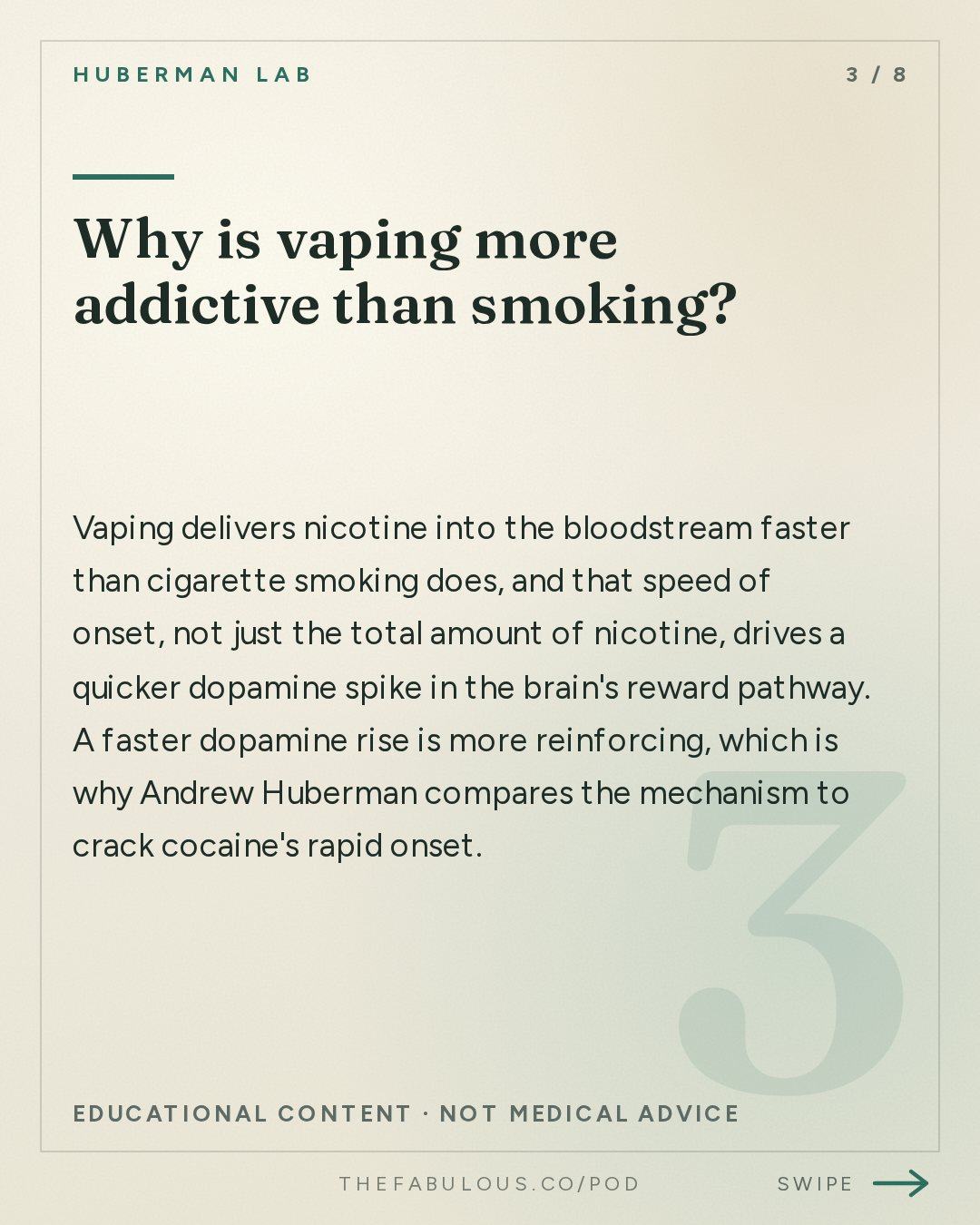
Why is vaping more addictive than smoking?
Vaping delivers nicotine into the bloodstream faster than cigarette smoking does, and that speed of onset, not just the total amount of nicotine, drives a quicker dopamine spike in the brain's reward pathway (22:31). A faster dopamine rise is more reinforcing, which is why Andrew Huberman compares the mechanism to crack cocaine's rapid onset.
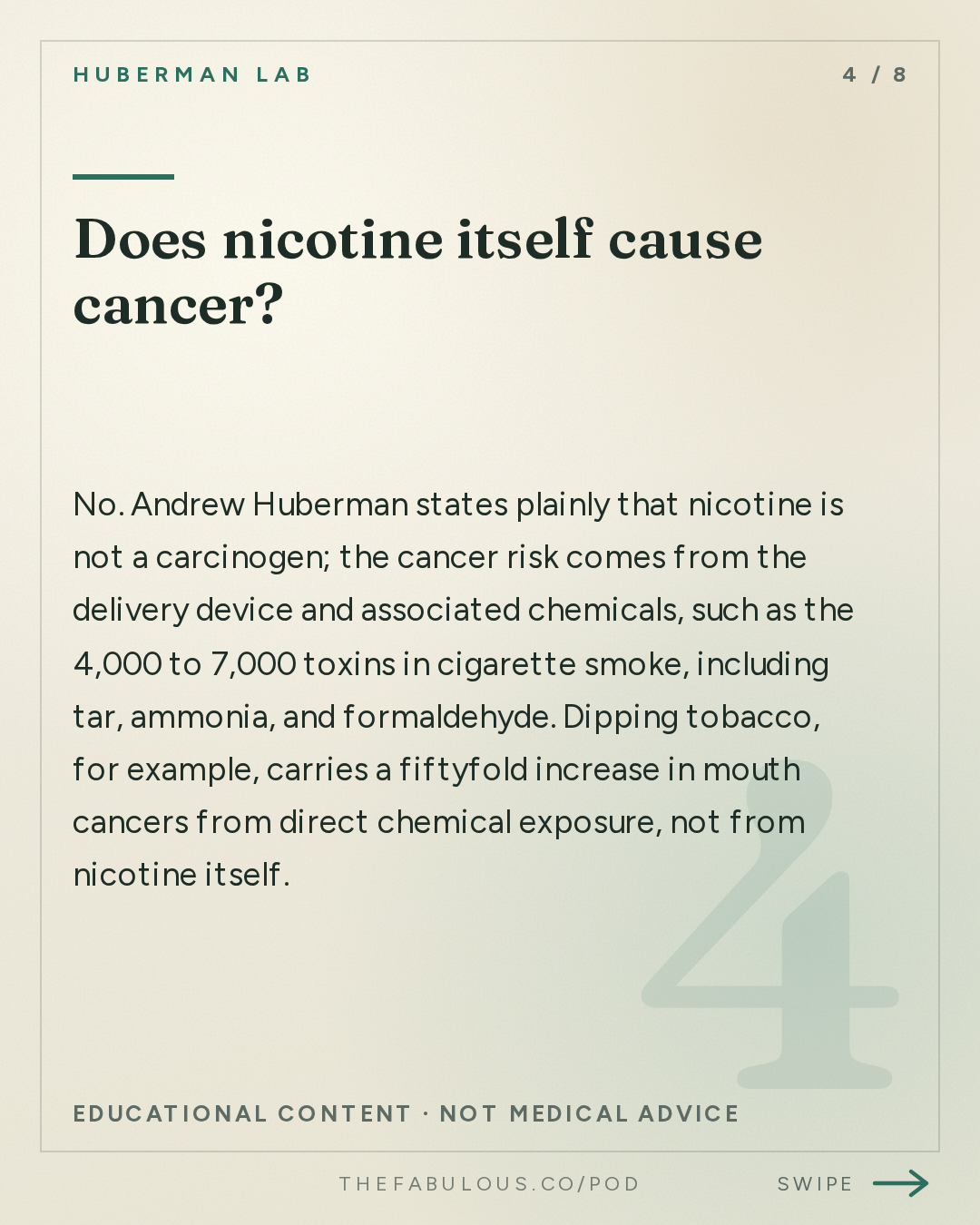
Does nicotine itself cause cancer?
No. Andrew Huberman states plainly that nicotine is not a carcinogen; the cancer risk comes from the delivery device and associated chemicals, such as the 4,000 to 7,000 toxins in cigarette smoke, including tar, ammonia, and formaldehyde (21:29, 18:03). Dipping tobacco, for example, carries a fiftyfold increase in mouth cancers from direct chemical exposure, not from nicotine itself (14:34).
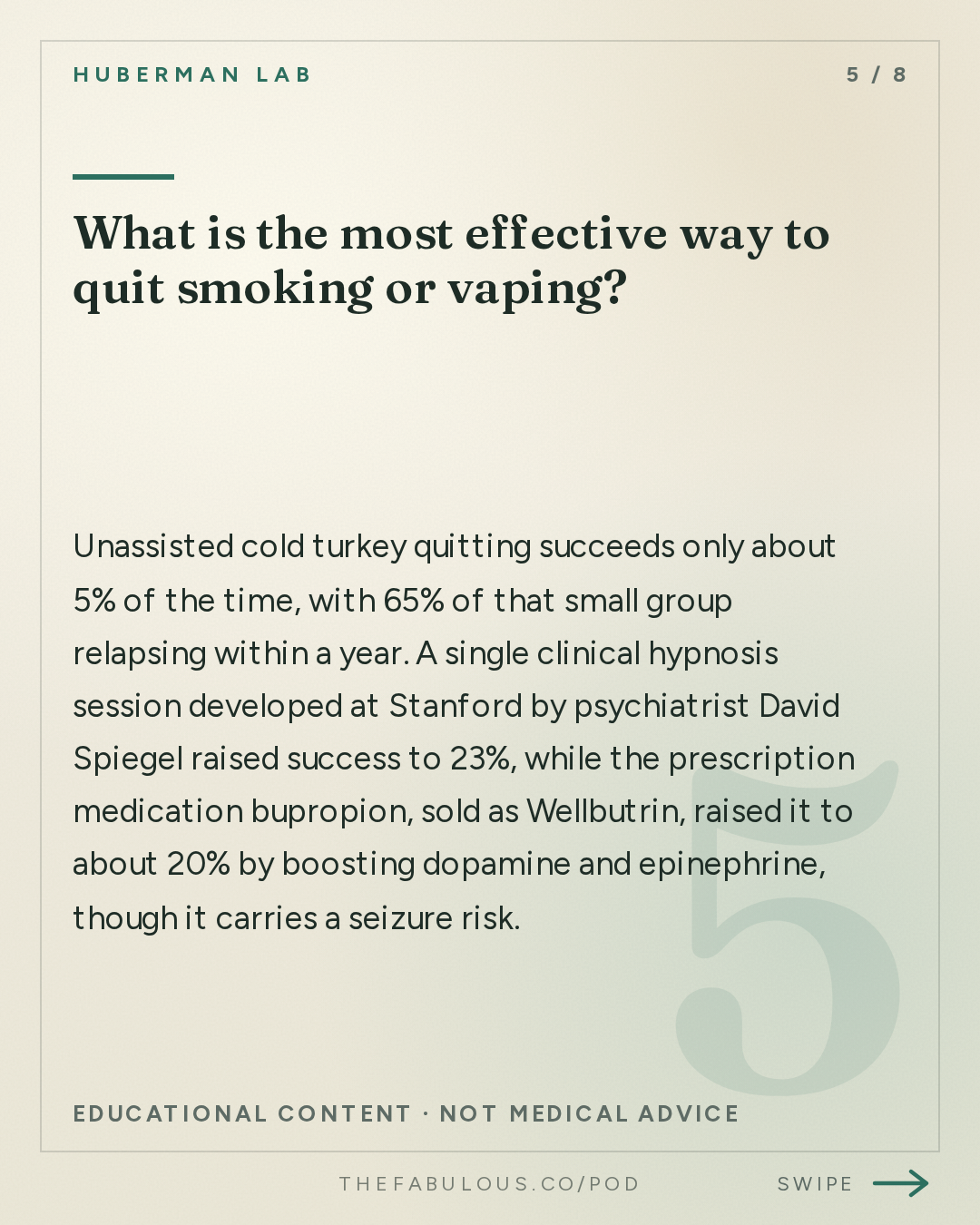
What is the most effective way to quit smoking or vaping?
Unassisted cold turkey quitting succeeds only about 5% of the time, with 65% of that small group relapsing within a year (24:55). A single clinical hypnosis session developed at Stanford by psychiatrist David Spiegel raised success to 23% (27:40), while the prescription medication bupropion, sold as Wellbutrin, raised it to about 20% by boosting dopamine and epinephrine, though it carries a seizure risk (29:25).
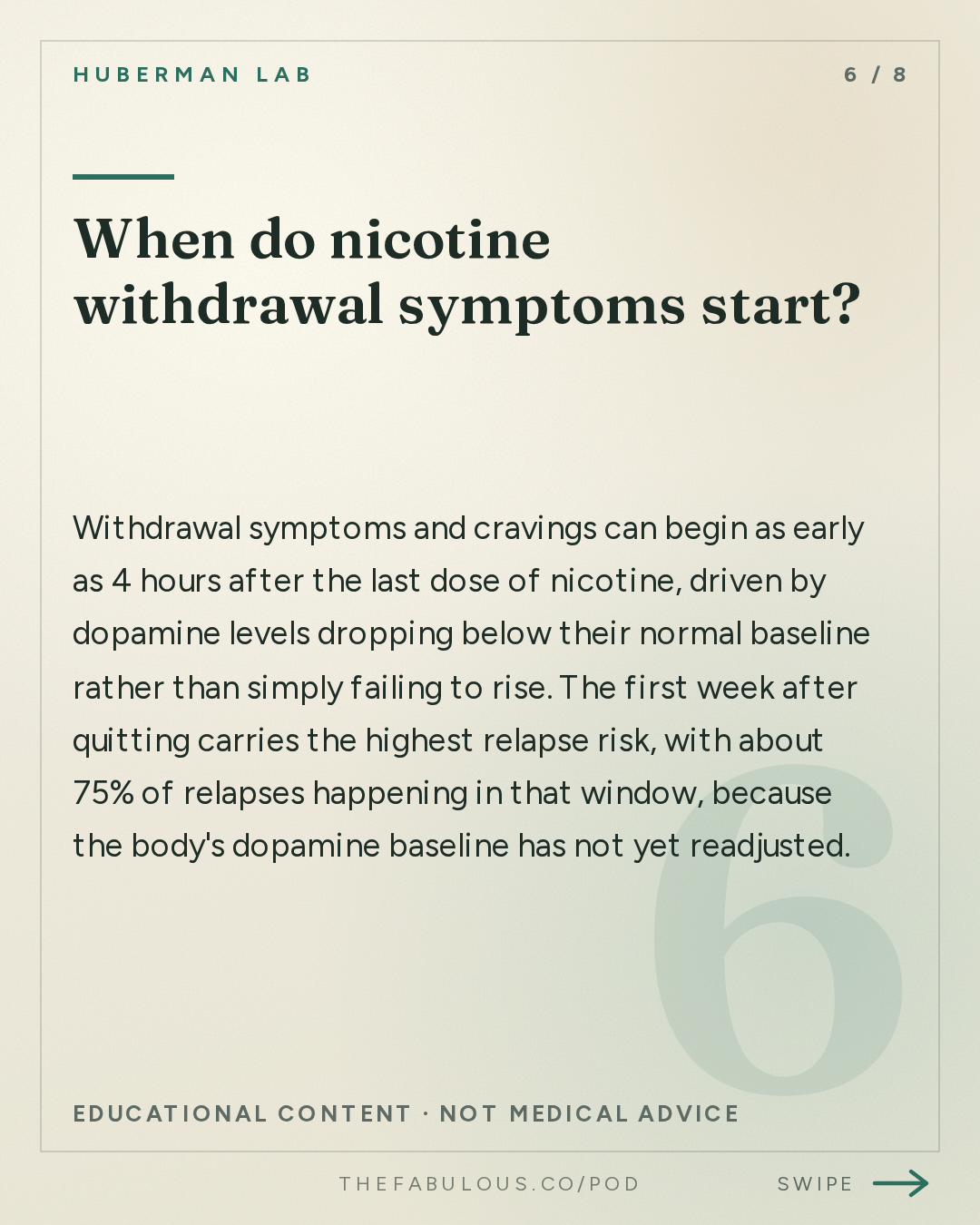
When do nicotine withdrawal symptoms start?
Withdrawal symptoms and cravings can begin as early as 4 hours after the last dose of nicotine, driven by dopamine levels dropping below their normal baseline rather than simply failing to rise (20:43). The first week after quitting carries the highest relapse risk, with about 75% of relapses happening in that window, because the body's dopamine baseline has not yet readjusted (33:00).
Is nicotine safe to use for focus if someone avoids smoking or vaping?
Andrew Huberman suggests any potential cognitive benefit applies mainly to adults around age 25 or older, since the brain is still developing before that point and nicotine can interfere with that process (15:25). He is clear that smoking, vaping, or direct mucosal contact with tobacco are not recommended delivery routes even for adults, given the documented harm to the cardiovascular system and other tissues (16:01).
The full read, in cards
Go deeper
- Pharmacologic Approach to Smoking Cessation: An Updated Review for Daily Clinical Practice — a 2020 review surveying pharmacologic options for smoking cessation, including bupropion and nicotine replacement therapy
- David Spiegel's 1993 hypnosis cessation study — Stanford research showing a single hypnosis session can produce a 23% smoking cessation success rate, later replicated
Mentioned
Andrew Huberman · David Spiegel · Stanford School of Medicine · bupropion · Wellbutrin · alpha four beta two receptor · mesolimbic reward pathway · POMC neurons
More from this show and category
Paul Stamets on Mushrooms, Immunity and Psilocybin
Mycologist Paul Stamets argues that mushroom mycelium, the thread-like network fungi use to digest food, can upregulate human immunity and brain plasticity. He cites COVID trials where Agarikon and Turkey Tail tripled antibody levels (34:37) and cut symptom duration by 5.1 days (38:19), plus psilocybin data on addiction and depression.

Mary Helen Immordino-Yang on Emotion and Learning
Psychologist Mary Helen Immordino-Yang says emotion is the substrate of thought, not a distraction from it. What a student feels about a topic, not just the grade, determines what actually gets learned, and she traces this from infant attachment through cultural perception to a call for project-based schooling over standardized tests.
Anna Lembke: Why Addiction Is Really About Control
Stanford psychiatrist Anna Lembke says the deepest addictions are addictions to control, not substances. She explains the brain's pleasure-pain balance, a 30-day protocol for resetting reward pathways, why the periaqueductal gray links threat and spirituality, and how surrender, codependency, ketamine, and GLP-1 drugs fit the same control framework.

The Søberg Principle: Cold Exposure Protocol
Cold and heat exposure activate brown fat, the tissue that burns fuel for heat instead of storing it, improving insulin sensitivity and lowering inflammation. Danish researcher Susanna Søberg found the minimum effective dose is about 11 minutes of cold water weekly and 57 minutes of sauna weekly, always ending on cold (26:47, 27:43, 33:29).
