
What Is the Underdog Effect in Psychology?
Just Watch Me!
The brief
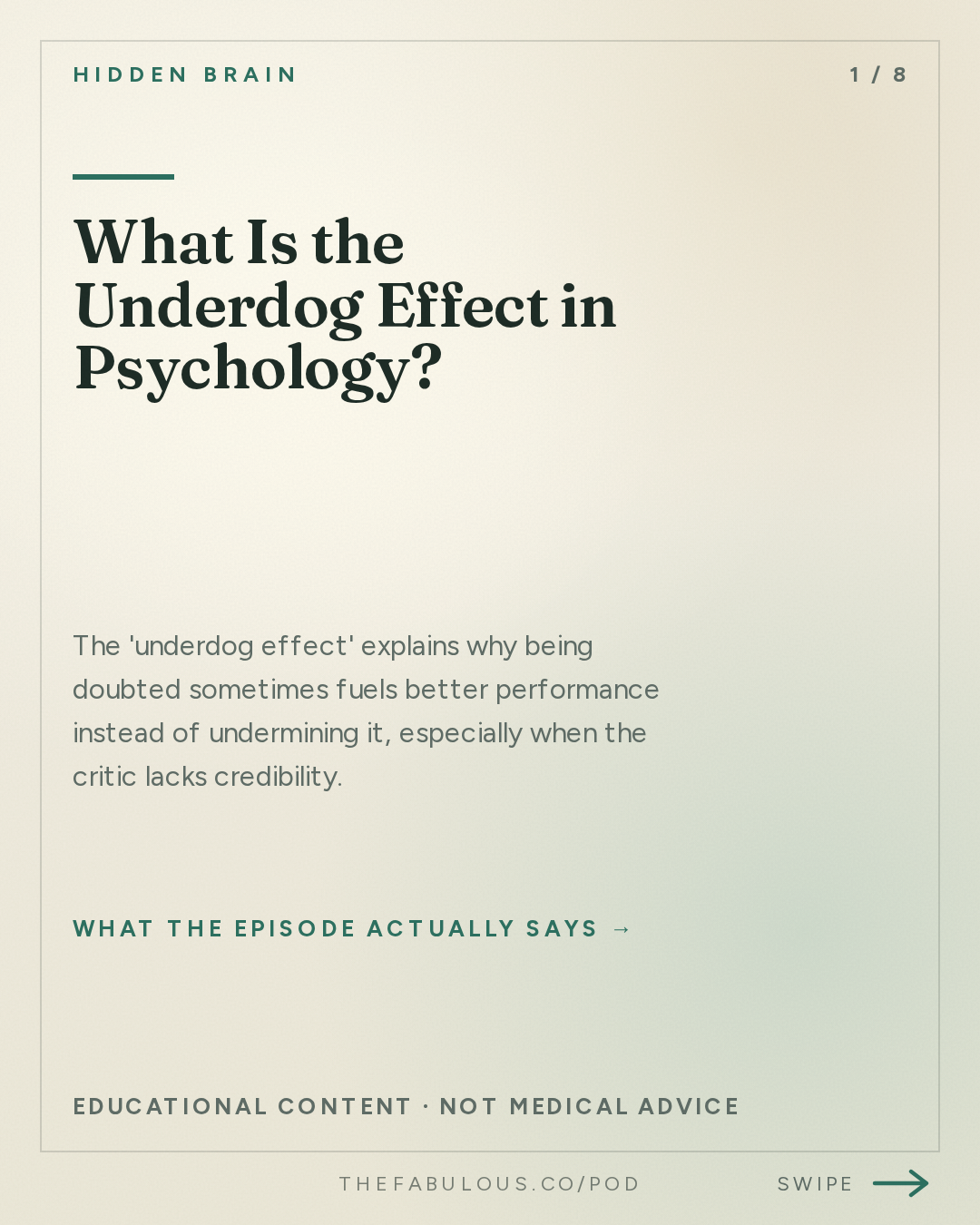
The 'underdog effect' explains why being doubted sometimes fuels better performance instead of undermining it, especially when the critic lacks credibility. Wharton researcher Sameer Nurmohamed and Boston College's Ben Rogers show how reframing setbacks as an underdog story or a hero's journey can raise confidence, job success, and a sense of meaning.
In 1969, a 31-year-old writer named John Kennedy Toole killed himself after a string of publishers rejected his comic novel, telling him it was pointless and poorly built. His mother refused to let the manuscript die. She pushed it on the novelist Walker Percy, who expected to hate it and instead found it brilliant. Eleven years after Toole's death, A Confederacy of Dunces was published. A year after that, it won the Pulitzer Prize (01:25). The rejection that broke one man became, through someone else's stubbornness, the setup for a triumph he never lived to see.
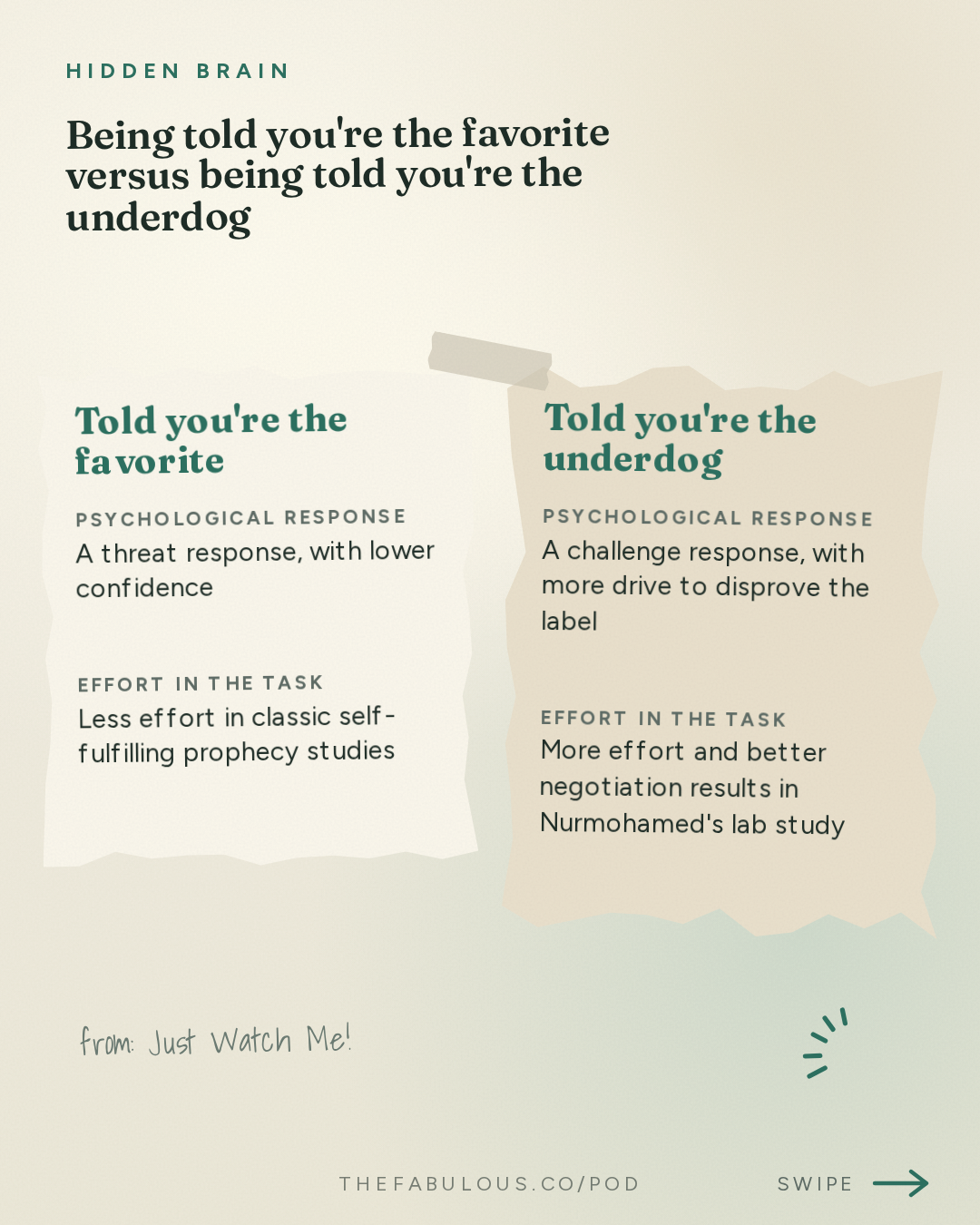
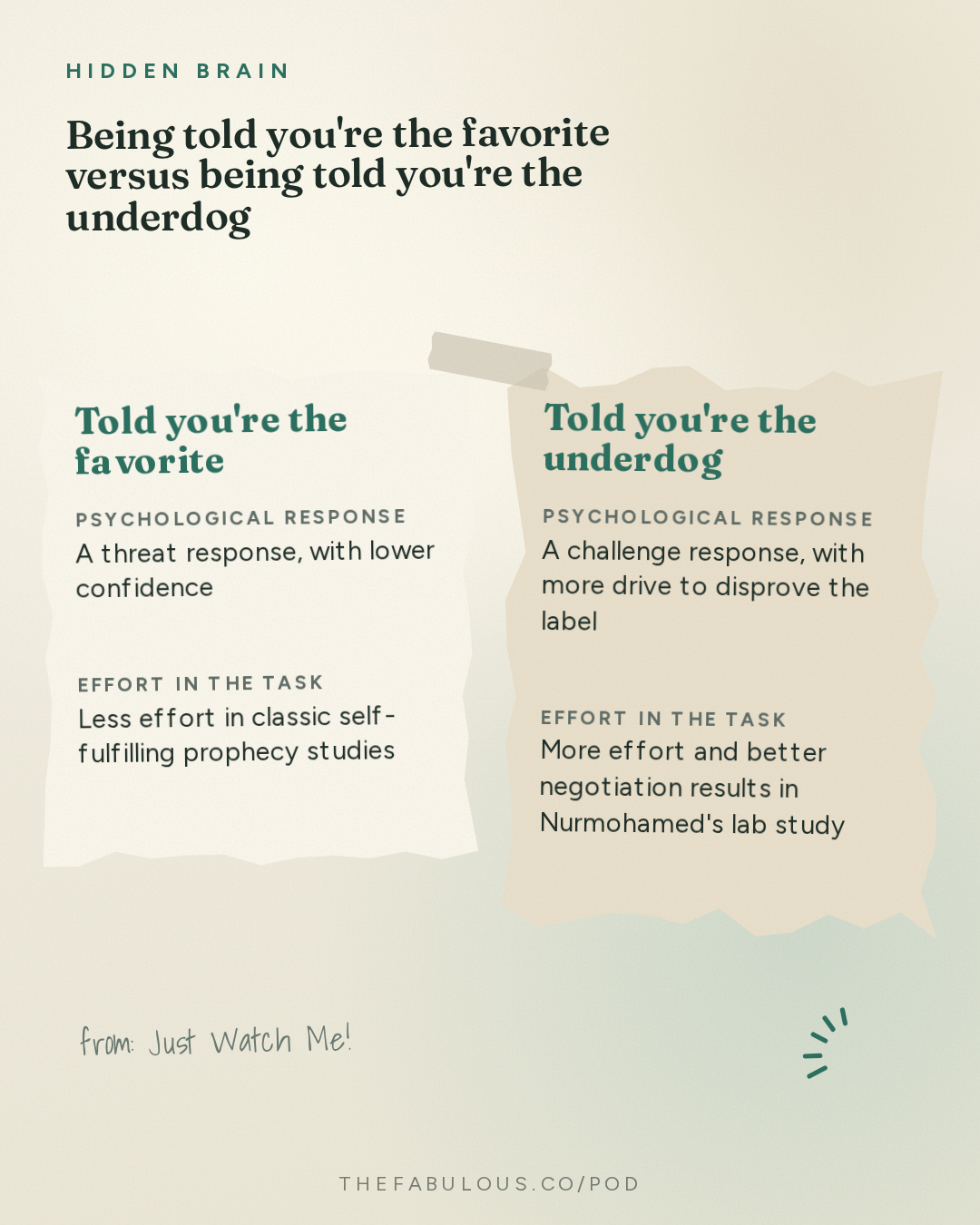
That story sits at an odd angle to the rest of the episode, because most of what follows argues that rejection does not have to break anyone. At the University of Pennsylvania's Wharton School, organizational scientist Sameer Nurmohamed has spent years studying people who were counted out and then did not fold. His favorite example is Tom Brady, picked 199th, in the sixth round of the 2000 NFL draft, after six other quarterbacks (08:24). Brady went on to win seven Super Bowls (10:37) and kept citing that draft slight for the rest of his career. Nurmohamed calls this the underdog effect: being doubted by others sometimes raises performance instead of lowering it.
This cuts against an older and better-known finding, the Pygmalion effect, in which a teacher's or manager's high expectations lift a person's confidence and output (18:25). Its mirror image is the Golem effect: commanders who expect little from their cadets get cadets who perform worse, partly because those commanders quietly give them fewer resources and less attention (19:13). Both effects describe a kind of psychological gravity, where other people's beliefs pull our own behavior toward them. Nurmohamed's puzzle was why his data showed the opposite. In a survey of a thousand employees at a packaging company, the people who felt underestimated by others got higher performance ratings from their own supervisors (20:43).
The answer, it turns out, is credibility. When the Pygmalion and Golem effects were first documented, the low or high expectations usually came from someone with real authority and knowledge, a boss, a commander, a teacher. Nurmohamed found that when the doubter has little credibility, something else kicks in: reactance, the urge to push back against a perceived threat to our freedom, and self-enhancement, the basic drive to protect a positive view of ourselves (23:01). In a lab negotiation study, participants told they were the 'underdog' by researchers who barely knew them did not shrink. They tried harder, and performed better, specifically to prove the forecast wrong (24:45).
Underdogs who have a chip on their shoulder don't perform well in spite of being doubted, they perform well because they've been doubted. (29:08)
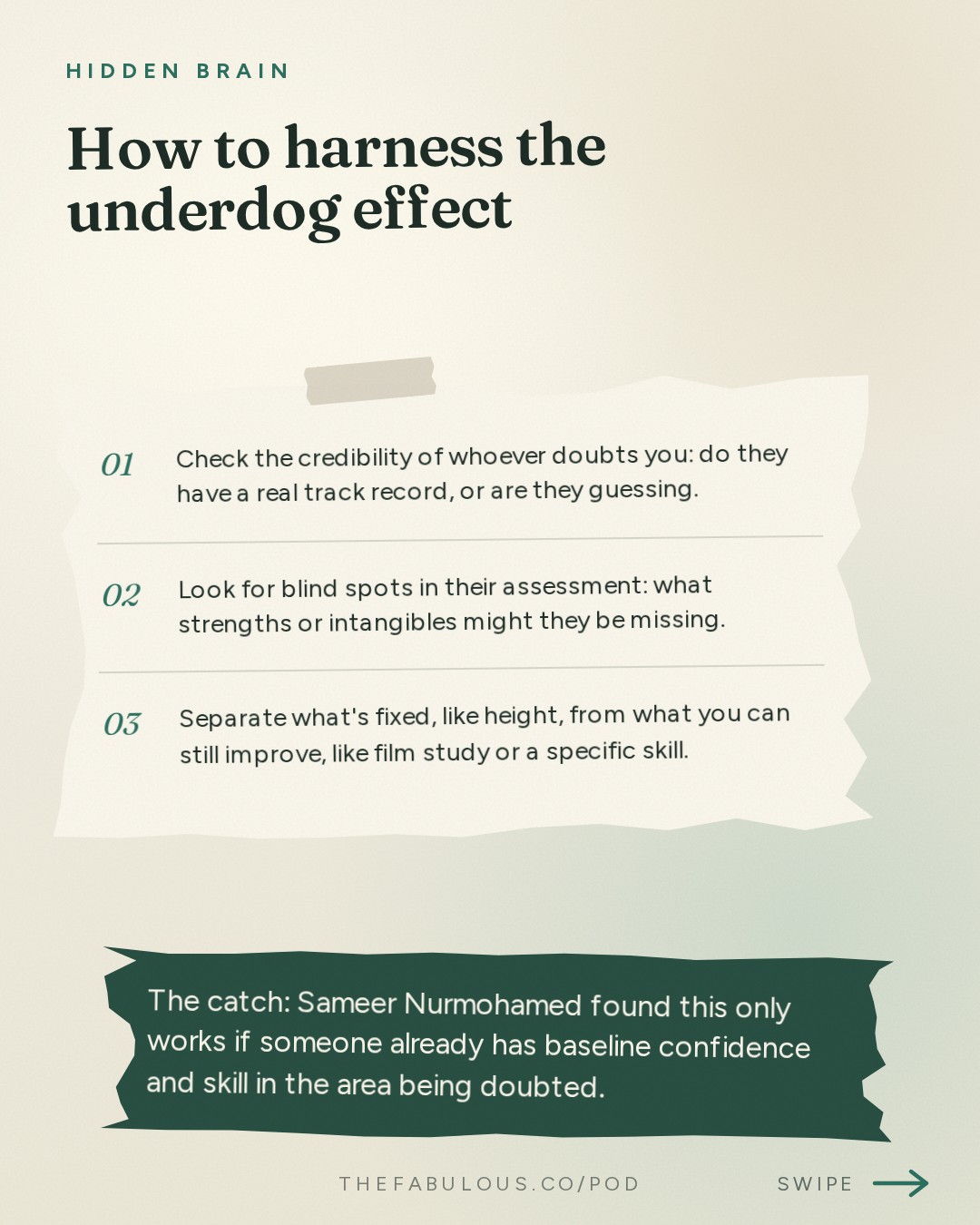
This is not a license to go looking for insults. Nurmohamed is careful that the effect has a floor: it only shows up in people who already have some baseline skill and confidence in the area being judged. He is not a golfer, he says, and being told he will golf badly does nothing for him, because he has no foundation of competence to defend (38:13). The effect also depends on being able to spot the doubter's blind spots. His advice is to check a critic's track record, notice what their assessment leaves out, such as intangibles that do not show up on a scouting report, and separate what is fixed, like a person's height, from what can still be trained, like Tom Brady's hours of film study after practice (46:35).
The underdog frame has reach beyond individuals. Nurmohamed ran workshops with job seekers who had faced discrimination, having some write about times others doubted them and they proved it wrong. Weeks later, the ones who had built that underdog narrative were more likely to have landed jobs, because the story had buffered their confidence against the sting of being passed over (39:19). Groups do something similar: research by Naomi Ellemers, cited in the episode, found that people identify more strongly with a team when outsiders are openly betting against it, which is part of why the 1980 US Olympic hockey team's upset of the Soviet Union became known as the Miracle on Ice (36:47, 47:59).
From underdog to hero
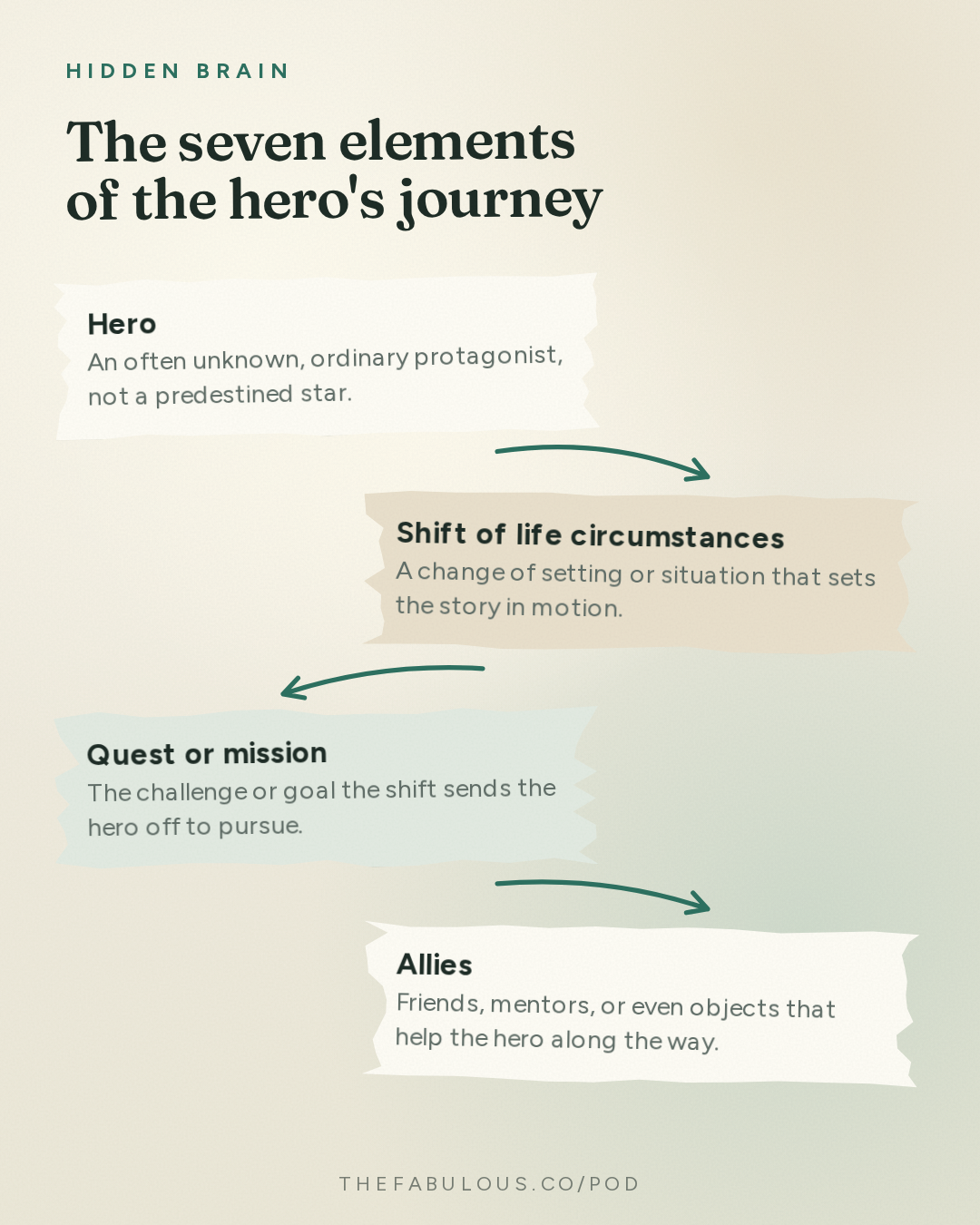
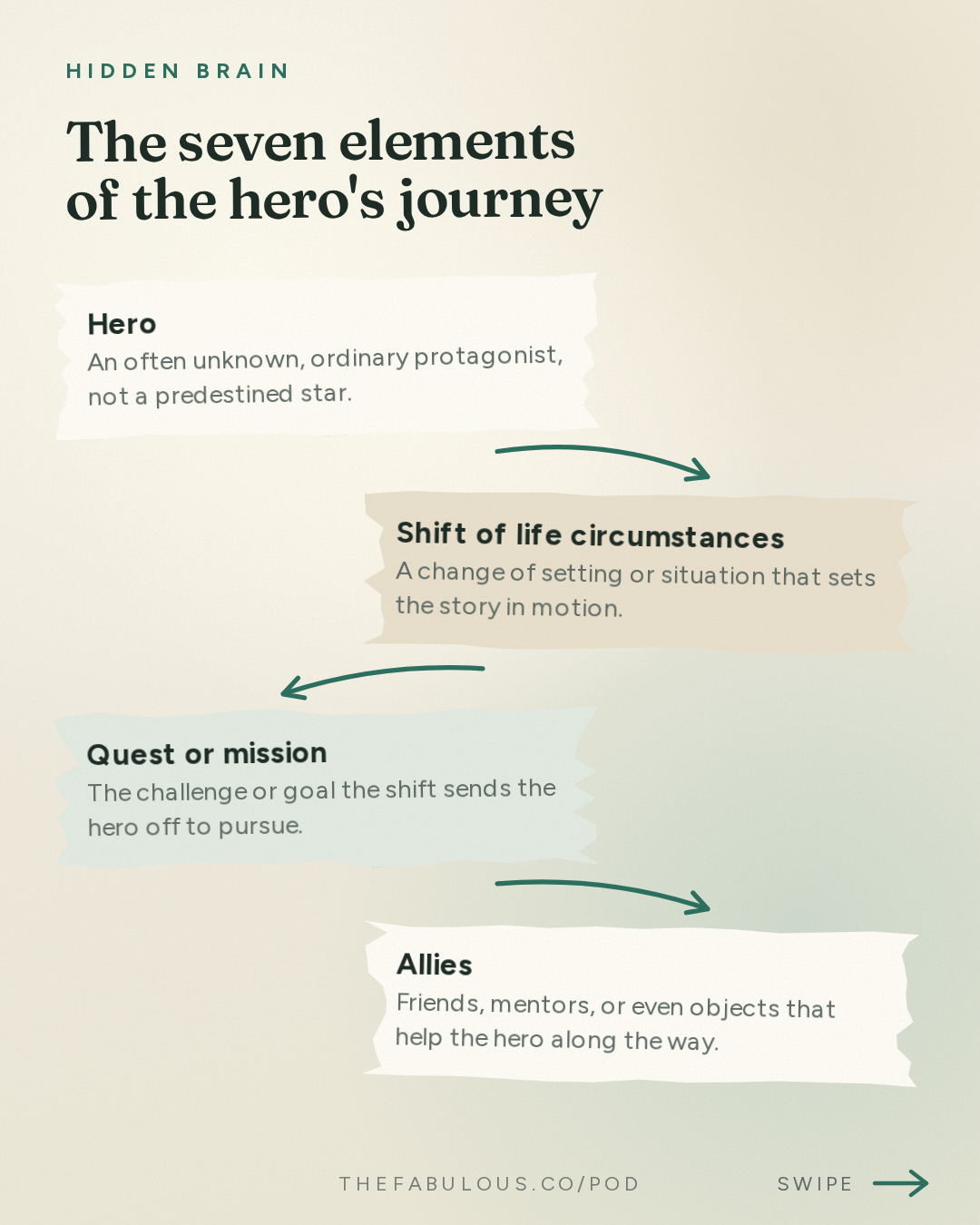
If the underdog effect explains how a single piece of doubt can be turned into fuel, Boston College social scientist Ben Rogers studies a longer arc: how people narrate their whole lives. Rogers works with a framework called the hero's journey, a pattern the mythologist Joseph Campbell found repeating across thousands of years of myth and religious story. Campbell counted 17 steps. Rogers and his colleagues compressed it into seven: an ordinary hero, a shift in life circumstances, a quest that shift sets off, allies who help along the way, challenges that test the hero, a transformation, and a return home to benefit others (56:31).
Rogers's research suggests that getting people to tell their own life this way is not just a nice story trick. One listener, a former dairy farmer named Jeff, described shutting down his family's dairy farm, spiraling into depression, and then writing a song in the empty barn that went viral and turned into a new career as a touring musician who now speaks about farmer mental health (57:31). Rogers heard in it nearly all seven elements, including an ally that was not a mentor but a guitar (60:11). Another listener, Michelle, described trying on different explanations for a year of upheaval, a midlife crisis, then a story of overcoming adversity, before settling on a version where she was finally the main character of her own life rather than a supporting player in everyone else's (62:07).
We are the main characters of our own journeys, and all of our journeys are heroic or meaningful in different ways. (63:50)
One natural worry is that a hero's journey sounds like a man's story, built from myths with male protagonists. Rogers and his team tested this directly and found no measurable difference between men and women in how naturally they saw their lives as a hero's journey, and no difference in how much the writing exercise boosted their sense of meaning (74:25). That does not mean the frame is equally available to everyone. Rogers points to research on 'master cultural narratives,' the dominant stories a society tells about who gets to be a hero, which can be quietly closed to people whose lives do not match the template, including people facing real structural barriers (88:35).
There is also a harder limit. Rogers's team ran the hero's journey exercise with people living with chronic pain, expecting it to help, which on average it did, raising how meaningful people rated their lives. But this was also the study with by far the highest opt-out rate: 10 to 15 percent of participants declined to even try reframing their experience this way, compared with perhaps one percent in other samples (84:31, 85:18). Rogers's read is that chronic pain strips away a sense of control, and it is hard to feel like the author of a story when you do not feel in charge of your own body on a given day (86:21).
A listener named Kai, who coaches entrepreneurs, offered the clearest image of what the exercise is actually for. She described a client who had always felt like an outsider in business meetings, until she reframed the fear itself as the moment before a hero answers the call.
The room hadn't changed. The fear hadn't disappeared. But her story about herself had changed enough for her to act. (87:33)
Put side by side, Nurmohamed's underdog effect and Rogers's hero's journey are really about the same lever, pulled at two different timescales. One is about a single moment of doubt, and whether to let it crush you or use it. The other is about an entire life, and whether to narrate it as something that merely happened to you or something you are actively authoring. Neither researcher claims the trick works on everyone, or that it should. But both suggest that the story we tell about our setbacks is not a fixed fact waiting to be discovered. It is closer to a draft, open to revision, and sometimes the revision is the whole point.
Ask this episode anything
Pod's AI answers from the episode itself, with the minute mark so you can hear it yourself.
Or start with one of these
Ask this episode
Pod's AI listens to the whole episode to answer, and points you to the minute it comes from.
The rest of this answer, and any question after it
Answers come from the episode itself, never from a summary of it.
ContinueKey takeaways
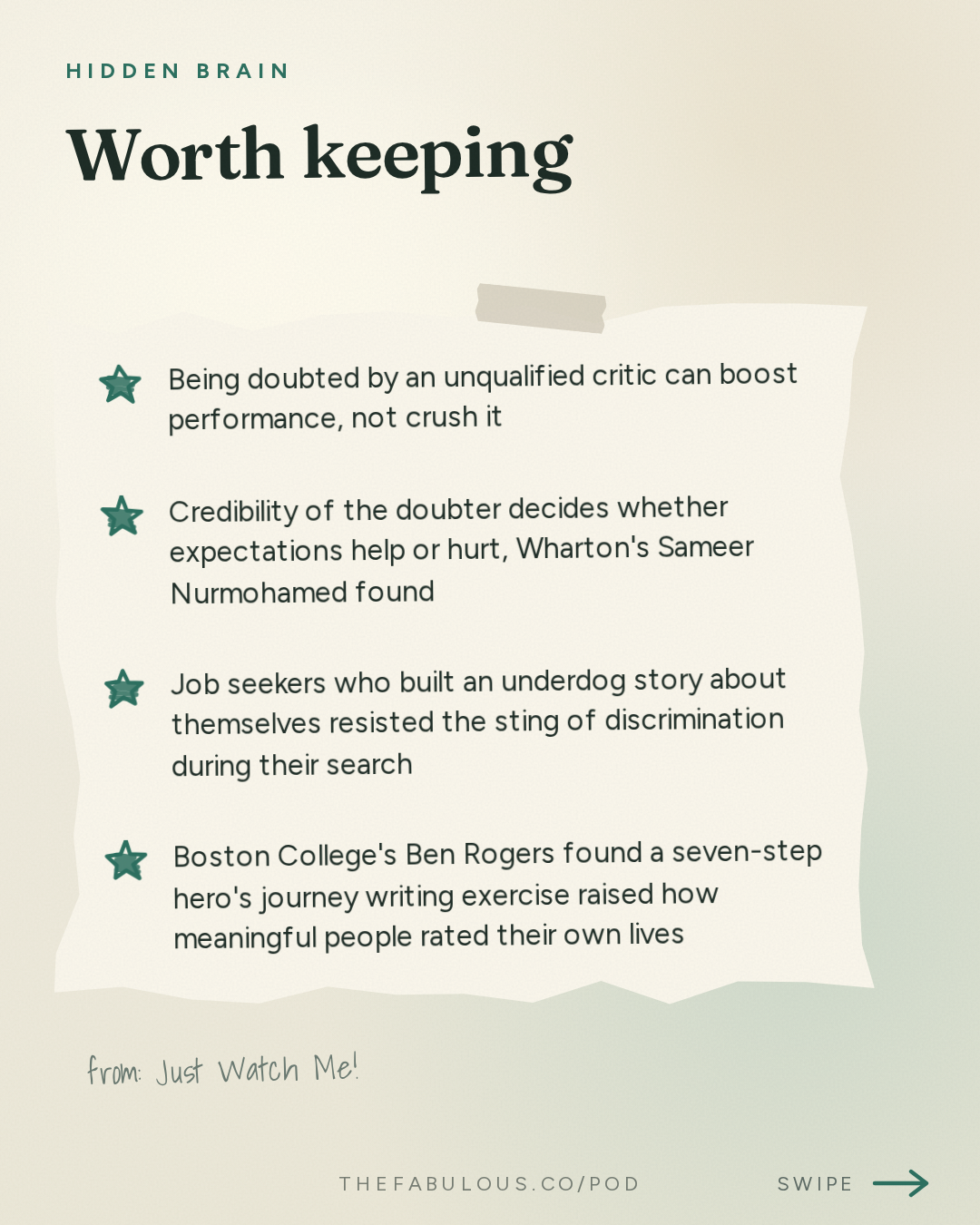
- Being doubted by an unqualified critic can boost performance, not crush it
- Credibility of the doubter decides whether expectations help or hurt, Wharton's Sameer Nurmohamed found
- Job seekers who built an underdog story about themselves resisted the sting of discrimination during their search
- Boston College's Ben Rogers found a seven-step hero's journey writing exercise raised how meaningful people rated their own lives
- About 10 to 15 percent of chronic pain patients opted out of the hero's journey exercise, far more than in other groups studied
The episode in cards
By the numbers
- 199th pick Tom Brady's position in the 2000 NFL draft
- 80% percent people in a classic study who rated themselves better than average drivers
In their words
“Can the sting of doubt and the bite of criticism ever be our friends?”
“An underdog is basically someone whom other people widely perceive to not be likely to win or to succeed.”
“Underdogs who have a chip on their shoulder don't perform well in spite of being doubted, they perform well because they've been doubted.”
“We are the main characters of our own journeys, and all of our journeys are heroic or meaningful in different ways.”
“The room hadn't changed. The fear hadn't disappeared. But her story about herself had changed enough for her to act.”
Protocols
-
Check the credibility of your doubters before you believe them
Sameer Nurmohamed, an organizational scientist at the University of Pennsylvania's Wharton School, advises checking whether a critic has a real track record of being right, looking for blind spots in their assessment, such as intangibles a scouting report might miss, and separating traits that are fixed from skills that can still be trained.
Whenever facing criticism or low expectations
-
Write an underdog story before a hard job search
In Nurmohamed's field workshops, job seekers wrote and reflected on a time when others doubted them and they proved those doubts wrong, and this underdog narrative buffered their confidence against the psychological damage of discrimination during the job search.
Once, before or during a job search
-
Rewrite a life event as a hero's journey
Ben Rogers, a social scientist at Boston College, has people identify a hero, a shift in life circumstances, a quest, allies, challenges, a transformation, and a legacy in their own life story, then shows them the resulting narrative, which in his studies raised how meaningful people rated their lives after a five to ten minute writing exercise.
A single session, repeatable at major life transitions
Questions this episode answers
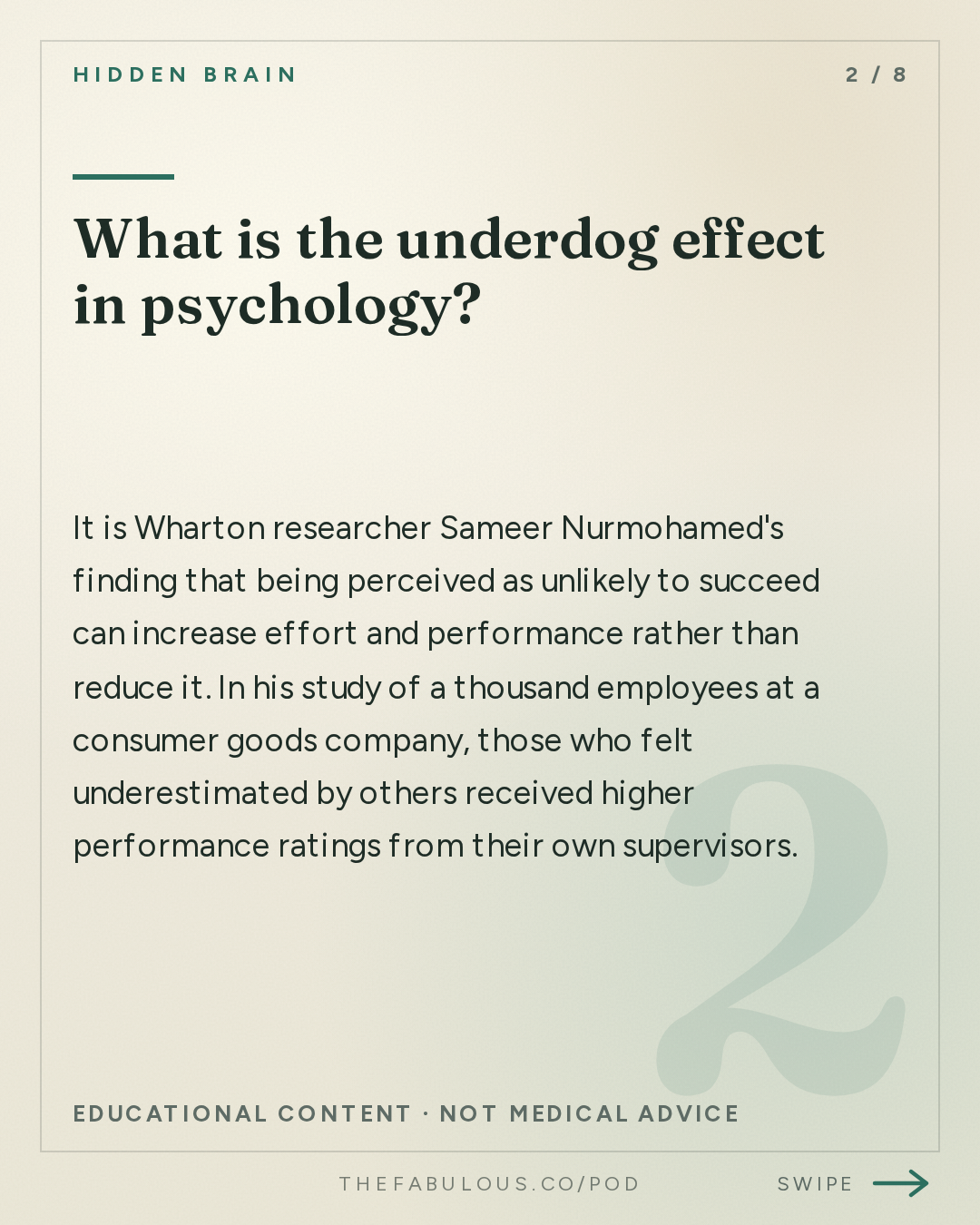
What is the underdog effect in psychology?
It is Wharton researcher Sameer Nurmohamed's finding that being perceived as unlikely to succeed can increase effort and performance rather than reduce it. In his study of a thousand employees at a consumer goods company, those who felt underestimated by others received higher performance ratings from their own supervisors (20:43).
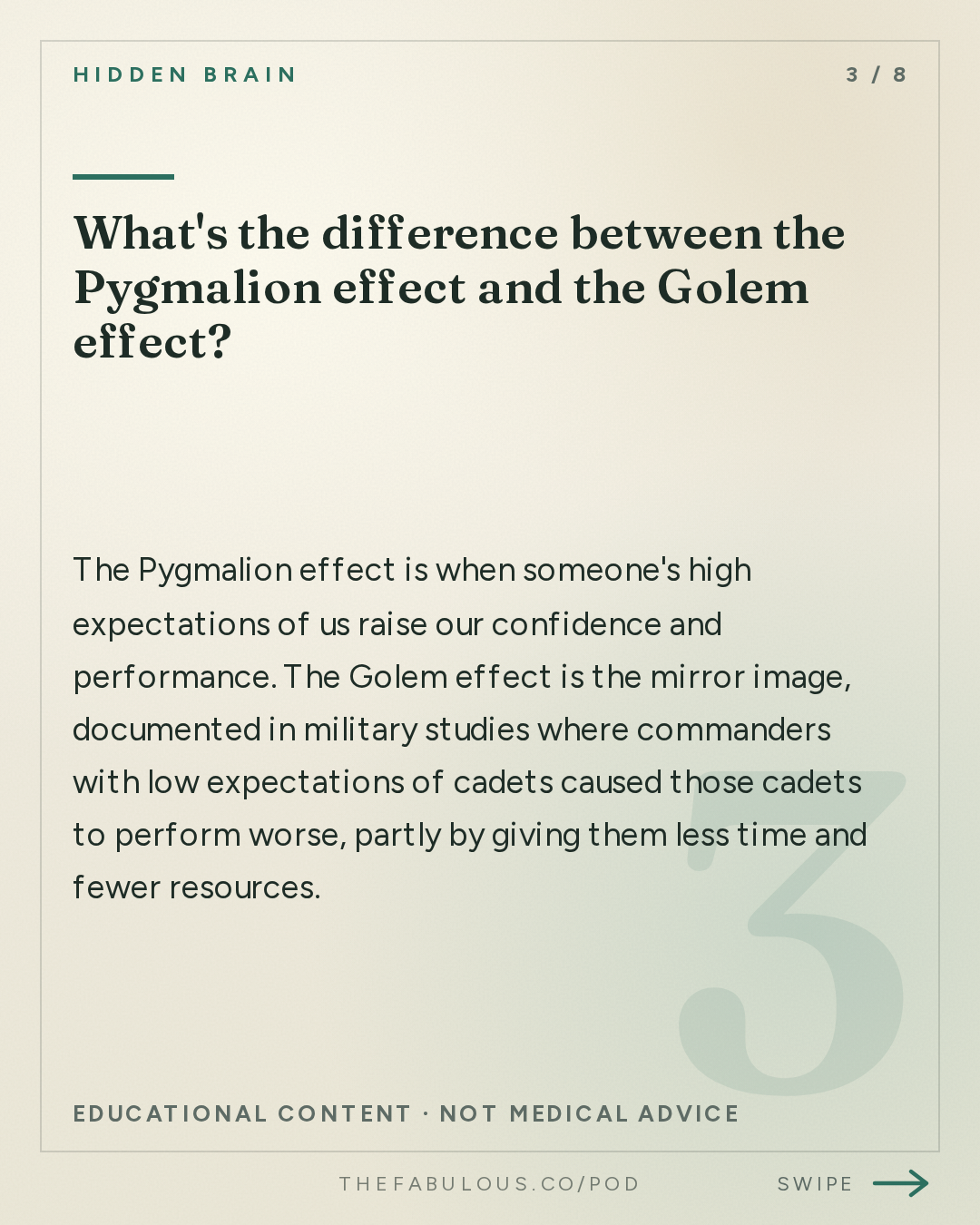
What's the difference between the Pygmalion effect and the Golem effect?
The Pygmalion effect is when someone's high expectations of us raise our confidence and performance (18:25). The Golem effect is the mirror image, documented in military studies where commanders with low expectations of cadets caused those cadets to perform worse, partly by giving them less time and fewer resources (19:13).
Why did being drafted 199th overall help Tom Brady's career?
Brady was picked in the sixth round of the 2000 NFL draft, after six other quarterbacks, and a pre-draft scouting report criticized his build, arm strength, and mobility (08:24, 07:59). Nurmohamed's research suggests Brady treated the low expectations from low-credibility scouts as something to disprove, a pattern he kept citing even after winning seven Super Bowls (14:32).
What is the hero's journey psychological intervention?
Boston College social scientist Ben Rogers has people identify seven elements in their own life, a hero, a shift in circumstances, a quest, allies, challenges, a transformation, and a legacy, then shows them the resulting story. In his studies, this re-storying exercise raised how meaningful people rated their lives, with no difference between men and women (56:31, 74:25).
Does the underdog effect or hero's journey exercise work for everyone?
No. Nurmohamed found the underdog effect requires some baseline confidence and skill in the area being doubted (38:13). Rogers found that in a study of people with chronic pain, 10 to 15 percent opted out of the hero's journey exercise entirely, a far higher rate than in other groups, likely because chronic pain strips away a sense of control over one's own story (84:31, 85:18).
The full read, in cards
Go deeper
- A Confederacy of Dunces — John Kennedy Toole's posthumously published novel, rejected by publishers in his lifetime, won the Pulitzer Prize 12 years after his death
- Sameer Nurmohamed's underdog effect research — found employees who felt underestimated got higher supervisor ratings, and that a critic's credibility determines whether doubt helps or hurts performance
- Ben Rogers's hero's journey re-storying intervention — found rewriting a life event using a seven-step hero's journey framework raised reported meaning in life, with no difference by gender
- Reflected Best Self Exercise — University of Michigan exercise in which people gather feedback from their network to surface strengths they may not see in themselves
Mentioned
John Kennedy Toole · A Confederacy of Dunces · Walker Percy · Tom Brady · Sameer Nurmohamed · University of Pennsylvania Wharton School · Jalen Brunson · Aly Raisman · Bill Belichick · Ben Rogers · Boston College · Joseph Campbell · Miracle on Ice
More from this show and category
What Is Covering? Kenji Yoshino Explains
Covering is downplaying a known stigmatized identity to put others at ease, a term legal scholar Kenji Yoshino traces from FDR to Deloitte's workplace data. A 2012 Deloitte survey found 61% of employees cover some part of themselves, and even 45% of straight white men report doing it too.
How Romantic Attraction and Compatibility Really Work
Attraction is not a checklist, and stated preferences rarely predict who we actually choose. UC Davis psychologist Paul Eastwick finds machine learning scores 0% accuracy predicting speed-dating compatibility, while University of Maryland psychologist Ed Lemay shows social projection bias leads partners to assume feelings and values that may not exist.
How Sleep Deprivation Affects Decisions
Sleep deprivation degrades ethical judgment and decision-making in novel situations, contributing to disasters from train crashes to BP's 2005 explosion. Chronic pain, meanwhile, is reshaped by fear, relationships, and mindset as much as by tissue damage, per sleep researcher Chris Barnes and pain psychologist Rachel Zoffness.
Why Am I Unhappy? The Psychology Behind It
Psychologists George Loewenstein and Alison Ledgerwood argue that most unhappiness starts inside the mind, not from outside events. Loewenstein traces it to the hedonic treadmill and guilt over our own feelings; Ledgerwood traces it to a negativity bias built to spot threats. Their shared fix: notice good moments without suppressing bad ones, and ask whether a reaction fits now or an old pattern (96:51).
