
Why Am I Unhappy? The Psychology Behind It
Why Am I Unhappy?
The brief
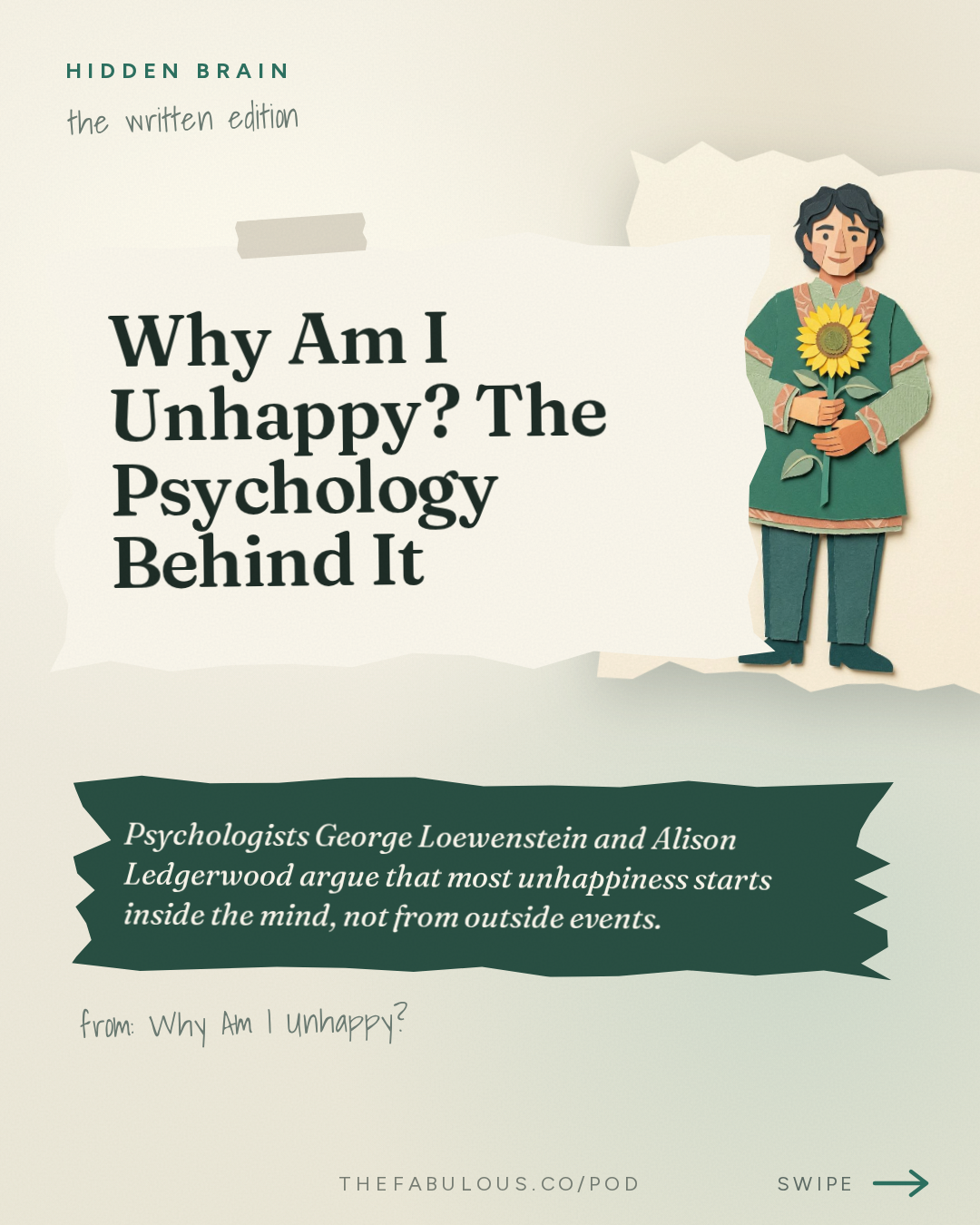
Psychologists George Loewenstein and Alison Ledgerwood argue that most unhappiness starts inside the mind, not from outside events. Loewenstein traces it to the hedonic treadmill and guilt over our own feelings; Ledgerwood traces it to a negativity bias built to spot threats. Their shared fix: notice good moments without suppressing bad ones, and ask whether a reaction fits now or an old pattern (96:51).
Count Vronsky gets everything he wants. In Tolstoy's Anna Karenina, he spends years chasing a married woman, risking his army career and his standing in society to have her. And then he has her, and the feeling he spent years imagining lasts about as long as a held breath. Tolstoy writes that Vronsky felt only "one grain of the mountain of bliss he had anticipated" (00:59). Tolstoy calls this the eternal error: believing happiness is a prize that circumstances hand over once we have arranged them correctly.
Carnegie Mellon University psychologist George Loewenstein has spent a career studying why that error keeps repeating itself, and he has lived it. After a lackluster academic job search that produced two interviews, one for a dog food brand manager role and a fluke second interview at the University of Chicago, he landed what seemed like a dream post there (04:52). He was happy for a few weeks. Then the university gave him a basement office with slit windows positioned directly beneath the dean's bathroom, with a pipe that broadcast every flush, and he spent what he calls one of the most miserable years of his life chasing tenure (06:42). Psychologists have a name for this: the hedonic treadmill, the tendency for any gain, material or professional, to fade into the background the moment a new goal appears (08:41). The treadmill does not just blunt pleasure. Loewenstein once went whitewater canoeing with a friend during a flood, and after hours of real danger the river calmed and the two men felt, strangely, bored and let down (10:43). Bored enough that Loewenstein suggested paddling over a small dam, a decision that trapped them both in the churning water below it and nearly killed them (11:57). He is explicit about the connection: the accident happened because excitement had already become the baseline, and ordinary safety felt like deprivation (16:11).
Built for survival, not for feeling good
Loewenstein's larger claim is that this is not a personal failing. Minds, he argues, were never built to produce happiness. They were built to keep ancestors alive long enough to reproduce, and fear, shame, and anger are simply more effective at that job than contentment and joy.
"Our minds are designed to do things that will enhance our evolutionary fitness, which means help us to survive and reproduce." — George Loewenstein, psychologist at Carnegie Mellon University [27:24]
That asymmetry shows up everywhere once Loewenstein points it out. Pride has a counterpart, shame, and shame is far more intense and far longer lasting (28:29). Dread does not even have a positive opposite in English; the closest phrase, pleasurable anticipation, is a workaround, not a word (29:02). Psychologist Mark Leary's sociometer theory treats self-esteem the same way, as a constant, automatic gauge of how a group currently values a person, inherited from an evolutionary past when being cast out of the group was close to a death sentence (31:33). The psychologist Paul Rozin put the general pattern in one image: drop a cockroach in a vat of fine wine and it ruins the wine, but pour fine wine over a cockroach and the cockroach is still a cockroach (29:36). Bad is simply stronger than good.
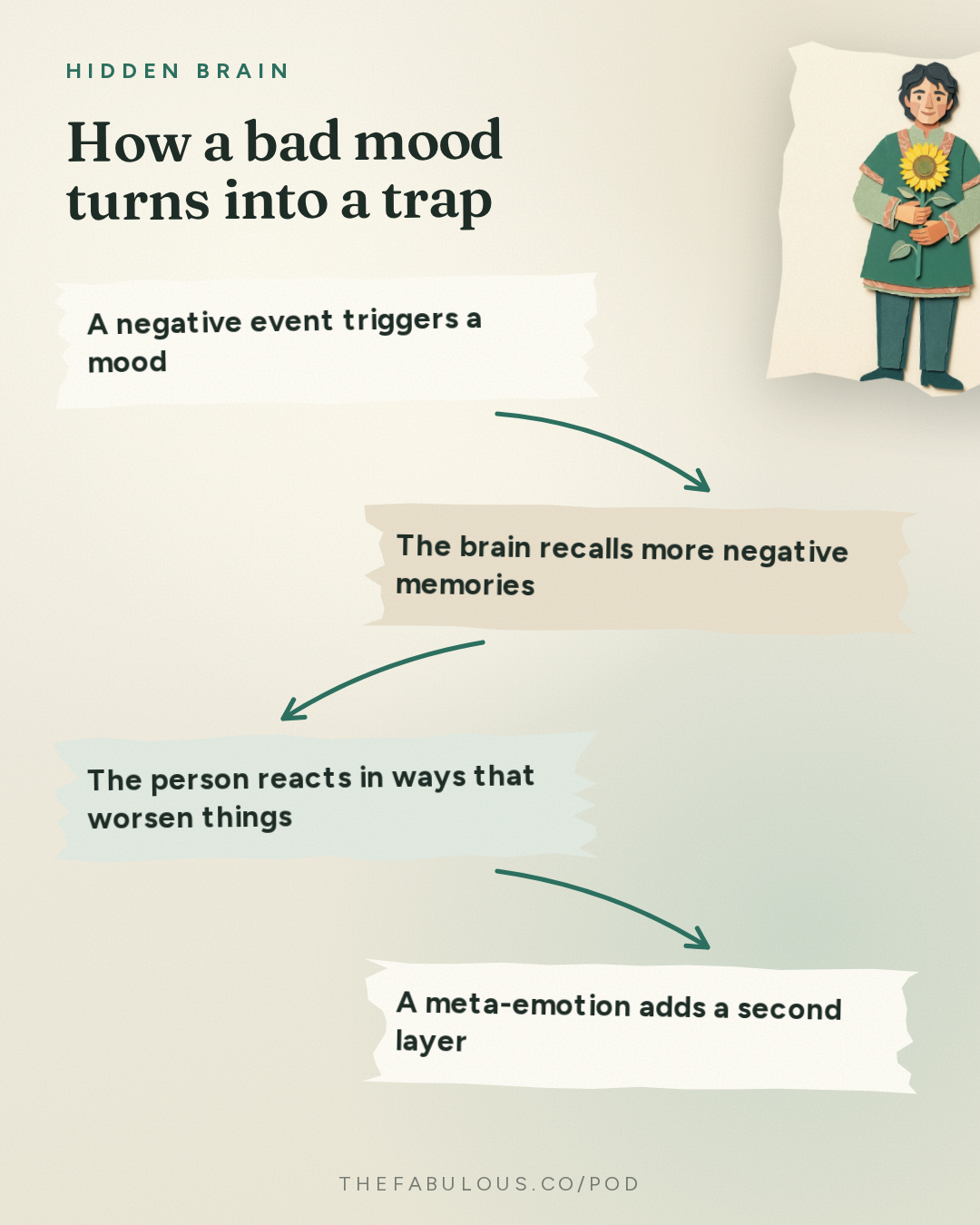
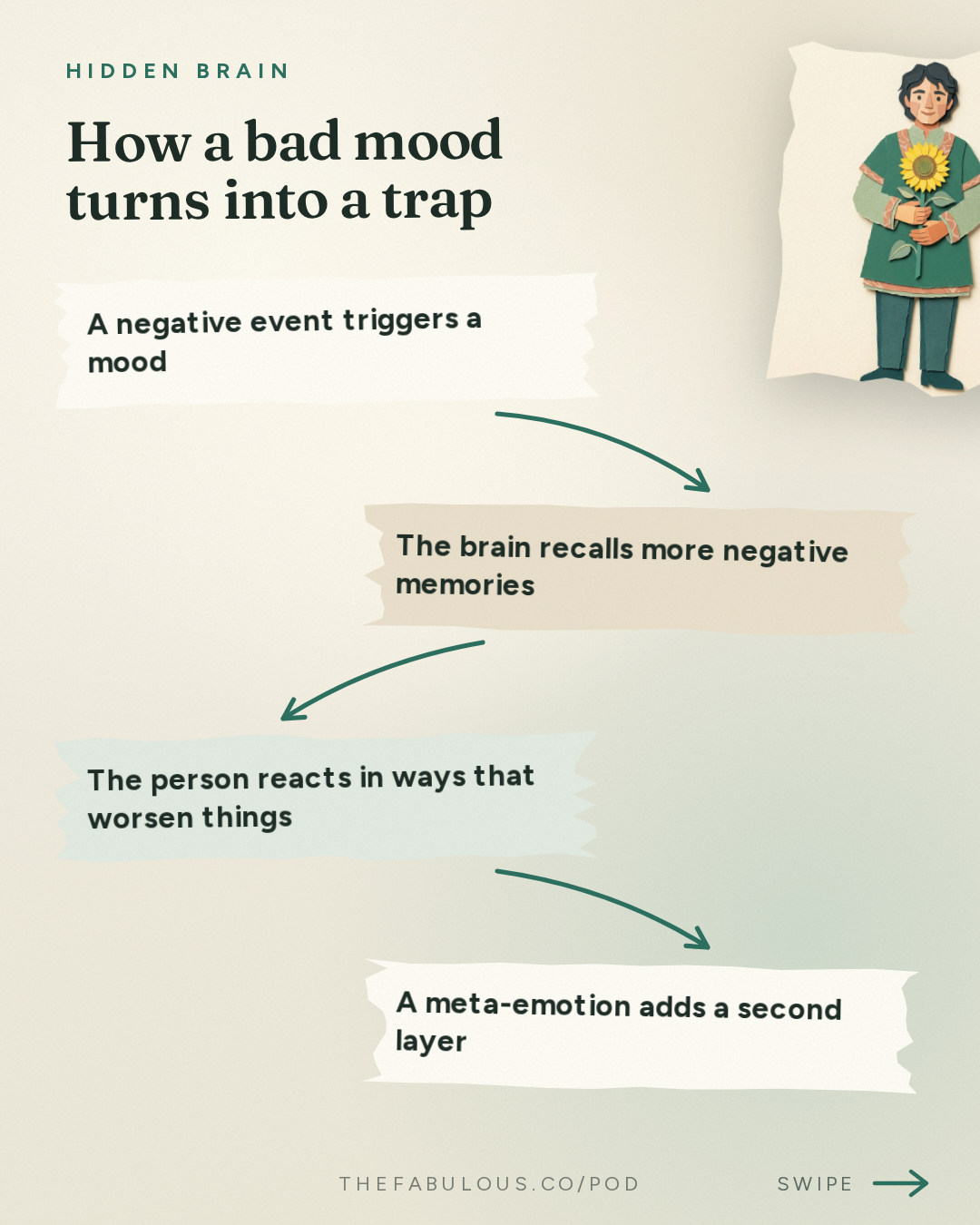
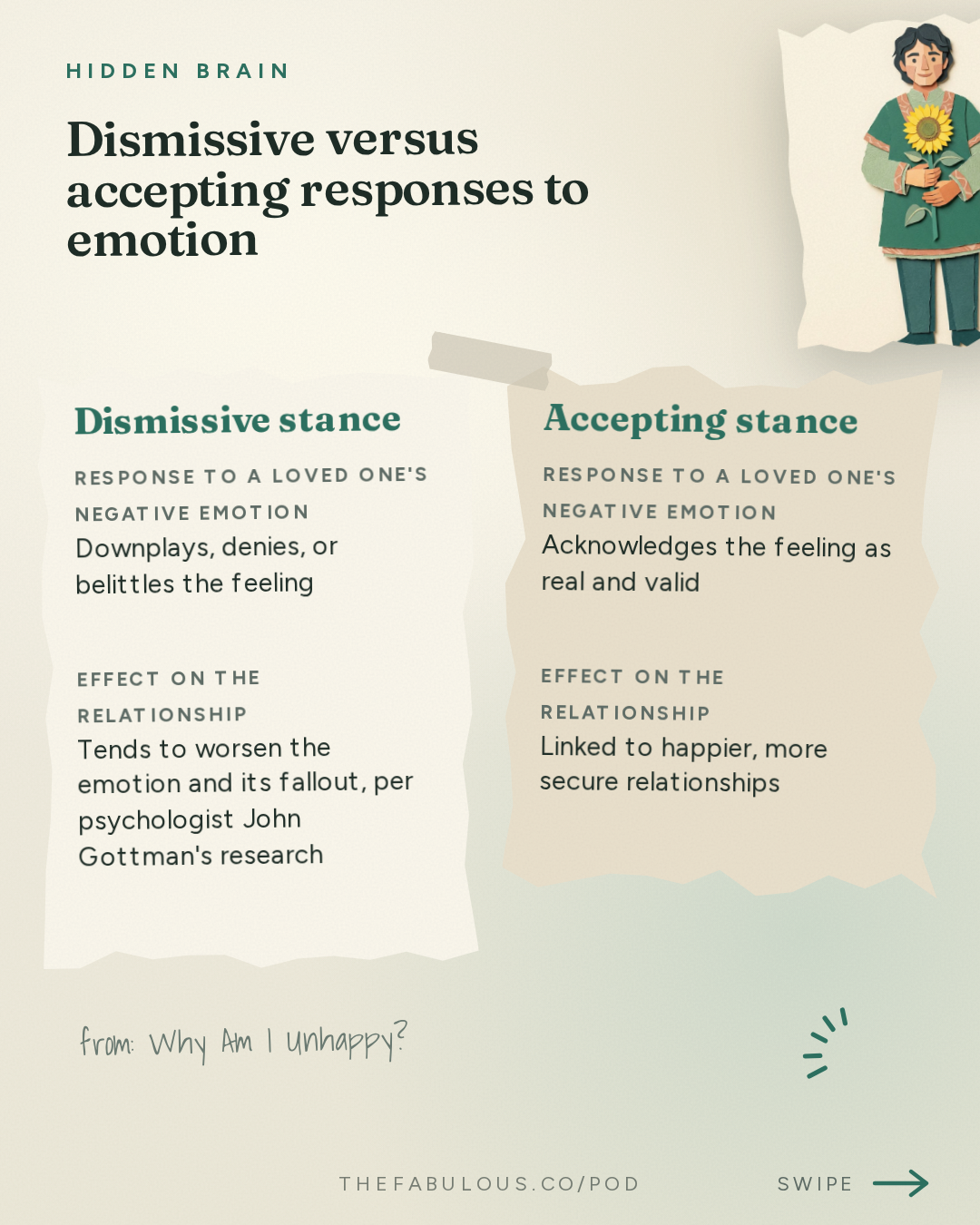
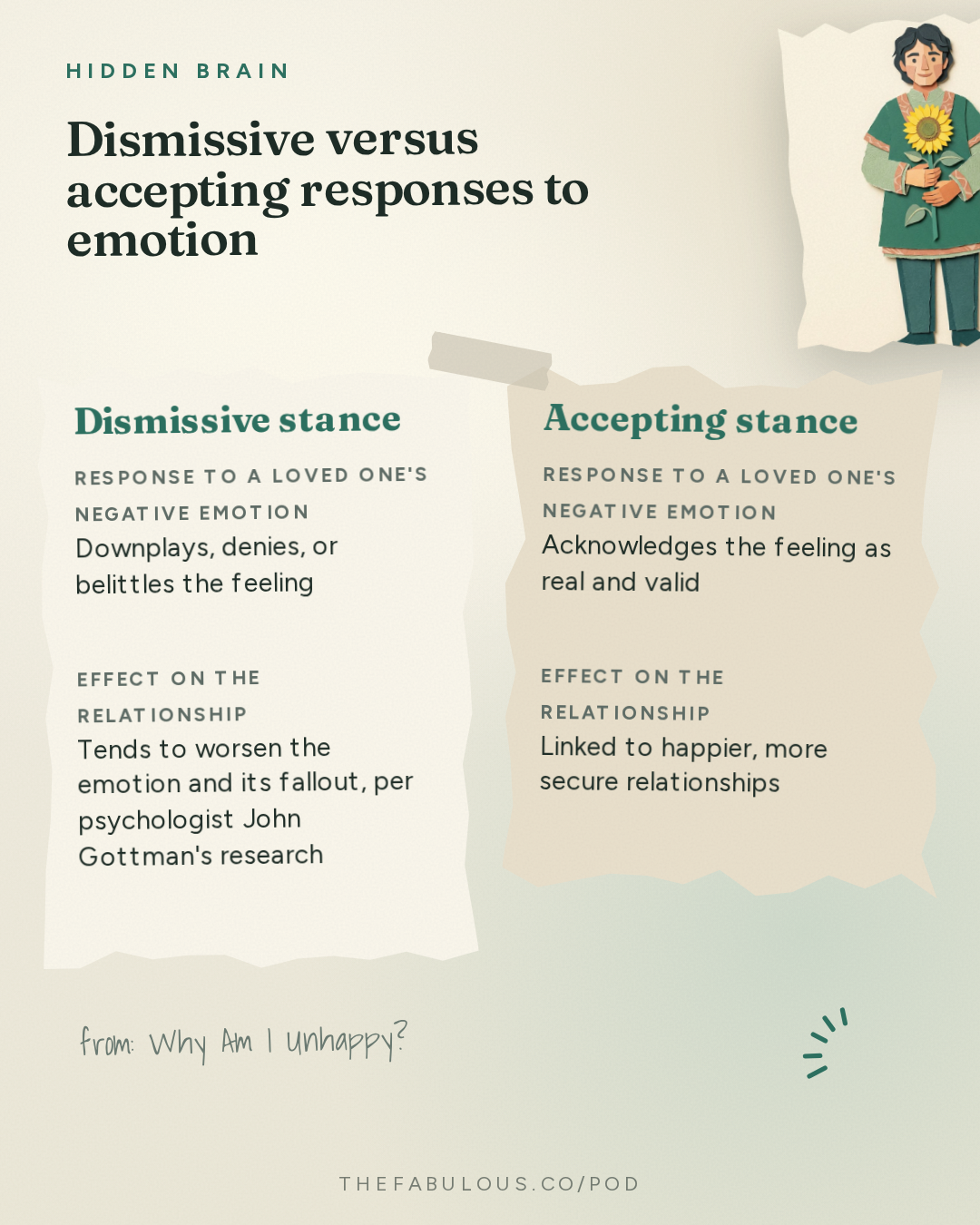
This machinery does not stay quiet once it switches on. Loewenstein's research into what he calls meta-emotions, feelings about feelings, shows how a single bad mood multiplies itself. Drawing on relationship researcher John Gottman's finding that parents who dismiss a child's emotions tend to make those emotions worse, Loewenstein argues people do the same thing to themselves: feeling envy and then feeling guilty for the envy, or failing to grieve and then feeling ashamed of the failure (39:00). In an informal "misery survey" he ran, hundreds of respondents described sorrows from decades earlier that were still, in their words, alive (23:09), and many described anger or resentment they knew, rationally, they could simply release, yet could not (25:11). Writer and Holocaust survivor Primo Levi, in his final depression, wrote that he knew intellectually his suffering would pass but could not feel anything except that it would last forever (19:34), a line Loewenstein cites as the clearest description he knows of what it feels like to be trapped inside a negative state rather than simply experiencing one.
Living with the tilt
If Loewenstein explains why bad feelings are built to dominate, University of California, Davis psychologist Alison Ledgerwood explains how durable that dominance is, and what, practically, can be done about it. Her framing experiments gave people a policy described either as saving 70 percent of jobs or costing 30 percent of jobs, identical facts in different language, and people liked the policy far more under the positive framing (60:31). The more striking result came when she tried to walk people back. Those who started with the positive frame accepted a shift toward the negative easily. Those who started with the negative frame resisted being talked into anything more positive (61:21). Pessimism, once installed, has a one-way lock on the door.
"It makes sense that we would want our brains to focus on problems or threats when they are there in our environment." — Alison Ledgerwood, psychologist at the University of California, Davis [59:06]
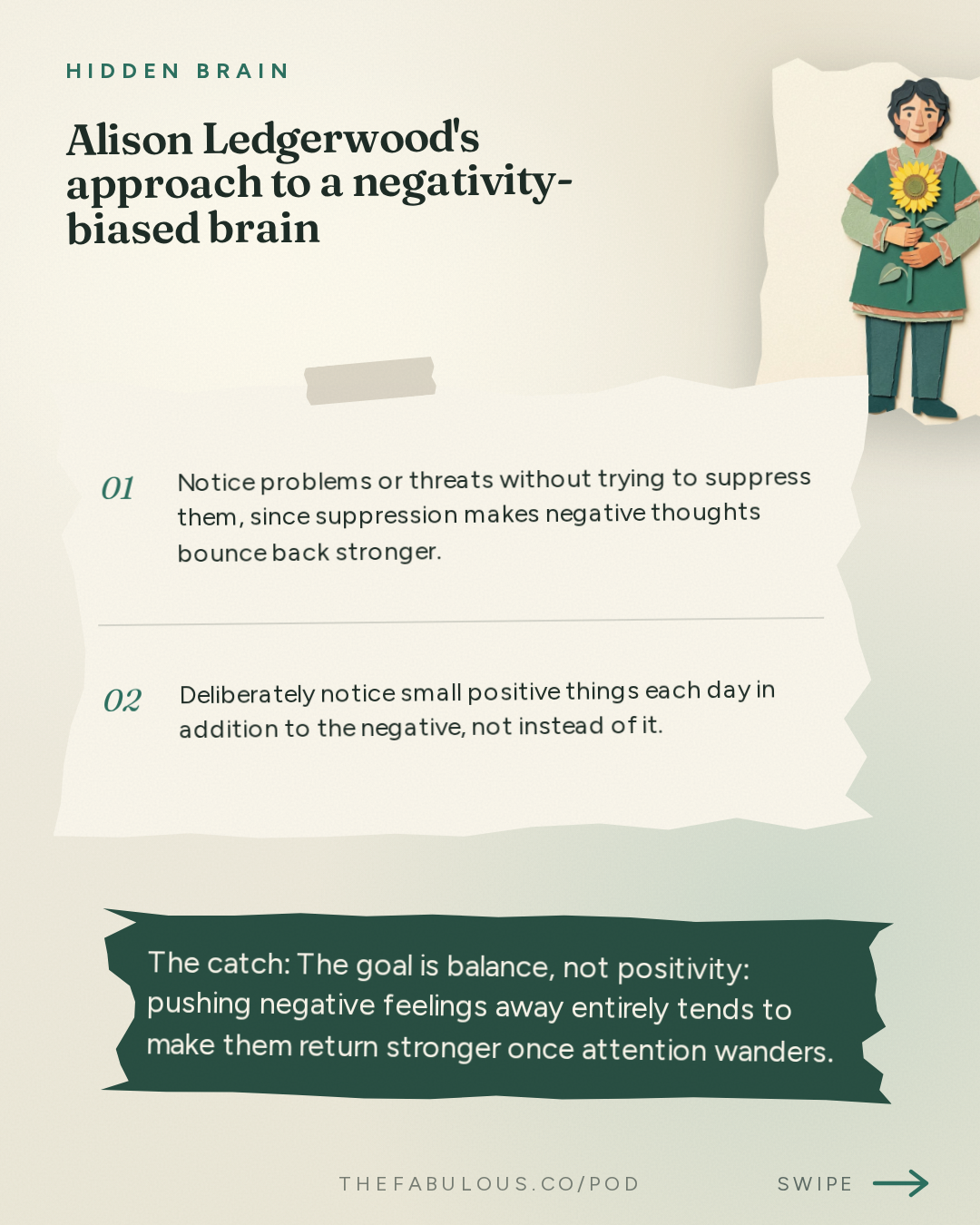
Ledgerwood's advice is not to fight the bias into silence. She cites the classic finding that telling someone not to think of a white bear guarantees they will think of almost nothing else, and the same logic applies to suppressed worry or shame: push it down and it returns stronger the moment attention drifts (84:06). Instead she recommends addition rather than subtraction, deliberately noticing small good things, the way light falls through a window, alongside whatever is wrong, so the mind gets practice holding both (85:06). She also points to "capitalization," the research finding that sharing good news with people who respond with real enthusiasm is almost as important to wellbeing as getting comfort during bad news (89:10). A listener named Bill, undergoing cancer treatment, wrote in describing a daily practice of celebrating small wins, a good parking spot, a painless IV stick, his favorite sandwich in the cafeteria, while still fully aware of what he was facing (85:29). Ledgerwood calls this exactly the right kind of balance, not denial, just ballast.
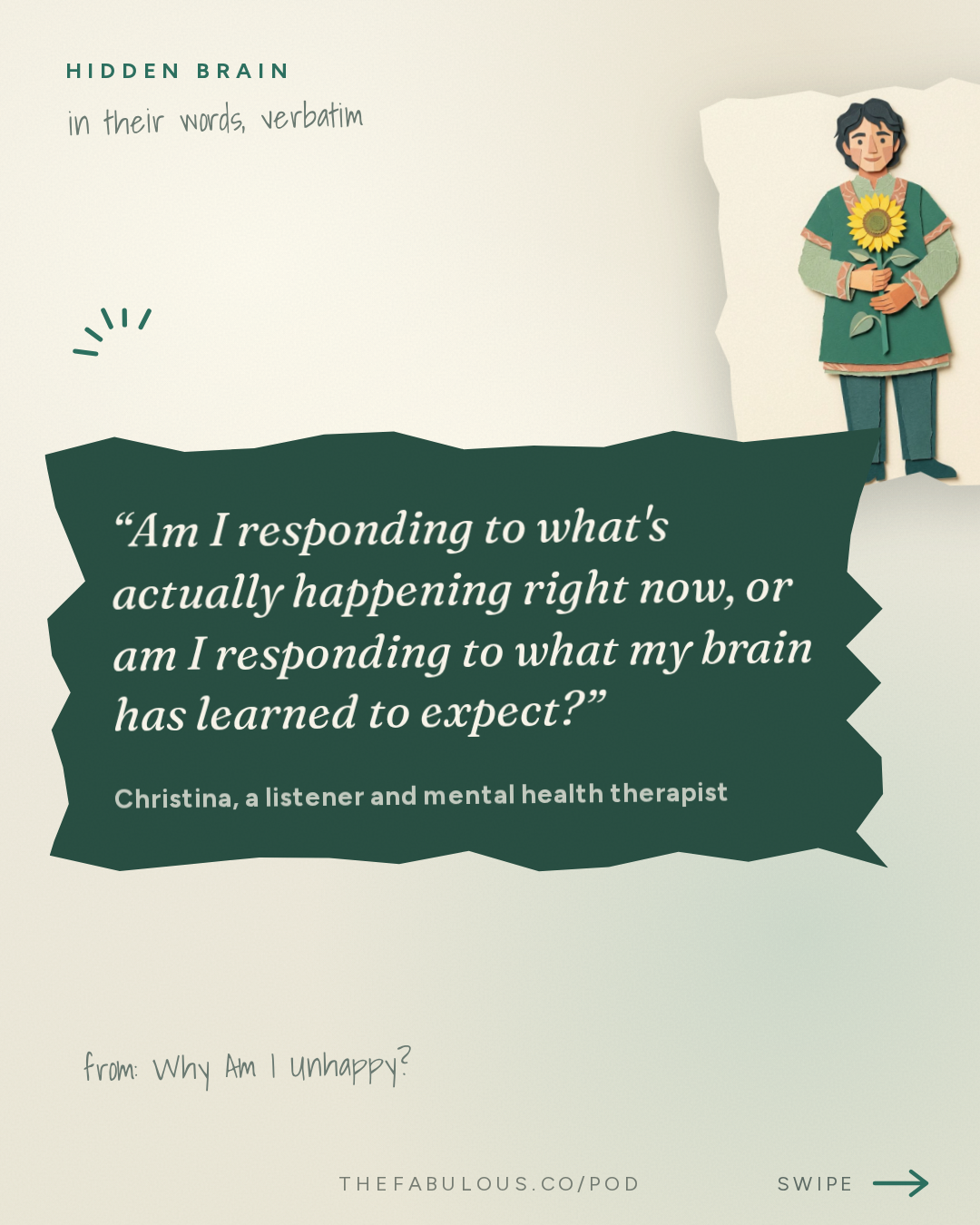
The hardest case is the one where the negative feeling is not irrational at all. A listener named Christina, a mental health therapist, wrote that she used to dread meetings with her supervisor because some earlier meetings really had gone badly, so her anxiety was not inventing a threat, it was overgeneralizing a real one, treating "this might go badly" as "this will go badly" (93:29). Her own fix has become a single habitual question.
"Am I responding to what's actually happening right now, or am I responding to what my brain has learned to expect?" — Christina, a listener and mental health therapist [96:51]
Ledgerwood calls this exactly right: the question does not erase the fear, it just makes room to ask whether the present moment actually resembles the past one it is borrowing dread from (95:12). That modesty of ambition runs through both guests. Sigmund Freud once said the goal of psychoanalysis was to turn neurotic misery into ordinary unhappiness, and Loewenstein, asked whether that is the best anyone can hope for, agrees that intervals of happiness are realistic but a baseline of unhappiness is close to inevitable, and worth no longer being ashamed of (49:28). Vronsky's mistake was thinking the ache would stop once he got the thing he wanted. The quieter, harder lesson from two careers of research is that the ache is not a bug in the circumstances. It is closer to a setting in the instrument doing the wanting.
Ask this episode anything
Pod's AI answers from the episode itself, with the minute mark so you can hear it yourself.
Or start with one of these
Ask this episode
Pod's AI listens to the whole episode to answer, and points you to the minute it comes from.
The rest of this answer, and any question after it
Answers come from the episode itself, never from a summary of it.
ContinueKey takeaways
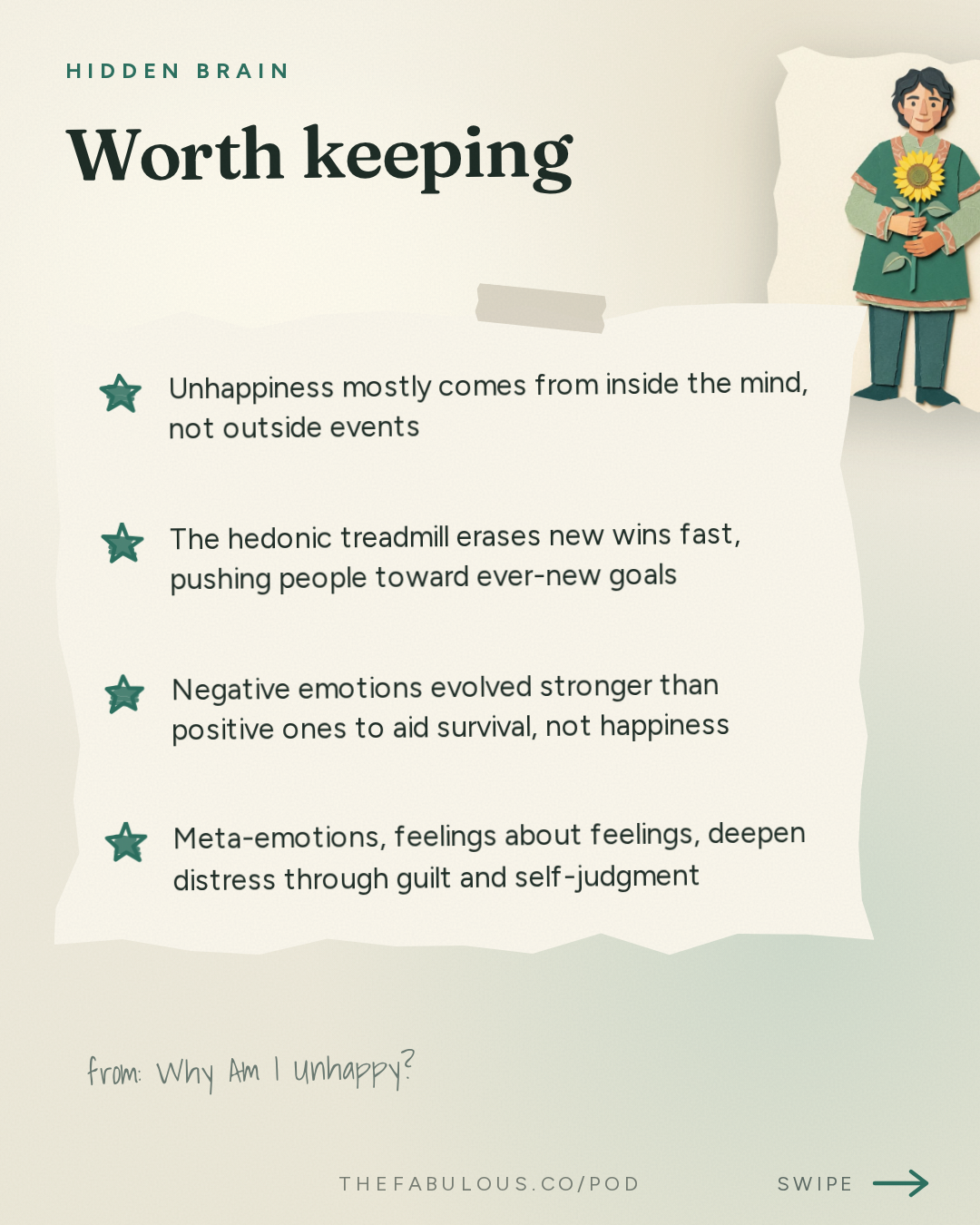
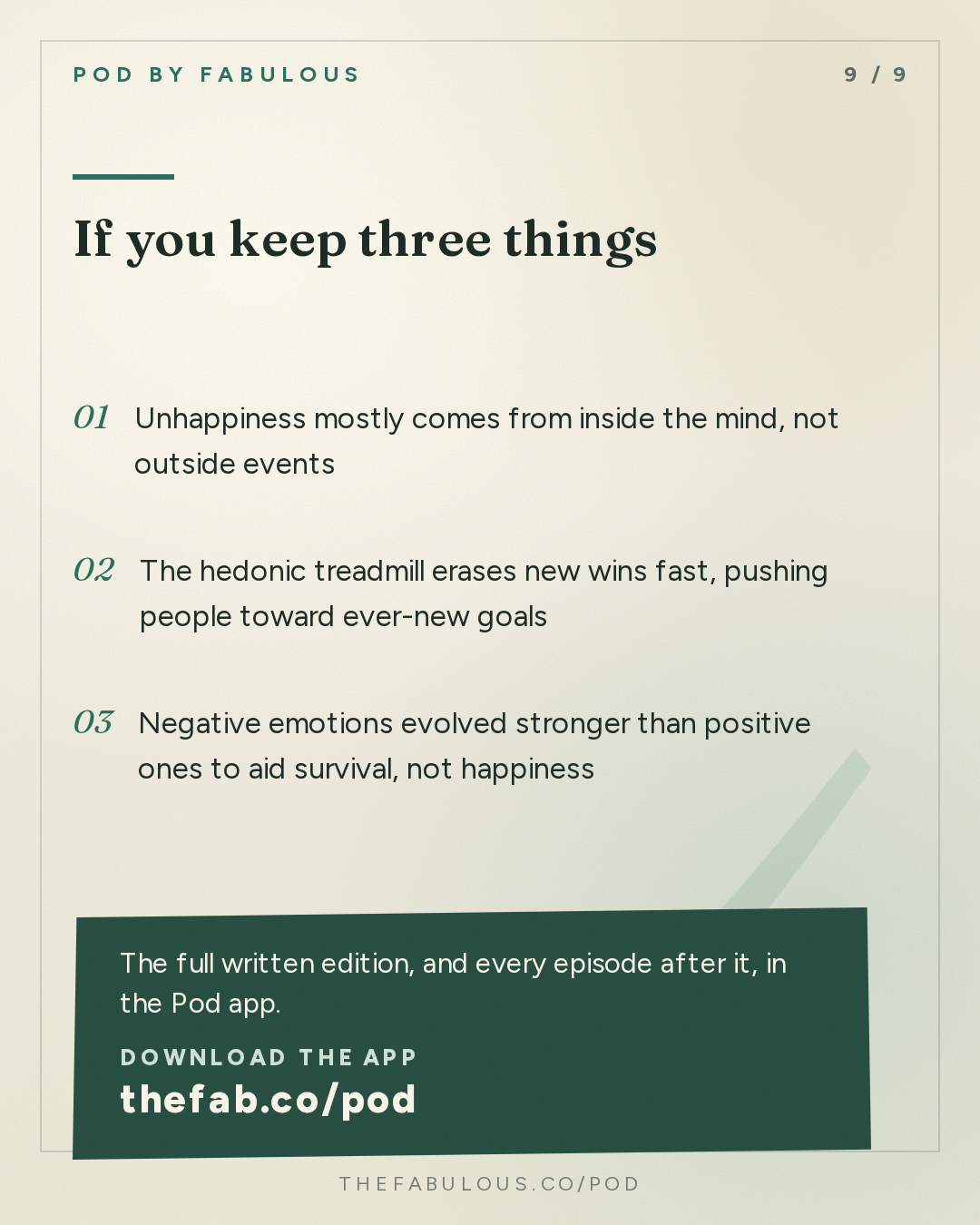
- Unhappiness mostly comes from inside the mind, not outside events
- The hedonic treadmill erases new wins fast, pushing people toward ever-new goals
- Negative emotions evolved stronger than positive ones to aid survival, not happiness
- Meta-emotions, feelings about feelings, deepen distress through guilt and self-judgment
- Asking if a reaction fits the present or an old expectation can calm anxious overreaction
The episode in cards
By the numbers
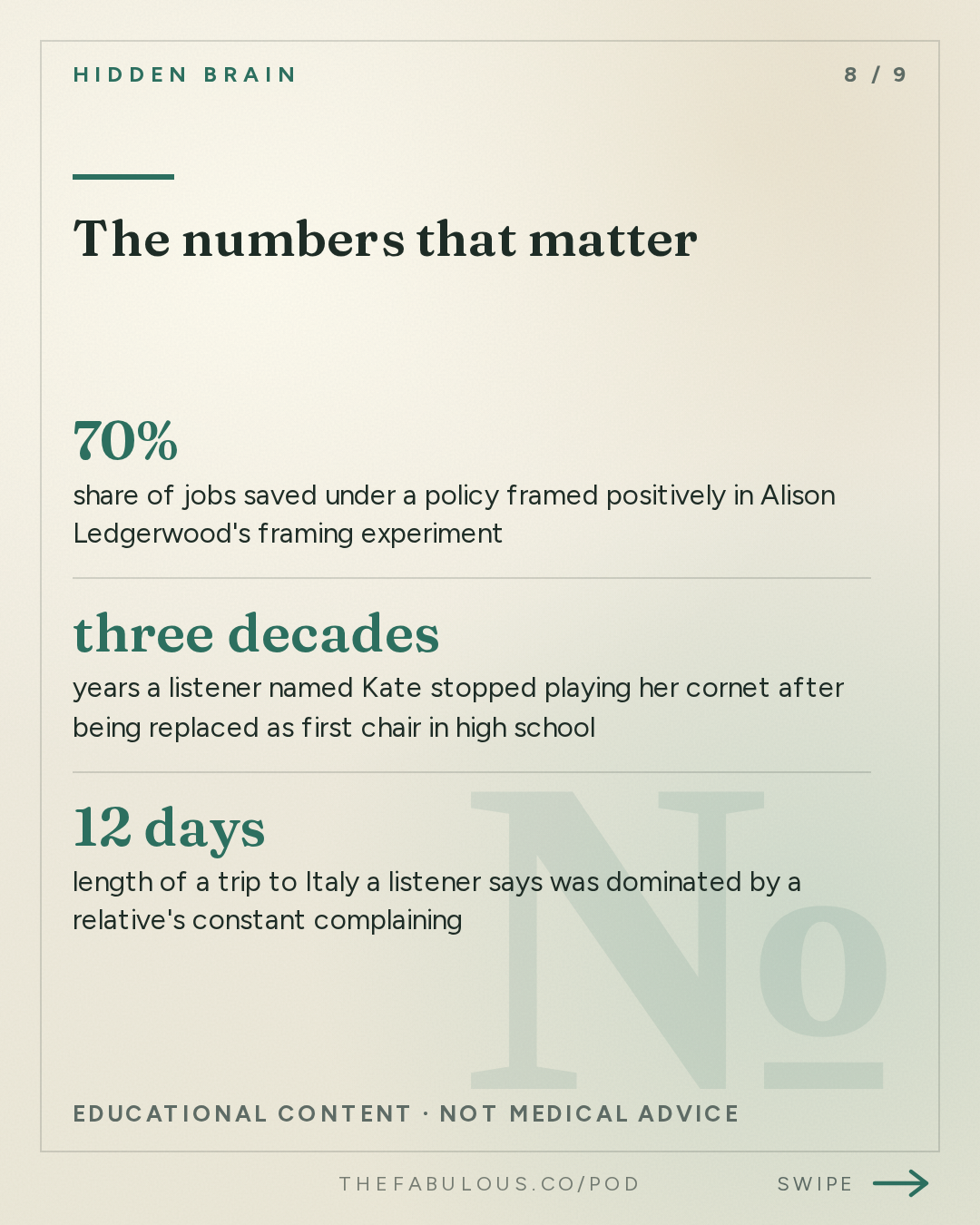
- 70% percent share of jobs saved under a policy framed positively in Alison Ledgerwood's framing experiment
- three decades years a listener named Kate stopped playing her cornet after being replaced as first chair in high school
- 12 days length of a trip to Italy a listener says was dominated by a relative's constant complaining
In their words
“Our minds are designed to do things that will enhance our evolutionary fitness, which means help us to survive and reproduce.”
“It makes sense that we would want our brains to focus on problems or threats when they are there in our environment”
“The goal is not to suppress the negative thoughts. So research shows that pushing down or suppressing negative emotions doesn't work.”
“Am I responding to what's actually happening right now, or am I responding to what my brain has learned to expect?”
Protocols
-
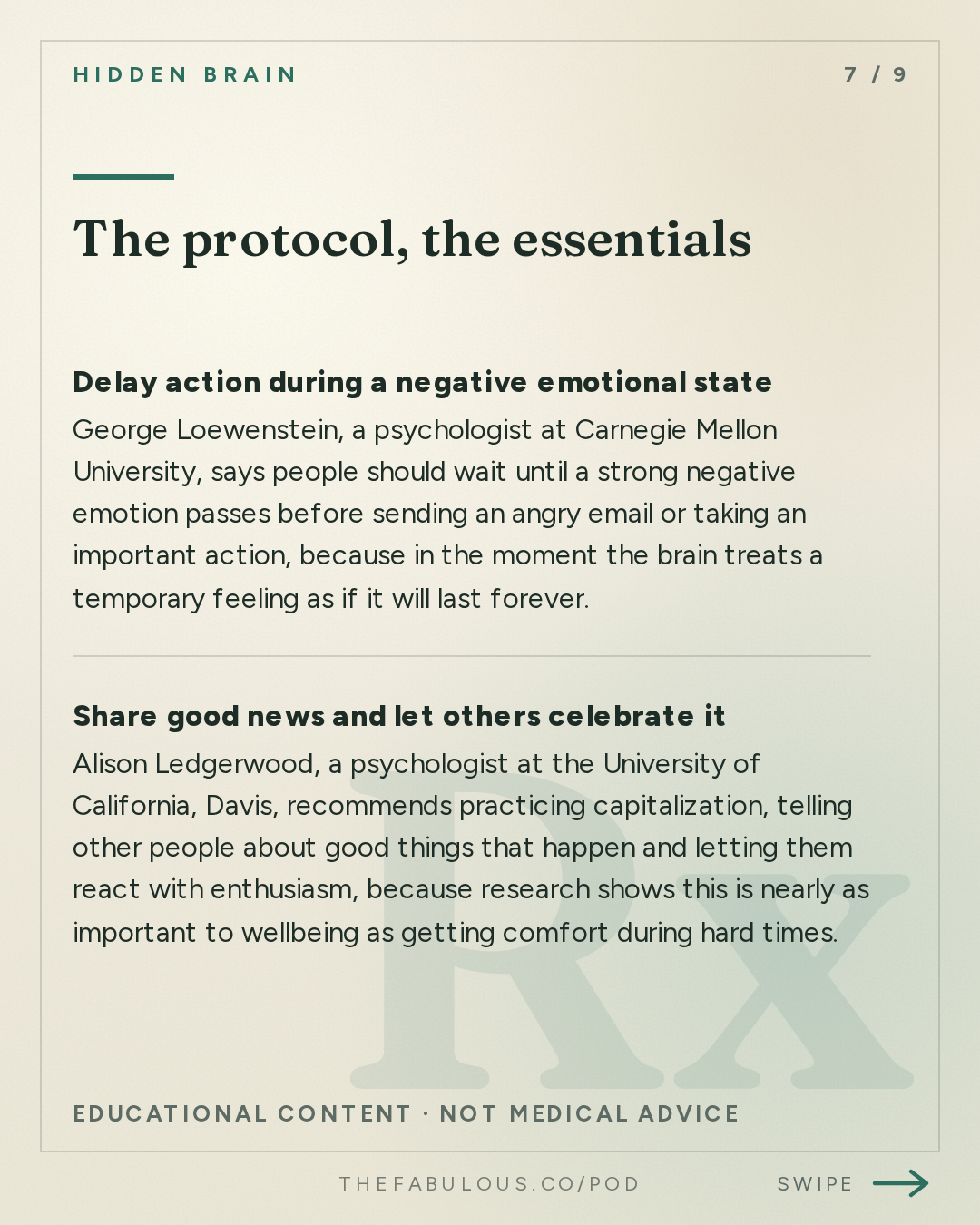
Delay action during a negative emotional state
George Loewenstein, a psychologist at Carnegie Mellon University, says people should wait until a strong negative emotion passes before sending an angry email or taking an important action, because in the moment the brain treats a temporary feeling as if it will last forever.
Whenever a strong negative emotion hits before responding to something important
-
Share good news and let others celebrate it
Alison Ledgerwood, a psychologist at the University of California, Davis, recommends practicing capitalization, telling other people about good things that happen and letting them react with enthusiasm, because research shows this is nearly as important to wellbeing as getting comfort during hard times.
Each time something positive happens, not only during crises
-
Separate might happen from will happen
Christina, a listener who works as a mental health therapist, asks herself whether she is reacting to what is actually happening right now or to what her brain has learned to expect from past difficult experiences, and she says the question does not remove her anxiety but gives her room to feel curious instead of certain.
Before assuming a meeting or event will go badly
Questions this episode answers
Why does happiness fade so quickly after getting what I want?
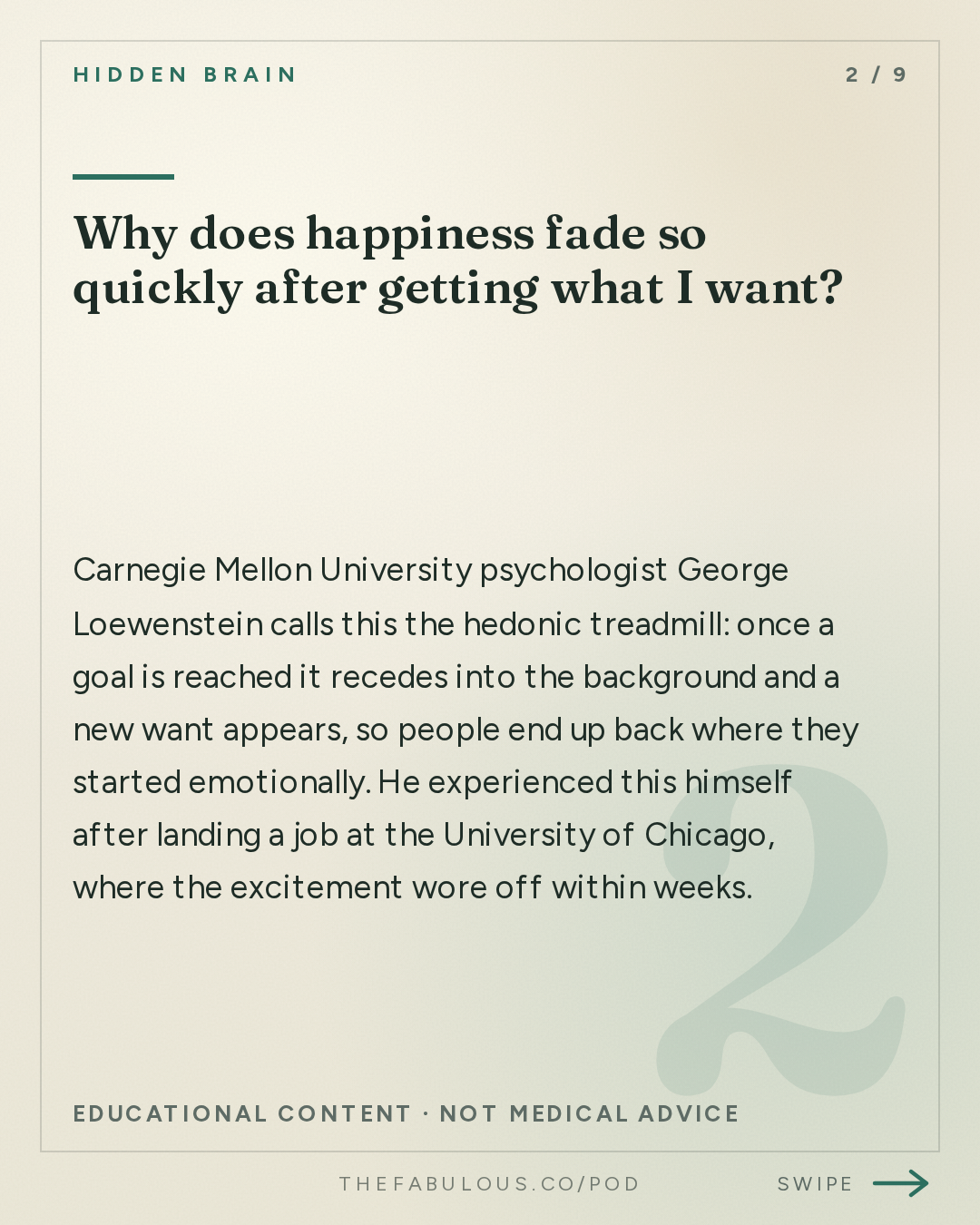
Carnegie Mellon University psychologist George Loewenstein calls this the hedonic treadmill: once a goal is reached it recedes into the background and a new want appears, so people end up back where they started emotionally (08:41). He experienced this himself after landing a job at the University of Chicago, where the excitement wore off within weeks (06:42).
What is the negativity bias?
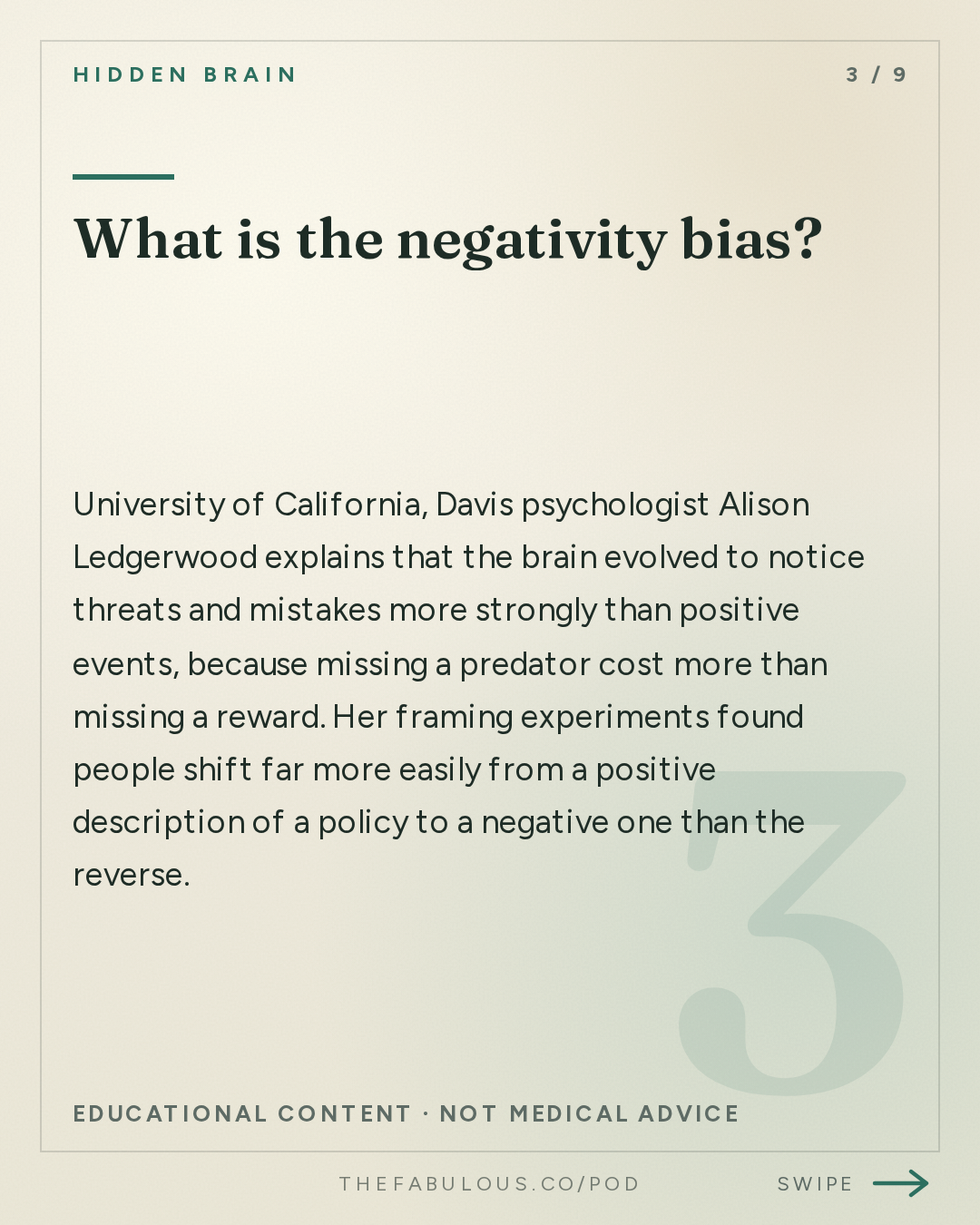
University of California, Davis psychologist Alison Ledgerwood explains that the brain evolved to notice threats and mistakes more strongly than positive events, because missing a predator cost more than missing a reward (59:06). Her framing experiments found people shift far more easily from a positive description of a policy to a negative one than the reverse (61:21).
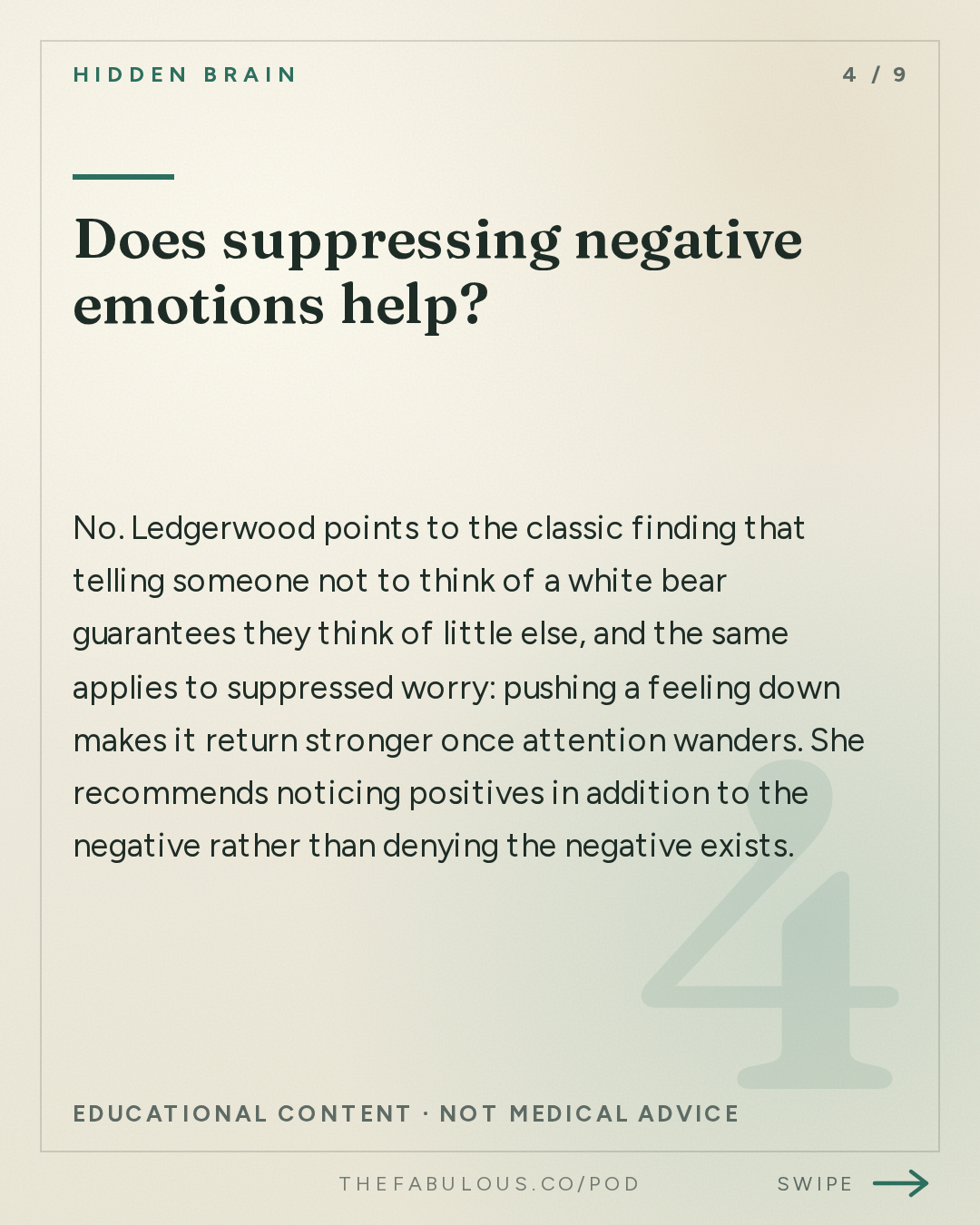
Does suppressing negative emotions help?
No. Ledgerwood points to the classic finding that telling someone not to think of a white bear guarantees they think of little else, and the same applies to suppressed worry: pushing a feeling down makes it return stronger once attention wanders (84:06). She recommends noticing positives in addition to the negative rather than denying the negative exists (84:31).
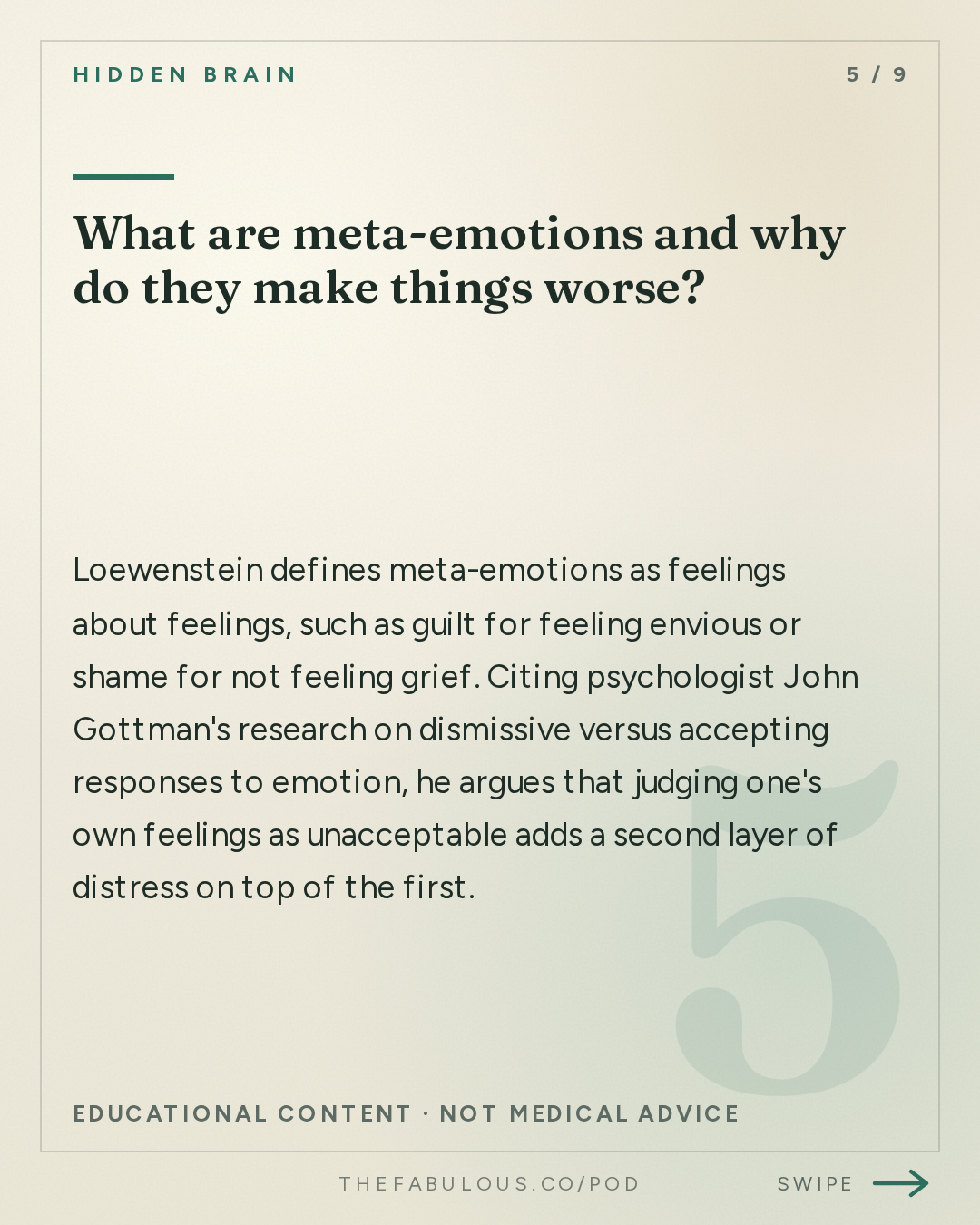
What are meta-emotions and why do they make things worse?
Loewenstein defines meta-emotions as feelings about feelings, such as guilt for feeling envious or shame for not feeling grief (39:33). Citing psychologist John Gottman's research on dismissive versus accepting responses to emotion, he argues that judging one's own feelings as unacceptable adds a second layer of distress on top of the first (39:00).
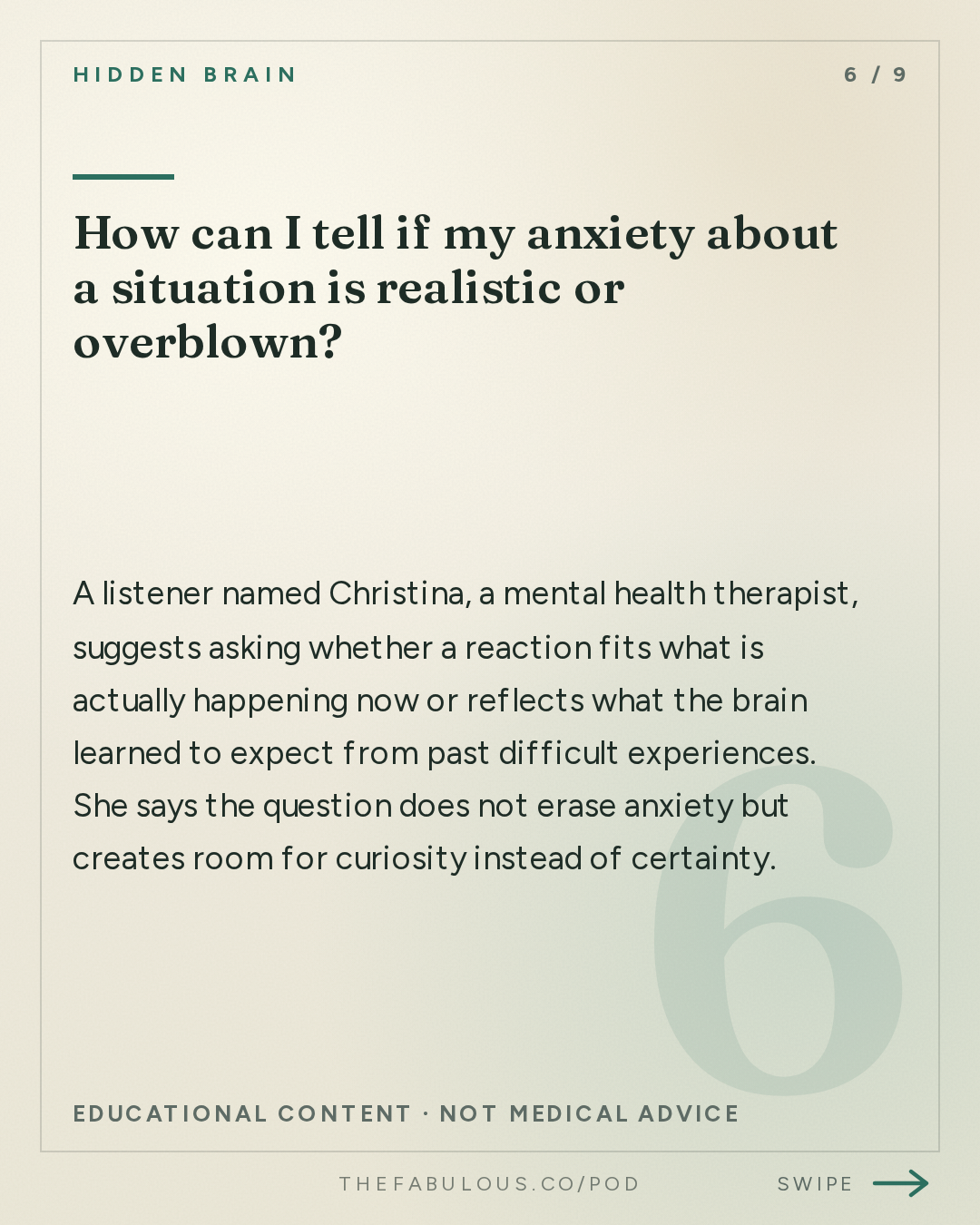
How can I tell if my anxiety about a situation is realistic or overblown?
A listener named Christina, a mental health therapist, suggests asking whether a reaction fits what is actually happening now or reflects what the brain learned to expect from past difficult experiences (96:51). She says the question does not erase anxiety but creates room for curiosity instead of certainty.
The full read, in cards
Go deeper
- Anna Karenina — Leo Tolstoy's novel supplies the episode's opening story about chasing happiness through external wishes
- The Opposite of Happiness: How Bad Feelings Make and Break Us — George Loewenstein's book argues negative emotions are evolved mechanisms that often backfire on wellbeing
- Thanking, Apologizing, Bragging, and Blaming — Loewenstein and Shireen Chaudhry's paper on why simple words like thanks or sorry are so hard to say even when they would mend a relationship
- Spirals of Silence — Loewenstein, Cass Sunstein and Aaron Carbone's paper on how shame keeps people from disclosing common struggles, making those struggles seem rarer than they are
- Jobs-saved framing study — Alison Ledgerwood's experiment showing people shift more easily from a positive frame of a policy to a negative one than the reverse
Mentioned
George Loewenstein · Alison Ledgerwood · Leo Tolstoy · Anna Karenina · Primo Levi · John Gottman · Cass Sunstein · Sigmund Freud · Mark Leary · Paul Rozin · Peter Ubel · Carnegie Mellon University · University of California, Davis
More from this show and category
How to Build Agency: Martin Seligman's Method
Martin Seligman argues that agency, the belief that our actions can change outcomes, is a skill built through specific exercises, not an inherited trait. He describes three tools, disputing catastrophic thoughts, graded task assignment, and writing about a best possible self, backed by decades of research on optimism and helplessness.
Seligman on Learned Helplessness and Optimism
Psychologist Martin Seligman found that helplessness is learned, and so is optimism. His research links explanatory style to depression risk, predicts success at West Point and in sales, and traces a psychological theory of human progress from ancient Greece to St. Augustine to modern China.
Why Conversations Go Wrong: Tannen and Levine
Georgetown linguist Deborah Tannen and University of Chicago psychologist Emma Levine explain why conversations misfire and when lying helps. Tannen shows that mismatched pacing and indirectness create hidden meta-messages about relationships, while Levine finds most lies are pro-social, told to spare feelings when the truth offers no benefit.
The Psychology of Career Jolts and Quitting
Psychologist Anthony Klotz finds that half of all job quitting starts with a sudden emotional jolt, not careful planning. Psychologist Ap Dijksterhuis adds that sleep, meditation, and walking help the unconscious mind solve problems willpower alone cannot crack.
