
How to Build Agency: Martin Seligman's Method
How to Make a Difference: Part 2
The brief
Martin Seligman argues that agency, the belief that our actions can change outcomes, is a skill built through specific exercises, not an inherited trait. He describes three tools, disputing catastrophic thoughts, graded task assignment, and writing about a best possible self, backed by decades of research on optimism and helplessness.
Ask this episode anything
Pod's AI answers from the episode itself, with the minute mark so you can hear it yourself.
Or start with one of these
Ask this episode
Pod's AI listens to the whole episode to answer, and points you to the minute it comes from.
The rest of this answer, and any question after it
Answers come from the episode itself, never from a summary of it.
Continue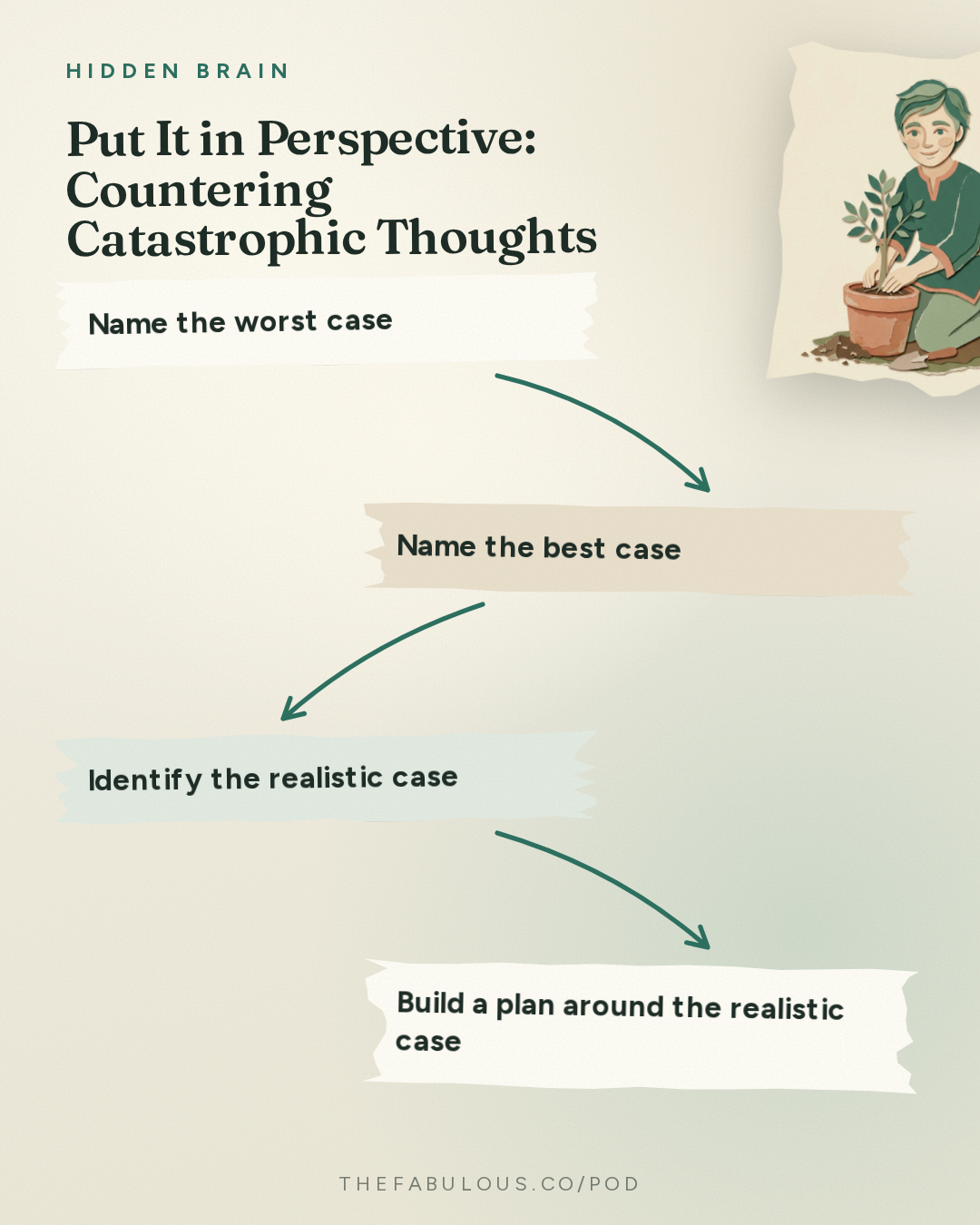
Key takeaways
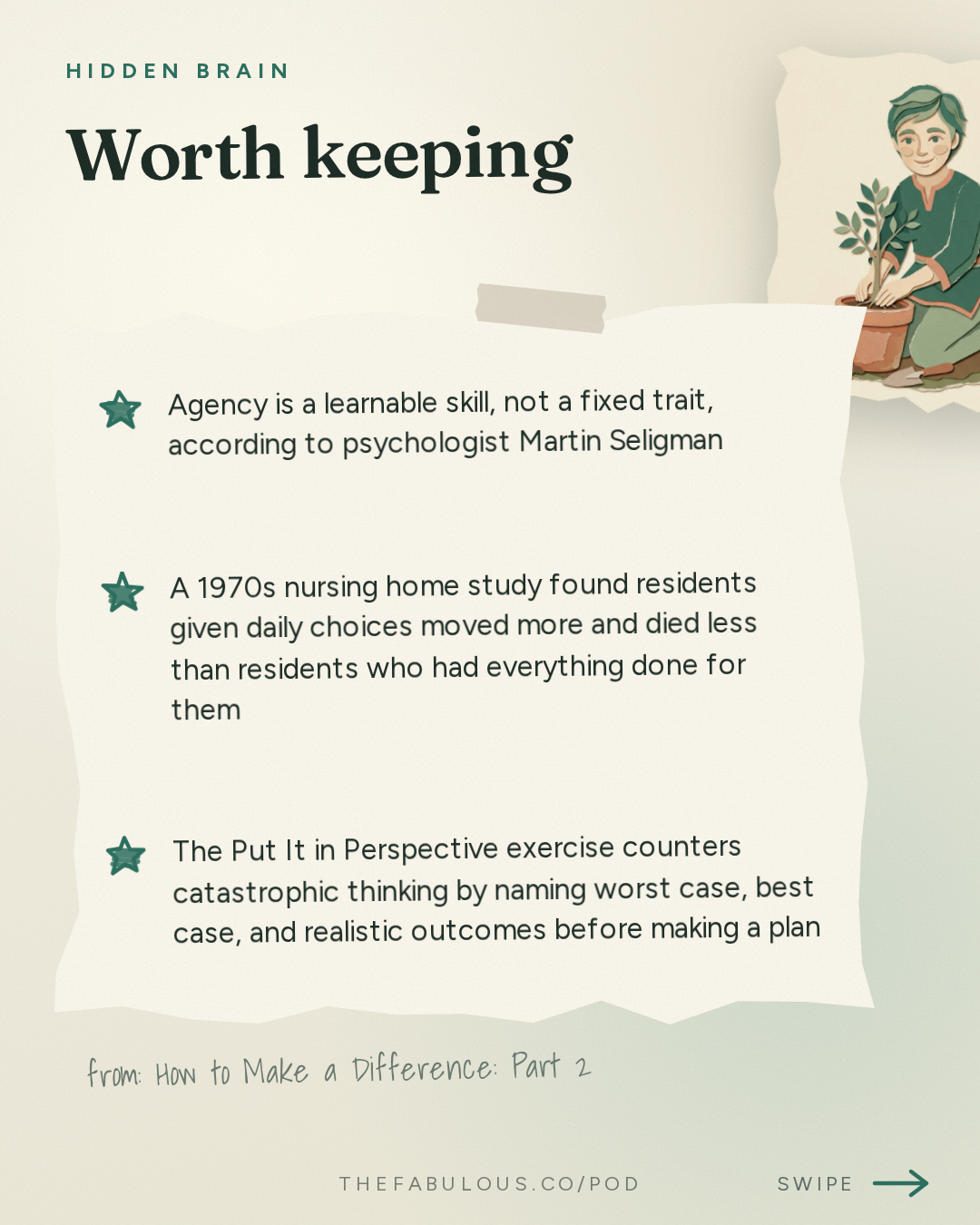
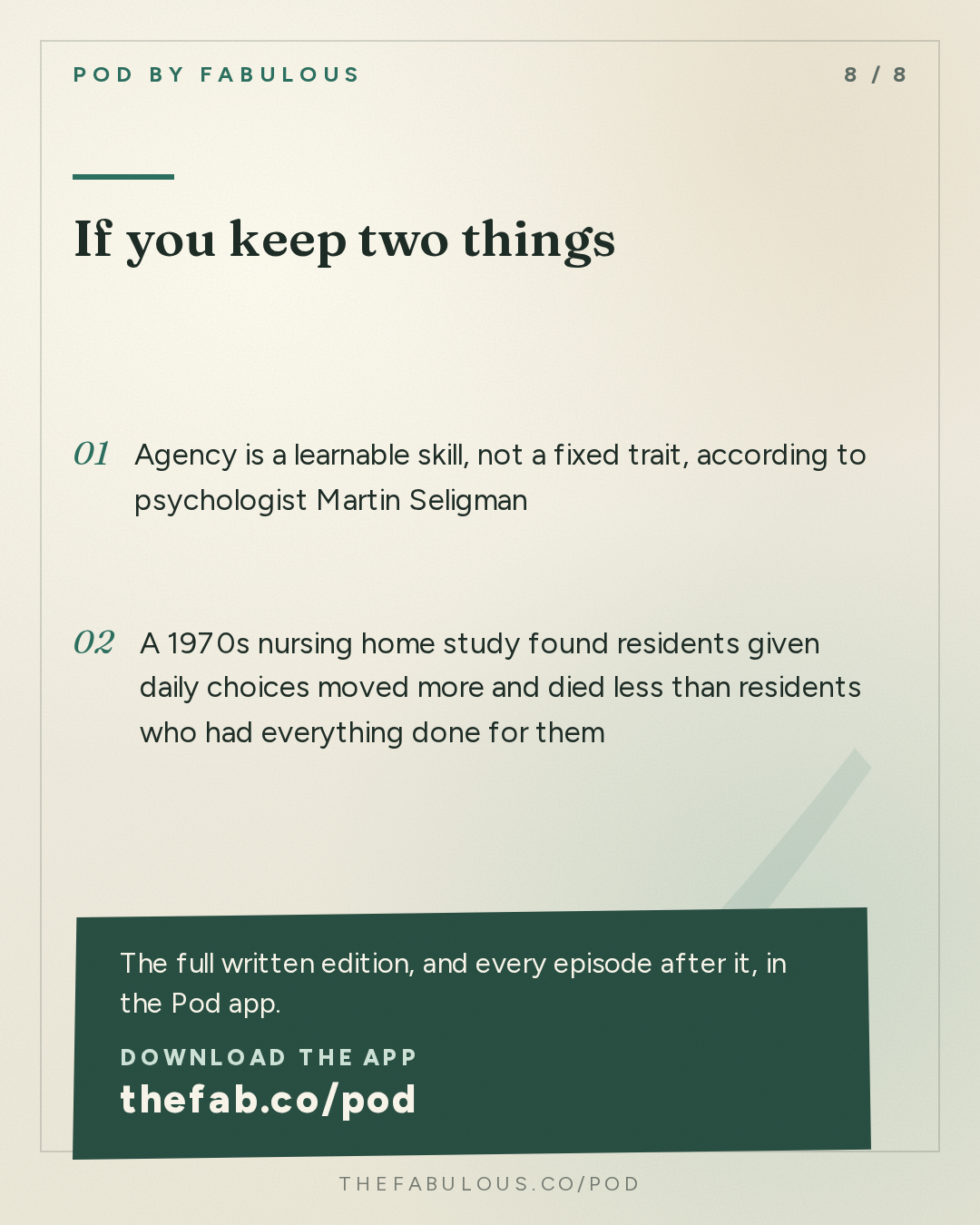
- Agency is a learnable skill, not a fixed trait, according to psychologist Martin Seligman
- A 1970s nursing home study found residents given daily choices moved more and died less than residents who had everything done for them
- The Put It in Perspective exercise counters catastrophic thinking by naming worst case, best case, and realistic outcomes before making a plan
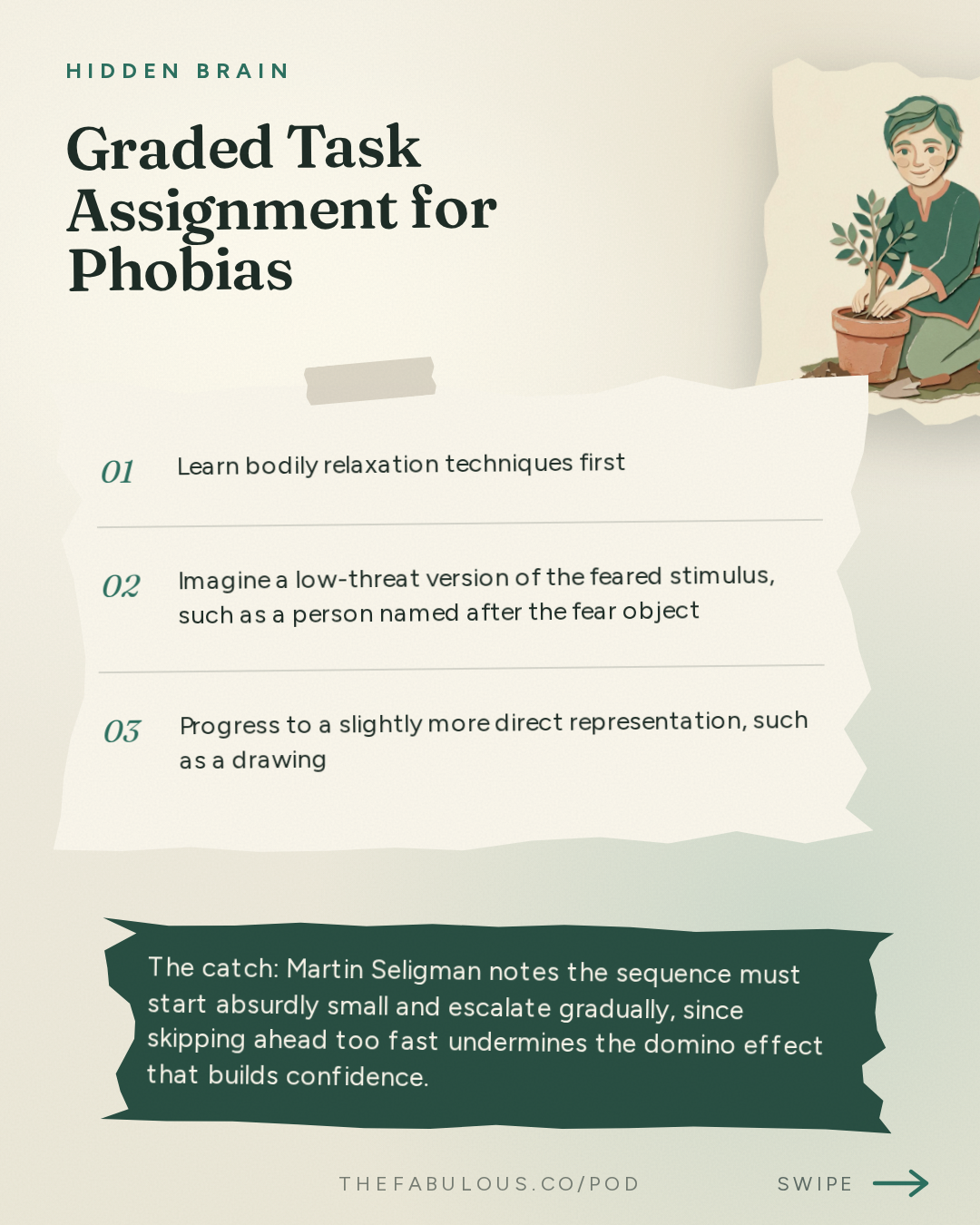
- Graded task assignment breaks a feared or overwhelming task into six to 10 small steps to build confidence gradually
- Seligman's free Signature Strengths test has been taken by five million people to identify traits like humor or social intelligence for use at work
The episode in cards
A brilliant graduate student is handed a hard problem. She has aced every course. She has every reason to believe she can solve it. Instead, within days, her professor finds her with her head in her hands, sobbing. She has given up, not because the problem defeated her, but because she never believed she could beat it in the first place. Martin Seligman, the University of Pennsylvania psychologist who tells this story about a student he calls Suzanne, has spent sixty years turning that moment into a research program (06:07). His conclusion is blunt and, in its way, hopeful: believing you can act is not a fixed trait handed out at birth. It is a skill, and skills can be taught.
Seligman calls this belief agency, and he says psychology spent most of the twentieth century unable to study it, blocked by three blind spots (07:52). The field only knew how to treat misery, not how to build flourishing. It assumed people were shaped entirely by their environments, leaving no room for choice or preference. And it had no serious theory of thinking itself, of the sentences people silently tell themselves about why things happen. Without a science of thought, there was no way to explain why a talented student would collapse before she'd truly tried.
"If you have the talent of Mozart, but you don't believe you can compose music, the result is zero." — Martin Seligman [07:15]That line is the spine of the episode. Talent without belief produces nothing, and belief, it turns out, is trainable.
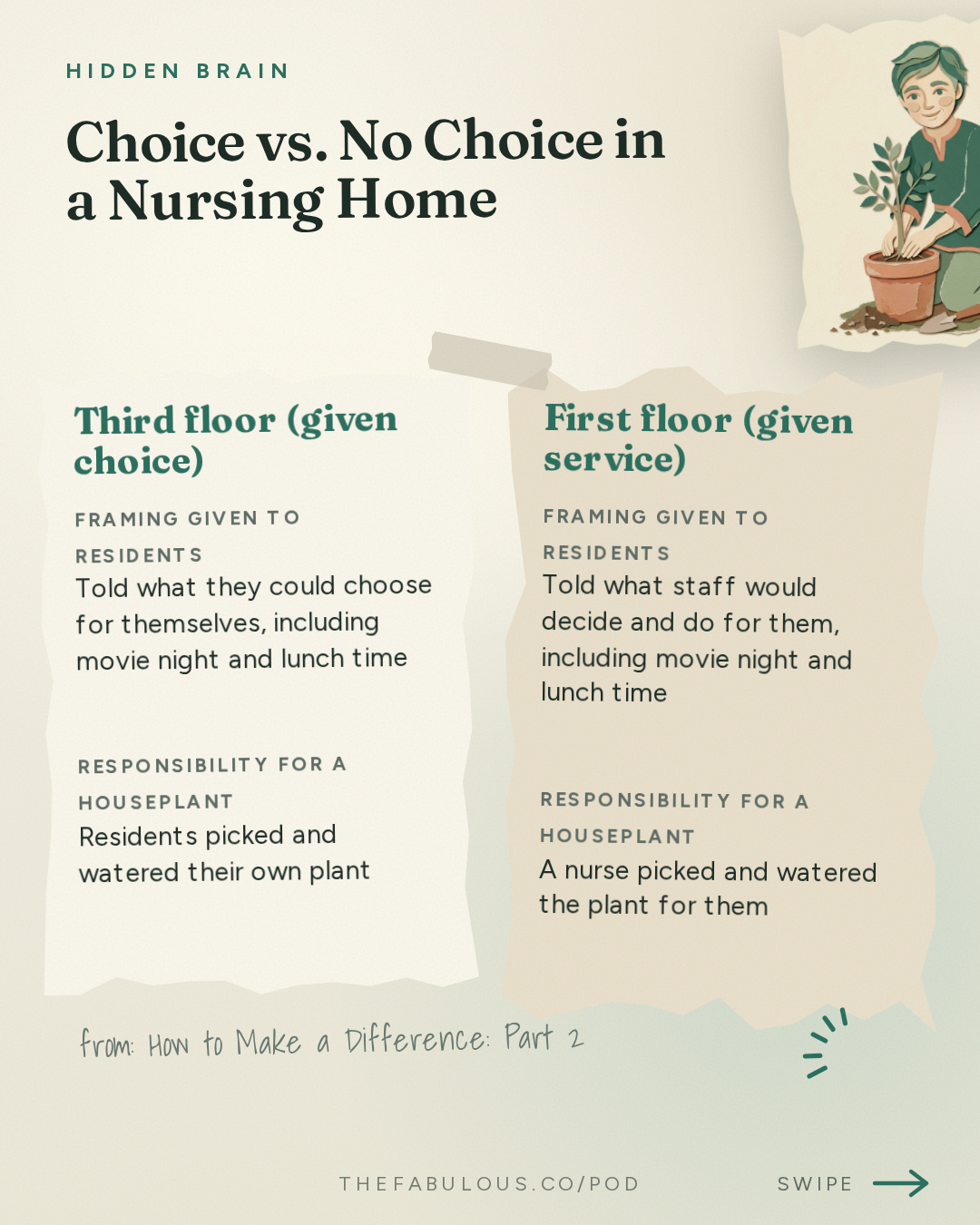
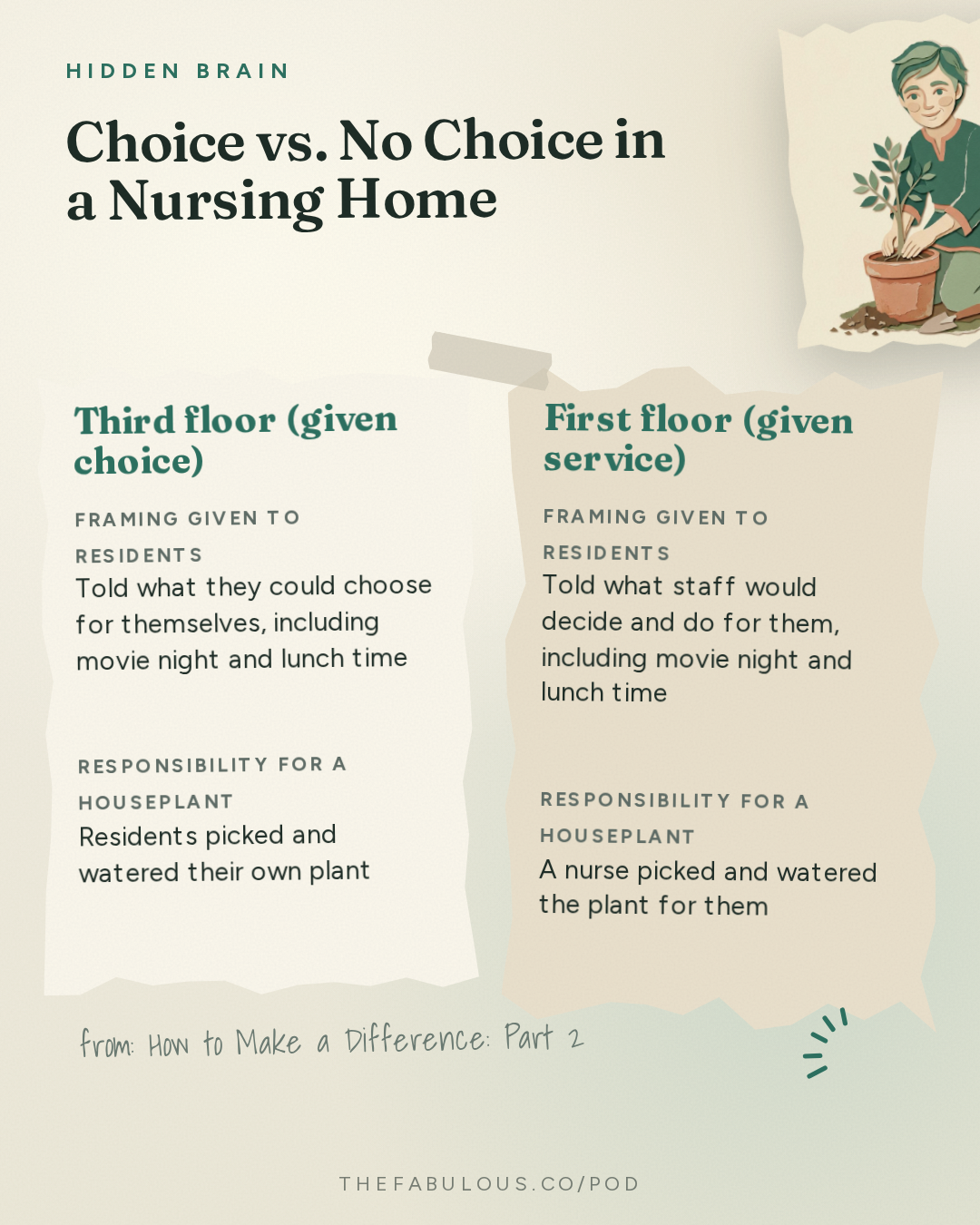
The clearest evidence for this comes from a nursing home study that Seligman describes as one of the discoveries that opened the field. Researchers Ellen Langer and Judy Rodin gave two floors of residents nearly identical amenities, movies, lunch, a houseplant, but framed them differently. One floor was told what would be done for them: the nurse will pick a plant, the nurse will water it, movie night is Tuesday. The other floor was told what they could choose: pick your own plant and water it yourself, choose your own movie night (10:58). The only real difference was who held the decision. Researchers tracked the residents in a low-tech way, taping wheelchair wheels and checking how dirty the tape got, as a proxy for how much people moved (11:27). The floor with choice moved more. It also, over time, died less.
"They found that a statistically larger sample of people died on the first floor than on the third floor." — Martin Seligman [12:01]The physical setup was the same. The presence or absence of a small daily decision was not.
For decades the standard explanation was that helplessness itself was toxic, that giving up damaged the body. But newer neuroscience complicates that story. Seligman credits University of Colorado researcher Steve Maier with a set of experiments, built over twenty-five years, showing that the active ingredient was not the harm of helplessness but the protective power of mastery (13:56). In other words, agency is not just the absence of a wound. It is its own force, something the brain has to learn and reinforce, not merely a default state that gets suppressed.
Arguing With the 4 A.M. Voice
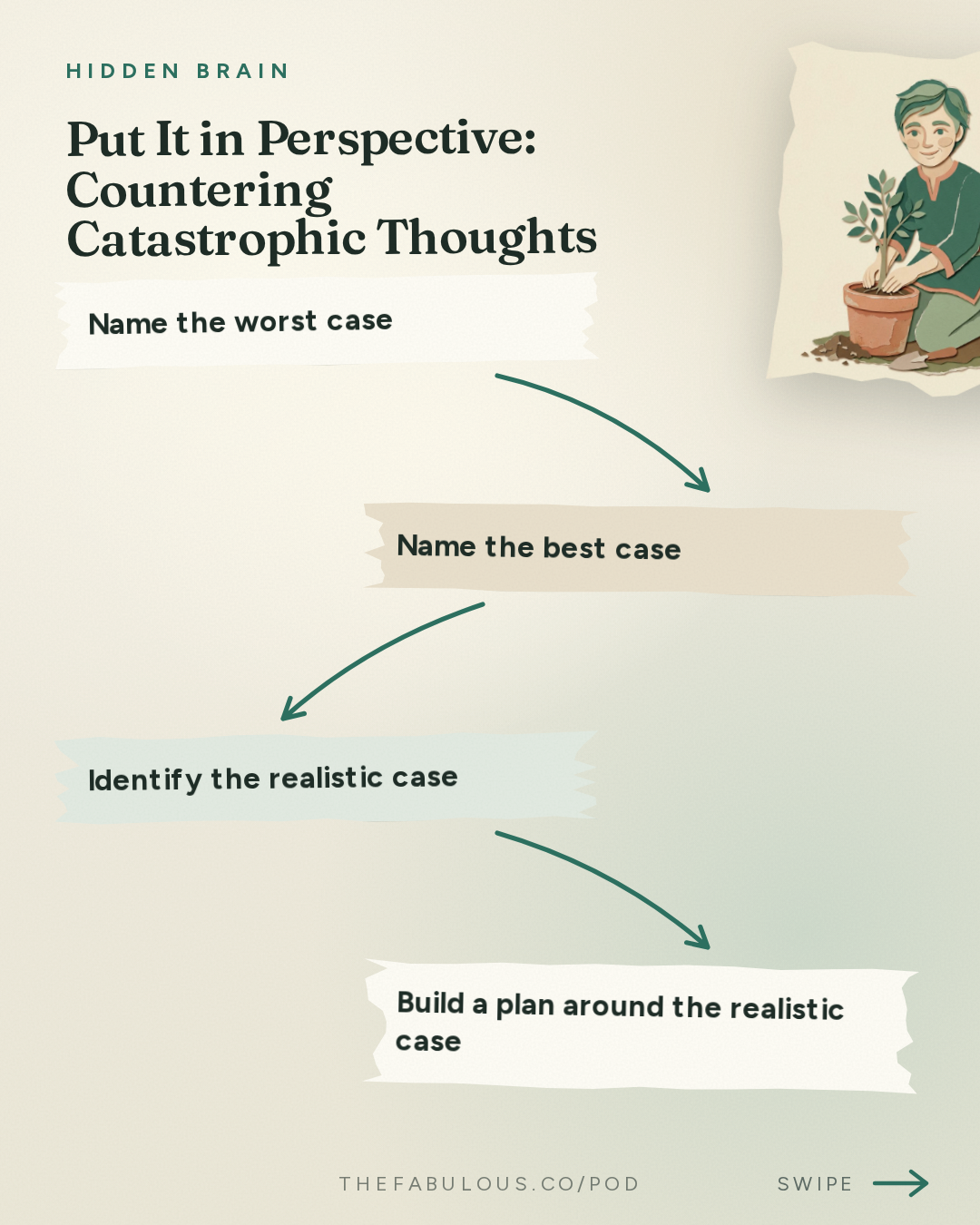
If agency can be learned, the next question is how, and Seligman's answer starts with the brain's oldest habit: catastrophizing. He traces this to the Ice Age. Ancestors who assumed good weather would continue got, in his phrase, crushed by the ice. Ancestors who assumed disaster was coming survived to pass on their genes (19:27). The result is a nervous system that defaults to worst-case thinking, useful for a species dodging glaciers, less useful for a manager anxious about a 4 p.m. meeting. Seligman's tool for this is called Put It in Perspective. First, name the worst possible outcome. Then name the best possible outcome, something equally unlikely, like a surprise promotion. Only after entertaining both extremes do you land on the realistic middle, and from there, build an actual plan (21:20). The exercise doesn't suppress the catastrophic thought, it interrogates it. Seligman still uses it on himself. Describing a bout of pre-interview anxiety at nearly eighty-four years old, he explains how he talked himself down by remembering a similar interview that had gone well the week before (23:40).
"You can't treat your automatic thoughts as if they were true, and that's one of the basic discoveries of positive psychology and agency." — Martin Seligman [22:37]
A related idea concerns how people explain events that have already happened, what Seligman calls explanatory style. Pessimists interpret a bad event as permanent, pervasive, and personal, meaning it will last forever, poison every area of life, and prove something is wrong with them (25:24). That triad, Seligman argues, is the engine of learned helplessness and depression. The antidote is not blind positivity but the habit of treating those interpretations as one hypothesis among several, then testing them against evidence, the same move psychologist Carol Dweck later popularized as growth mindset (30:32).
The most concrete tool in the episode is graded task assignment, developed originally to treat phobias and later applied to depression. The logic is almost embarrassingly simple: instead of confronting the whole feared task at once, break it into small steps that build on each other. A person terrified of cats might start by imagining a person named Ada Katz, then a drawing of a cat, working up through six to ten steps before encountering a real animal (29:44). Seligman reports the same structure works on a filthy kitchen: don't clean everything, wash one cup and put it away (27:25). Small, achievable wins create what he calls a domino effect, each success feeding belief in the next attempt.
Imagination as the Third Leg
Seligman describes agency as resting on three components: optimism, the belief that things can go well in the future; efficacy, the belief that a specific task can be handled right now; and imagination, the ability to picture a range of possible futures (28:05). Of the three, he says imagination is the least understood, and he offers a writing exercise as a partial fix: describe your best possible self, including the path that got there. With people who are depressed, he avoids a related version of the exercise, having someone write their own obituary, because it can backfire (38:08). For everyone else, he treats it as a way to surface future scenarios the mind has never rehearsed.
Two of his former students illustrate how imagination and strength-finding combine in daily life. A waitress who resented her job took a strengths inventory (Seligman's own free tool, which he says at least ten million people have used, with five million completing the strengths test specifically) and discovered her top strength was social intelligence (40:00). She reframed each table as a chance to be the highlight of a stranger's evening. Her tips went up and the job became bearable (41:10). Another student, dreading a nightly walk through a dangerous part of Philadelphia, learned his top strength was humor. He bought rollerblades and a stopwatch and turned the walk into a private Olympic event, timing himself each night (43:56). Neither circumstance changed. The relationship to it did.
Seligman is careful to note agency has a shadow side. People who are genuinely oppressed or trapped can be unfairly blamed if agency is treated as a moral obligation rather than a resource (44:41). And late in the conversation he turns, unexpectedly, to artificial intelligence, describing an AI assistant called Claude as a creative partner who helped him find a missing transition between two chapters of his book after five years of failed attempts on his own (47:57).
"I wake up in the morning now more excited than I've been in about 50 years to see what Claude and I can do together." — Martin Seligman [49:10]It's a strange note to end on, an eighty-four-year-old scientist of self-belief crediting a piece of software with reviving his sense of possibility. But it fits the argument he has been making for an hour: agency isn't about doing everything alone. It's about believing, and then finding the tools, human or otherwise, that make the belief usable.
In their words
“If you have the talent of Mozart, but you don't believe you can compose music, the result is zero.”
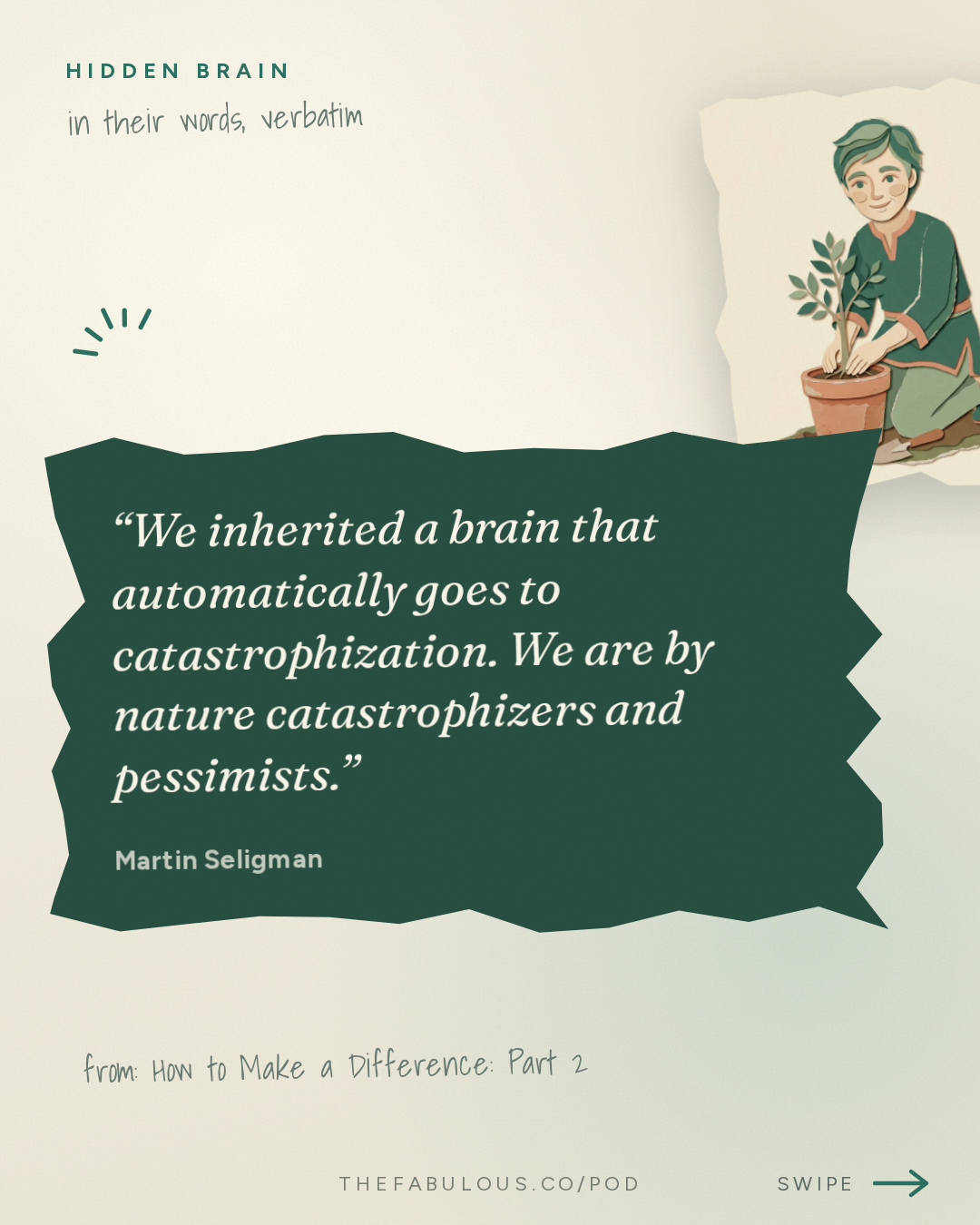
“We inherited a brain that automatically goes to catastrophization. We are by nature catastrophizers and pessimists.”
“You can't treat your automatic thoughts as if they were true, and that's one of the basic discoveries of positive psychology.”
“Find the intersection of what you're naturally good at and what the world needs.”
“I wake up in the morning now more excited than I've been in about 50 years to see what Claude and I can do together.”
Protocols
-
Put It in Perspective
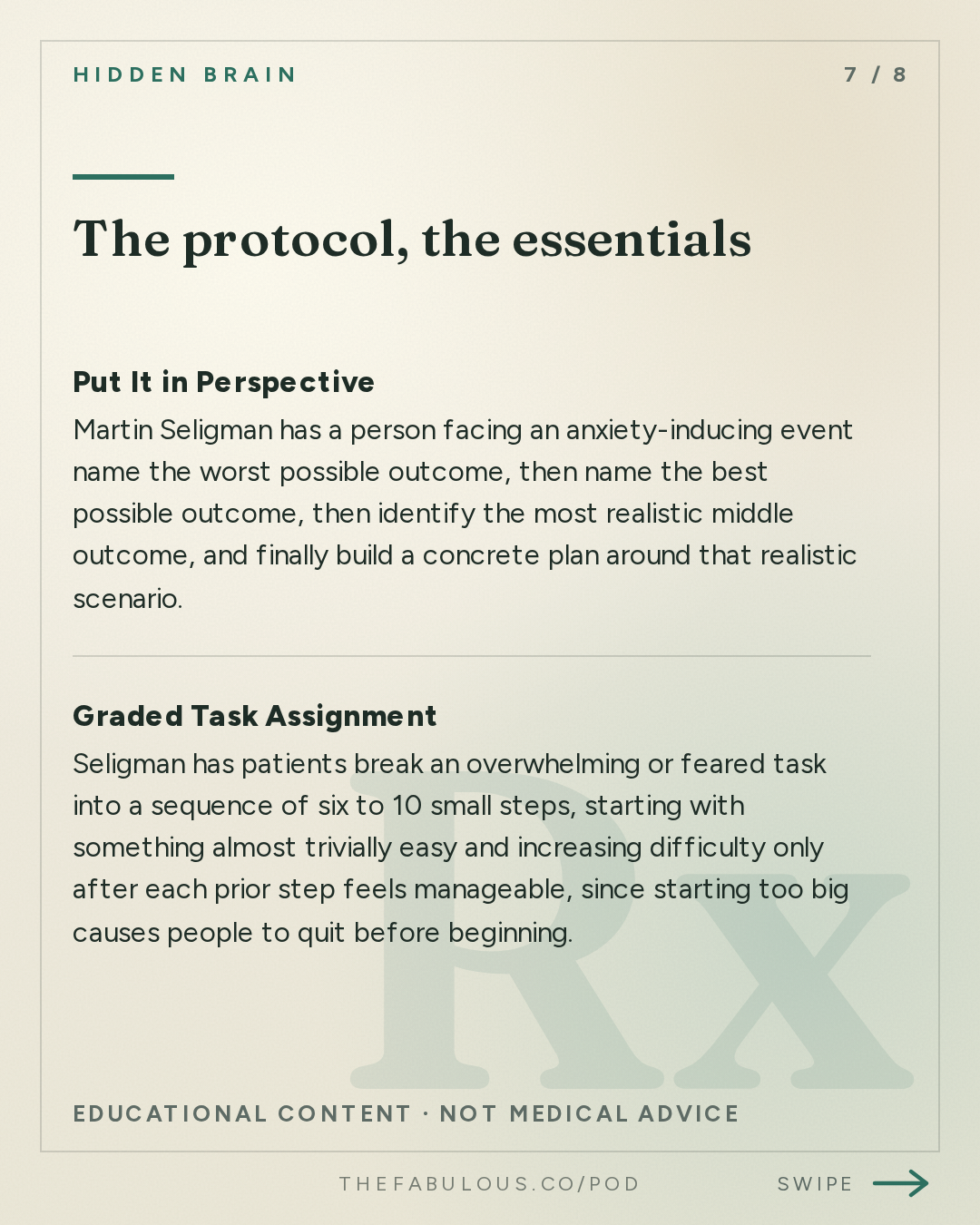
Martin Seligman has a person facing an anxiety-inducing event name the worst possible outcome, then name the best possible outcome, then identify the most realistic middle outcome, and finally build a concrete plan around that realistic scenario.
Use whenever a catastrophic thought arises about an upcoming event
-
Graded Task Assignment
Seligman has patients break an overwhelming or feared task into a sequence of six to 10 small steps, starting with something almost trivially easy and increasing difficulty only after each prior step feels manageable, since starting too big causes people to quit before beginning.
Progress one step at a time until the full task is achievable
-
Write Your Best Possible Self
Seligman recommends writing a detailed account of one's most successful imagined future and the route that led there, which he says helps generate future scenarios the mind has not previously rehearsed, though he avoids the related obituary-writing version of this exercise with people who are depressed because it can trigger distress.
A one-time or periodic writing exercise
-
Apply Signature Strengths at Work
Seligman has people take a strengths inventory to identify their top strength, such as humor or social intelligence, and then redesign a disliked task around that strength, as when his student used social intelligence to make waitressing tables the social highlight of each customer's evening.
Applied daily within an existing job or task
Questions this episode answers
What is psychological agency according to Martin Seligman?
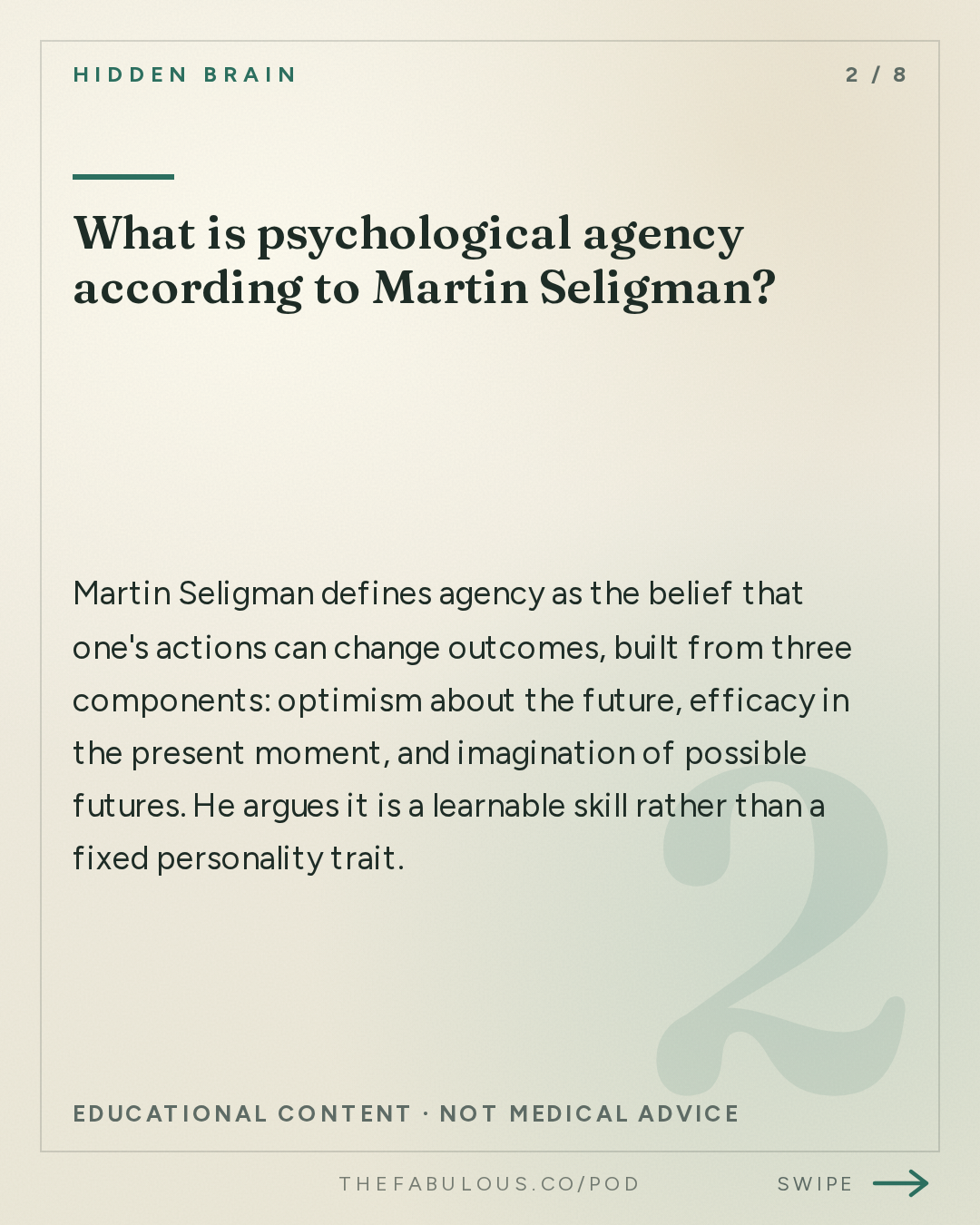
Martin Seligman defines agency as the belief that one's actions can change outcomes, built from three components: optimism about the future, efficacy in the present moment, and imagination of possible futures (28:05). He argues it is a learnable skill rather than a fixed personality trait (02:11).
Does having choice actually affect health outcomes?
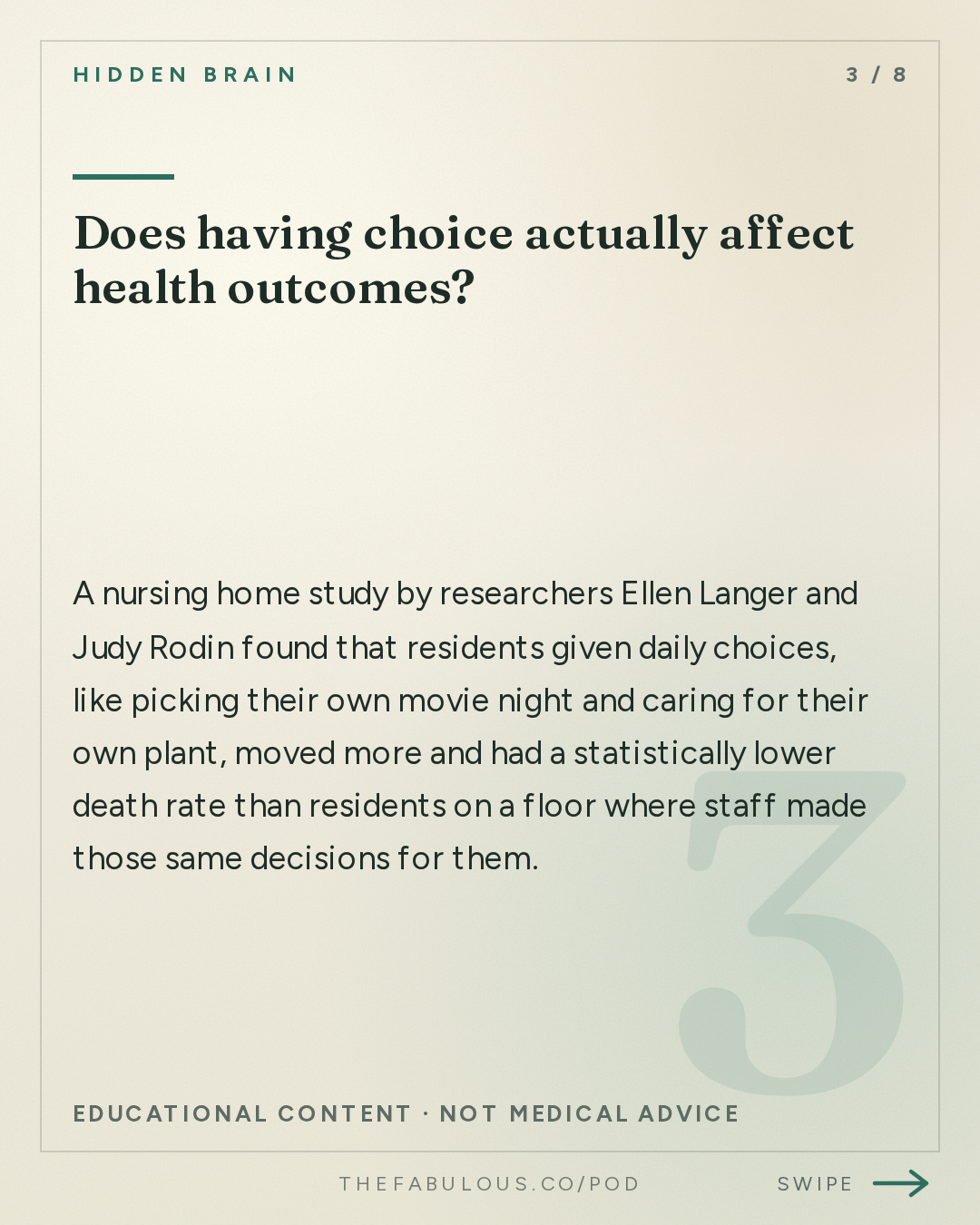
A nursing home study by researchers Ellen Langer and Judy Rodin found that residents given daily choices, like picking their own movie night and caring for their own plant, moved more and had a statistically lower death rate than residents on a floor where staff made those same decisions for them (10:58, 12:01).
What is the Put It in Perspective exercise?
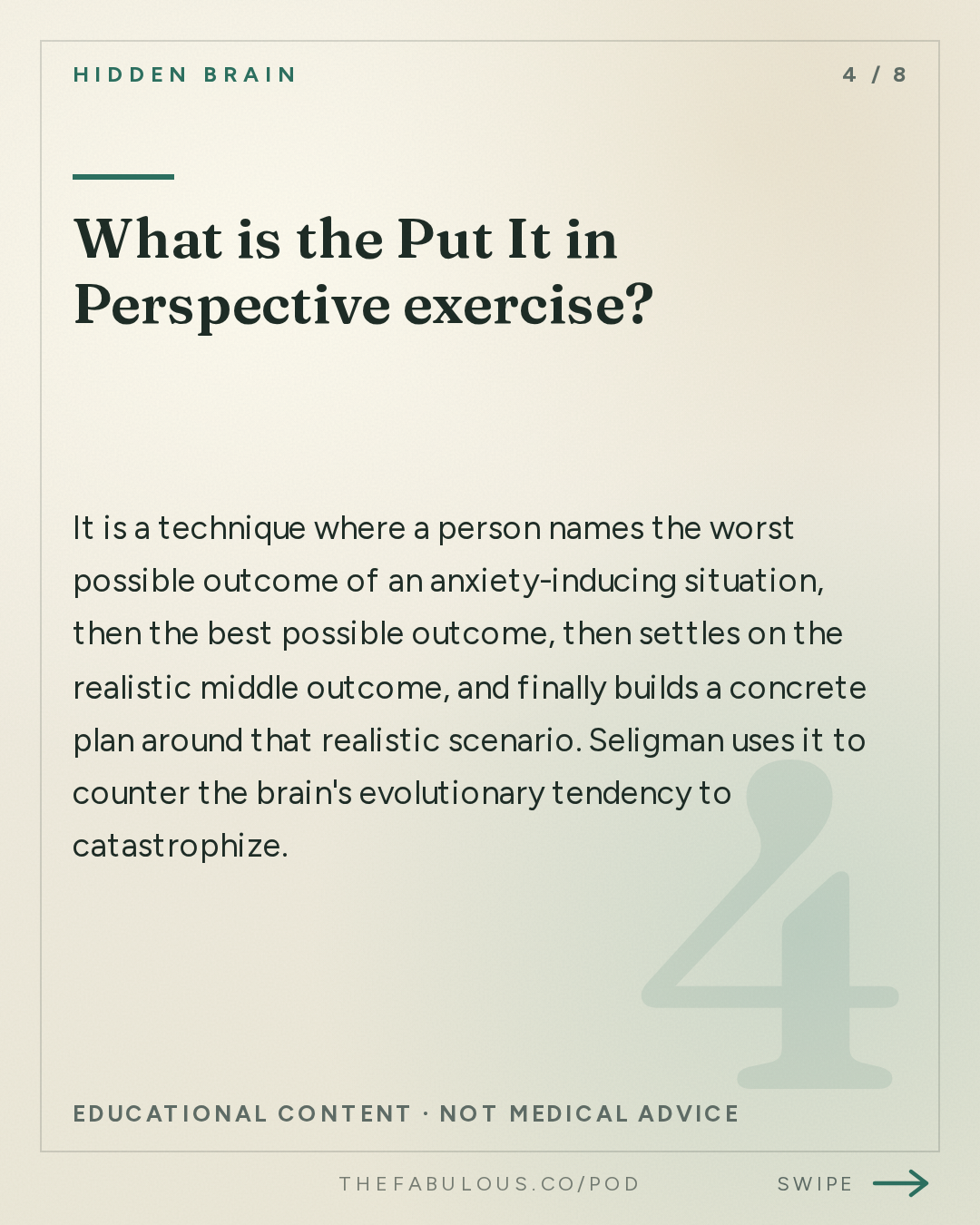
It is a technique where a person names the worst possible outcome of an anxiety-inducing situation, then the best possible outcome, then settles on the realistic middle outcome, and finally builds a concrete plan around that realistic scenario (21:20). Seligman uses it to counter the brain's evolutionary tendency to catastrophize (19:27).
How does graded task assignment help with phobias or depression?
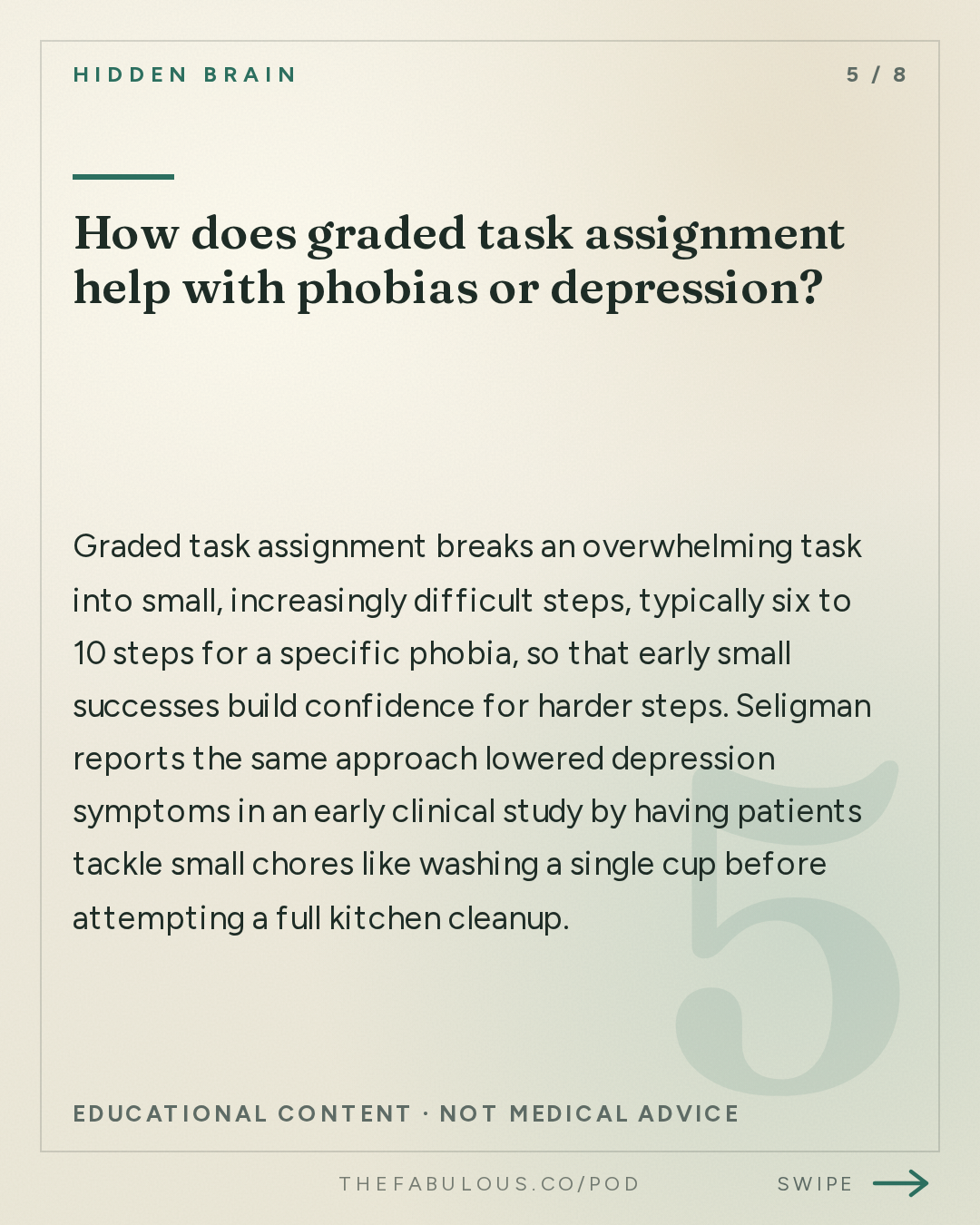
Graded task assignment breaks an overwhelming task into small, increasingly difficult steps, typically six to 10 steps for a specific phobia, so that early small successes build confidence for harder steps (29:15). Seligman reports the same approach lowered depression symptoms in an early clinical study by having patients tackle small chores like washing a single cup before attempting a full kitchen cleanup (27:25).
What is the Via Signature Strengths test?
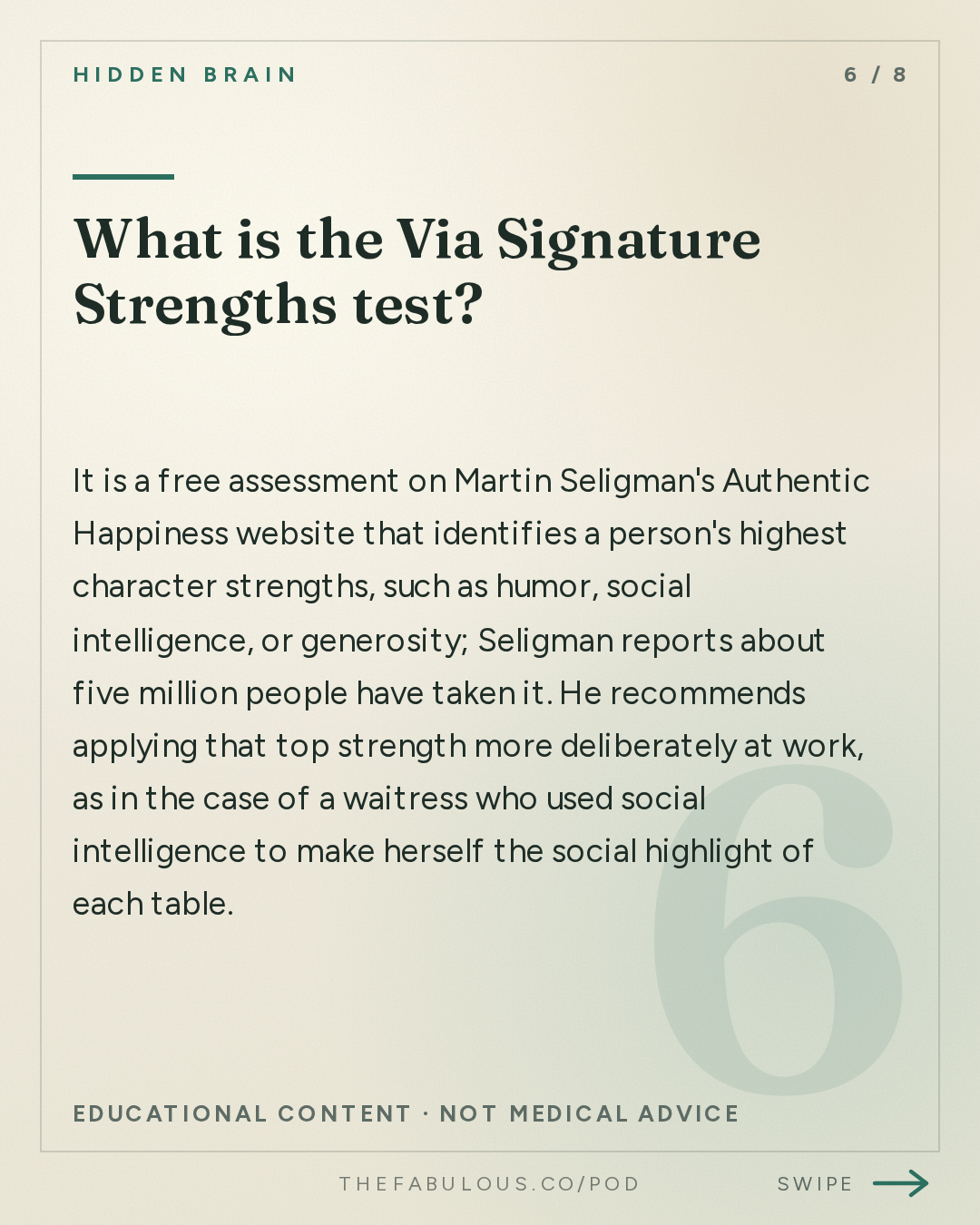
It is a free assessment on Martin Seligman's Authentic Happiness website that identifies a person's highest character strengths, such as humor, social intelligence, or generosity; Seligman reports about five million people have taken it (40:38). He recommends applying that top strength more deliberately at work, as in the case of a waitress who used social intelligence to make herself the social highlight of each table (41:10).
The full read, in cards
Go deeper
- Agency: The Psychological History of Human Progress — Seligman's book tracing the concept of individual agency through history, including chapters on ancient China and the Bible
Mentioned
Martin Seligman · Ellen Langer · Judy Rodin · Steve Maier · Carol Dweck · Danny Kahneman · Claude · University of Pennsylvania · Authentic Happiness
More from this show and category
Seligman on Learned Helplessness and Optimism
Psychologist Martin Seligman found that helplessness is learned, and so is optimism. His research links explanatory style to depression risk, predicts success at West Point and in sales, and traces a psychological theory of human progress from ancient Greece to St. Augustine to modern China.
Why Conversations Go Wrong: Tannen and Levine
Georgetown linguist Deborah Tannen and University of Chicago psychologist Emma Levine explain why conversations misfire and when lying helps. Tannen shows that mismatched pacing and indirectness create hidden meta-messages about relationships, while Levine finds most lies are pro-social, told to spare feelings when the truth offers no benefit.
The Psychology of Career Jolts and Quitting
Psychologist Anthony Klotz finds that half of all job quitting starts with a sudden emotional jolt, not careful planning. Psychologist Ap Dijksterhuis adds that sleep, meditation, and walking help the unconscious mind solve problems willpower alone cannot crack.
Psychology of Indirect Speech: Steven Pinker
Psychologist Steven Pinker explains why people hedge instead of stating things plainly: naming a transaction out loud turns a warm relationship into a cold one. He shows how common knowledge, once spoken aloud, cannot be denied, and how innuendo lets bribery, threats and courtship happen with plausible deniability intact.
