
Whitney Cummings on Wellness as a Second Job
Why Wellness Feels Like a Second Job | Whitney Cummings
▶ Listen to the full episode More from The Dr. Gabrielle Lyon Show
The brief
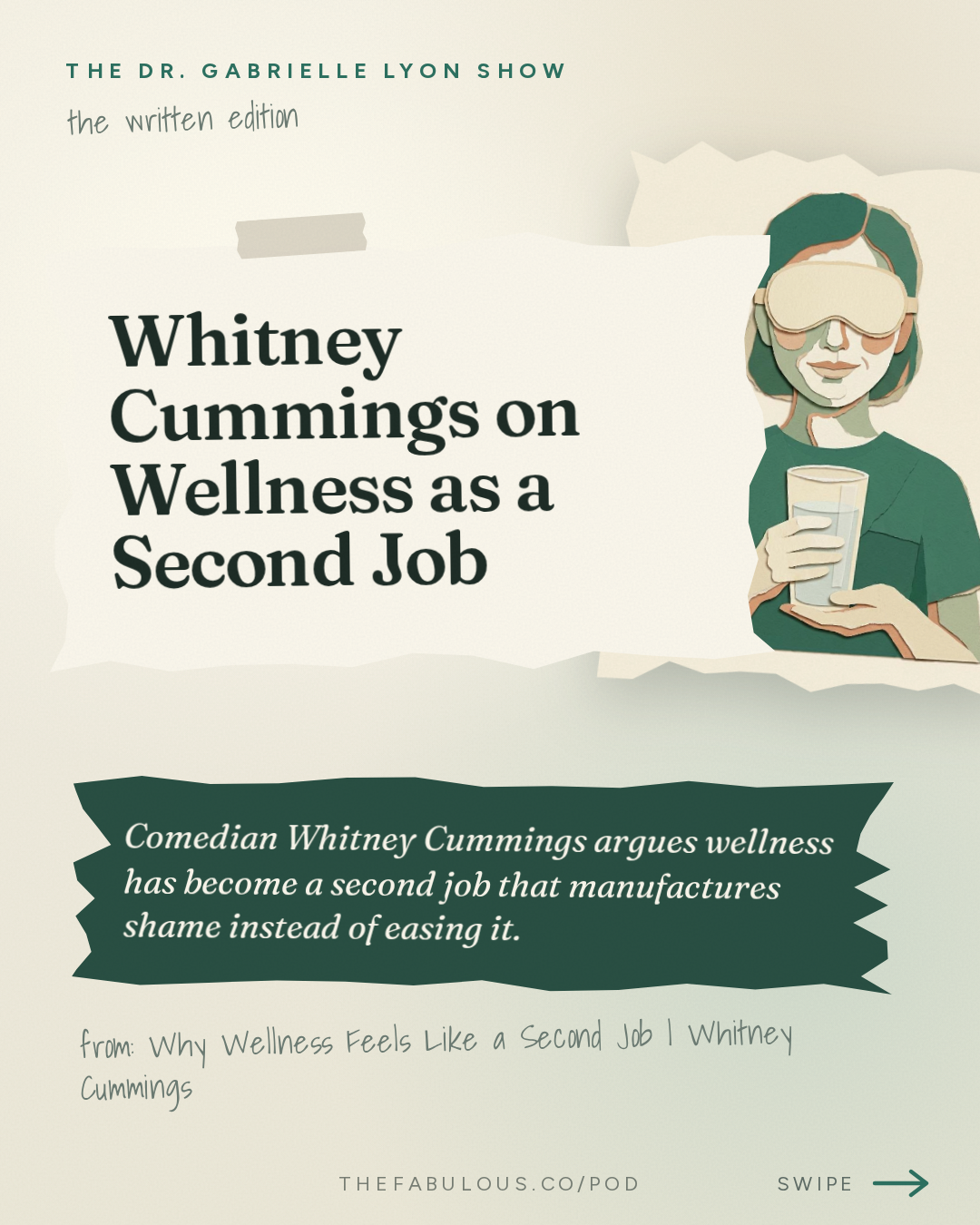
Comedian Whitney Cummings argues wellness has become a second job that manufactures shame instead of easing it. She traces her own turn from childhood chaos to stand-up, critiques the sleep and hydration industry, and offers her 100 energy dollar framework for saying no without guilt.
At a wolf sanctuary called Wolf Connection in Palmdale, California, comedian Whitney Cummings once watched a pack of rescued wolf dogs and tried to guess which one ran the show. One wolf howled. One peed on a fence. One tried to pick a fight through the wire. One was asleep. The sleeping one, she learned, was the alpha (70:34). Alphas do not need to prove anything. They rest.
That image turns out to be the spine of a long, funny, and surprisingly rigorous conversation between Cummings and physician Gabrielle Lyon about what modern wellness has become: not a path to feeling better, but a second job with its own performance review.
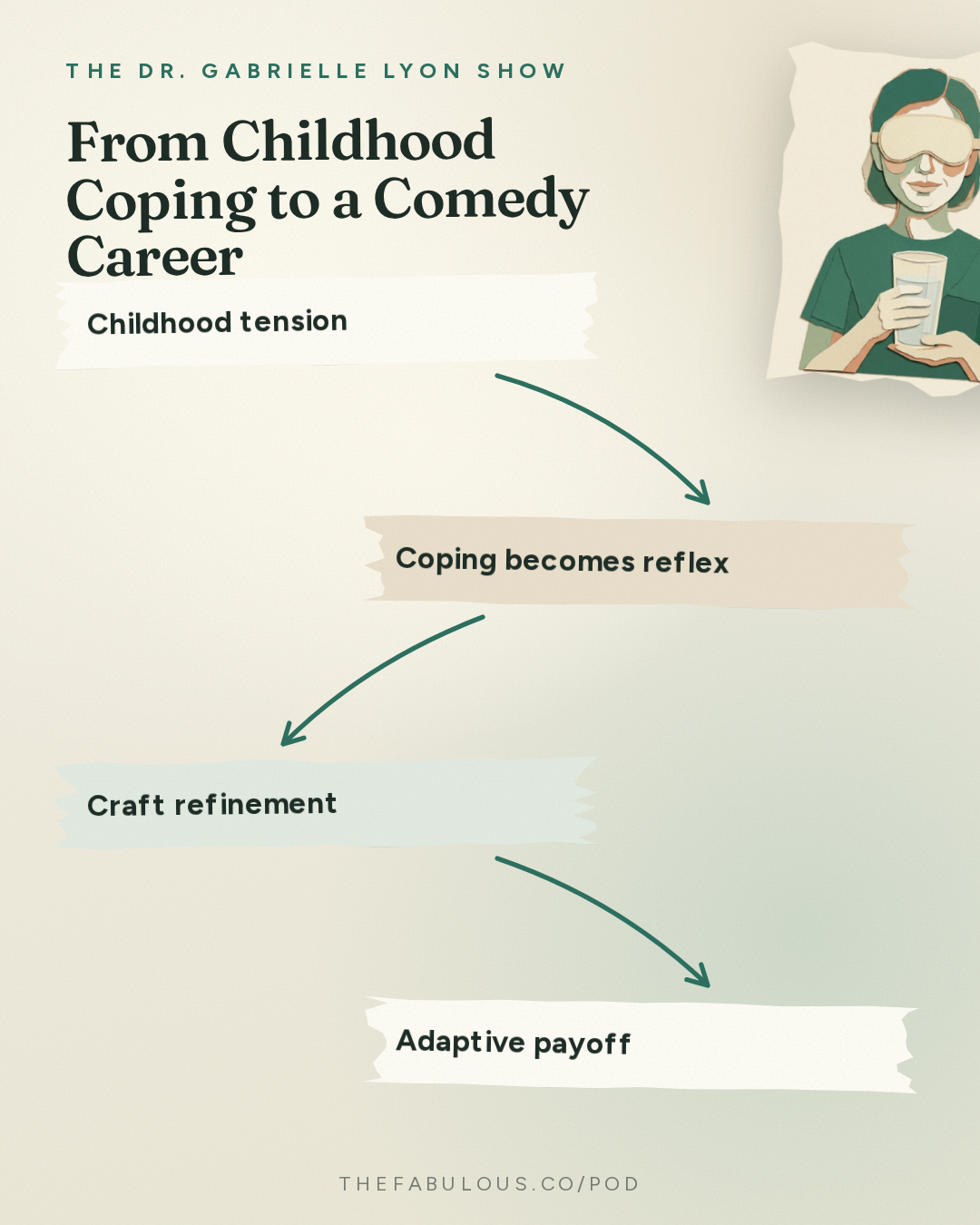
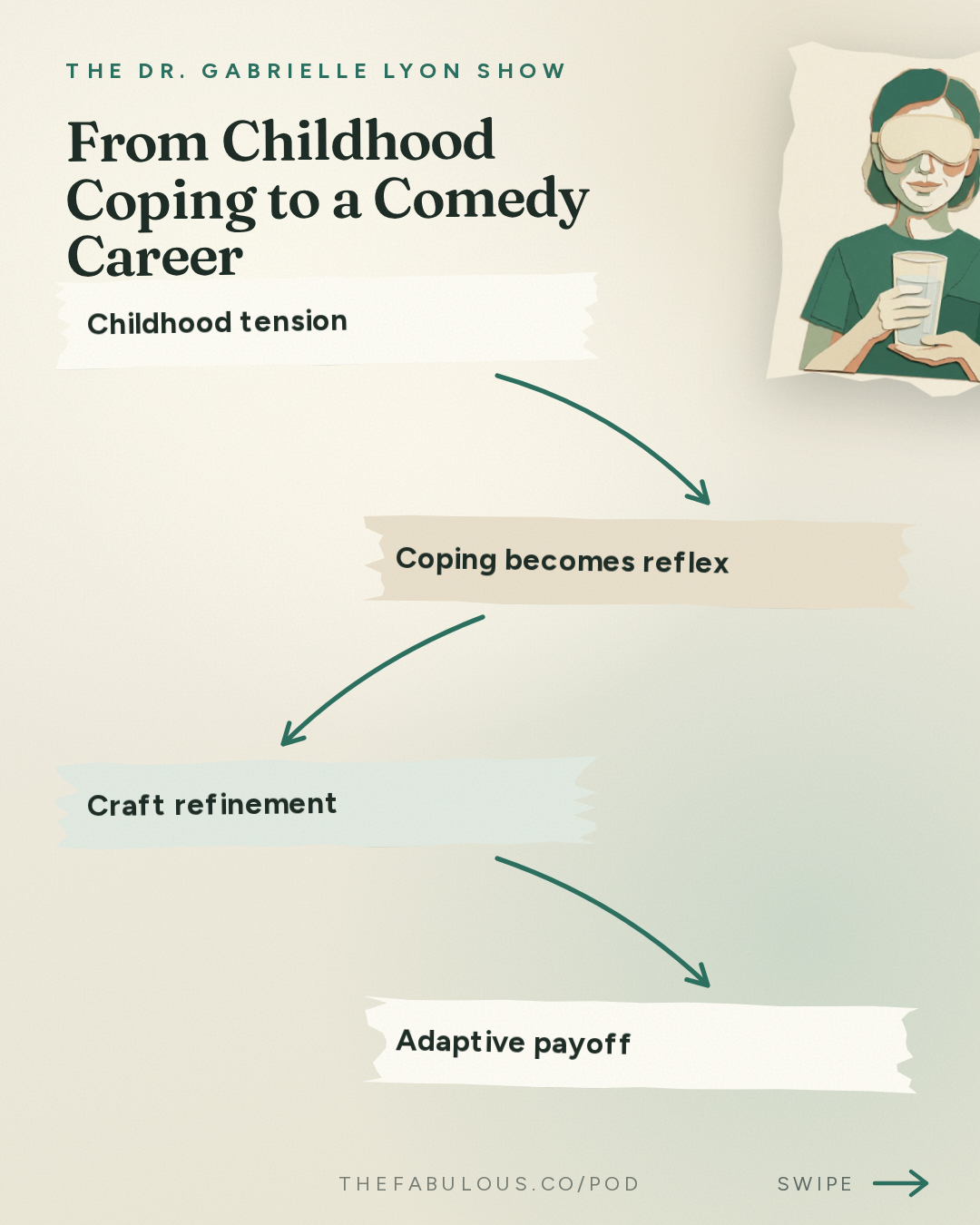
Cummings traces her comic instinct to a specific kind of childhood. She grew up, she says, in an alcoholic home where everyone walked on eggshells, and holiday dinners were tense enough that whoever cracked the joke first became the hero (02:13). Making people laugh was not a bit, it was crowd control, a way to cut tension and stop a fight before it started. Psychologists call this kind of early coping a maladaptive behavior: a response that solves an immediate problem (surviving dinner) while creating others later (an identity built on managing other people's moods). Cummings' word for the same idea is blunter: she alchemized it (01:44). The habit did not disappear. It got repurposed, and by her account it eventually paid for her house.
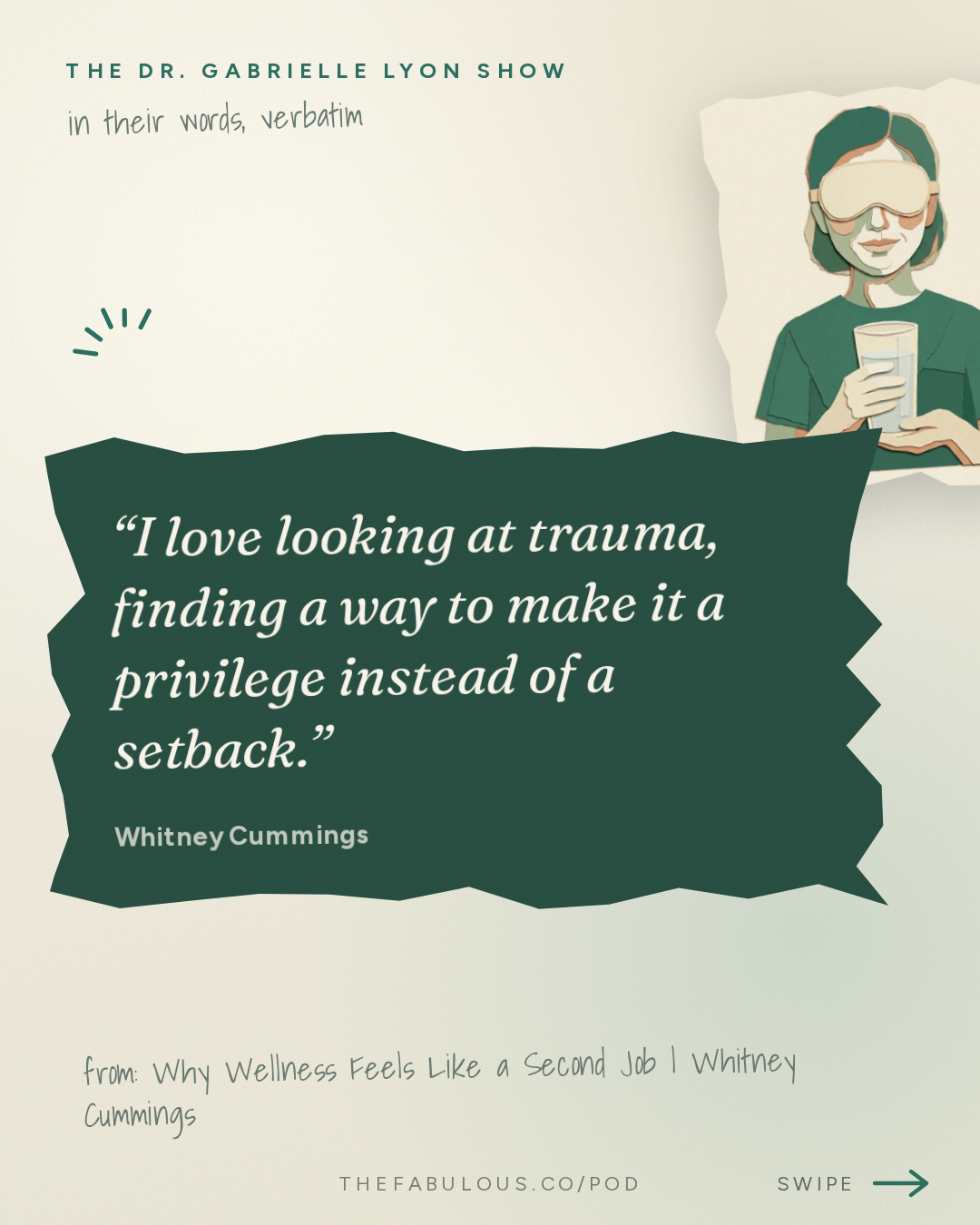
"I love looking at trauma, finding a way to make it a privilege instead of a setback." Whitney Cummings, [02:13]
She is careful to separate that origin story from a license for sloppiness on stage. A joke that does not land, she argues, is not really a joke, it is either a lie or an insult, because the audience's involuntary reaction, not the performer's intention, is what makes something funny (03:25). That same habit of auditing her own motives runs through everything else she says about health.
Cummings is sharpest about what she calls the gold rush of the wellness industry: podcasters monetizing discoveries women, in her telling, have practiced for 2,000 years (08:12). Breathing through pain is Lamaze. Skipping meals is something women have survived, and sometimes suffered from, for generations, which is why she calls fasting culture "our thing" with a dark edge, linking it directly to the eating disorders she lived through as a teenager (08:36). The joke lands, but the claim underneath it is serious: repackaging instinct as innovation, then selling it back, is itself a warning sign.
That skepticism has a factual backbone. Cummings points out that a lot of these studies did not include women, and Lyon adds that it was not until 1993 that including women became mandatory (29:59), meaning decades of dosing standards and diagnostic criteria were built on male physiology and then applied to everyone else. She adds a grittier detail from her own history: she used to enroll in paid medical studies to make rent, and participants who reported more symptoms, like a headache, got invited back and paid again (30:40). That built-in incentive to exaggerate distorts the data before a single number ever reaches a journal. Her advice is not to distrust medicine wholesale, but to remember that a protocol tested on people who needed fifty dollars may not transfer cleanly to anyone else's body (31:03).
She applies the same ancestry-first logic to her own pregnancy. Cummings got pregnant naturally at 40 (25:46) and describes consciously managing her stress hormones once she learned about epigenetic imprinting, the idea that a fetus's development can be shaped by the chemical environment of the mother's bloodstream, not only by genes. Her claim: adrenaline and cortisol circulating during pregnancy can imprint a baby toward that same chemical state, the way a baby born to a mother using drugs can be born dependent (25:46). So instead of resenting morning sickness, she reframed the nausea as her body protecting the pregnancy (26:15). Whether or not the biology is exactly that tidy, the behavioral move, treating a symptom as information instead of an enemy, recurs throughout the conversation.
It shows up again in a smaller, sharper moment about punctuality. Lyon recalls Cummings once asking what time she would leave for a 3:30 appointment fifteen minutes away. Lyon's answer, leaving at 3:00, Cummings calls self-respect (33:25): padding in time for traffic, a bathroom break, fifty unread emails. The opposite habit, cutting it to the minute and arriving flustered, she reframes as a subconscious adrenaline addiction (33:44), a way of manufacturing a small crisis that generates a reliable hit of stress chemistry and, often, sympathy. Lateness, in this telling, is not a time management problem. It is a mood a person has learned to chase.
The Price of Performing Wellness
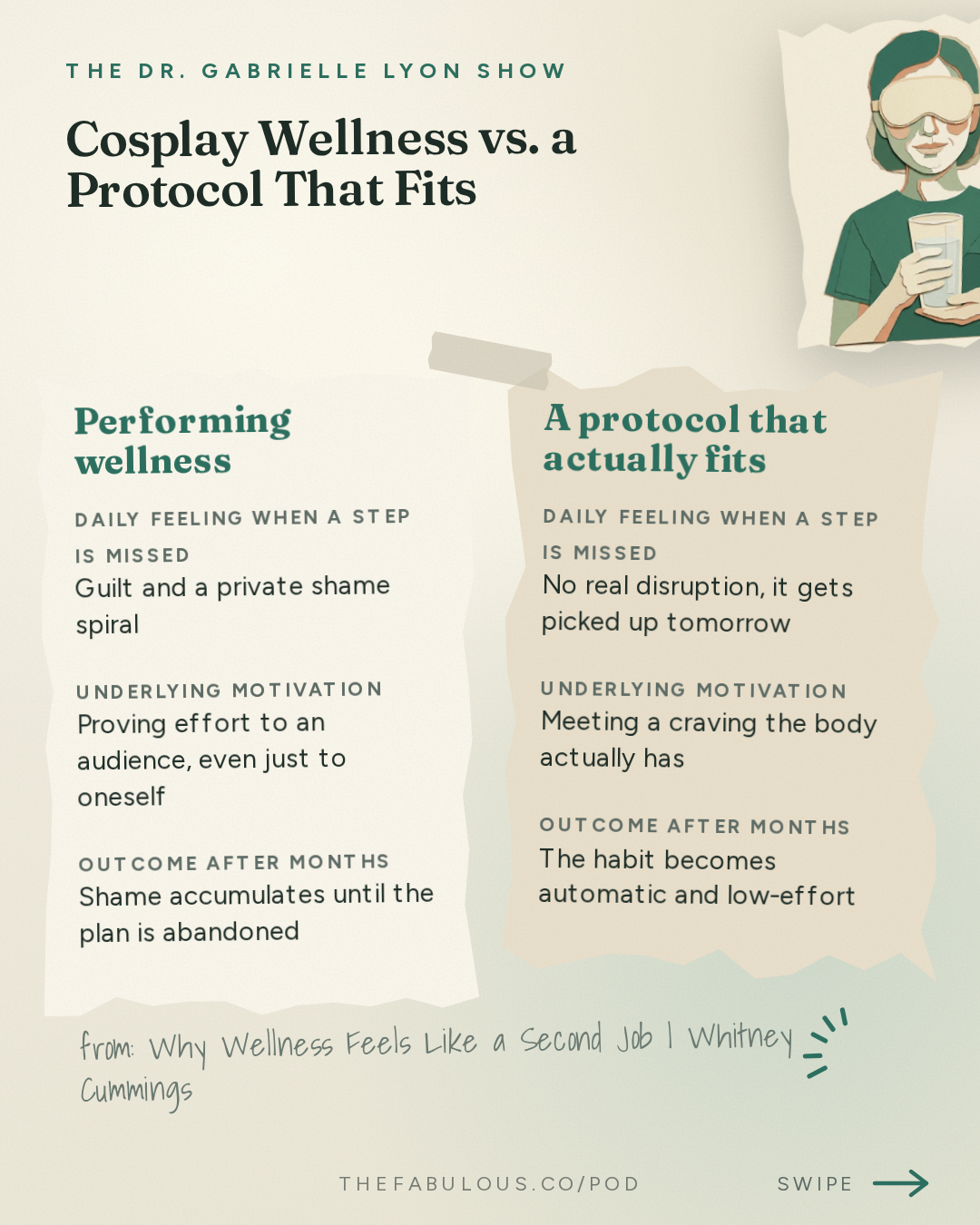
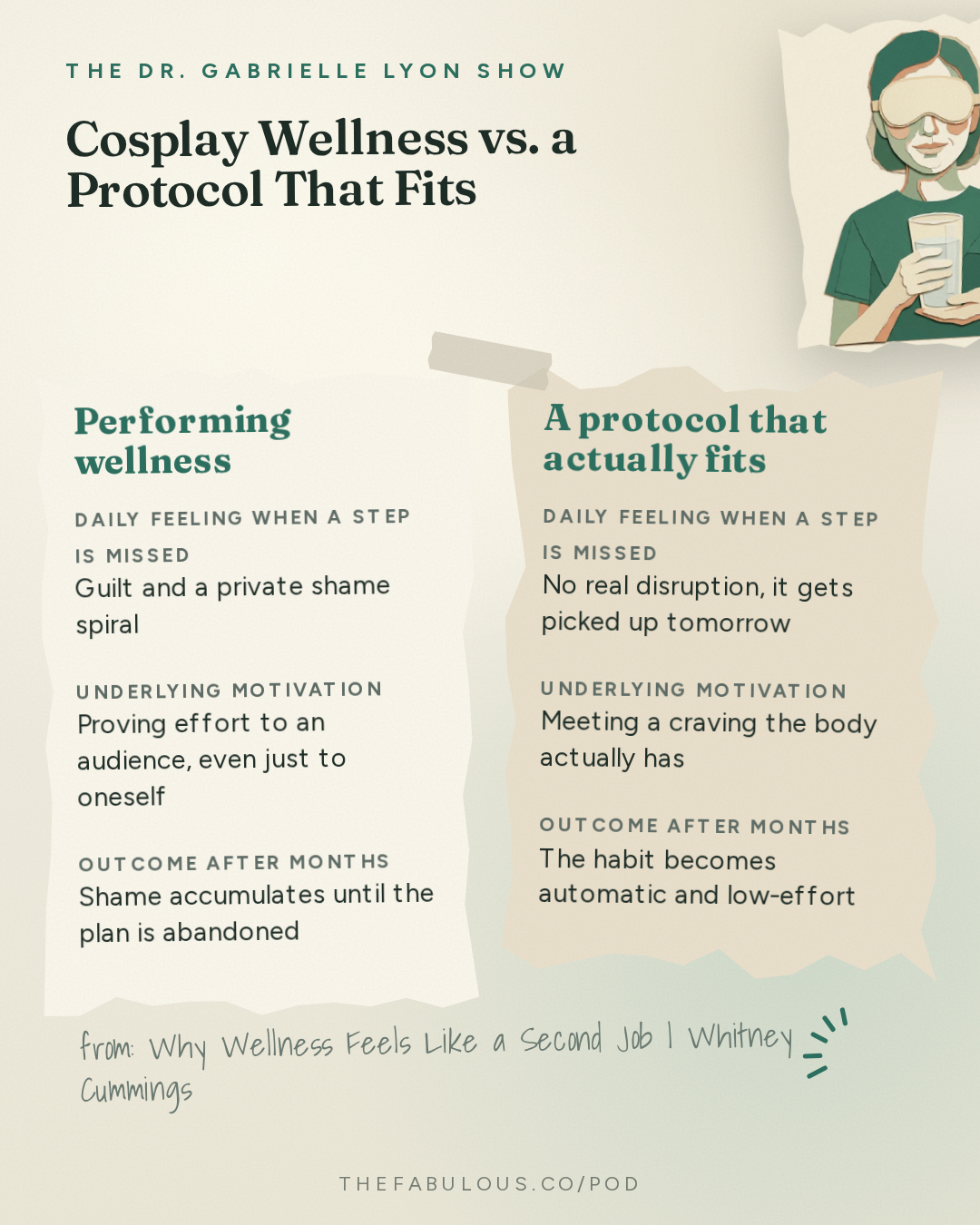
The same chemistry, Cummings argues, powers what she calls wellness cosplay: wearing the gym clothes with the intention of going, getting a small adrenaline hit from the plan and a small shame hit when it does not happen, then resetting the cycle the next day (22:59). It is structurally identical, she says, to the way an addict bargains, except reversed. Instead of promising to quit tomorrow, the wellness cosplayer promises to start tomorrow, and three months of postponement later concludes the whole thing just is not for her (23:18). The protocol was never really the point. The private shame spiral was doing something else, something familiar to anyone who grew up managing someone else's mood.
Her proposed filter is almost comically simple: if a commitment is not an immediate hell yes, treat it as a no, at least for now (48:23). A decision can always be revisited later. What should not happen, in her framing, is saying yes to protect an image and then quietly resenting the obligation.
"Am I looking for an excuse to beat myself up with wellness or shame myself, or am I genuinely doing this for the right reasons?" Whitney Cummings, [47:59]
Run honestly, that question dismantles a few sacred numbers. Lyon gets five or six hours of sleep most nights while raising two young children (39:12), and Cummings pushes back on the eight hour standard as an impossible rule set by people without her schedule, more of a shame mechanism than a biological requirement (41:31). She applies the same skepticism to the instruction to drink eight glasses of water a day, which she traces to marketing rather than physiology (41:07). The point is not that sleep or hydration do not matter. It is that a single rigid number, applied to every body regardless of hormones, caregiving load, or age, functions less like medicine and more like another standard to fail.
Energy Dollars and the Alpha Who Rests
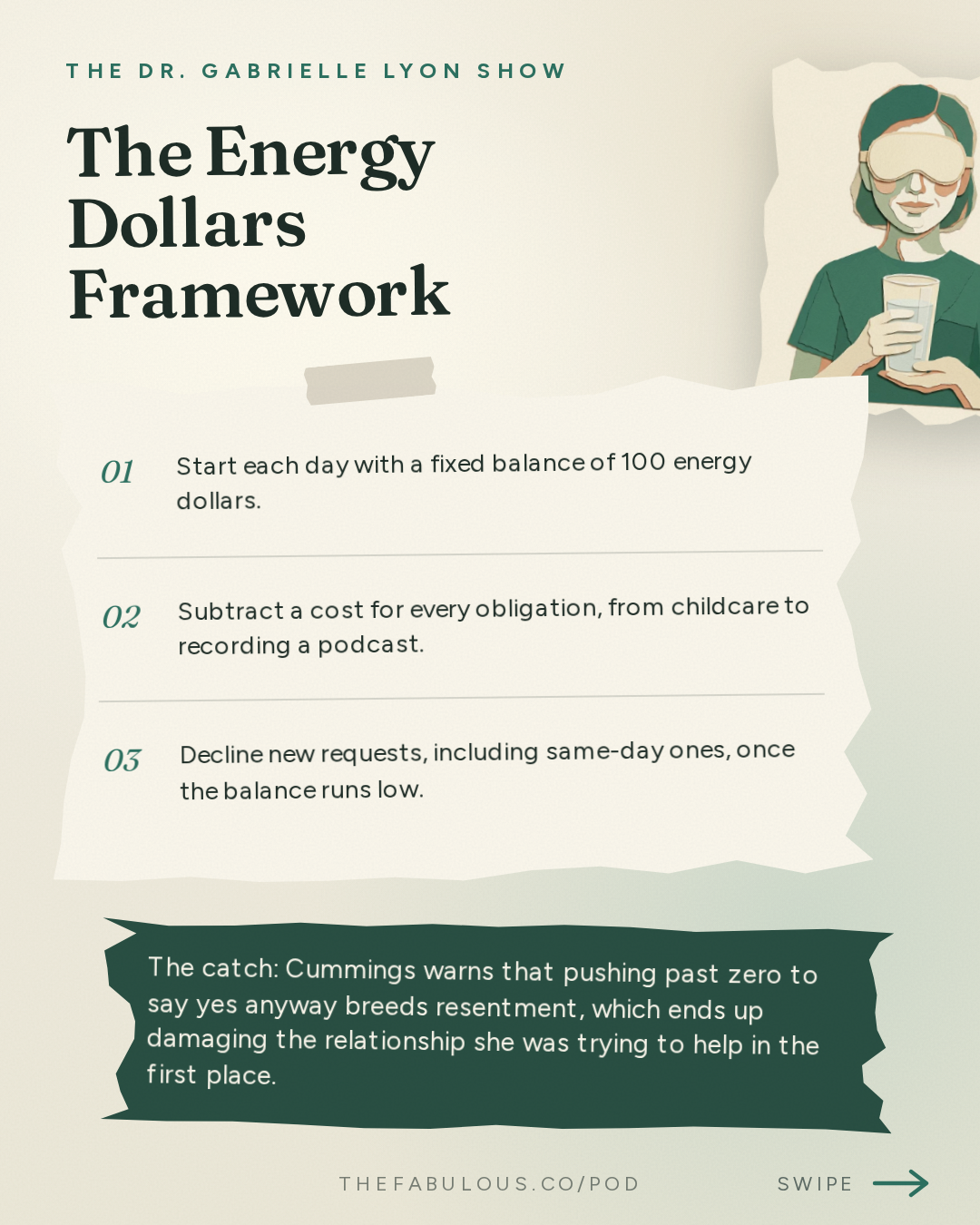
Her most concrete tool for avoiding that trap is something she calls energy dollars: a daily budget of 100 units, with a cost assigned to every obligation, twenty spent playing with her son, thirty spent recording a podcast, and so on (65:05). Once the balance runs low, new asks, even same-day ones from friends, get declined. The rule exists because pushing past the budget reliably produces the same bad outcome: she does the favor anyway, resents it, and damages the relationship she meant to help (65:47). Saying "I don't want to," she argues, is a complete sentence, and refusing out of obligation rather than desire is its own kind of self-betrayal (66:17).
Which returns to the sleeping wolf. Cummings says she spent most of her life feeling guilty for resting, treating stillness as laziness, until she noticed that her best material tends to arrive exactly when she stops trying to produce it (70:56). The alpha in a wolf pack, by her account, is not the one fighting through the fence. It is the one who does not need to react to anything.
"Don't let them trick you into thinking busyness is the same as productivity." Whitney Cummings, [71:34]
She ends on a distinction between intelligence and wisdom: intelligence is knowing a tomato is a fruit, wisdom is knowing not to put it in a fruit salad (73:09). The wellness industry, in her account, is extremely good at selling intelligence: another fact, another protocol, another number to hit. What she argues for instead is something closer to wisdom, the ongoing and sometimes boring work of asking whether a habit actually serves a body, or is simply performing for an audience that was never really watching.
Ask this episode anything
Pod's AI answers from the episode itself, with the minute mark so you can hear it yourself.
Or start with one of these
Ask this episode
Pod's AI listens to the whole episode to answer, and points you to the minute it comes from.
The rest of this answer, and any question after it
Answers come from the episode itself, never from a summary of it.
ContinueKey takeaways
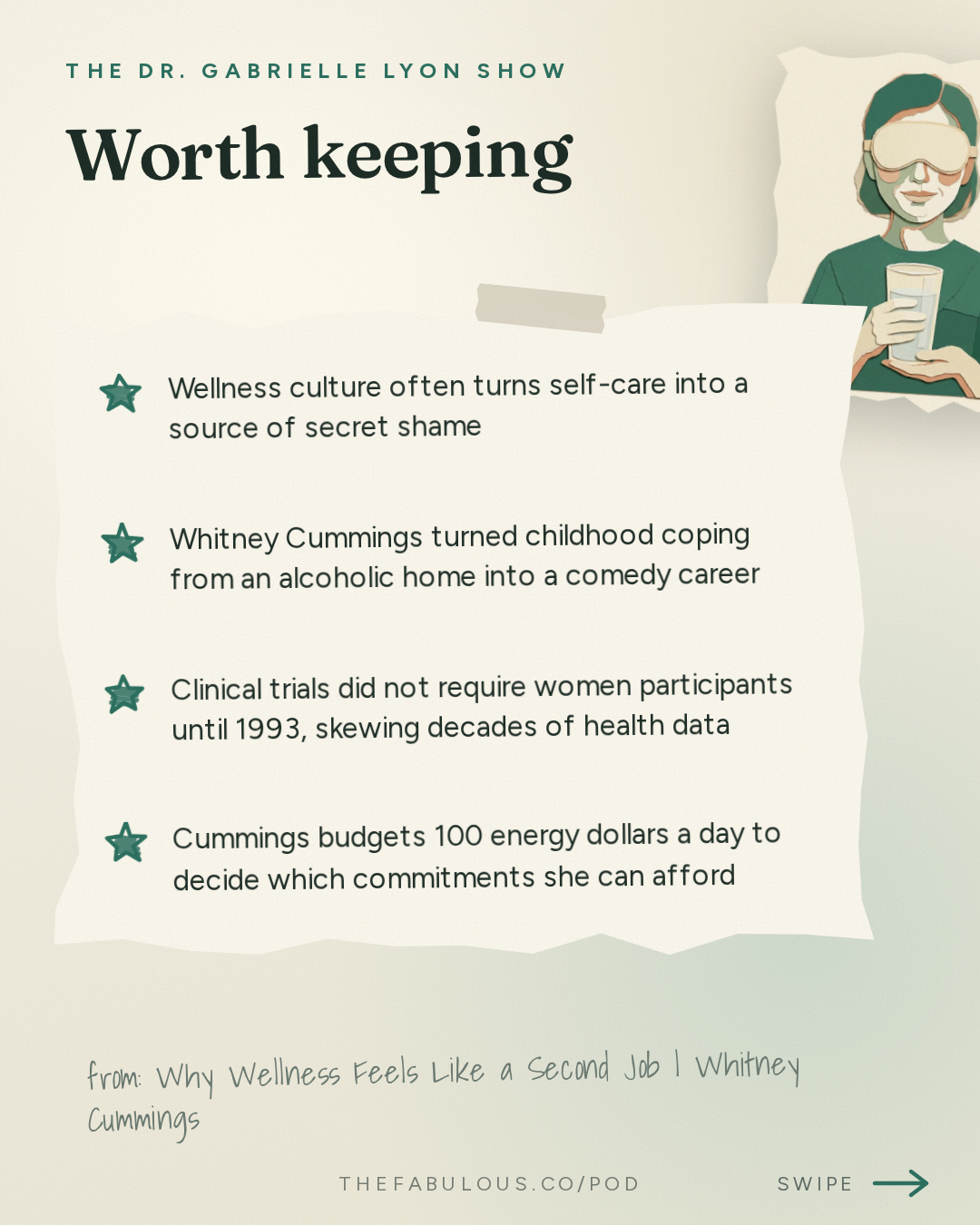
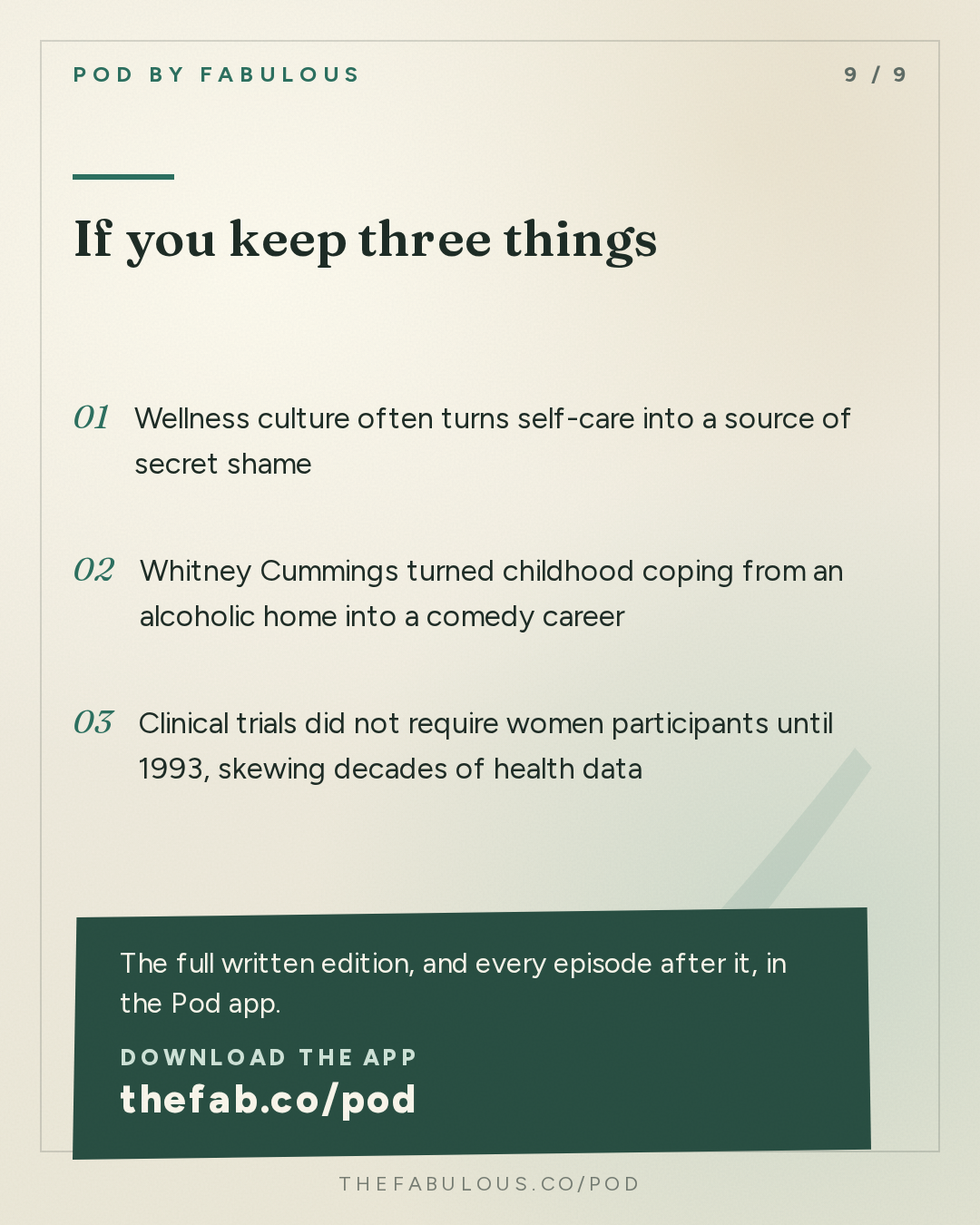
- Wellness culture often turns self-care into a source of secret shame
- Whitney Cummings turned childhood coping from an alcoholic home into a comedy career
- Clinical trials did not require women participants until 1993, skewing decades of health data
- Cummings budgets 100 energy dollars a day to decide which commitments she can afford
- Chronic lateness can be a subconscious adrenaline habit, not just poor planning
The episode in cards
By the numbers
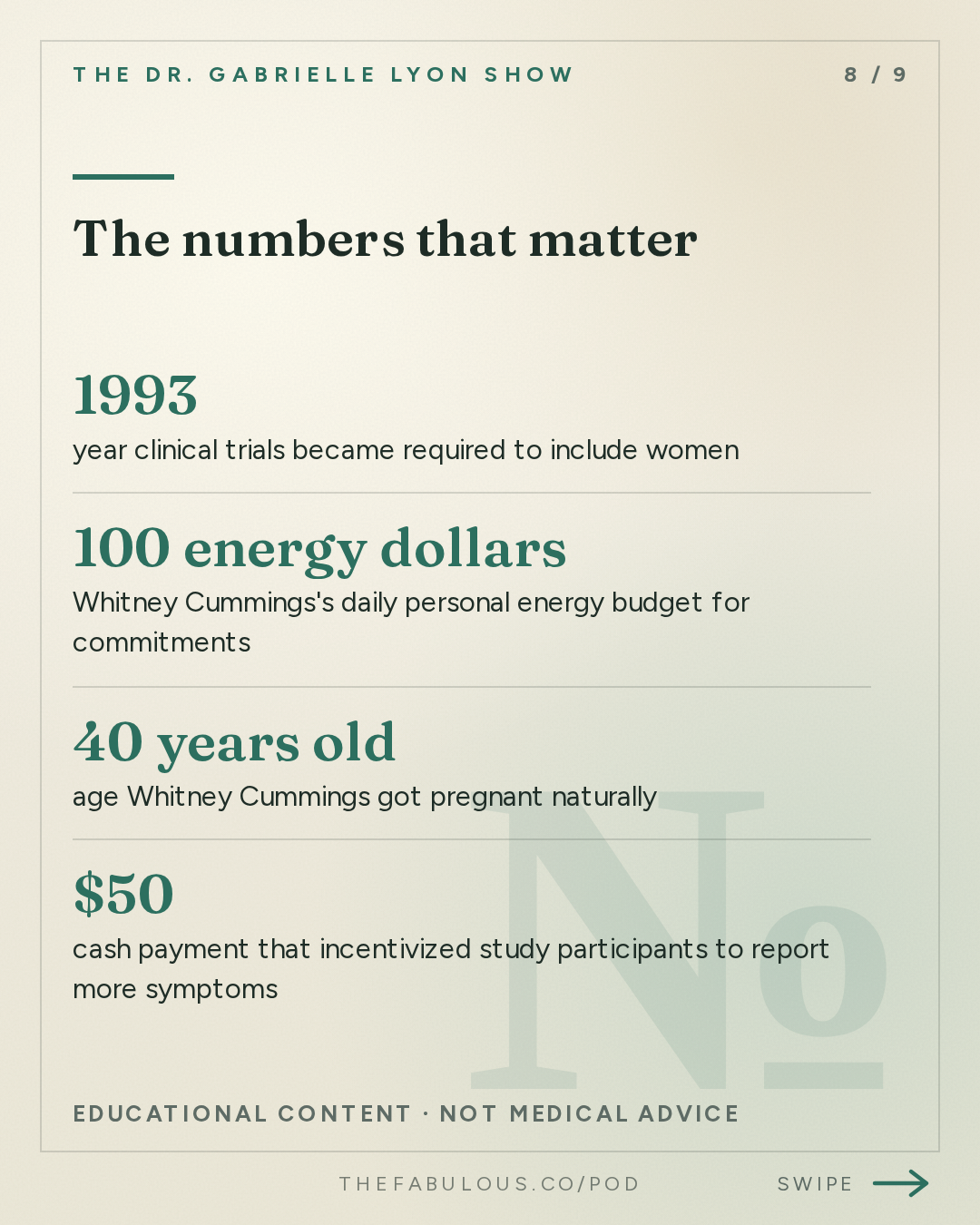
- 1993 year clinical trials became required to include women
- 100 energy dollars Whitney Cummings's daily personal energy budget for commitments
- 40 years old age Whitney Cummings got pregnant naturally
- $50 cash payment that incentivized study participants to report more symptoms
In their words
“I think the ultimate wellness is having a protocol down that is so satiating, so satisfying, that you don't have to think about it all the time.”
“I love looking at trauma, finding a way to make it a privilege instead of a setback.”
“Am I looking for an excuse to beat myself up with wellness or shame myself, or am I genuinely, you know, doing this for the right”
“Don't let them trick you into thinking busyness is the same as productivity.”
Protocols
-
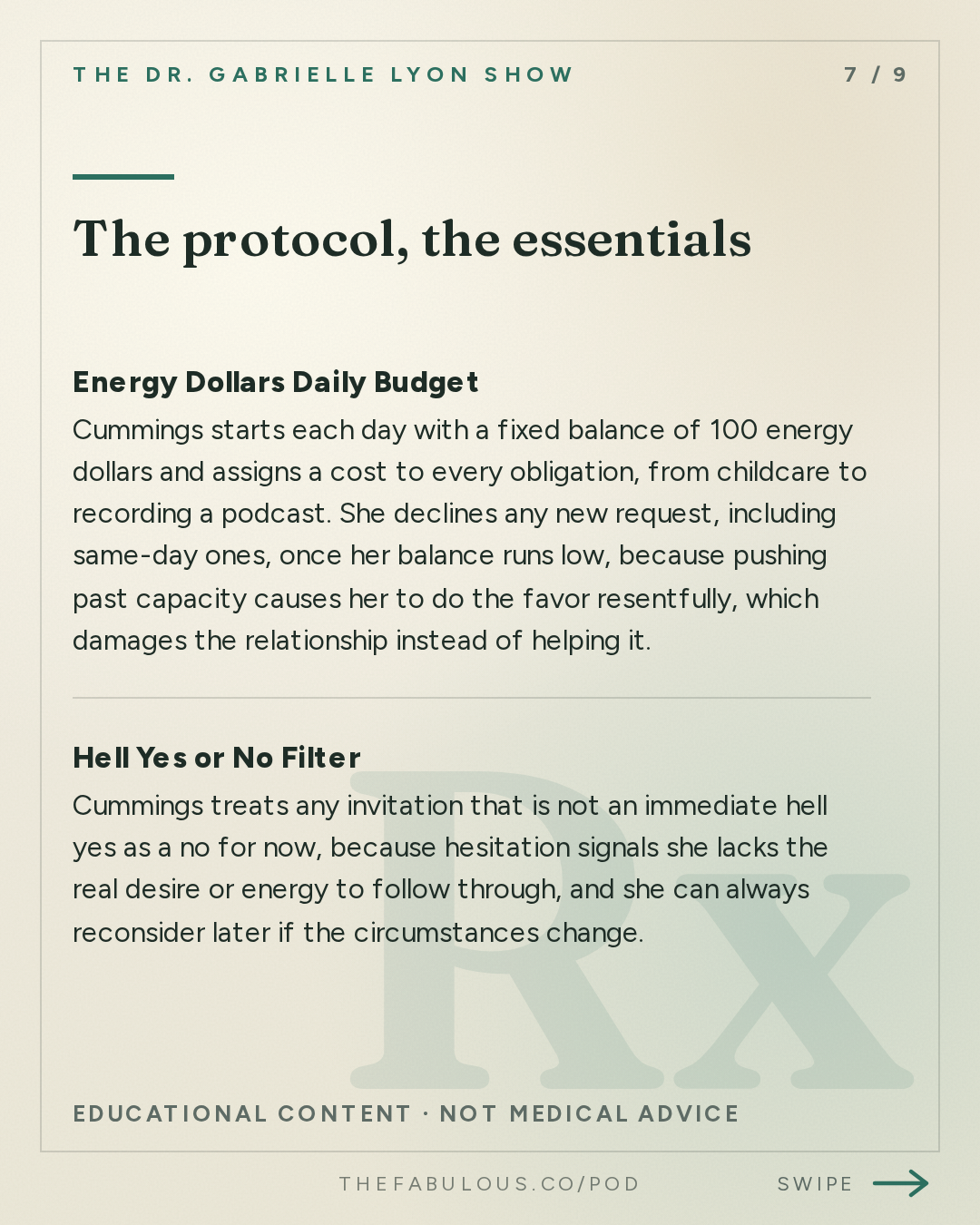
Energy Dollars Daily Budget
Cummings starts each day with a fixed balance of 100 energy dollars and assigns a cost to every obligation, from childcare to recording a podcast. She declines any new request, including same-day ones, once her balance runs low, because pushing past capacity causes her to do the favor resentfully, which damages the relationship instead of helping it.
daily
-
Hell Yes or No Filter
Cummings treats any invitation that is not an immediate hell yes as a no for now, because hesitation signals she lacks the real desire or energy to follow through, and she can always reconsider later if the circumstances change.
per decision
-
Arrive Early as Self-Respect
Cummings leaves roughly thirty minutes before any appointment that takes fifteen minutes to reach, which gives her a buffer for traffic, a bathroom break, and unread emails, and she calls the habit self-respect rather than anxiety.
per appointment
-
Sauna Multitasking Routine
Cummings uses her home sauna while stretching, lifting a kettlebell, and talking with her partner, because treating the sauna as a single passive fix without pairing it with other activity does not deliver the same benefit for her.
daily
Questions this episode answers
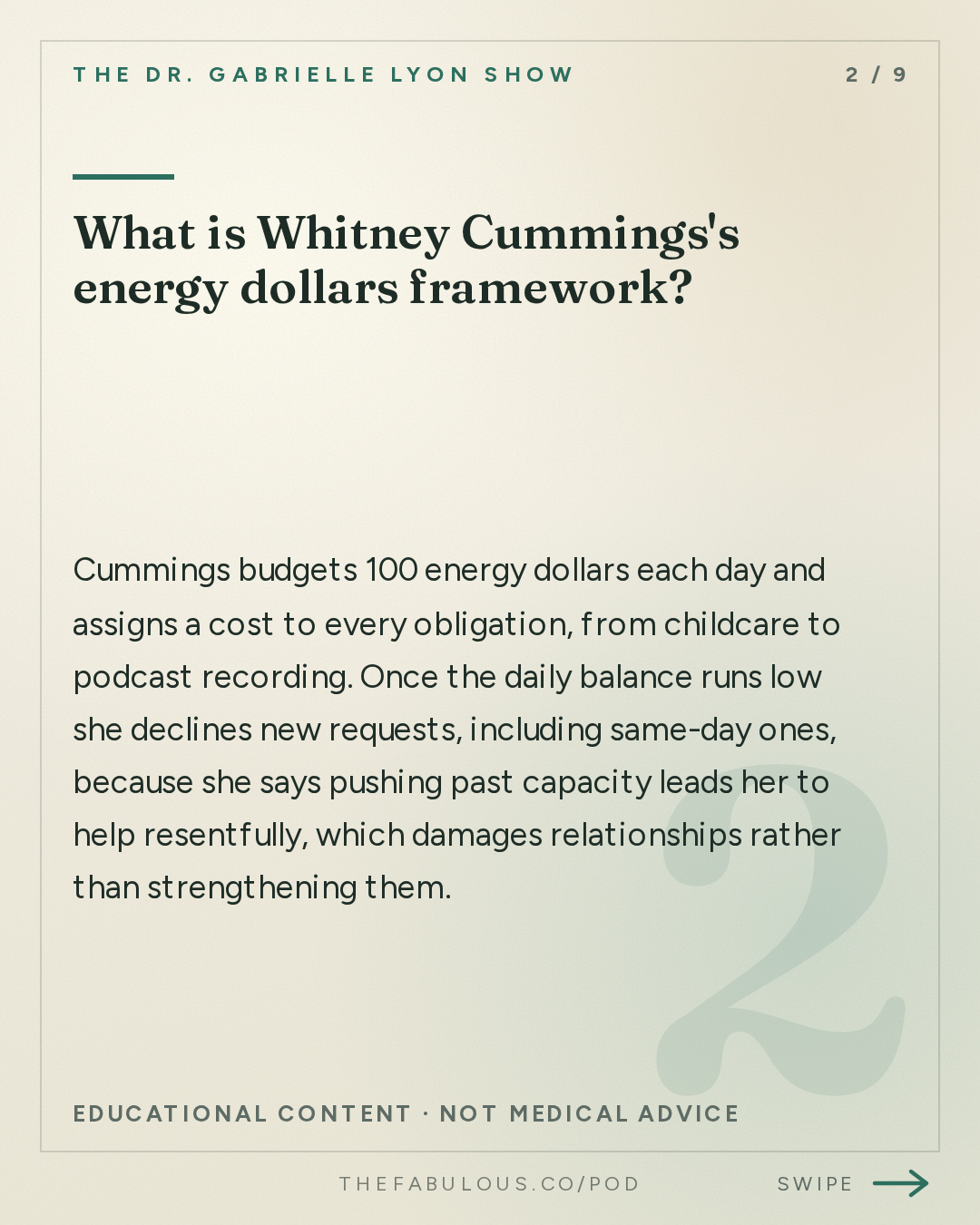
What is Whitney Cummings's energy dollars framework?
Cummings budgets 100 energy dollars each day and assigns a cost to every obligation, from childcare to podcast recording (65:05). Once the daily balance runs low she declines new requests, including same-day ones, because she says pushing past capacity leads her to help resentfully, which damages relationships rather than strengthening them (65:47).
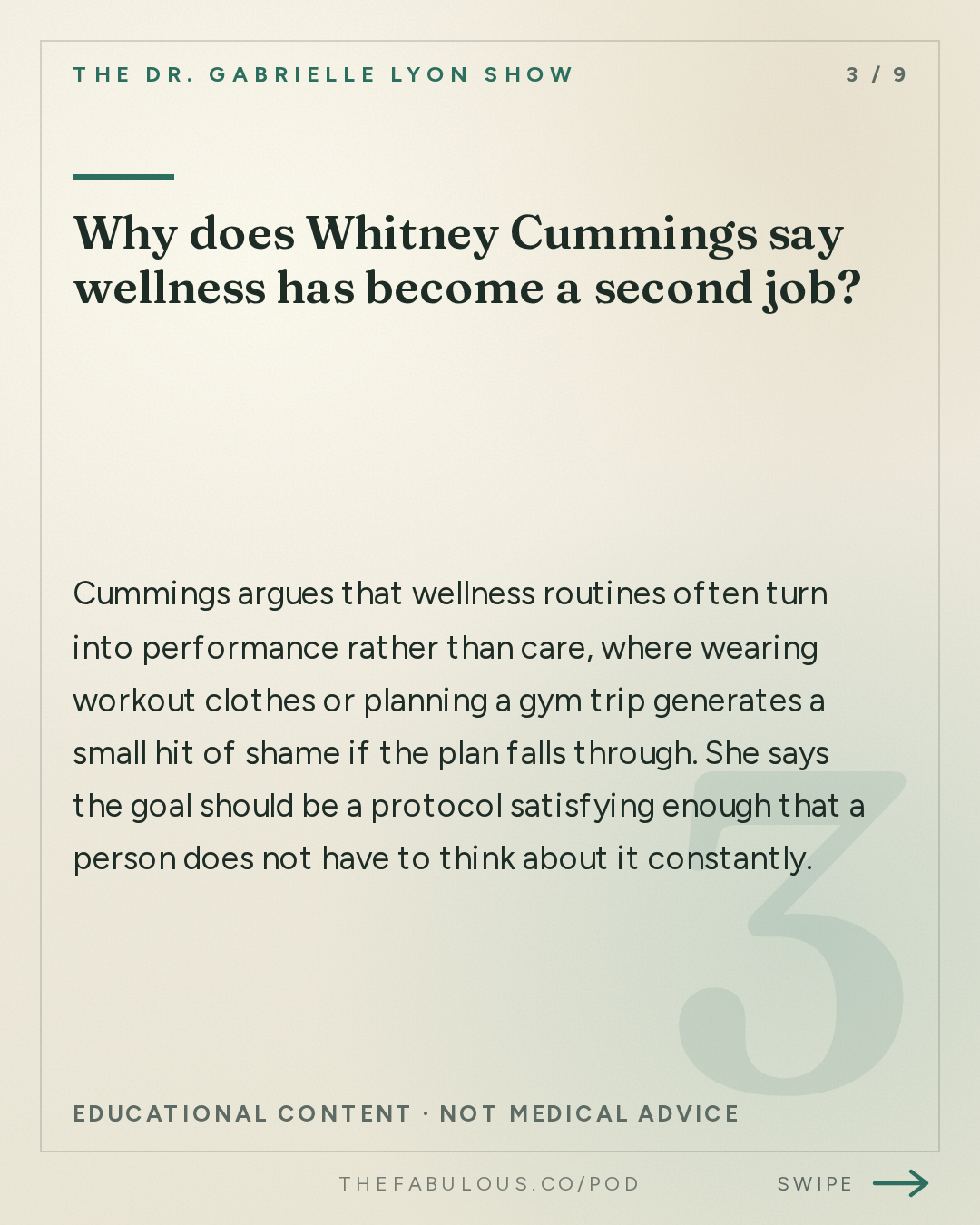
Why does Whitney Cummings say wellness has become a second job?
Cummings argues that wellness routines often turn into performance rather than care, where wearing workout clothes or planning a gym trip generates a small hit of shame if the plan falls through (22:59). She says the goal should be a protocol satisfying enough that a person does not have to think about it constantly (00:00).
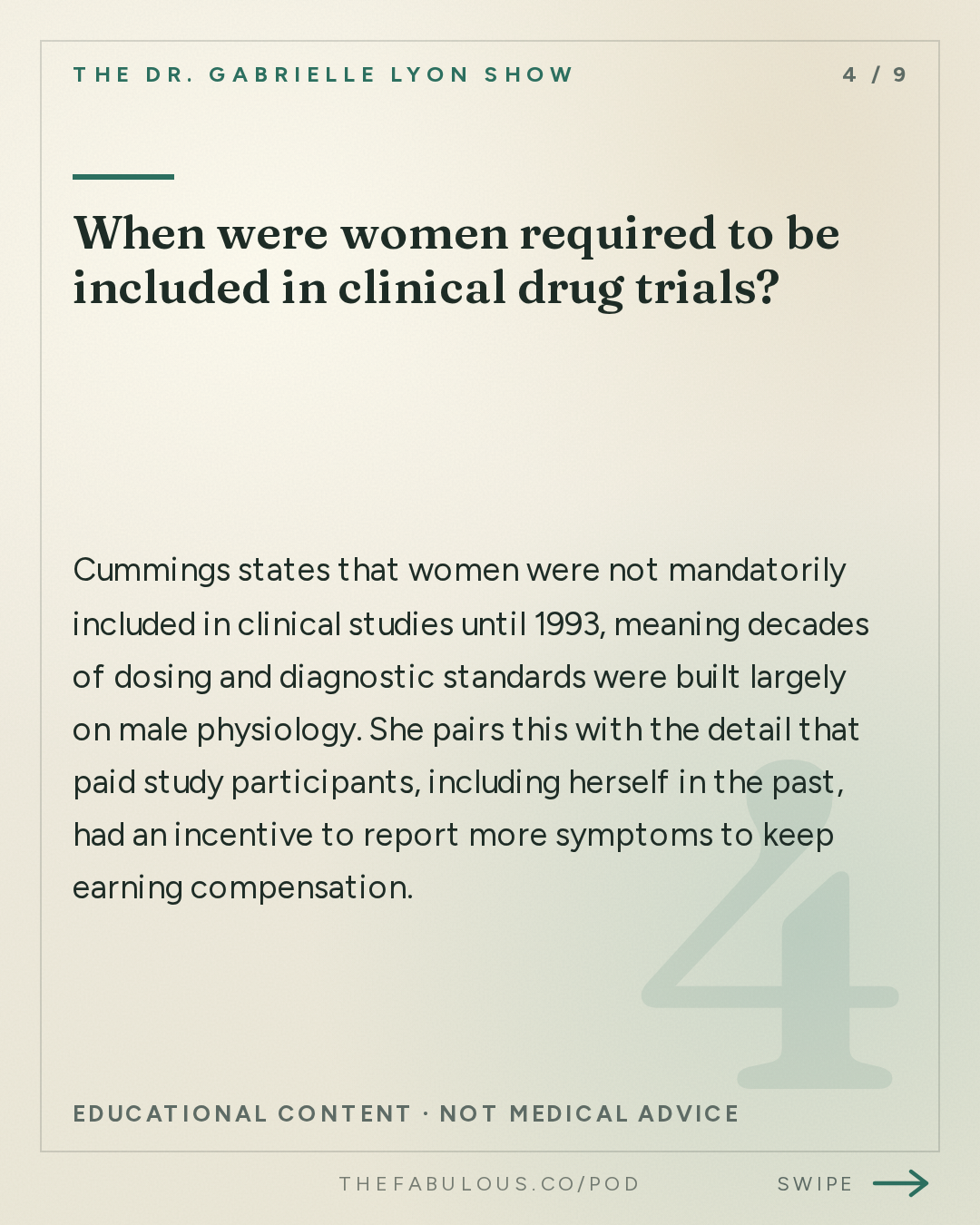
When were women required to be included in clinical drug trials?
Cummings states that women were not mandatorily included in clinical studies until 1993, meaning decades of dosing and diagnostic standards were built largely on male physiology (29:59). She pairs this with the detail that paid study participants, including herself in the past, had an incentive to report more symptoms to keep earning compensation (30:40).
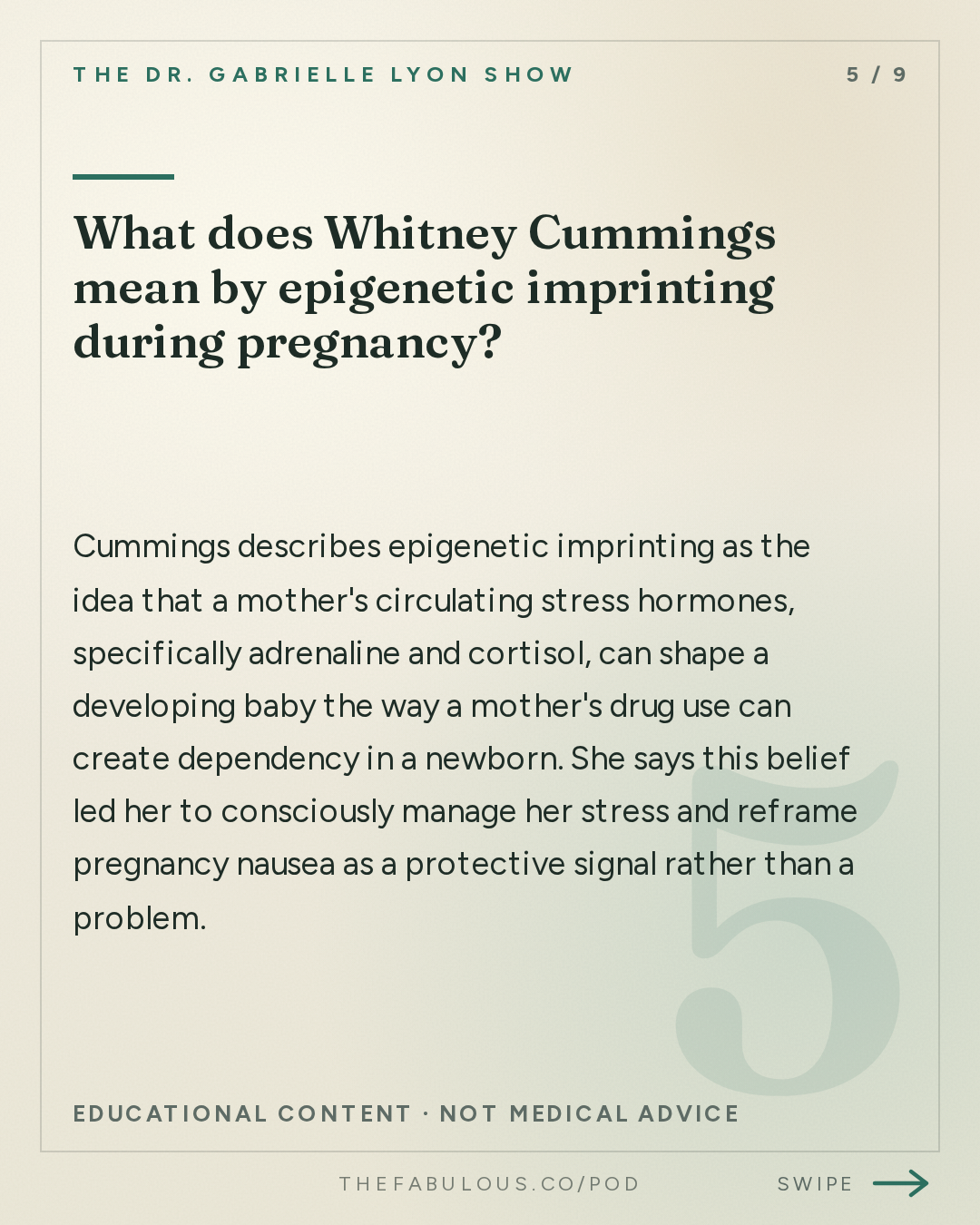
What does Whitney Cummings mean by epigenetic imprinting during pregnancy?
Cummings describes epigenetic imprinting as the idea that a mother's circulating stress hormones, specifically adrenaline and cortisol, can shape a developing baby the way a mother's drug use can create dependency in a newborn (25:46). She says this belief led her to consciously manage her stress and reframe pregnancy nausea as a protective signal rather than a problem (26:15).
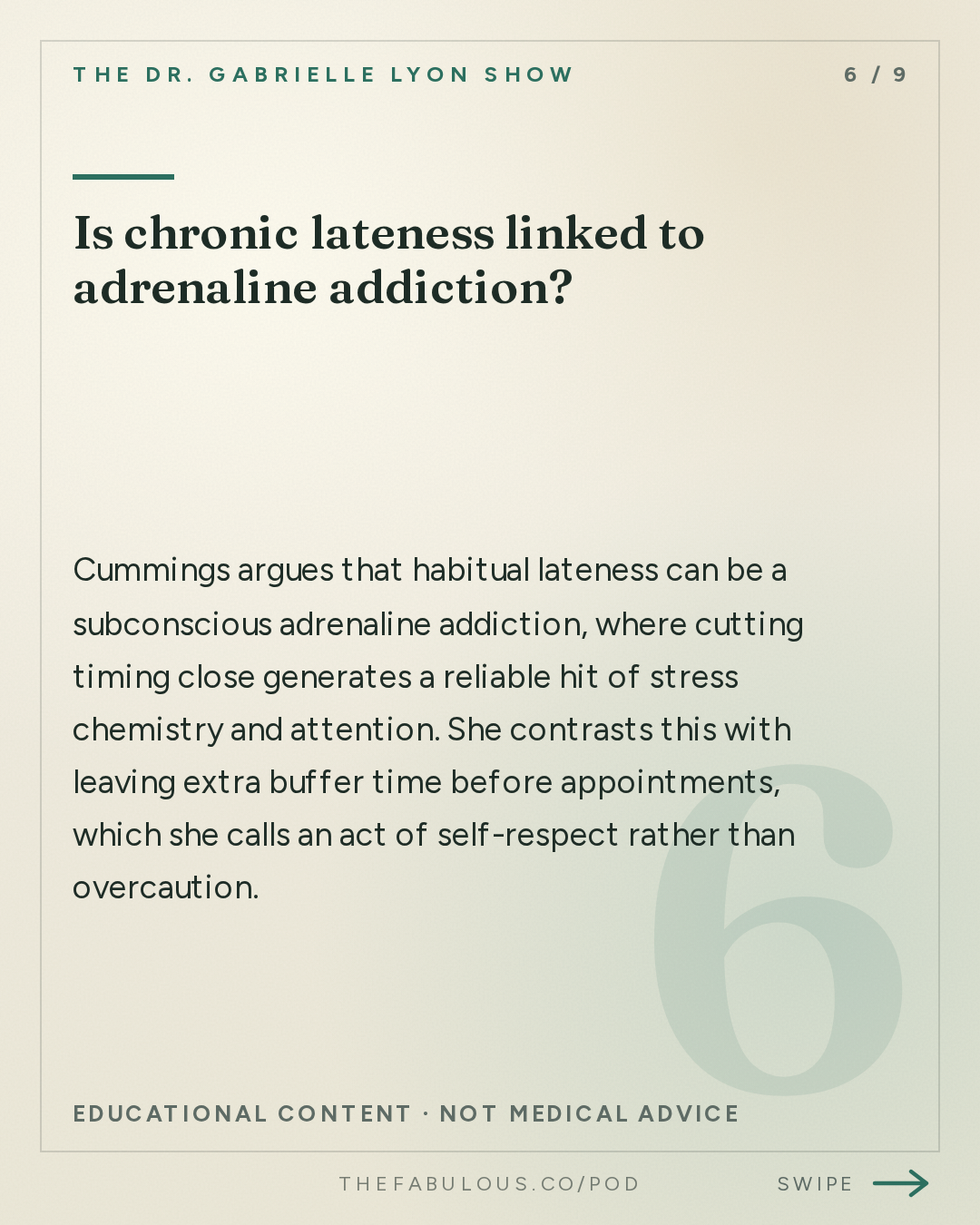
Is chronic lateness linked to adrenaline addiction?
Cummings argues that habitual lateness can be a subconscious adrenaline addiction, where cutting timing close generates a reliable hit of stress chemistry and attention (33:44). She contrasts this with leaving extra buffer time before appointments, which she calls an act of self-respect rather than overcaution (33:25).
Does the eight hours of sleep rule actually apply to everyone?
Cummings pushes back on the standard eight-hour sleep rule as an impossible, shame-based standard, noting she herself gets five or six hours most nights while raising two young children and does not feel she needs more (39:12, 41:31). She applies similar skepticism to the eight-glasses-of-water rule, which she traces to marketing rather than firm physiological need (41:07).
The full read, in cards
Go deeper
- The Female Brain — a film project Cummings made about neuroscience and how traits women display get pathologized
- I'm Fine and Other Lies — Cummings's book with a chapter on her recovery from codependence and chronic perfectionism
- Zen Mind, Zen Horse — recommended for understanding leadership and nature through wolf and horse behavior
- The Wrinkle Cure — Dr. Perricone's book that Cummings credits for her topical antioxidant skincare routine
Mentioned
Whitney Cummings · Cindy Eckert · Dr. David Sinclair · Huberman · Mary Ruth · Wolf Connection · Tru Niagen
More from this show and category
Plant-Based Diet vs Animal Protein for Muscle
A vegan diet that drops protein intake can shrink older adults' muscle in just 12 weeks, even with resistance training. A protein-matched vegetarian diet combined with training still built muscle, though less than an omnivorous diet, showing that total protein and amino acid quality, not plant versus animal labels, determine the outcome.
IBD vs IBS: Colon Cancer Risk Explained
NBC correspondent Chloe Melas went undiagnosed with ulcerative colitis for years after doctors dismissed her rectal bleeding as hemorrhoids. She explains why inflammatory bowel disease (IBD) raises colon cancer risk while irritable bowel syndrome (IBS) does not, why women wait over a year for an IBD diagnosis, and how most Americans fall far short of their daily fiber needs.
Retatrutide Triumph-1 Trial Results Explained
Retatrutide's Triumph-1 phase 3 trial produced an average 25% body weight loss at the highest dose over 80 weeks, with some lean mass loss that tracks in line with other obesity drugs rather than exceeding it. Preserving muscle depends on resistance training and adequate protein, not the drug itself.
Beef vs Soy Protein: What Muscle Research Shows
Muscle physiologist Dr. David Church found that four ounces of beef raised blood amino acids more than eight ounces of a soy-based patty, and that testosterone builds muscle mainly by recycling amino acids inside cells rather than boosting new synthesis. He also argues true protein needs run near 1.27 g/kg a day, well above the 0.8 g/kg RDA.
