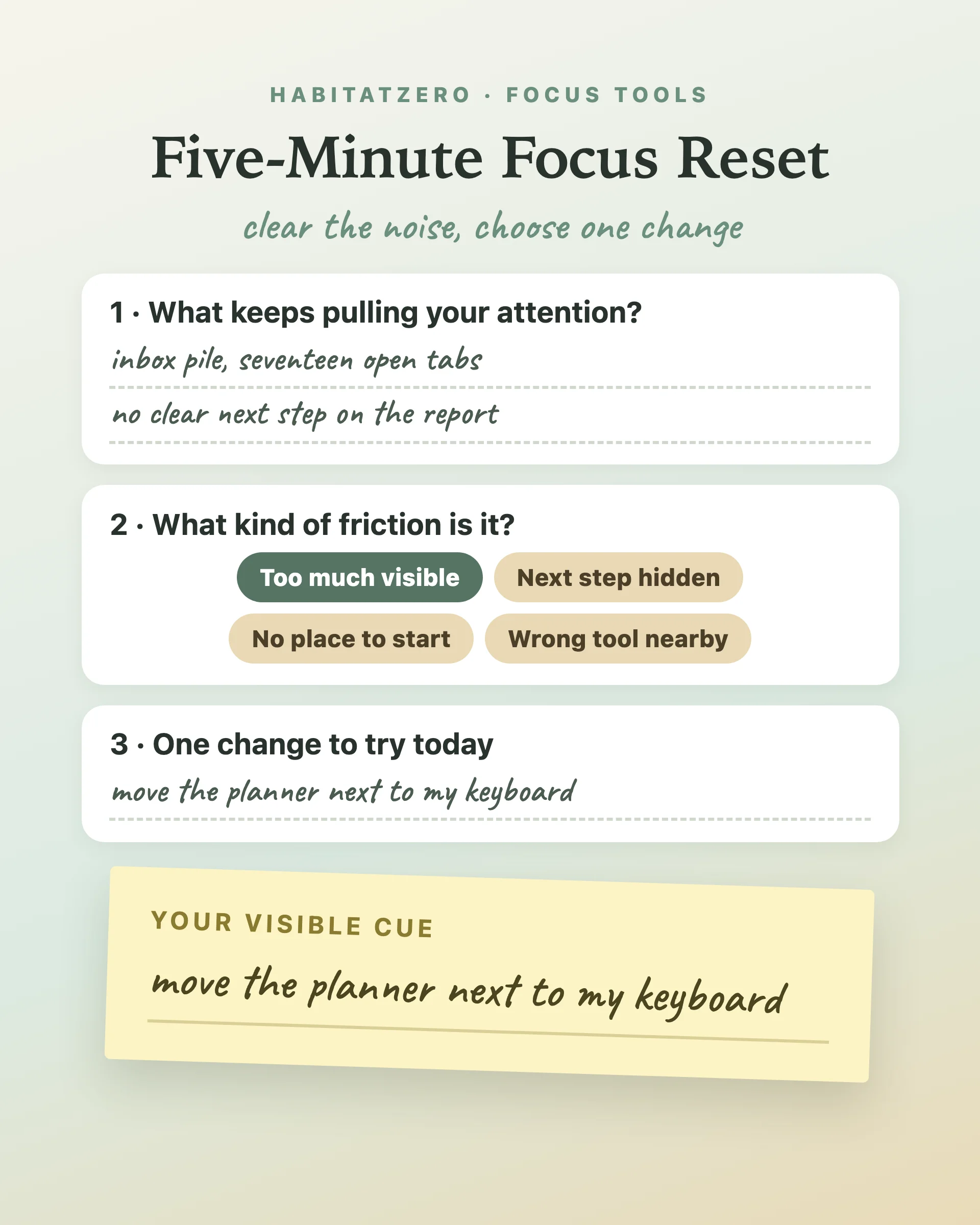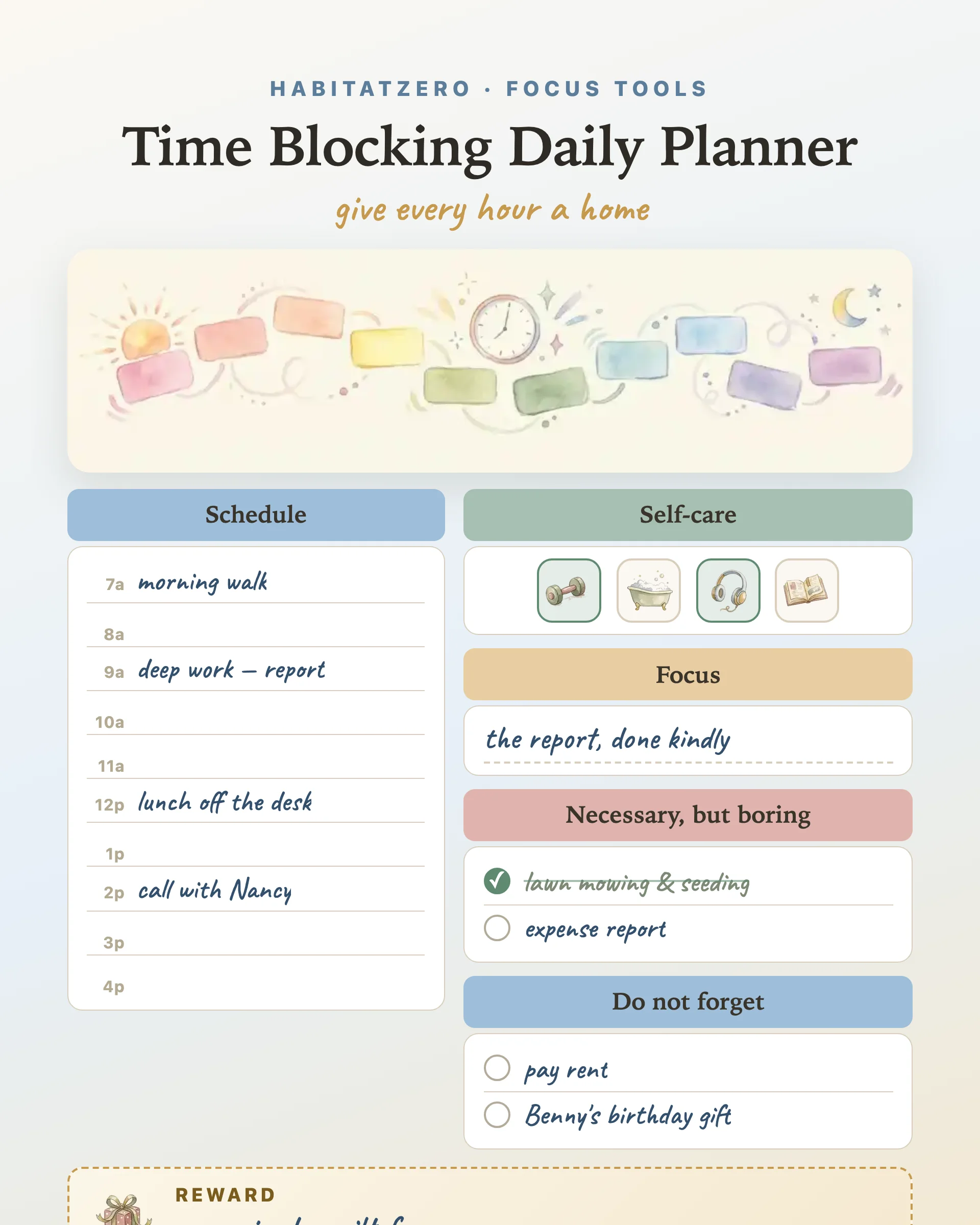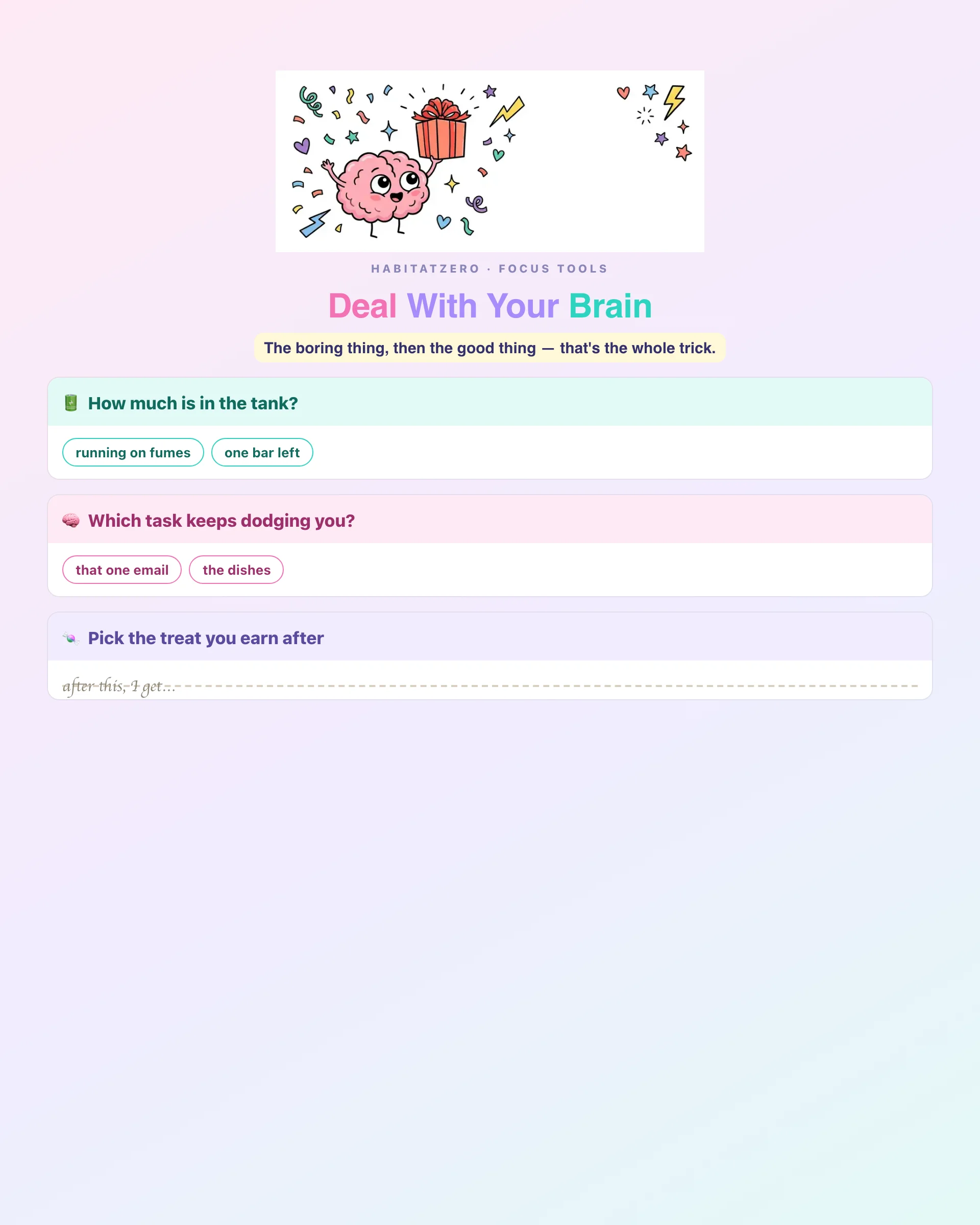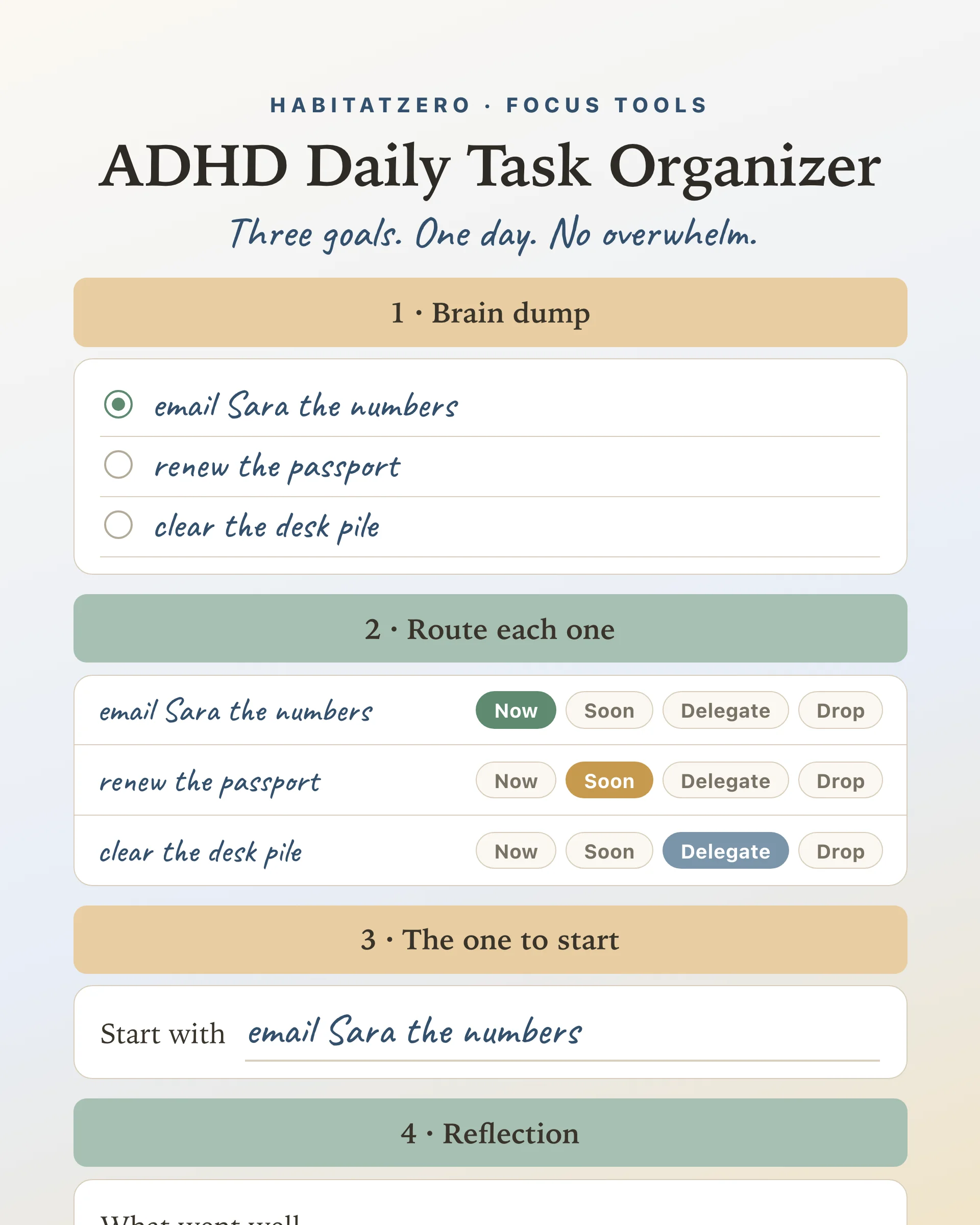
ADHD Daily Task OrganizerFocus & ADHD · ~10 min
About this template · Updated September 2026
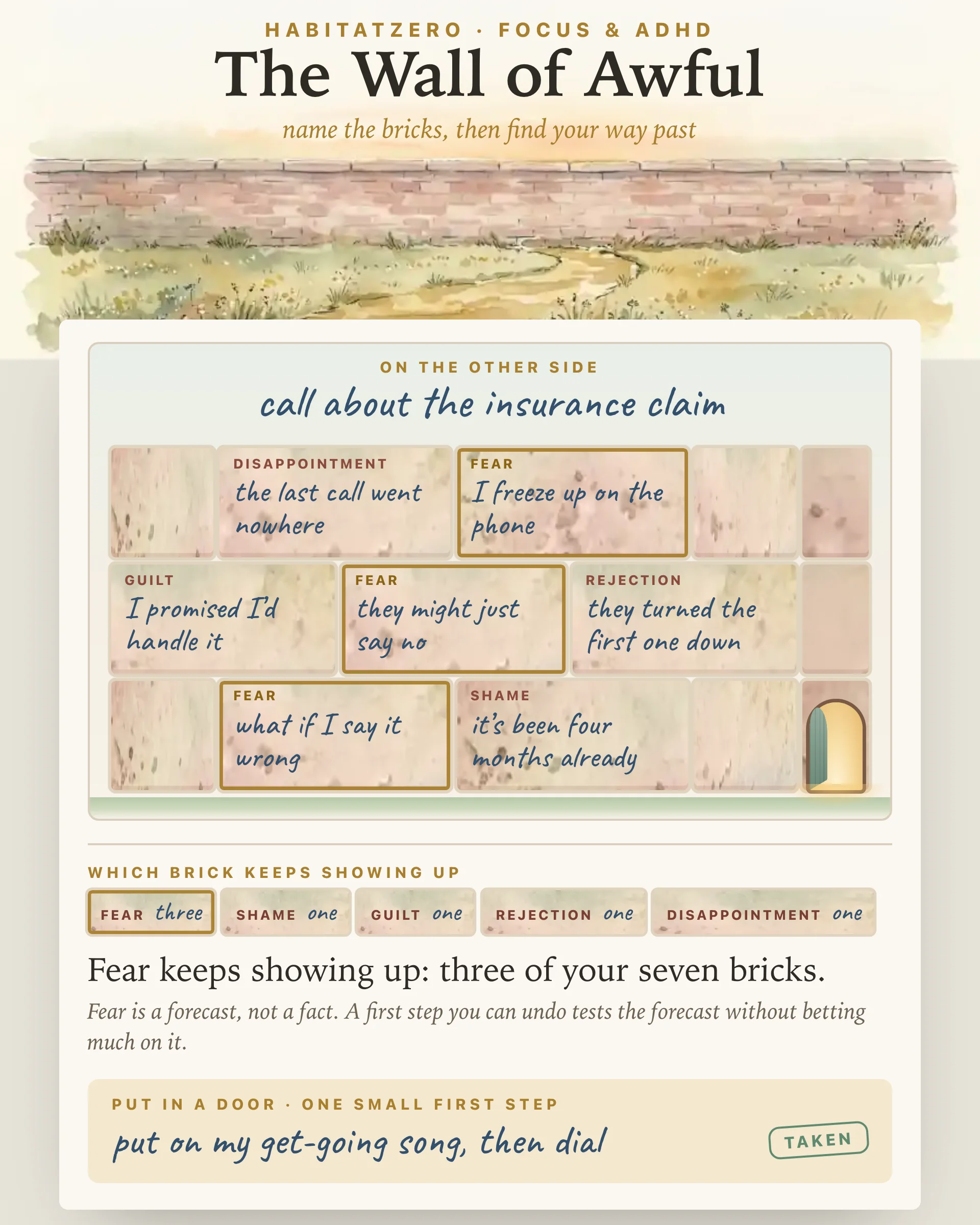
The Wall of Awful is ADHD coach Brendan Mahan's model, outlined in a short guide on his ADHD Essentials site, 5 Ways to Overcome the Wall of Awful, and set out in full in his 2026 book, Overcoming the Wall of Awful. This sheet is an independent way to practice his idea. Mahan, his publisher and his coaching practice had no part in making it and have not endorsed it.
You know the task. It would take twenty minutes, it has sat there for three weeks, and every time you look at it something in your chest says no. From the outside that looks like laziness. Mahan's book page answers that in one line: "You're not lazy. You're up against a Wall."
In Mahan's telling, the wall is made of feelings. Each time a task goes badly, it leaves something behind: guilt over the failure, disappointment, maybe a sting of rejection from yourself or from others. Those small feelings harden over time into bigger ones, like shame, fear of starting, worry about whether you can, even loneliness. Each one is a brick, and the next time a similar task comes along, the wall is already standing in front of it.
Everyone has one, he says, but people with ADHD tend to meet the same setbacks more often, so their walls tend to grow taller.
Mahan sorts the usual responses into five. Two of them do not work. Staring at the wall leaves you frozen, and going around it turns into avoidance: an evening of streaming shows instead of the form.
The third works and costs you. He calls it smashing through: turning all that feeling into anger and using the anger as fuel. It can sound like a kid yelling that fine, she will do her math, or like the voice in your own head asking what is wrong with you. You get past the wall, but the anger lands on the people around you, or on you. His book explores why smashing can hurt more than it helps.
The last two work. Climbing the wall means noticing the feelings that hold you back, accepting them, and acting anyway, with help from a friend, a counselor or a kinder way of talking to yourself. Putting a door in the wall means changing how you feel before you start: the right music, or taking the work out of the house, since the wall is often at its tallest at home.
Write the task on the far side of the wall. Then lay the bricks: tap the feeling that shows up when you picture starting, add a few words about where it came from, or leave the brick wordless if naming it is enough. The wall rises from the ground up and holds twelve bricks.
From the third brick on, the sheet counts what you have laid and names the feeling that keeps showing up, outlining those bricks in gold. That is the part a printed page cannot do for you. A wall that feels like plain laziness can turn out to be mostly fear, or mostly shame about how long the task has waited.
Then choose a way past. Picking a door, a climb or a smash draws it on the end of the wall, and one small first step goes underneath. When you take the step, mark it, and light shows through. If you rewrite the step, swap the way or change the task, the mark comes off, because it belonged to the step you actually took.
The wall itself is a coaching model, not a treatment that has been through clinical trials. What research does support is the ground it stands on. A major review found that emotion dysregulation is common in ADHD at every age and a large part of what makes the condition impairing. Procrastination researchers describe putting off an unpleasant task as a way to repair your mood in the short run, with the bill passed to your future self.
There is also a hint about climbing. In one study, first-year students who forgave themselves for procrastinating before their first exams felt less negative afterward and put off studying less before the next round. That sits comfortably with Mahan's advice to treat yourself as you would a friend, and less comfortably with smashing through on self-criticism.
None of this proves that naming your bricks will change your follow-through. Treat the sheet as a way to see the wall clearly, not as a cure for it.
Open it when one task has sat untouched for days and the reason feels bigger than the task. Give each task its own wall, and start a fresh one when you move on. If fear is the loud brick, shrink the first step with Task Paralysis. If the door you need is another person in the room, try Body Doubling. If shame keeps showing up, the Self-Compassion Worksheet gives the critical voice a gentler reply.
And if the wall stands in front of most of your days rather than one stubborn task, bring that pattern to a clinician who knows ADHD.
It is ADHD coach Brendan Mahan's picture of why some tasks feel impossible to start. Each time a task goes badly, the feelings it leaves behind, such as failure, shame, fear or rejection, become another brick, and over the years they stack into a wall between you and the task.
No. Mahan says everyone has one. His point is that people with ADHD tend to meet the same setbacks again and again, so their walls tend to grow taller, and his book widens the lens to autism, anxiety and trauma too.
Mahan describes five ways people meet their walls. Staring at it and going around it both leave you stuck. Smashing through on anger gets the job done but bruises relationships, including the one with yourself. Climbing it, by noticing and accepting the feelings, and putting a door in it, by shifting your mood first, are the two he says work.
No. This brick-by-brick sheet is an independent way to practice his published model; Mahan and his publisher did not make, review or endorse it. For the model in his own words, read his book, Overcoming the Wall of Awful.
Not to look around: the page shows a filled-in wall you can read from top to bottom. Laying your own bricks and keeping your wall between visits happens in HabitatZero, which costs nothing.
By the team behind Fabulous, the science-based self-care app used by over 30 million people.