Wind-Down Routine BuilderSleep & Evenings · ~4 min
About this template · Updated September 2026
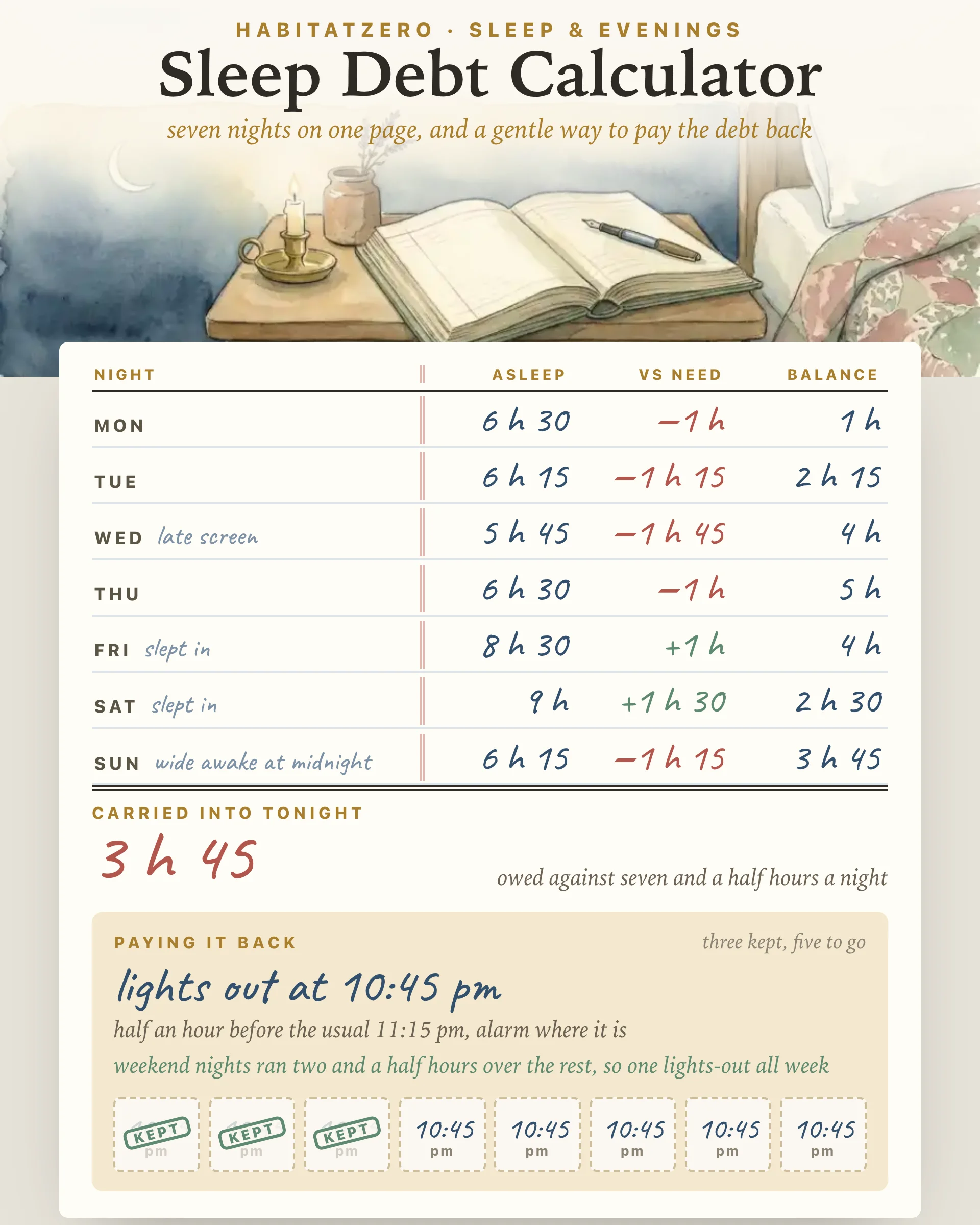
A run of short nights rarely announces itself. An early start on Tuesday, a show that ran long on Wednesday, a Saturday that swallowed the morning, and by Sunday you cannot say whether you are behind. A sleep debt calculator answers with a number. You say how much sleep you need, you say how much you got, and it keeps a running balance of the gap.
This one is laid out as a ledger, because that is how the arithmetic behaves. Each night gets a line. A short night adds to what you owe and a long one pays some of it off. The balance sits at the foot of the page, and under it a plan pays that balance back in small installments of earlier lights-out instead of one long weekend morning.
The ledger needs a nightly figure to measure against. The American Academy of Sleep Medicine and the Sleep Research Society recommend seven or more hours for adults aged eighteen to sixty, a figure their fifteen-member panel settled after a year of review. Treat it as a floor rather than a target. The panel set no upper limit, and it noted that more than nine hours a night can suit young adults and people recovering from sleep debt. So the page starts at seven and lets you raise the figure to eight or nine if you know you run on more.
In a two-week laboratory study, healthy adults kept to four or six hours in bed a night slipped further on tests of attention and thinking each day, until their deficits matched as much as two full nights without sleep. Their own sleepiness ratings rose at the start and then barely moved. The authors concluded that the volunteers were largely unaware of how impaired they had become.
That is the case for writing the week down: feeling fine is not a reliable readout of what you owe.
Start with the oldest of your last seven nights. Tap the nearest hour and nudge it by quarter hours, counting time asleep rather than time in bed. If something shaped the night, add a word or two, like late screen or early start, and the line keeps it beside the day.
The vs need column sets each night against your figure, and the balance column carries the running total down the page. The ledger never runs a credit. A long Saturday pays off what you already owe, but it cannot be banked against a short Tuesday that comes after it, which keeps one lucky night from hiding a bad run.
Under the double rule sits the balance you carry into tonight. Set your usual lights-out, choose to pay back fifteen, twenty or thirty minutes a night, and the page works out how many nights clear the balance and prints a coupon for each one. The morning after you keep one, tap it, and the payment book counts down.
Sleep debt is slow to repay. When a team in Japan let volunteers sleep as long as they could across many nights in a row, recovering from a single hour of habitual shortfall took about four days. The same study found that true need varied from one volunteer to the next, one more reason to set the nightly figure yourself.
The weekend of sleeping in is the lump sum most of us reach for, and it does less than it seems to. In a 2019 study at the University of Colorado, volunteers who slept as long as they liked over a weekend, after a workweek of short nights, gained only about an hour of extra sleep in total. Once the short nights resumed, their body clocks ran later, and the weekend did not protect them from the dip in insulin sensitivity that short sleep brought on.
That is why the plan here moves only the evening. Your alarm stays where it is, Friday and Saturday included, and lights-out comes a little earlier every night until the book is square.
The balance is only as good as your guesses, and your body does not keep minute-perfect books. Read it as a direction: a week that ends several hours down is worth changing, whatever the exact figure. It is not a diagnosis.
If you often feel sleepy during the day, nod off without meaning to, or give yourself plenty of time in bed and still sleep poorly for weeks, bring it to a doctor. The same goes for loud snoring or pauses in breathing that someone else notices. Those point to problems that an earlier bedtime will not fix.
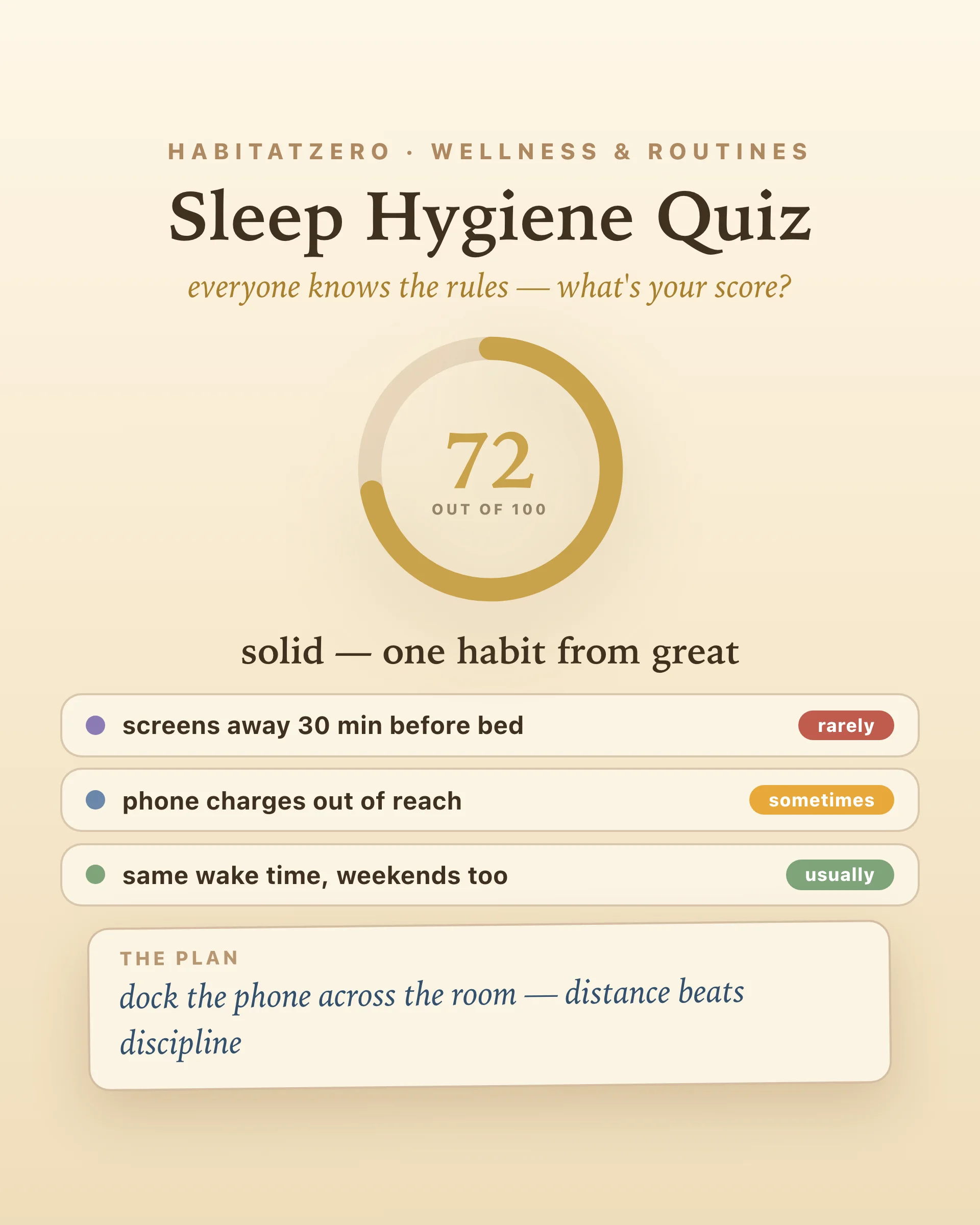
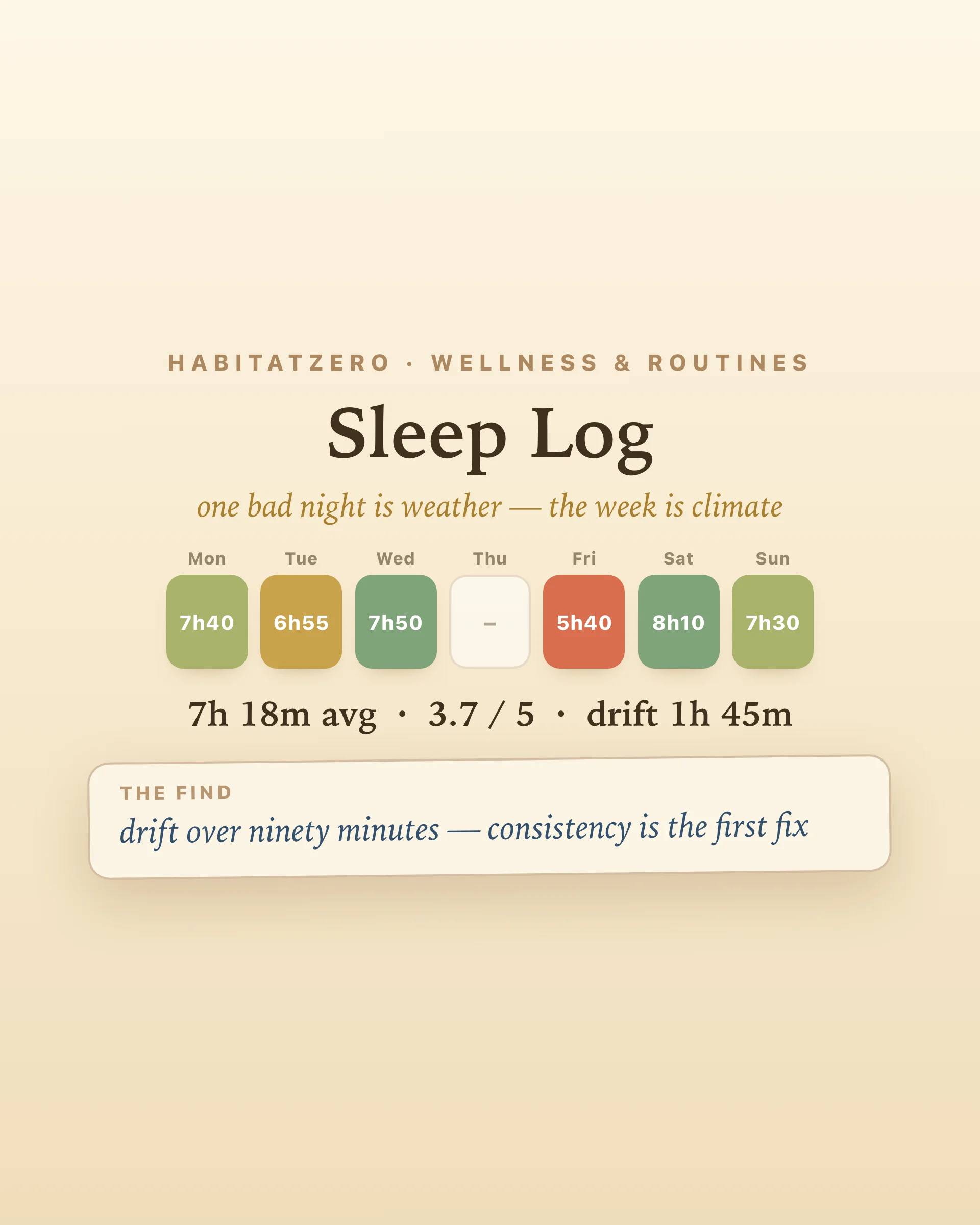
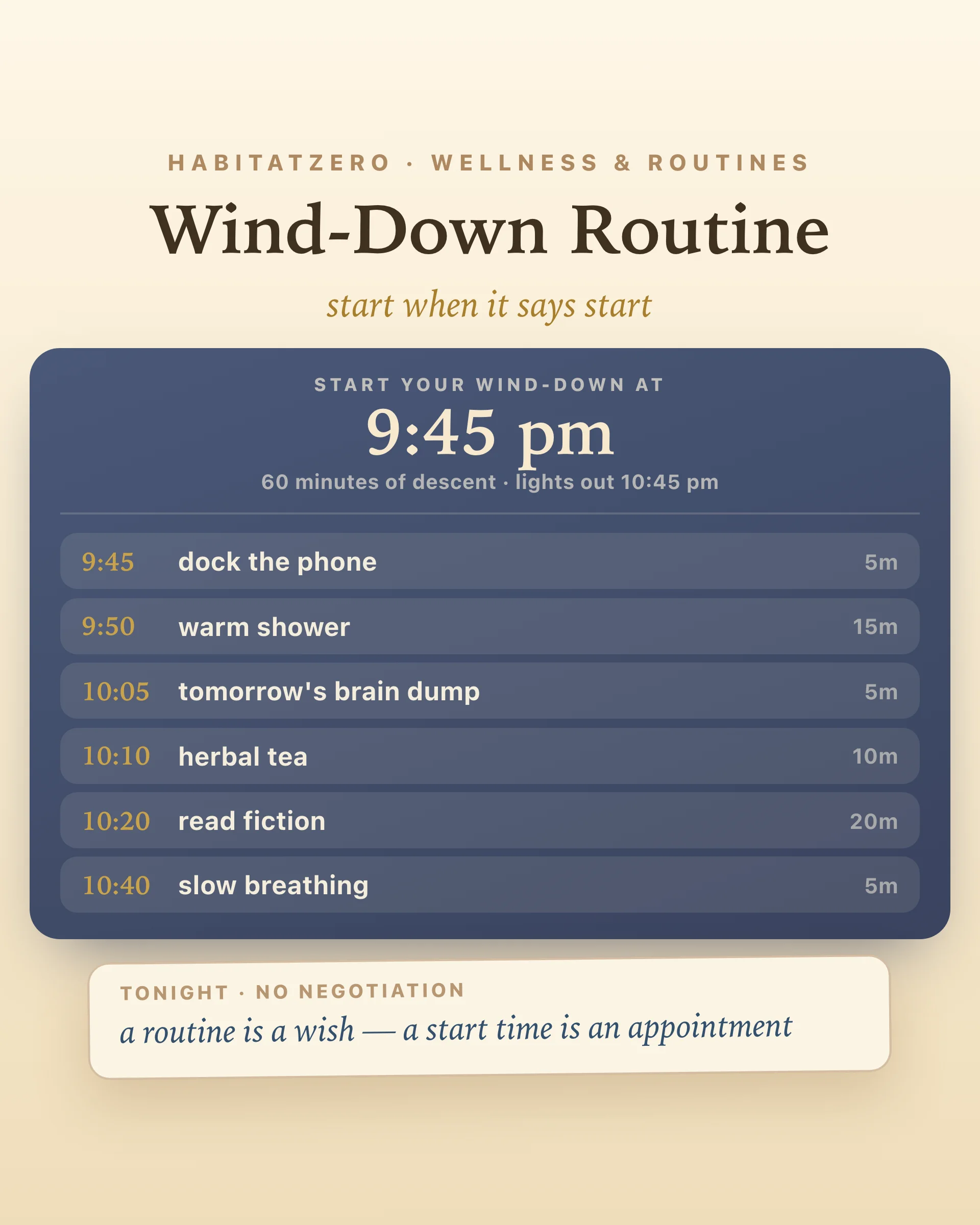
Open it on a Monday morning after a rough week to see what you are carrying, then keep it for the payback. To make the earlier lights-out happen, build a Wind-Down Routine that starts on time. If you want to know whether the plan is changing your nights, keep a two-week Sleep Log alongside it, and if the short nights have no obvious cause, the Sleep Hygiene Quiz points at the habits most likely to be costing you.
Take the sleep you need each night, subtract the sleep you actually got, and carry the difference forward from night to night. This calculator runs that sum across your last seven nights and never lets a long night bank credit against a short one that follows it. A sleep deficit calculator does the same arithmetic under another name.
The name comes from money, but the effect shows up in the lab. Volunteers held to six hours or less in bed for two weeks kept slipping on attention tests day after day, while their own sense of sleepiness rose at first and then barely moved, so the shortfall piled up without them feeling it.
Largely, though slowly. A study that let people sleep as long as they could night after night found that recovering from a single hour of habitual shortfall took about four days. Small nightly installments suit that pace better than one heroic Saturday morning.
It helps less than it feels like it should. In a 2019 study, two days of unlimited sleep added only about an hour in total, and the body clock ran later once the short nights resumed. An earlier lights-out spread across the whole week keeps your wake time steady while it chips away at the balance.
The American Academy of Sleep Medicine and the Sleep Research Society recommend seven or more hours for adults aged eighteen to sixty, and they set no upper limit. Plenty of people need eight or nine, which is why the calculator lets you raise the nightly figure.
By the team behind Fabulous, the science-based self-care app used by over 30 million people.