Wind-Down Routine BuilderSleep & Evenings · ~4 min
About this template · Updated September 2026
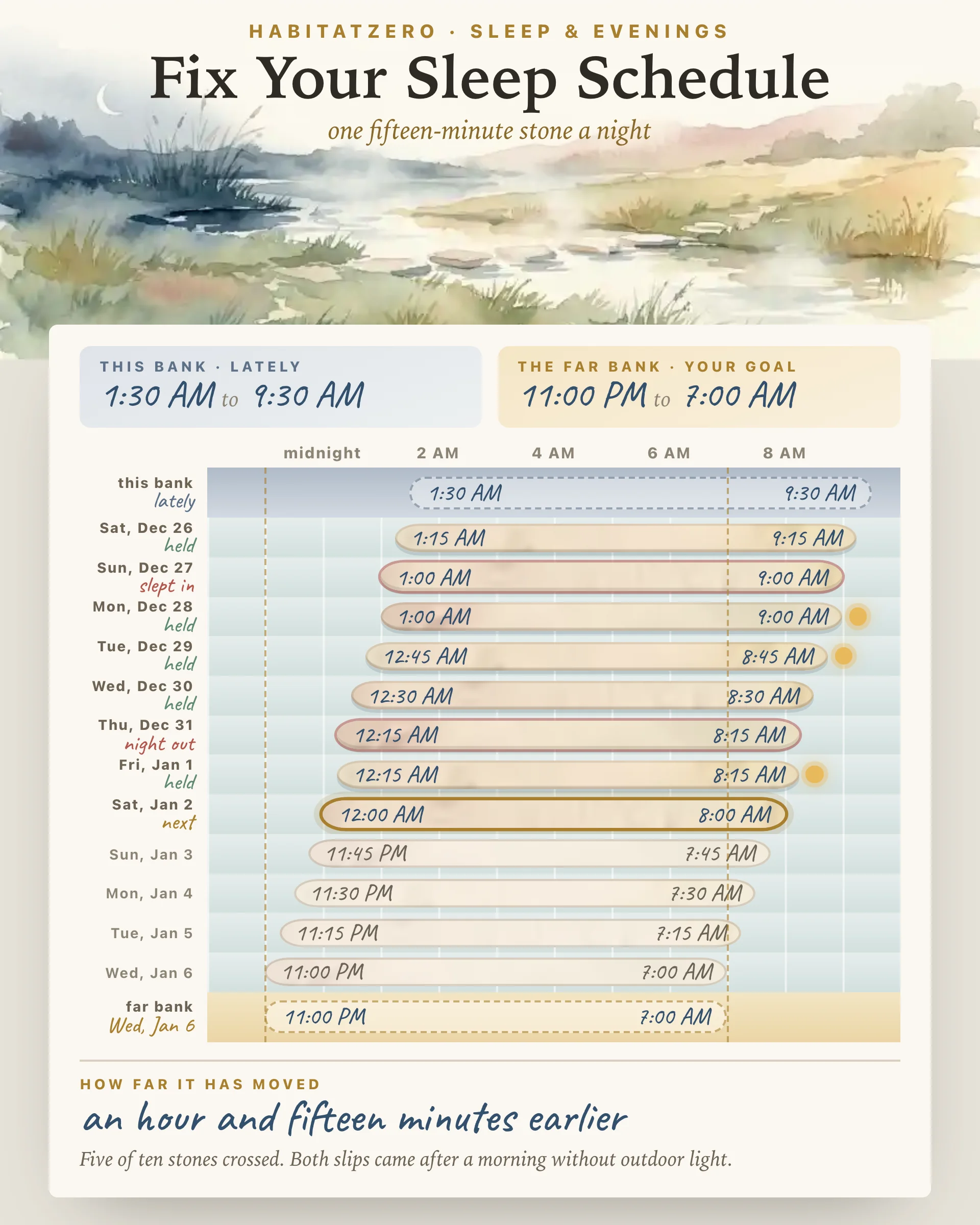
Nights drift. A winter break, a run of late shows, a week of deadlines, and suddenly you fall asleep at two and surface at ten. Then Monday asks for a seven o'clock alarm, and the fixes that come to mind are the blunt ones: set the alarm and hope, or stay up all night and crash early. Both tend to fail for the same reason. The body clock that times your sleepiness does not jump. It moves in small steps, and it follows light more than it follows your alarm.
This page turns the slow way into something you can see: stepping stones between where your nights are and where you want them, one per night, each fifteen minutes nearer the far bank.
For the twice-yearly clock change, the American Academy of Sleep Medicine suggests you shift your bedtime fifteen to twenty minutes a night for a few nights and let light help, heading outside for morning sun and dimming the lights at night. A drifted schedule is the same problem made bigger, so this page stretches that small step across as many nights as your gap needs.
Light matters because moving your sleep does not drag the clock along by itself. In a study of preflight adjustment, volunteers moved their sleep an hour earlier each day for three days. With ordinary dim indoor light in the mornings, their body clocks shifted by a little over half an hour. With bright light for the first hours after waking, they shifted by about two. The researchers also note that people usually take longer to adjust to a move earlier than to a move later, which is why resetting toward mornings feels like wading upstream.
Fifteen minutes is gentler than that lab schedule on purpose: without a light box, you want steps that ordinary daylight can keep up with.
The first anchor is the wake time. The academy's everyday advice is to get up at the same time every day, even on weekends or during vacations, and during a reset that means getting up at each stone's wake time however the night went. You cannot order sleep to arrive at a new bedtime, but you can always keep an alarm, and a morning kept on time builds the sleepiness that makes the next bedtime possible. The same page warns against lying in bed wide awake: if sleep has not come after about twenty minutes, get up and do something quiet in dim light.
The second anchor is light. Get outdoor light soon after you wake, even on a gray January morning, and keep the last hour before bed dim. If you are moving later instead, as some early risers want to, flip it: bright evenings, and mornings kept dim until your wake time.
Pick the bedtime and wake time your nights have drifted to on this bank, and the ones you want on the far bank. Each stone between them is one night, set on a river of clock time, so the path visibly drifts toward the far bank's hours, across midnight when it needs to. Every stone carries its date.
Each morning you check the night before. If lights went out near the stone's bedtime and you were up at its wake time, mark it held and step across. If not, mark it slipped and stay on the same stone for another night. A slip costs one night, not the crossing. Tap what got in the way, and mark whether you got outdoor light that morning.
The reading underneath adds it up: how far the schedule has moved, the night you should land, and what keeps slowing you, whether one reason keeps returning, slips bunch on Friday and Saturday nights, or they follow mornings spent indoors. A card holds six hours of shift and forty-two nights, so cross a wider gap in two legs.
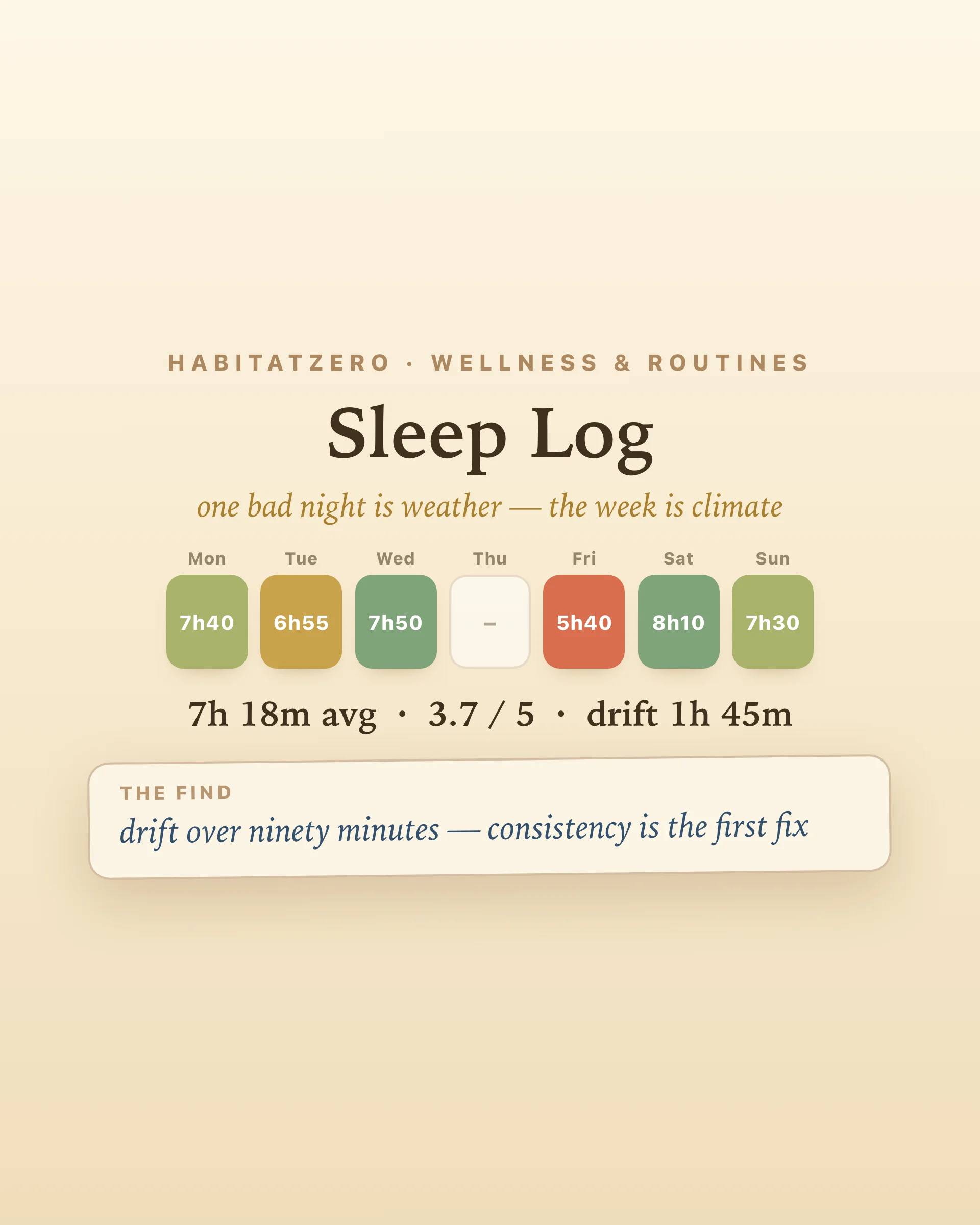
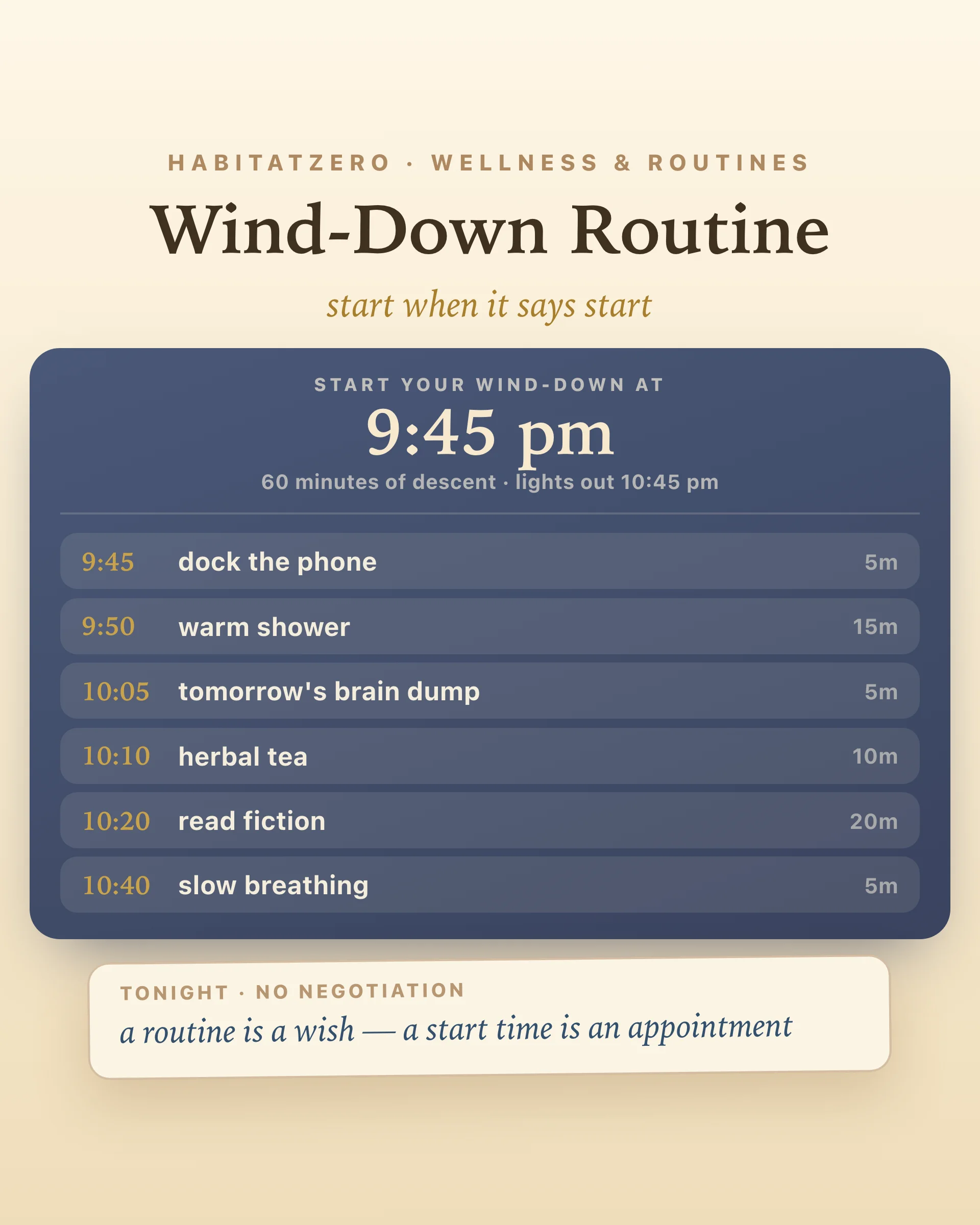
The fifteen-minute step borrows clock-change advice rather than coming from a trial built for resetting a month of late nights, and people differ: some move quickly, others need to stand on a stone for a few days. Nothing here measures your body clock. The page records what you did and reads it back, often enough to show the weak spot. If late caffeine keeps appearing, the Caffeine Calculator finds a cutoff that fits your bedtime. If screens keep you up, the Wind-Down Routine Builder gives the last hour a shape. Once you land, two weeks in the Sleep Log will show whether the new times hold.
Some schedules will not move however carefully you step. If you lie awake most nights for weeks, that is insomnia worth raising with a doctor, and the academy's sleep habits page names cognitive behavioral therapy as the most effective lasting treatment for it. If your nights keep sliding late whatever you do, the pattern may be delayed sleep-wake phase disorder, a body clock set later than your life allows. The academy's clinical guideline for circadian rhythm disorders supports treatments such as carefully timed melatonin, and because timing is the whole trick, that belongs with a clinician, not a guess. Both problems respond to treatment, and needing it says nothing about your willpower.
Move your bedtime and wake time about fifteen minutes toward your goal each night, and keep each new wake time on weekends too. Get outdoor light soon after waking and keep the last hour before bed dim. When a night slips, repeat those times the next night instead of jumping ahead.
Usually not for long. A sleepless night can leave you tired enough to crash early once, but the body clock itself has not moved, and the lost sleep tends to come back as a long nap or a late lie-in that pulls your nights later again. For clock changes, sleep specialists advise the opposite: small nightly shifts, helped along by morning light.
At fifteen minutes a night, a one-hour gap takes four nights and a three-hour gap takes twelve, plus one extra night for every night that slips. This planner works out your landing date from your own times and moves it as you check each night.
Keep the wake time anyway and let bedtime follow, because an on-time morning builds the sleepiness that makes the next night easier. If you are still awake after about twenty minutes, get up and do something quiet in dim light. If you lie awake most nights for weeks, raise it with a doctor, since insomnia that lasts has treatments that work.
No purchase is needed. The page shows a sample crossing you can look over; to set your own banks and log your nights each morning, personalize it in HabitatZero, where it is free and saves as you go.
By the team behind Fabulous, the science-based self-care app used by over 30 million people.