Wind-Down Routine BuilderSleep & Evenings · ~4 min
About this template · Updated September 2026
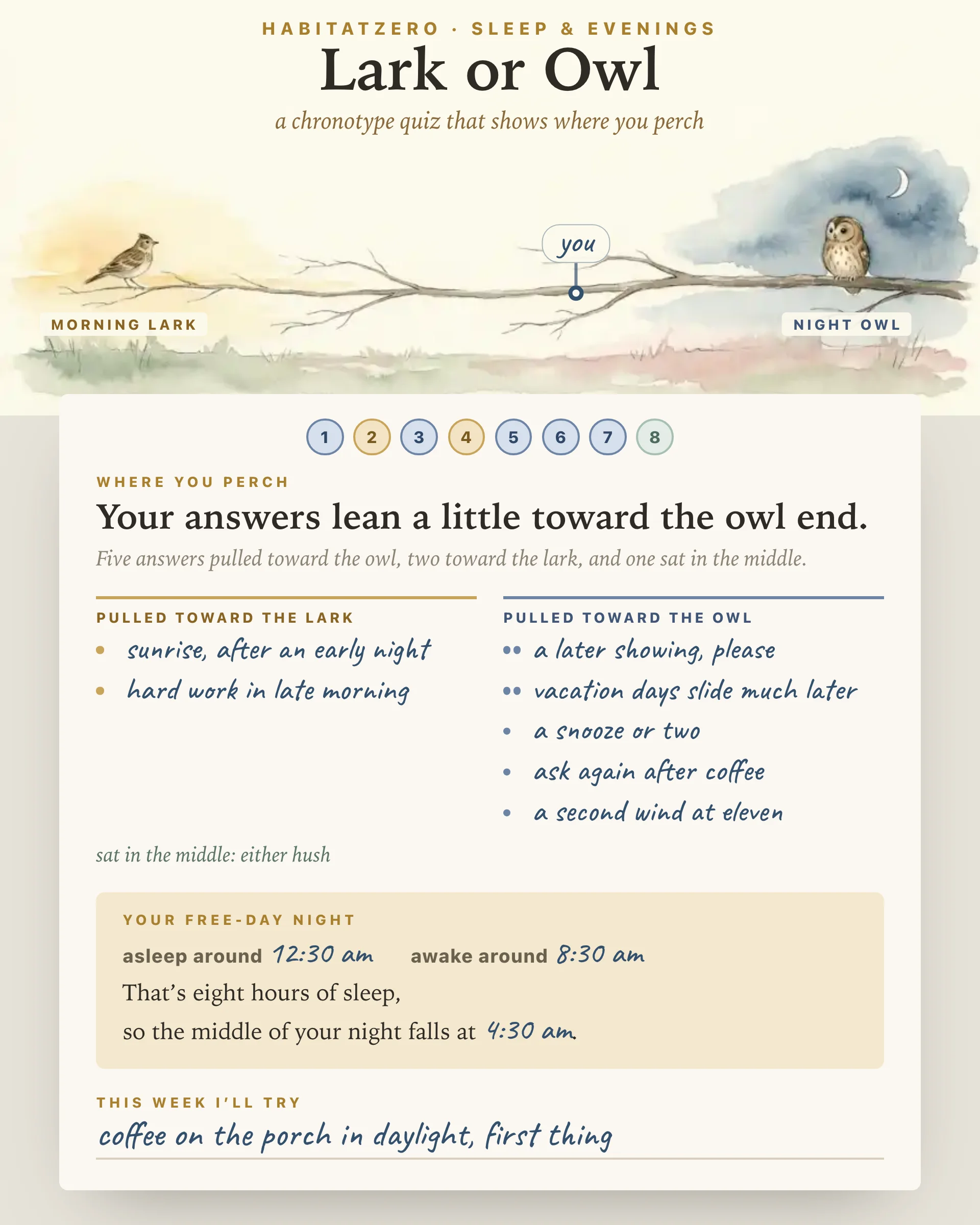
The eight moments in this quiz were written for this page, but the question behind them is decades old. Sleep researchers gauge where people fall between morning and evening with two well-known questionnaires: the Morningness-Eveningness Questionnaire that James Horne and Olov Östberg published in 1976, and the Munich ChronoType Questionnaire that Till Roenneberg, Anna Wirz-Justice and Martha Merrow introduced in 2003. This page borrows their ideas, not their wording, and it is independent: neither those researchers nor their institutions are connected with it or have endorsed it.
Your chronotype is the time of day your body clock favors for sleeping and for being awake. At one end sit larks, who wake early without trying and fade by late evening. At the other sit owls, who come alive after dark and find early alarms brutal. Roenneberg's team described the spread vividly: the most extreme larks get up at roughly the hour the most extreme owls go to bed.
Most people live well inside those ends. Diaries from more than fifty thousand Americans showed a near-normal spread of chronotypes, crowded around the middle with long tails on either side. That is why this page returns a position rather than a type. Popular quizzes often sort you into four animals; this one shows where you perch on a single branch, and why.
Each moment is a small scene from an ordinary week: the work-day alarm, a friend's invitation to watch the sunrise, a tricky question over breakfast, a late movie, a vacation with nothing planned. Tap the answer that fits a normal week rather than your best or worst one. Every answer carries a gentle or a strong pull toward one end, and a couple can sit in the middle. As you go, the marker on the painted branch slides toward the lark or the owl.
After the eighth answer the page writes its reading in plain words, such as a little toward the owl end or near the middle of the branch, and lists the answers that pulled each way with the strong pulls first. Tap any numbered dot to change an answer and watch the reading shift with it.
Then comes a number that opinion alone can't supply. Slide to when you usually fall asleep and wake on a day off with no alarm, and the page finds the middle of that night: sleep from 12:30 am to 8:30 am puts the midpoint at 4:30 am. Researchers lean on this free-day midpoint because days without an alarm show what your body does when no schedule is steering it.
Last, the page offers a few ways to shape your week, built from your own answers: protecting the hours you said you would give hard work, a light habit that suits your lean, and a note about weekends if your free-day mornings run late. Choose one, or write your own.
The questionnaires track the body reasonably well. In Horne and Östberg's original study, people who scored as morning types reached their daily peak in body temperature earlier than evening types, and they went to bed and got up earlier too. Roenneberg's questionnaire asks about work days and free days separately, and that split exposed a pattern: later types build up a sleep debt across the workweek and repay it by sleeping hours longer on free days. The mismatch between the clock you live by and the clock you carry is what researchers went on to call social jet lag.
Your place on the range also moves. The same American diaries show people drifting later through adolescence, reaching peak lateness around age nineteen, and turning earlier from then on. Light moves it as well. Roenneberg's group found that more time outdoors in daylight went with earlier sleep, and when Kenneth Wright's lab took volunteers camping with no electric light, their internal clocks lined up with sunrise and sunset, with the later types shifting most. Morning light draws a late clock earlier, while bright evenings, screens included, hold it back.
What this quiz can't do is measure your clock. Eight moments give you a reflection, not a validated instrument, and a lean toward the owl is not a sleep problem in itself. Nor is it a verdict on discipline: an owl who dreads seven o'clock starts is often fighting timing, not character.
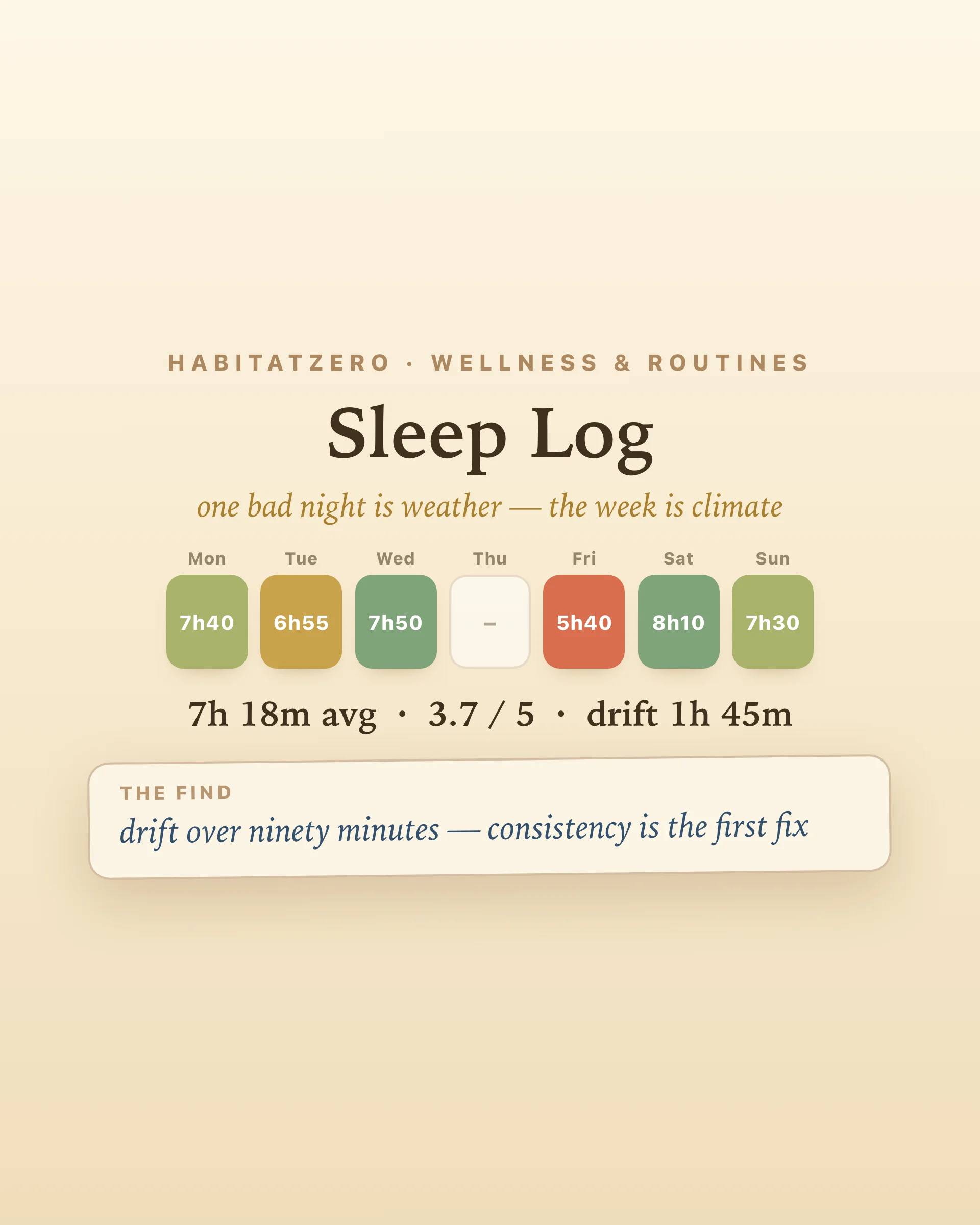
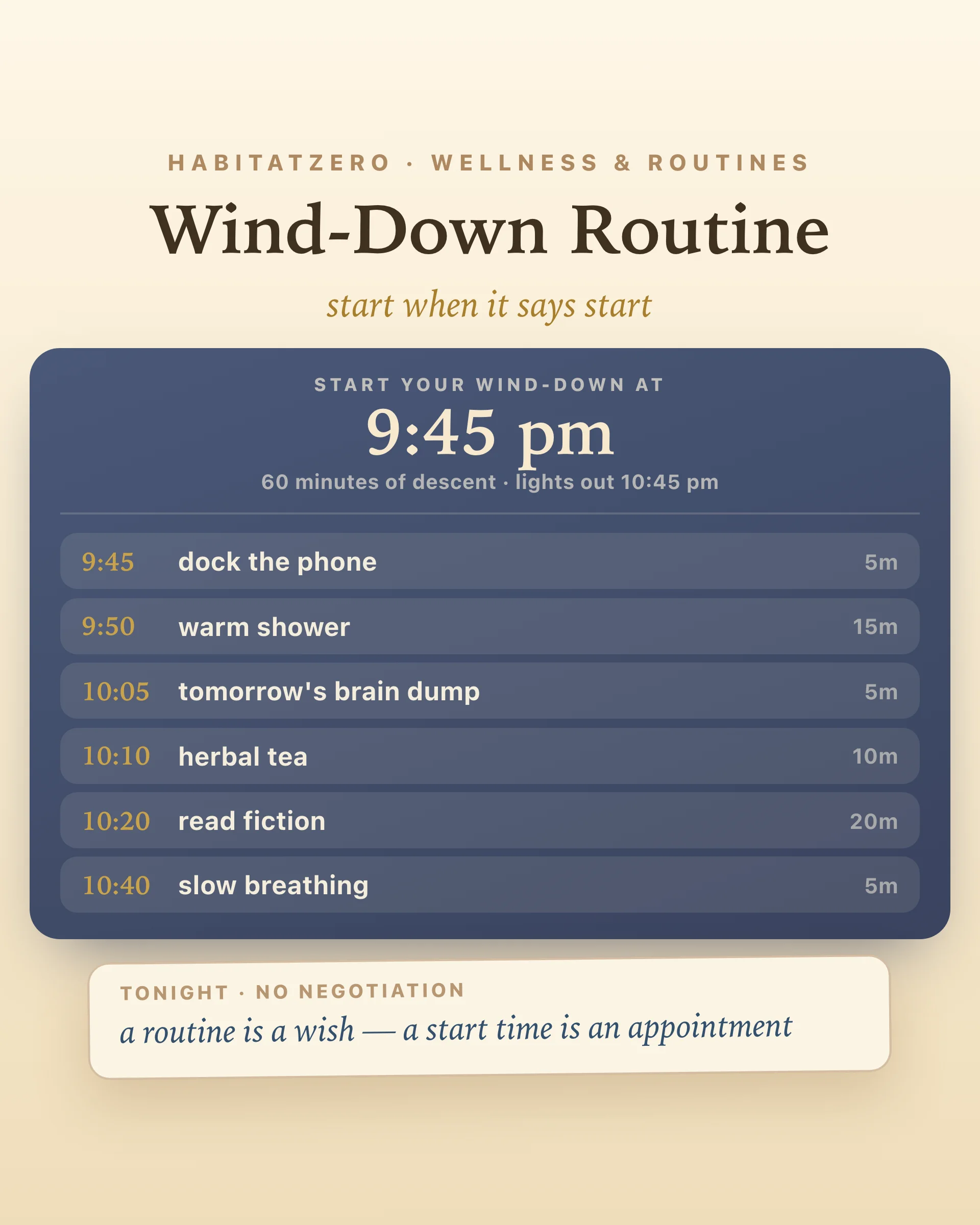
Take the quiz when you are deciding when to schedule demanding work, when mornings feel like a daily struggle, or after a new job, a move or a change of season. To check your answers against real nights, keep the Sleep Log for two weeks and compare its free-day times with the ones you set here. If you lean owl and want earlier nights, the Wind-Down Routine Builder gives your evening a start time, and the Caffeine Calculator shows how much of an afternoon coffee is still working at bedtime.
If sleep stays hard whatever hours you keep, or daytime drowsiness spills into work or driving, take that to a doctor or a sleep specialist instead of another quiz. Where you perch today is a starting point for arranging your days, and it is allowed to move.
Watch what your body does when nothing is pushing it. Note when you fall asleep and wake on free days without an alarm, and which hours feel easiest for hard thinking. Researchers use the middle of free-day sleep as a practical marker, and questionnaires add preference questions like the eight moments in this quiz.
Those four animals come from clinical psychologist Michael Breus and his 2016 book The Power of When. The research questionnaires work differently: they place people along one range from morning types to evening types, with most people somewhere in between. This quiz uses that range, drawn as a branch with a lark at one end and an owl at the other.
Yes, within limits. On average it drifts later through the teenage years, reaches its latest point around nineteen, then moves earlier through adulthood. Light shifts it too: more daylight, especially in the morning, tends to pull sleep earlier, while bright evenings push it later.
No. Leaning toward the evening is ordinary variation, and this quiz never gives a diagnosis. If you cannot fall asleep until very late however you try, and it keeps costing you mornings you need, that is worth taking to a doctor or a sleep specialist.
This page shows a finished example, with its reading, free-day midpoint and week plan. Answering the eight moments yourself and keeping the result to revisit after a change of season happens in HabitatZero, where personalizing it costs nothing.
By the team behind Fabulous, the science-based self-care app used by over 30 million people.