
Psychology of Indirect Speech: Steven Pinker
The Things We Don't Say
The brief
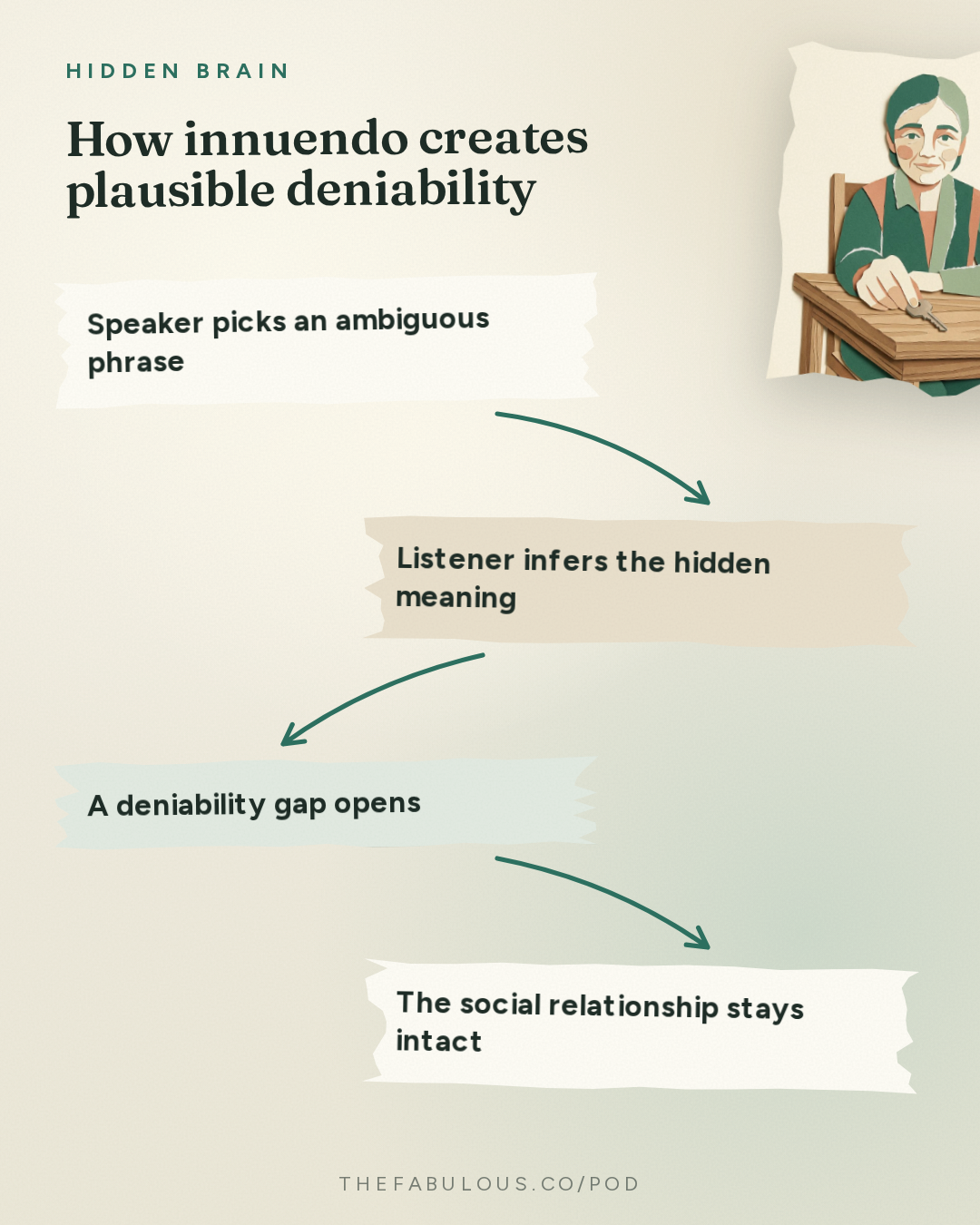
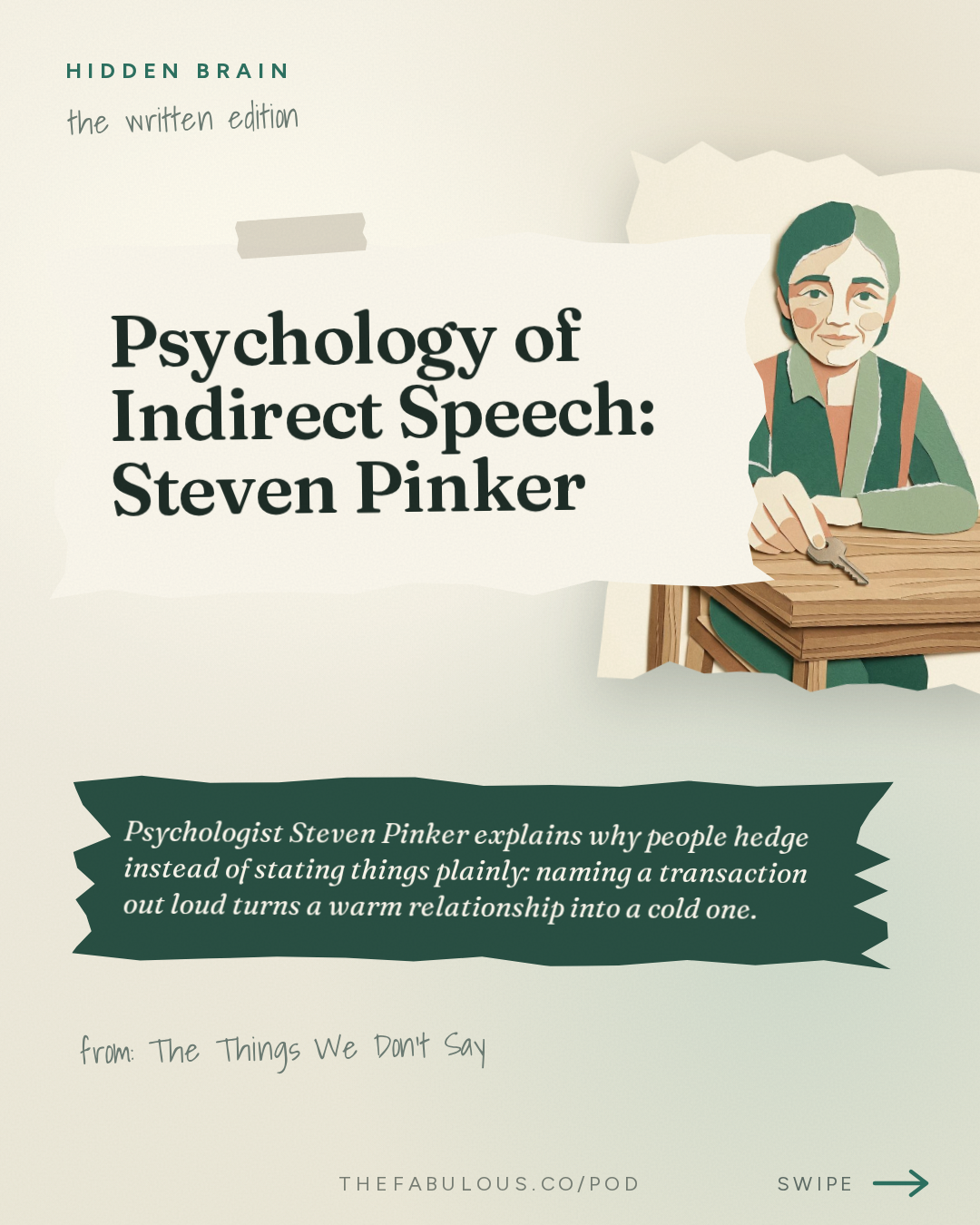
Psychologist Steven Pinker explains why people hedge instead of stating things plainly: naming a transaction out loud turns a warm relationship into a cold one. He shows how common knowledge, once spoken aloud, cannot be denied, and how innuendo lets bribery, threats and courtship happen with plausible deniability intact.
Steven Pinker, a psychologist at Harvard University, once sat in a dark corner of a Manhattan restaurant across from one of the world's richest people. His job was to help the university president secure a very large gift. Nobody at the table was allowed to say so. Money never came up (11:00). Pinker later realized the whole evening felt like a first date: both people know why they are there, but saying it aloud would ruin everything (06:33). That small, absurd discomfort turns out to be a window into something much larger about how language actually works.
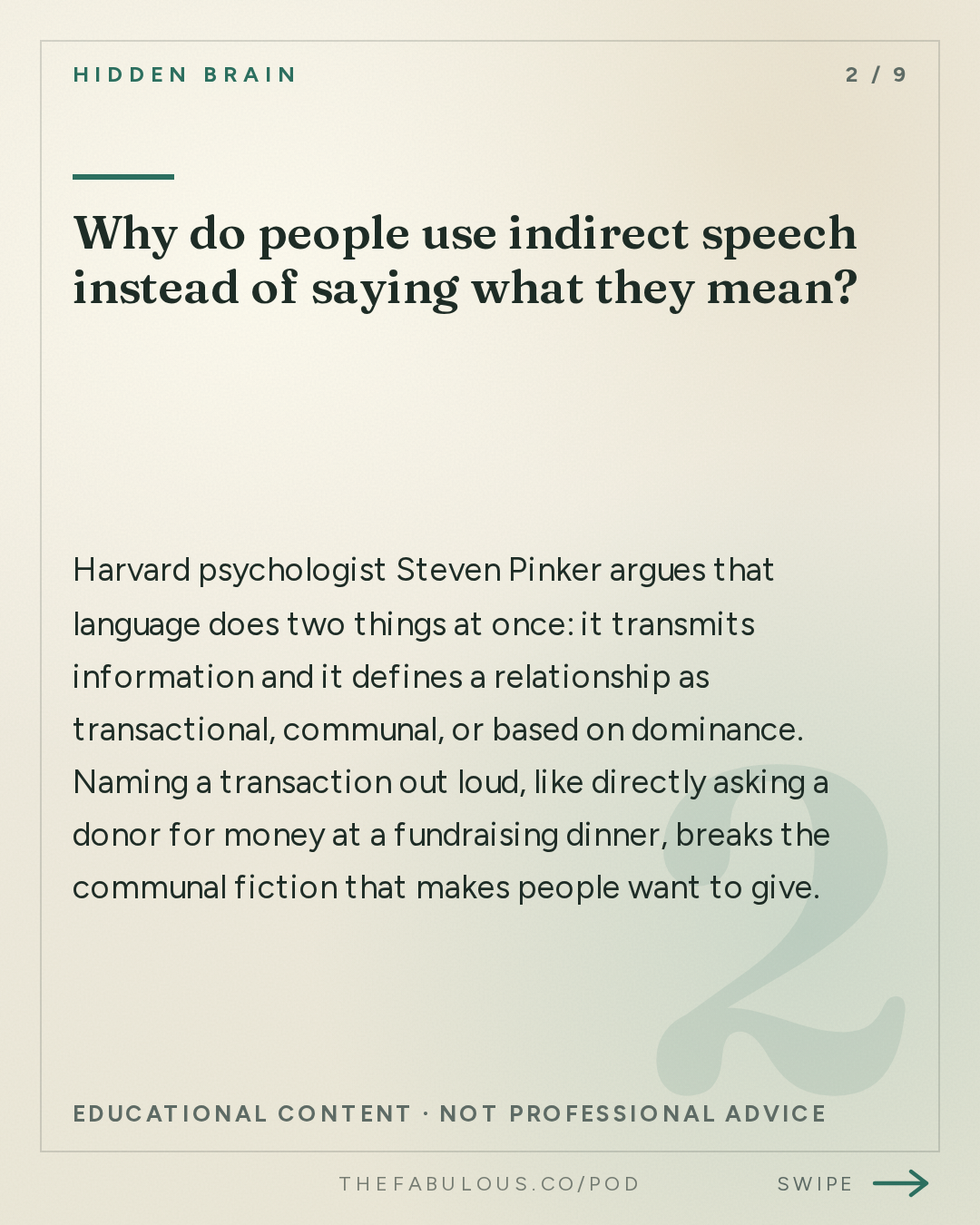
Pinker's claim is that speech is never doing just one job. It carries information, and at the same time it sets the terms of a relationship. As he puts it:
"Language has to do two things at once. It's a channel of communication... At the same time, it establishes a particular kind of social relationship." (Steven Pinker, [09:30])
He sorts those relationships into three rough types: transactional, where two parties are trading favors; communal, where warmth and mutual concern are assumed; and dominance, where one party outranks the other (09:47). Most social friction, Pinker argues, comes from confusion or disagreement about which of these three frames applies. A donor dinner works only if both sides pretend, for a few hours, that it is communal rather than transactional (12:06). A first date collapses if one person names the transaction too soon. Even insults follow the pattern: when Donald Trump attacked Nikki Haley on Twitter in 2016, she replied only "Bless your heart," a phrase that signals she refuses to fight on his terms and considers her status secure enough to ignore the jab (14:49, 15:45).
The Weight of Saying It Out Loud
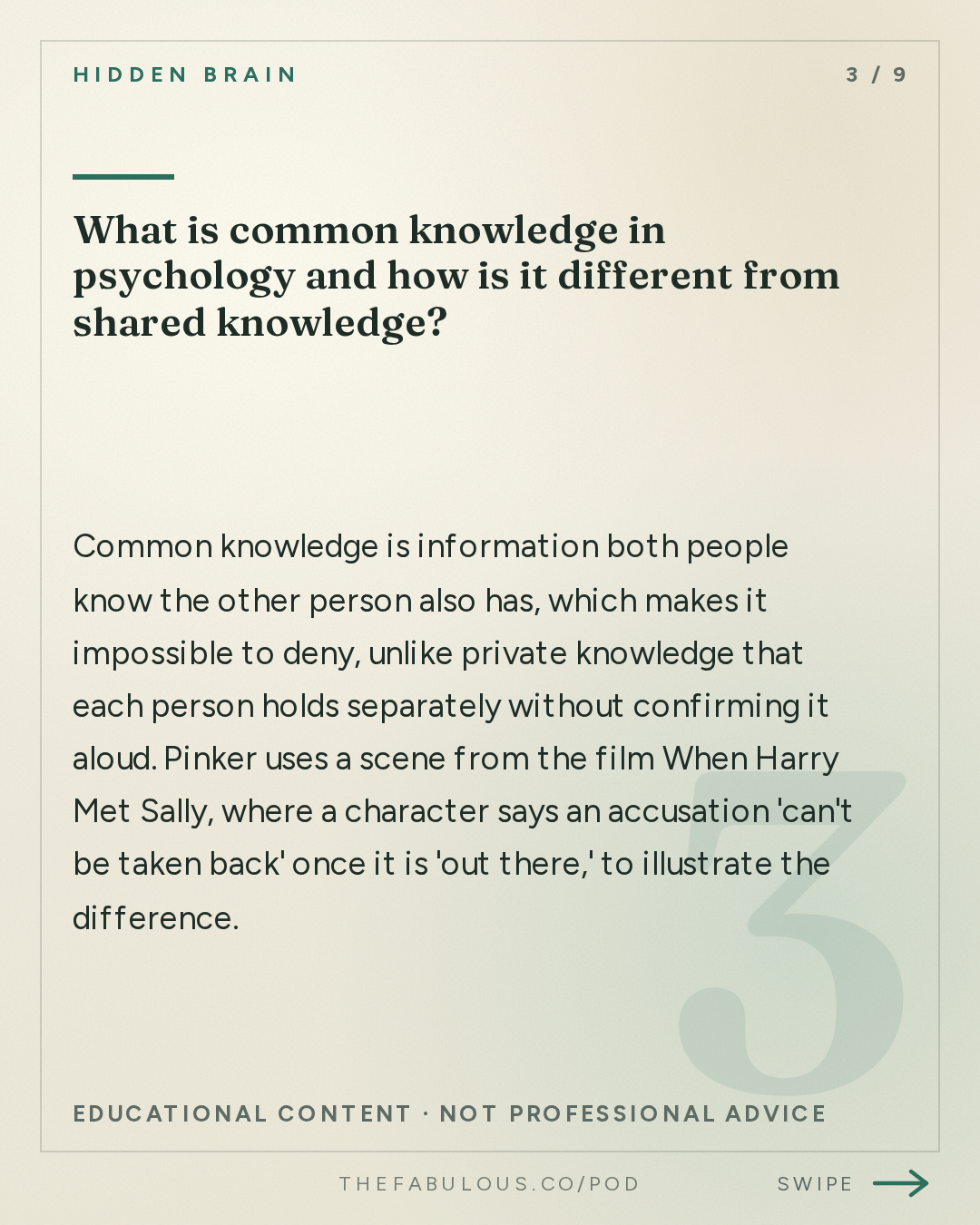
The most useful idea in the episode is the distinction between private knowledge and common knowledge. Two people can each privately suspect the same thing about each other without anything changing between them. But once that thing is said aloud, in words both people hear, it becomes what Pinker calls common knowledge: information each person knows the other has too, and knows that the other knows they have it. That chain of mutual awareness cannot be taken back. Pinker illustrates this with a scene from the 1989 film When Harry Met Sally, where Sally objects to being complimented by Harry. Harry offers to take it back. Sally tells him he can't, because "it's already out there."
"There's a big difference between something being common knowledge, or as Sally put it, 'out there,' and something being known privately by each of them." (Steven Pinker, [27:20])
This single mechanical fact, that spoken things become undeniable in a way that assumed things are not, explains a surprising amount of social behavior. It explains the humble brag: when the British evolutionary biologist John Maynard Smith said, "I wasn't smart enough to do physics, any idiot can do biology," he wasn't stating a fact so much as performing confidence, letting the listener do the work of concluding he must be brilliant, all without ever making a boast that could be pinned on him as common knowledge (28:25). It also explains a small, sharp scene from the television comedy Curb Your Enthusiasm, in which a character discovers that his rival secretly funded a building wing and then told people about it anyway, so as to get moral credit for anonymity while still being known as the giver (31:33). Pinker traces this tension back to the medieval philosopher Maimonides, who ranked anonymous giving above public giving precisely because it removes any chance of reputational payoff (32:21). Pinker's own research backs this up: in experiments he ran with graduate students and postdoctoral researchers, people gave more moral credit to someone who gave a smaller amount anonymously than to someone who gave a larger amount publicly (33:10).
The Physics of a Veiled Threat
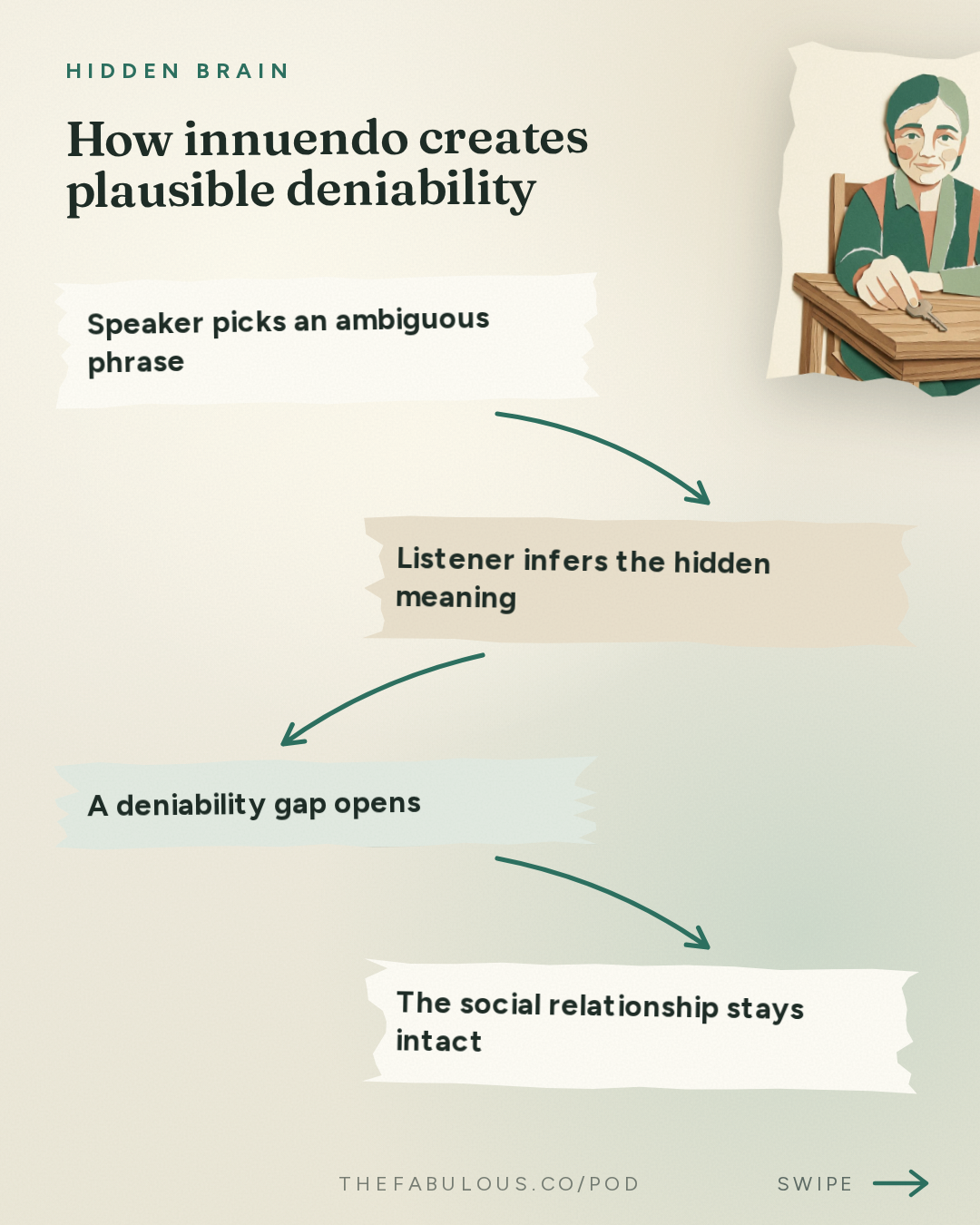
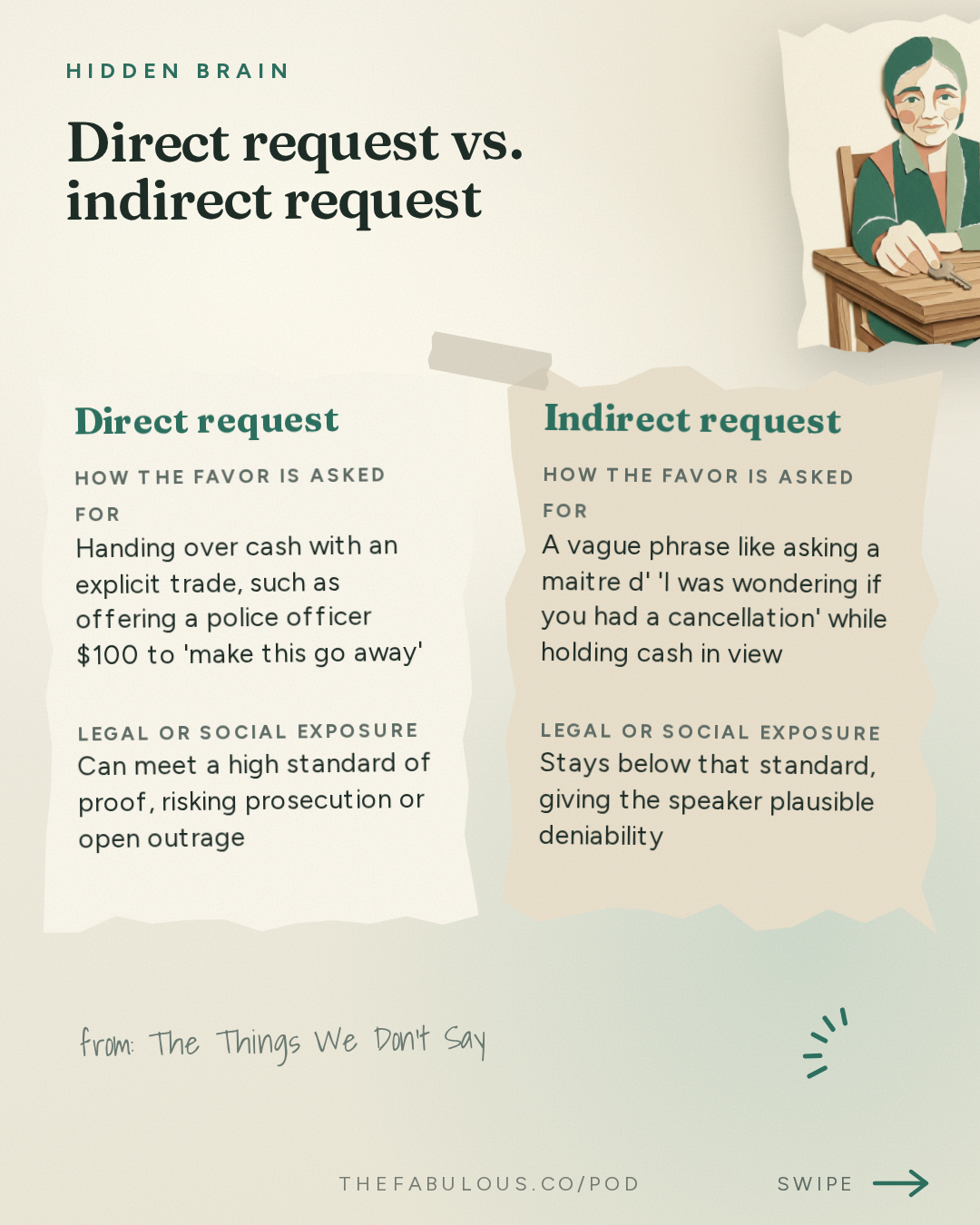
If common knowledge is one half of Pinker's theory, plausible deniability is the other. Indirect speech lets a speaker communicate something risky while keeping enough ambiguity that the message can be denied if challenged. The clearest illustration is a scene from The Sopranos, where a mob associate praises a juror for his "civic duty" and hopes he'll "do the right thing" in a mob trial. The literal words are a compliment. The intended message is a threat against his family. Pinker calls this an example of plausible deniability: the phrasing has to be clear enough for the listener to catch the real meaning, but vague enough to fail a much higher standard of proof, the kind needed in a courtroom (34:21, 35:44).
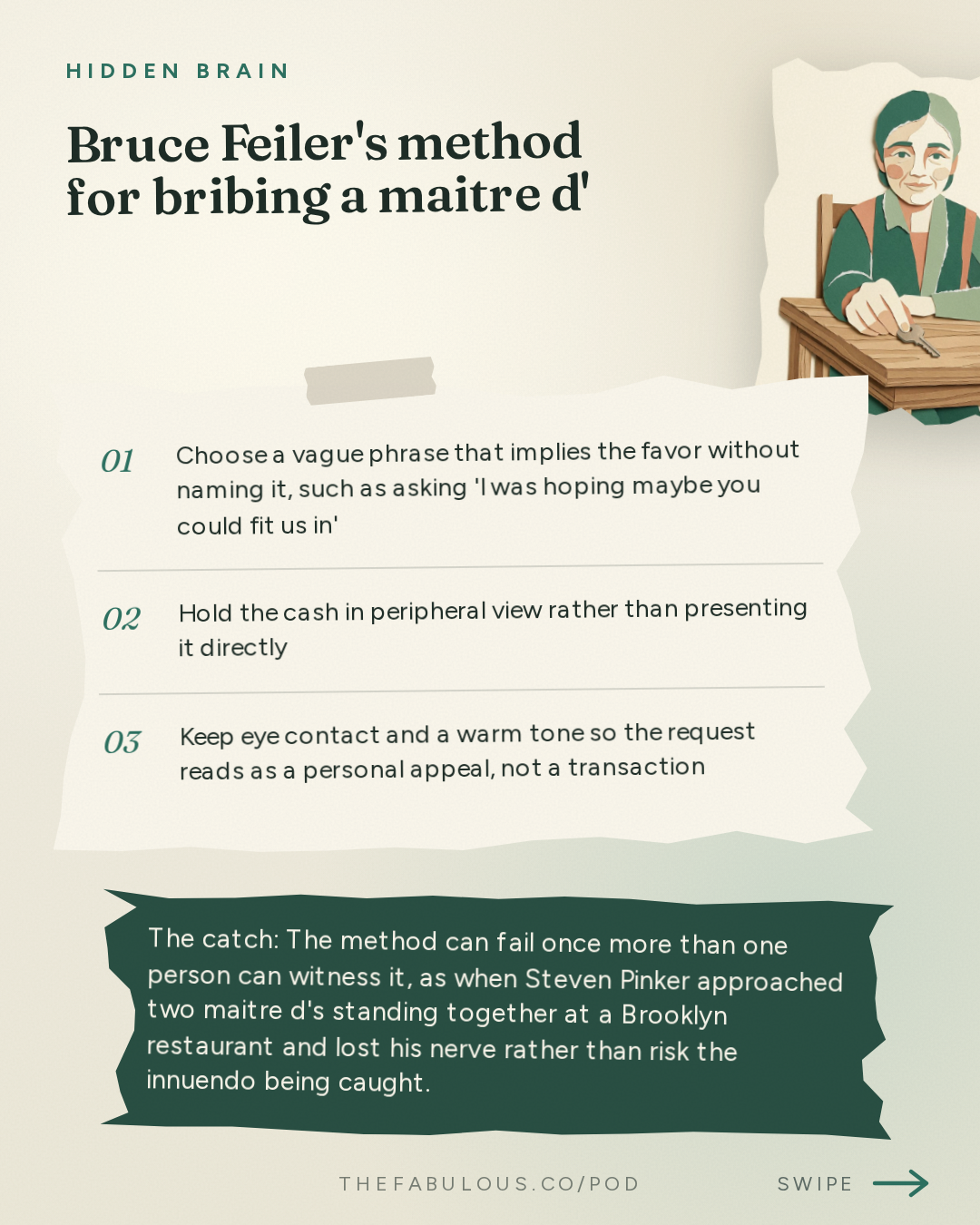
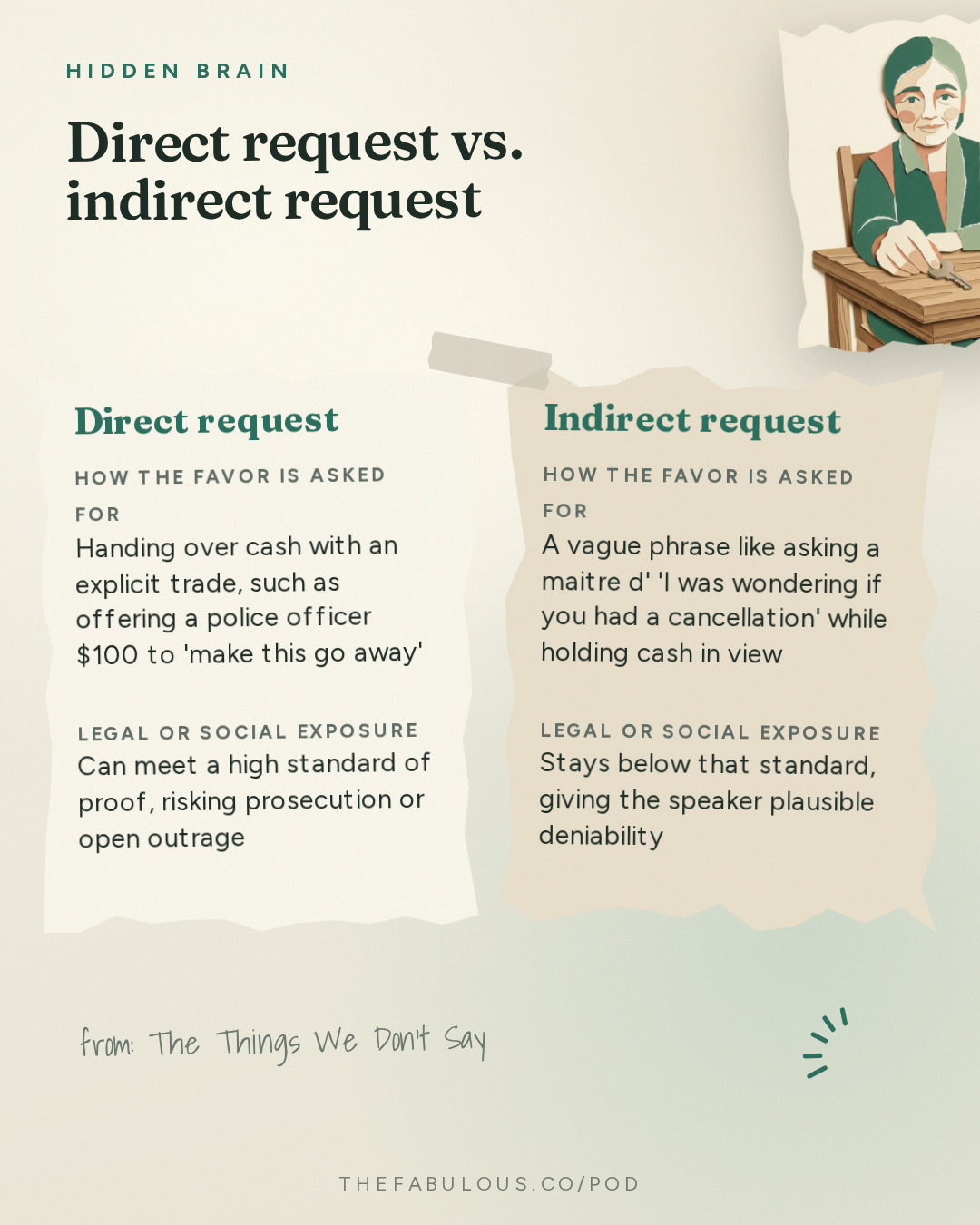
The same mechanics show up in something as mundane as tipping a maitre d'. The writer Bruce Feiler once took a magazine assignment to bribe maitre d's at popular New York restaurants for a good table. He dreaded outrage and rejection. Instead, he instinctively avoided naming the trade at all. Rather than offering twenty dollars for a table, he'd hold a bill in peripheral view while saying something like "I was hoping maybe you could fit us in." It worked every single time (37:55). Pinker's explanation is that an explicit quid pro quo treats the maitre d' as a transactional employee, undermining the authority and dignity built into that role, while an indirect request lets both people preserve the fiction of a favor between equals (39:04). Pinker later tried this himself, with fifty dollars in his pocket outside a Brooklyn restaurant, at his wife's challenge. He lost his nerve the moment he saw two maitre d's standing together, reasoning that innuendo aimed at one would be caught by the other, and walked away with the bill still in his pocket (50:24, 51:39).
Indirection has real costs, though, and Pinker doesn't shy from the darkest example: the 1997 crash of Korean Air Flight 801. In the cockpit, the strict hierarchy meant junior crew members sensed the plane was in danger but hedged their warnings instead of stating the problem outright, deferring to the authority of the captain even as the aircraft lost altitude (44:36). It is one case, Pinker says, where the social lubrication of indirect speech becomes "cruel, tragic, unjust" (45:00).
That tragedy sets up the episode's final argument, against a movement called radical honesty, championed by the psychotherapist Brad Blanton, which holds that people should say exactly what's on their minds at all times (45:47). Pinker calls the practical result a "hellscape," because stable relationships, whether friendships, marriages, or a professor's rapport with a student, run on what he calls fictions of mutual respect: the assumption that neither party thinks poorly of the other, even though everyone privately does, sometimes (46:12, 46:38). He quotes the seventeenth-century French philosopher Blaise Pascal, who wrote that if everyone said what was actually on their minds, there would not be four friends left in the world (47:16). A scene from the film Tootsie makes the same point as comedy: a character wishes a man would just be honest about wanting her, and later, when a man does exactly that, in the same words, she throws a drink in his face (48:19, 49:15). We say we want candor. We don't actually want to live inside it.
All of this circles back to the folktale that opens the episode, The Emperor's New Clothes, in which only a child is honest enough to say the king is naked. Listeners like to imagine they would be that child. Pinker's research suggests otherwise: most of us are the courtiers, calibrating every sentence to protect a relationship, a status, or a deal, and doing it so automatically we rarely notice the negotiation happening underneath the words.
Ask this episode anything
Pod's AI answers from the episode itself, with the minute mark so you can hear it yourself.
Or start with one of these
Ask this episode
Pod's AI listens to the whole episode to answer, and points you to the minute it comes from.
The rest of this answer, and any question after it
Answers come from the episode itself, never from a summary of it.
ContinueKey takeaways
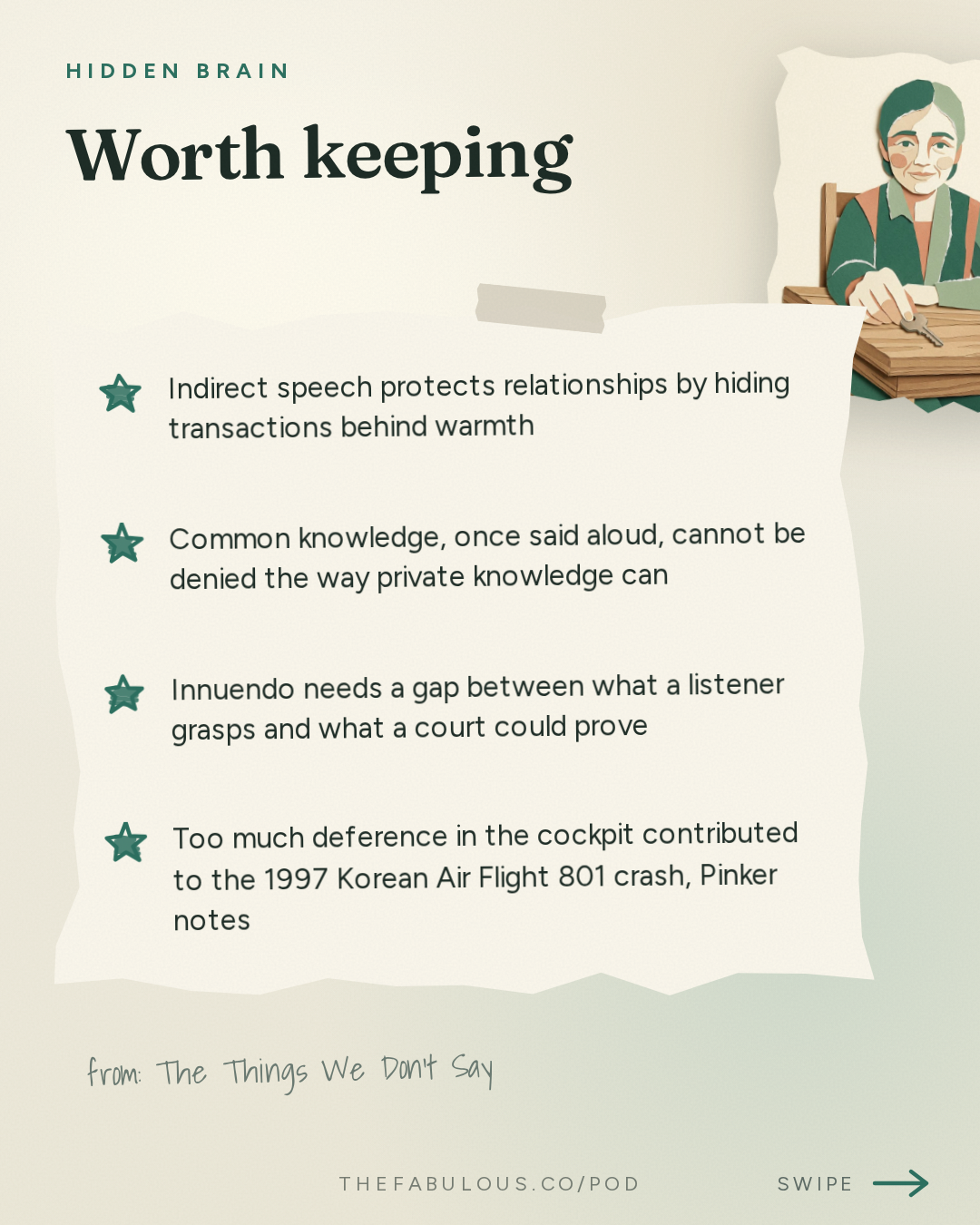
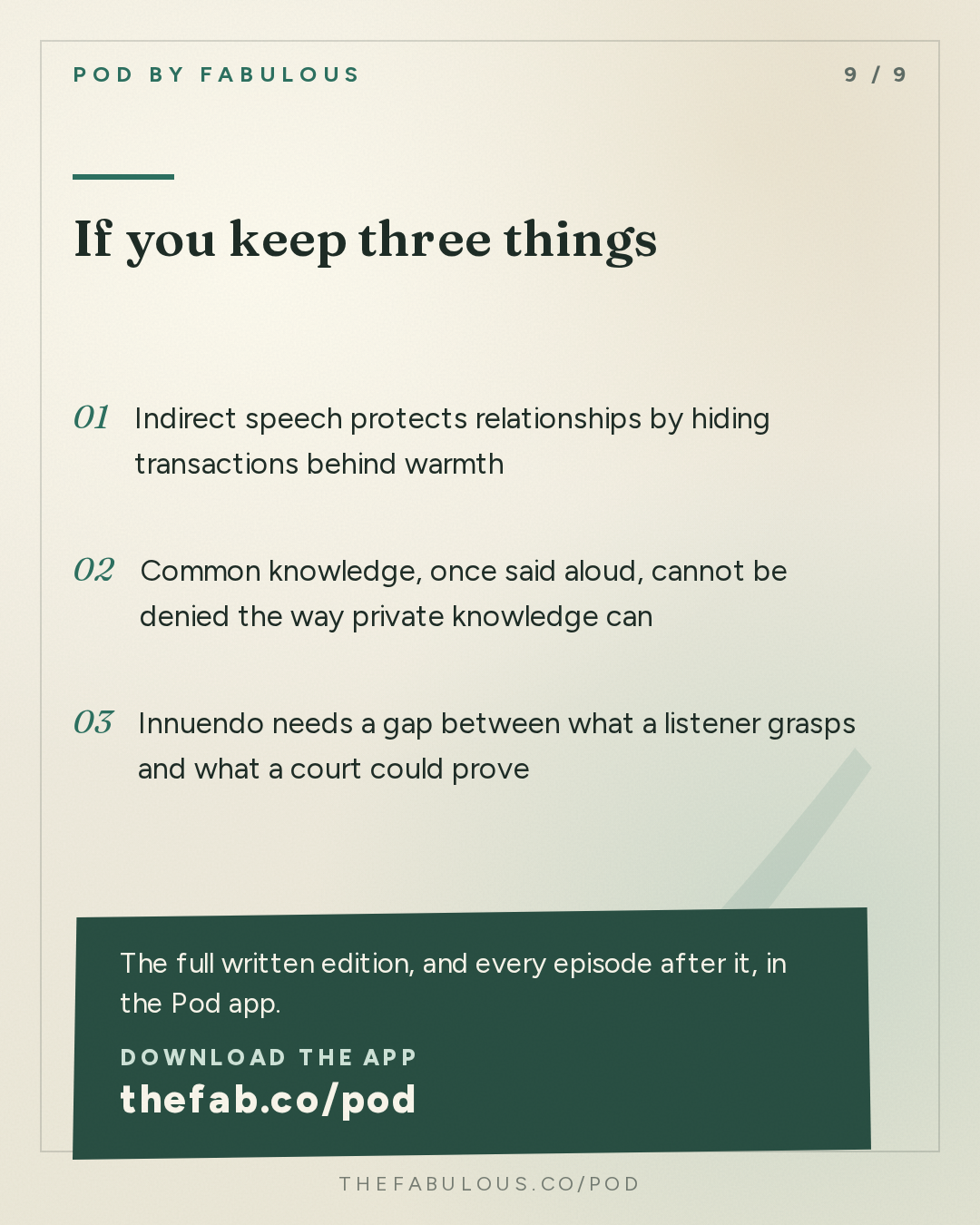
- Indirect speech protects relationships by hiding transactions behind warmth
- Common knowledge, once said aloud, cannot be denied the way private knowledge can
- Innuendo needs a gap between what a listener grasps and what a court could prove
- Too much deference in the cockpit contributed to the 1997 Korean Air Flight 801 crash, Pinker notes
- Radical honesty would destroy relationships because friendships rest on polite fictions, Pinker argues
The episode in cards
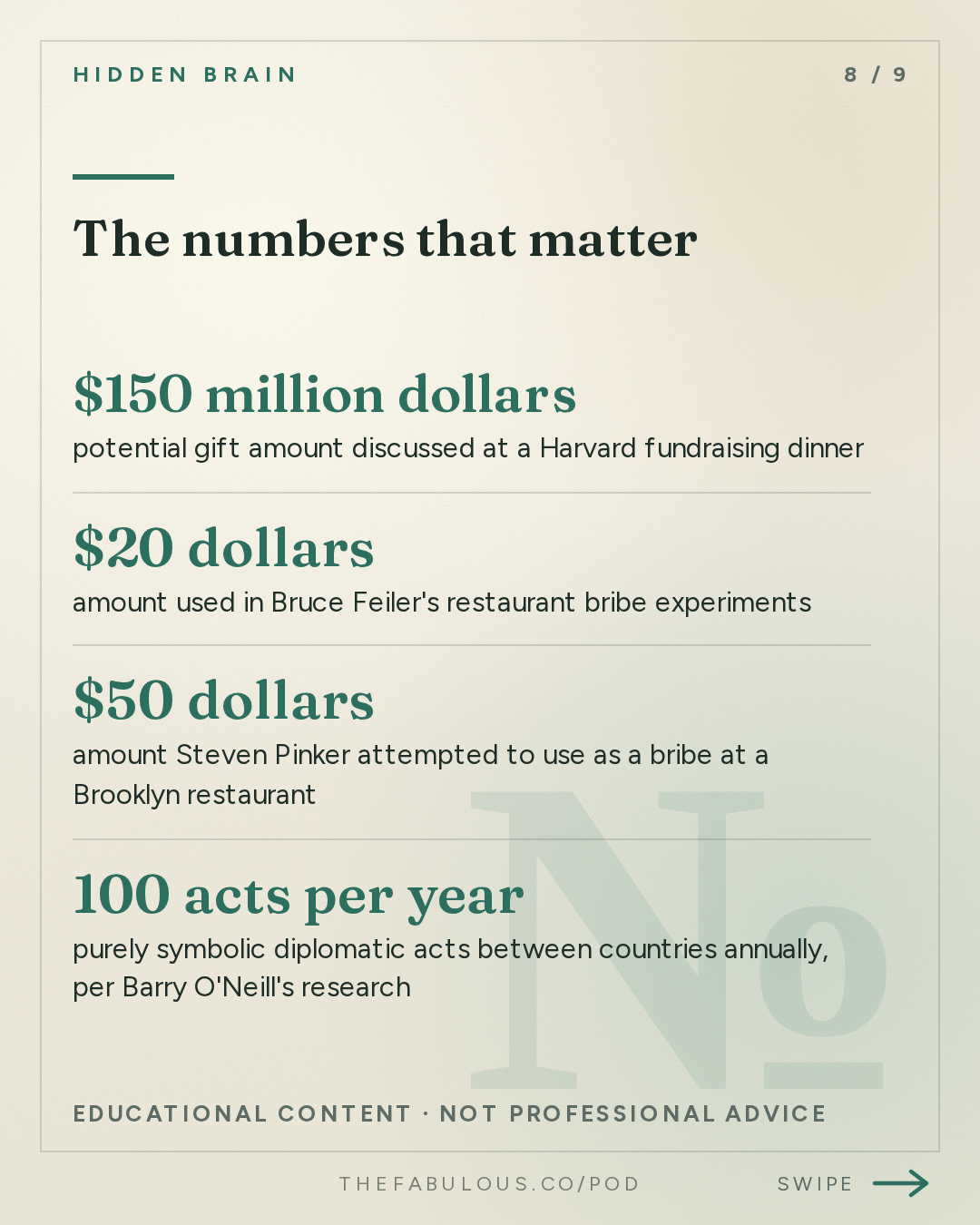
By the numbers
- $150 million dollars potential gift amount discussed at a Harvard fundraising dinner
- $20 dollars amount used in Bruce Feiler's restaurant bribe experiments
- $50 dollars amount Steven Pinker attempted to use as a bribe at a Brooklyn restaurant
- 100 acts per year purely symbolic diplomatic acts between countries annually, per Barry O'Neill's research
- 1997 year year of the Korean Air Flight 801 crash linked to indirect cockpit communication
In their words
“There's a big difference between something being common knowledge, or as Sally put it, 'out there,' and something being known privately by each of them.”
“If everyone said what was on their minds, there would not be four friends in the world.”
“A gaffe in Washington is when a politician says something that's true.”
Protocols
-
Bribe with vague requests, not explicit offers
Pinker recommends couching a bribe as a vague request instead of a direct quid pro quo, for instance asking a maitre d' something like 'I was wondering if you had a cancellation' while holding cash in peripheral view, because writer Bruce Feiler's indirect approach succeeded every time he tried it for a magazine assignment, and it avoids treating the recipient as a mere transactional employee.
One attempt per encounter
-
Keep transactions unspoken during courtship or fundraising
Pinker advises against naming a transaction directly when courting a donor or a romantic partner, because stating the transactional intent aloud collapses the communal fiction that makes people want to give money or say yes.
Throughout a negotiation or date
Questions this episode answers
Why do people use indirect speech instead of saying what they mean?
Harvard psychologist Steven Pinker argues that language does two things at once: it transmits information and it defines a relationship as transactional, communal, or based on dominance (09:47). Naming a transaction out loud, like directly asking a donor for money at a fundraising dinner, breaks the communal fiction that makes people want to give (11:30).
What is common knowledge in psychology and how is it different from shared knowledge?
Common knowledge is information both people know the other person also has, which makes it impossible to deny, unlike private knowledge that each person holds separately without confirming it aloud (28:10). Pinker uses a scene from the film When Harry Met Sally, where a character says an accusation 'can't be taken back' once it is 'out there,' to illustrate the difference (27:11).
How does innuendo provide plausible deniability?
Innuendo works when a phrase is clear enough for a listener to grasp the intended meaning but vague enough to fail a high standard of proof, such as in a court of law (35:44). Pinker points to a scene from The Sopranos, where a mob associate praises a juror instead of threatening him directly, as a veiled threat that avoids the legal exposure of outright extortion (34:21).
Does indirect speech ever cause real harm?
Yes. Pinker points to the 1997 crash of Korean Air Flight 801, where junior crew members hinted at danger instead of directly telling the captain the plane was losing altitude, a case where deference inside a strict cockpit hierarchy had fatal consequences (44:36).
What is radical honesty and does it actually work in relationships?
Radical honesty is a movement, associated with psychotherapist Brad Blanton, arguing people should say exactly what is on their minds without euphemism (45:47). Pinker argues the practical result is a 'hellscape' because friendships and stable relationships depend on polite fictions of mutual respect that constant honesty would destroy (46:12).
The full read, in cards
Go deeper
- When Everyone Knows That Everyone Knows: Common Knowledge and the Mysteries of Money, Power, and Everyday Life — Steven Pinker's book on how common knowledge shapes social and political life, discussed throughout the episode
- The Emperor's New Clothes — Hans Christian Andersen folktale used to frame the episode's theme of speaking truth to power
- Barry O'Neill's research on symbolic diplomatic acts — found roughly 100 purely symbolic acts occur between countries each year
- Bruce Feiler's magazine article on bribing maitre d's — reported that indirect bribes to New York maitre d's succeeded every time they were tried
Mentioned
Steven Pinker · Harvard University · Hans Christian Andersen · Nikki Haley · Donald Trump · United Nations · Barack Obama · Benjamin Netanyahu · John Maynard Smith · Maimonides · Blaise Pascal · Brad Blanton · Bruce Feiler · Barry O'Neill · Michael Kinsley · When Harry Met Sally · Curb Your Enthusiasm · The Sopranos · Tootsie
More from this show and category
How Sleep Deprivation Affects Decisions
Sleep deprivation degrades ethical judgment and decision-making in novel situations, contributing to disasters from train crashes to BP's 2005 explosion. Chronic pain, meanwhile, is reshaped by fear, relationships, and mindset as much as by tissue damage, per sleep researcher Chris Barnes and pain psychologist Rachel Zoffness.
Why Am I Unhappy? The Psychology Behind It
Psychologists George Loewenstein and Alison Ledgerwood argue that most unhappiness starts inside the mind, not from outside events. Loewenstein traces it to the hedonic treadmill and guilt over our own feelings; Ledgerwood traces it to a negativity bias built to spot threats. Their shared fix: notice good moments without suppressing bad ones, and ask whether a reaction fits now or an old pattern (96:51).
How to Build Agency: Martin Seligman's Method
Martin Seligman argues that agency, the belief that our actions can change outcomes, is a skill built through specific exercises, not an inherited trait. He describes three tools, disputing catastrophic thoughts, graded task assignment, and writing about a best possible self, backed by decades of research on optimism and helplessness.
Seligman on Learned Helplessness and Optimism
Psychologist Martin Seligman found that helplessness is learned, and so is optimism. His research links explanatory style to depression risk, predicts success at West Point and in sales, and traces a psychological theory of human progress from ancient Greece to St. Augustine to modern China.
