Reading JournalStudy & Learning · ~4 min
About this template · Updated July 2026
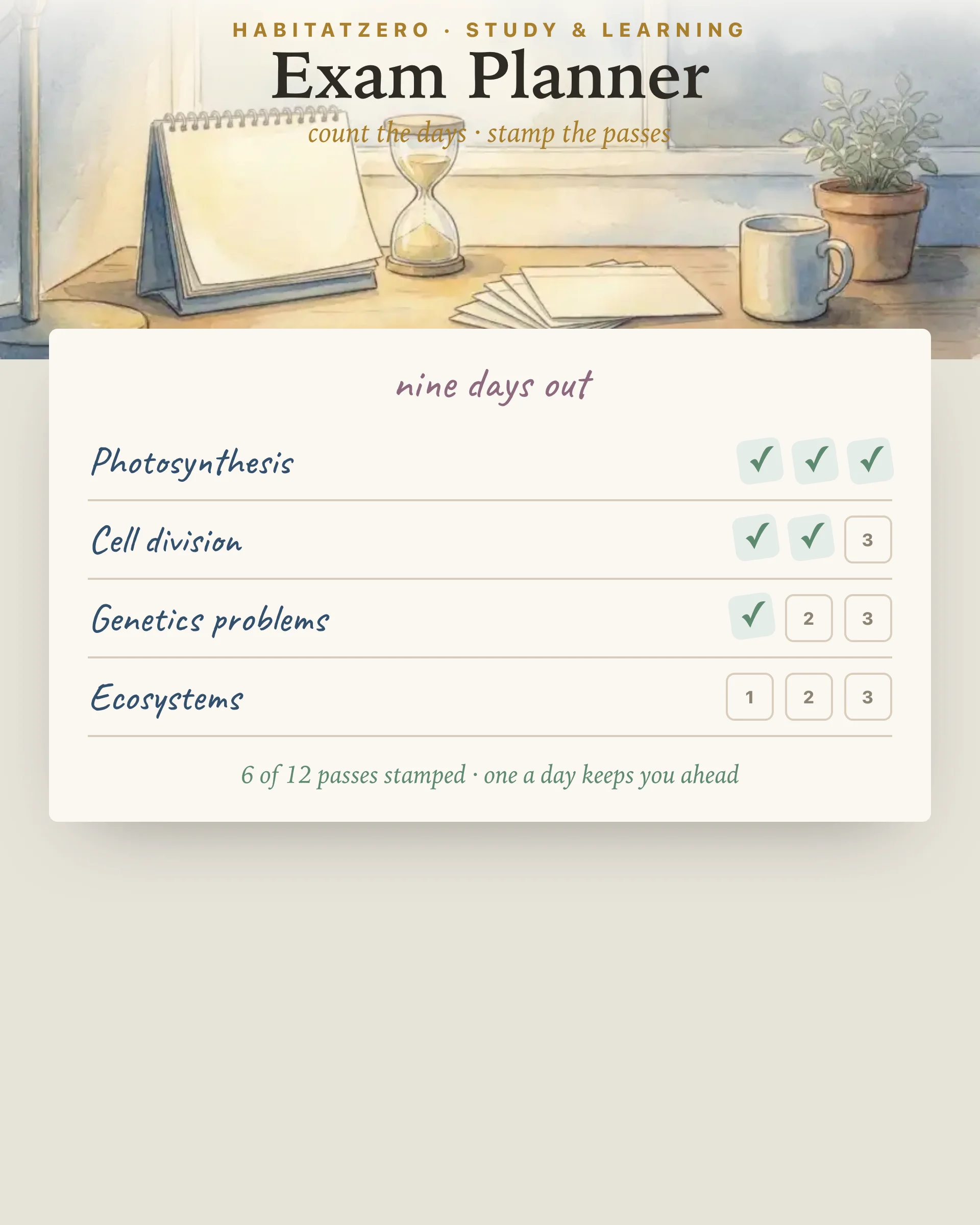
Every exam plan eventually collapses into one question: is today enough? The planner above exists to answer that question with a number instead of a feeling. Pin the date, list the topics, stamp a pass each time you genuinely move through one — and the pace line keeps dividing what's left by the days you have, so "am I behind?" always has a checkable answer.
Hours measure attendance; passes measure contact. A pass is one honest trip through a topic, and the sheet expects three: a first meeting, a working session, and a proving session. The order isn't cosmetic. The testing-effect research found that being tested on material — forcing retrieval rather than rereading it — produced markedly better retention a week later, which is why the second and third passes ask you to work and prove rather than revisit. Rereading feels like progress precisely because it's easy; retrieval feels worse and works better. The comprehensive review of learning techniques reached the same uncomfortable verdict: the two most effective tools students have are practice testing and spreading work across days — exactly the two things a countdown with pass stamps forces.
Twelve passes owed, six days left: two a day. That sentence is the entire management layer of this planner, recomputed every time you stamp or the calendar moves. It converts a looming exam into a daily quota small enough to start on, and it absorbs bad days gracefully — skip a Tuesday and Wednesday's number ticks up by one, visibly, instead of the whole plan silently rotting. Students don't usually fail exams for lack of time; they fail for lack of an honest running count of what the remaining time owes.
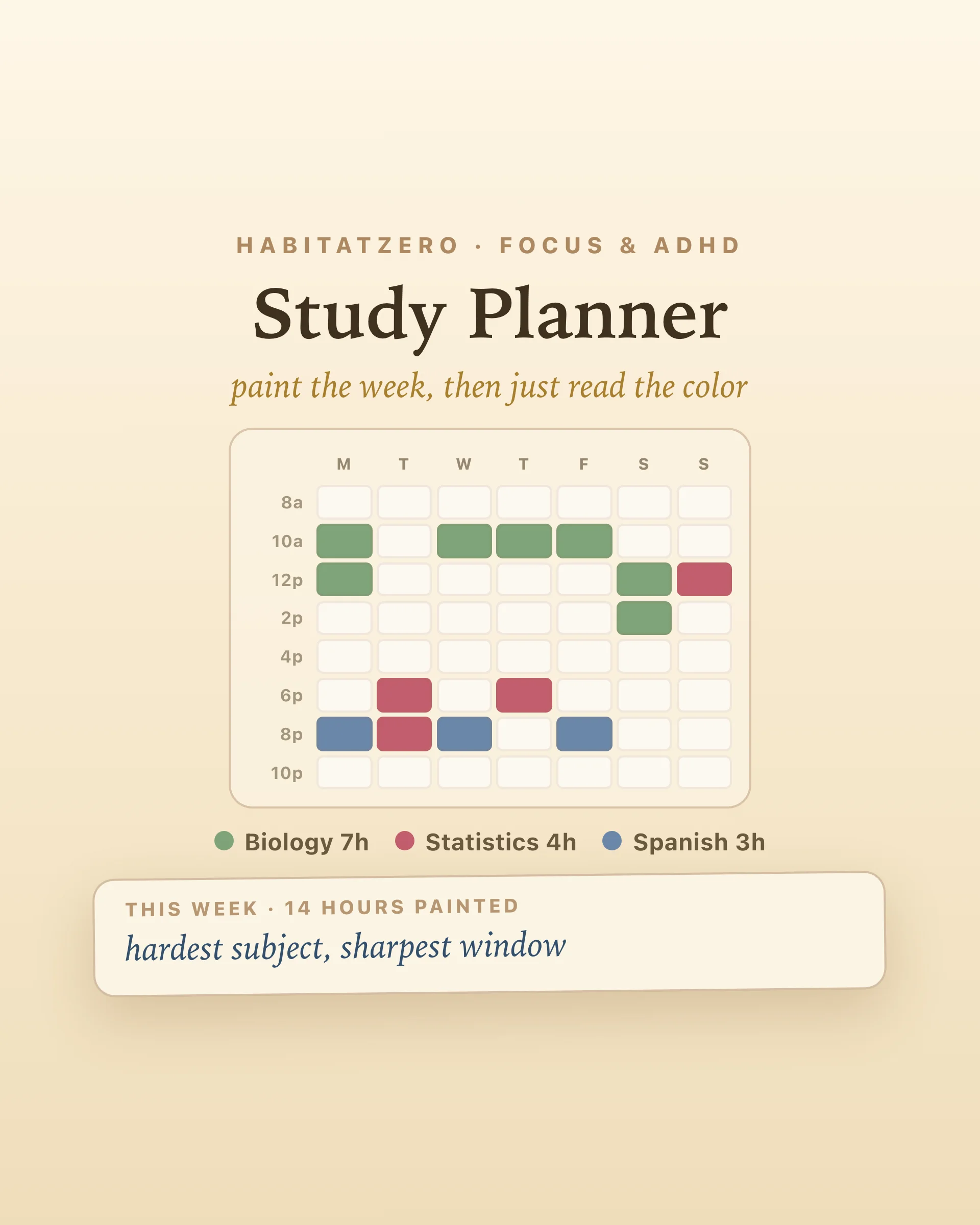
Finals season is several countdowns running at once, and merging them into one page turns arithmetic back into anxiety. Keep one exam per sheet and let each pace line stay clean. The week-level view — which subject gets which evening — is a different job, and the revision timetable already does it; this planner is what you open after the timetable told you tonight belongs to biology.
Work backwards from the date. Pin it, list every topic the exam can draw from, then move each topic through three passes: a first meeting with the material, a working session on problems or recall, and a final proving pass close to the day. The planner counts stamps against days so the schedule stays arithmetic instead of anxiety.
Meet it: read, annotate, understand the shape of the topic. Work it: closed-book problems, practice questions, recall from memory. Prove it: a final self-test that treats the topic as done only when it performs cold. Three passes spaced across the countdown beat six rereads the night before, and the second and third passes matter most.
Passes remaining divided by days remaining, rounded up. Twelve stamps left with six days on the clock reads as two a day. It updates every time you stamp or the calendar turns, so a slow Tuesday shows up as a slightly heavier Wednesday instead of a lost cause.
The revision timetable spreads several subjects across a week grid - it answers when. This page takes one exam and answers what and how many times. During finals season the timetable holds the week while a countdown like this one runs per exam.
As many as the syllabus names, up to the cap of twelve. If a single exam genuinely holds more, group sub-topics until it fits - a plan you can see on one page gets consulted, and a plan that scrolls gets abandoned.
By the team behind Fabulous, the science-based self-care app used by over 30 million people.