ADHD Daily Task OrganizerFocus & ADHD · ~10 min
About this template · Updated July 2026
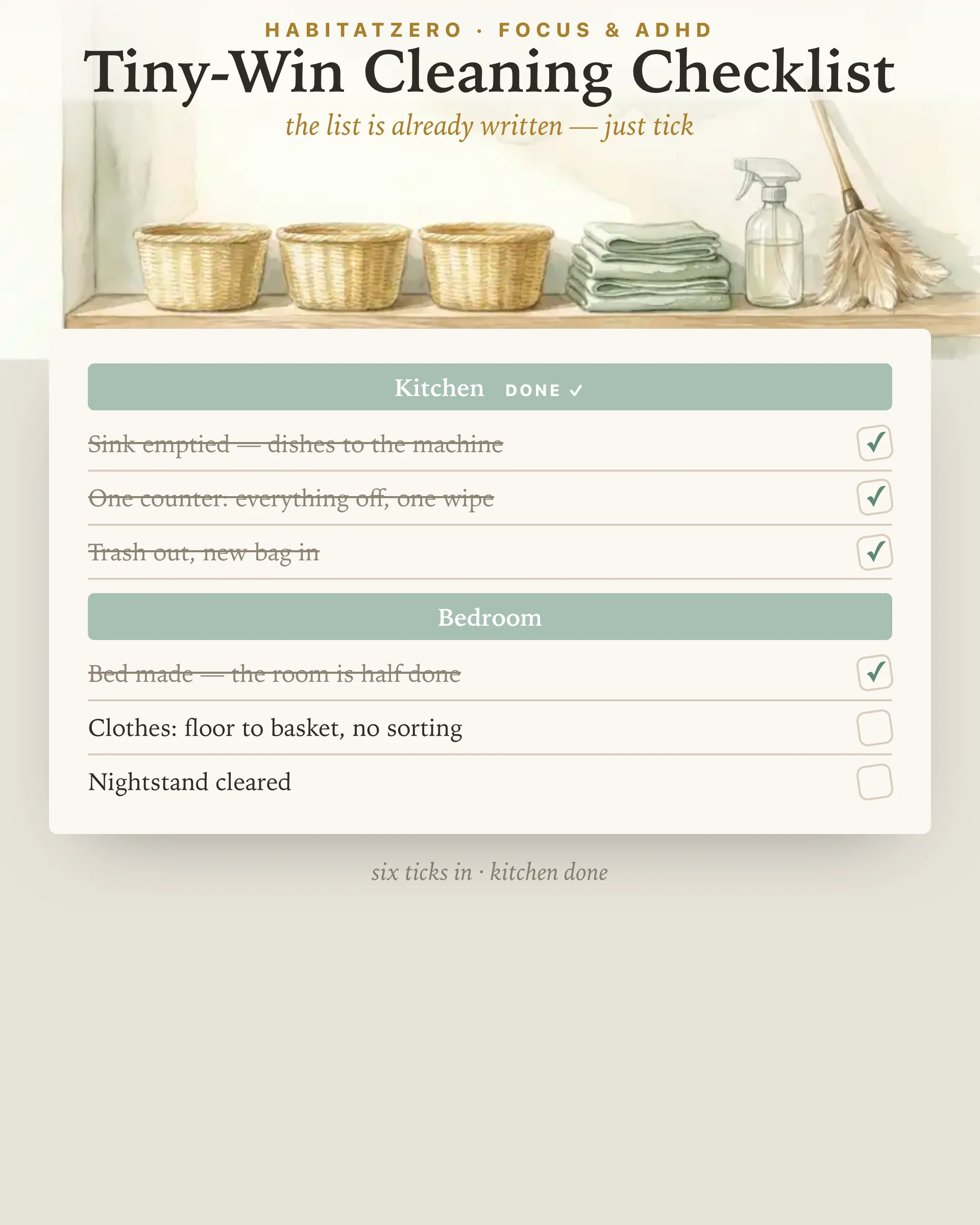
The dirty secret of cleaning with ADHD is that the mess is not the obstacle — the deciding is. Where to start, what counts as done, whether the towels or the sink matter more: every one of those micro-choices bills the same overdrawn account. This checklist pays that bill in advance. Four zones. Six ticks each. Already written, already ordered. The only job left is the next tick.
Each zone leads with its fastest visible win. The kitchen opens with the sink, because an empty sink changes the whole room's story in ninety seconds. The bedroom opens with the bed, which is half the room by area and all of it by mood. That ordering is deliberate: guidance on organizing at home with ADHD returns again and again to shrinking the first step until it is nearly free — because with attention and executive function working differently, the cost of starting dwarfs the cost of continuing. A tick that lands in two minutes buys the next one.
Every completed tick crosses its line out on the page — progress the eye can verify without trusting memory. When the round is over, one button clears the ticks and keeps the lists, so tomorrow starts at zero decisions again.
Most cleaning tools hand you a blank page, which for an ADHD brain is homework before the housework. Here the writing is capped at one optional line per zone, in your own hand, for the mess only your home knows about — the litter tray, the cable drawer. One line, not a second list. The point of a checklist is that it ends.
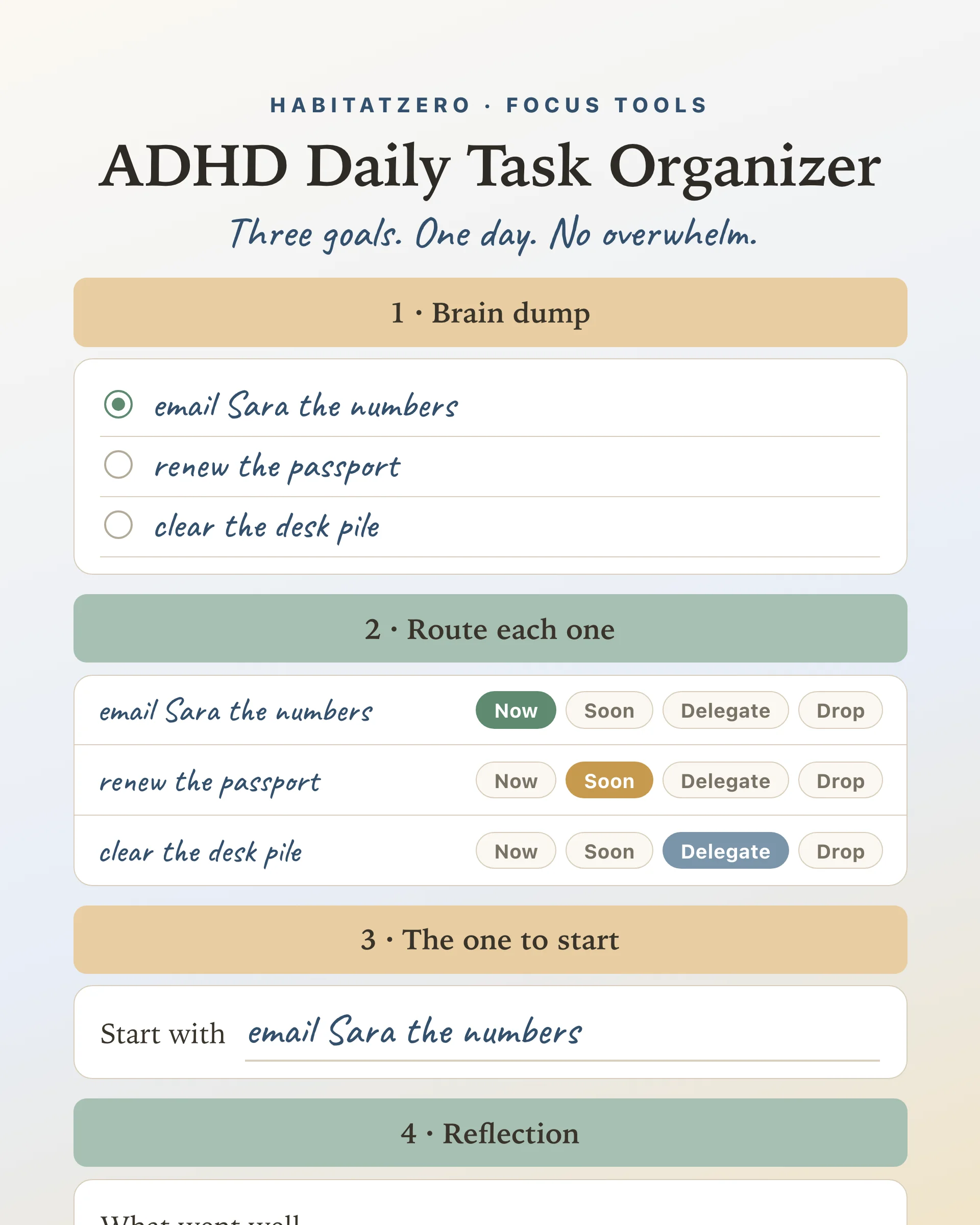
This page and the room reset planner split the job by kind of day. On a day with some fuel in the tank, the planner lets you design a mission: one room, your own done-enough bar, moves you wrote yourself. On the days when designing anything is the wall, this checklist is the ramp — pre-decided, pre-ordered, tickable in any five-minute gap. If the pile of everything else is what is loud, the ADHD priority matrix sorts tasks rather than rooms, and the anchored day planner gives the whole day a shape around whatever cleaning fits.
Four zones. The fastest win first. The thinking already done — which was the hard part all along.
Because the hard part of cleaning is rarely the wiping — it is the sequencing: choosing where to start, what counts, and when a room is finished. A pre-written list removes that whole tax. Six concrete ticks per zone means the decisions are already made, and the brain gets to spend itself on doing rather than choosing.
Each zone opens with the move that changes the room fastest — the sink emptied, the bed made. That first visible win typically lands in under two minutes, and the crossed-out line it leaves behind is the fuel for the second tick. Ordering by momentum instead of by logic is the difference between a list that starts and a list that stares back.
Opposite tools for opposite days. The planner is for when a specific room needs a mission you design: your room, your done-enough bar, your own five-minute moves. This checklist is for the days when designing anything is the obstacle — the lists exist already, and the only job is the next tick. Many people keep both: plan on strong days, tick on foggy ones.
The sheet prints beautifully — every list, tick and crossed-out line — so a free PDF is one print dialog away, and paper on the fridge works just as well as the browser. A HabitatZero account keeps your ticks and your custom lines between visits.
Every zone ends with one line in your own handwriting for exactly that — the litter tray, the plant shelf, the cable drawer. One custom line per zone is a deliberate cap: this page stays a checklist you finish, not another list you curate.
By the team behind Fabulous, the science-based self-care app used by over 30 million people.