
Effective Athlete Nutrition Support, Explained
#617: What Does Effective Athlete Support Look Like in Practice? – Gemma McGuinness
The brief
Performance nutritionist Gemma McGuinness argues that nutrition works best as a long-term investment in health, not a lever pulled only for performance. She explains how flexible standards, if-then planning, and psychological safety keep athletes consistent through injury, career transition, and pressure, with energy levels as the clearest sign nutrition is working.
Ask an athlete what a perfect week of eating looks like, and most can tell you in detail: the meal timing, the protein target, the pre-game carbohydrate load. Ask what happens when that week gets wrecked by a missed flight, a bad grade, or a coach's new demand, and the answer often gets quieter. Gemma McGuinness, a performance nutritionist, co-founder of Verus Performance, and a former professional footballer who played at international level, has spent her career in that quiet gap. Her argument, made across a long conversation with Sigma Nutrition Radio host Danny Lennon, is that the gap is not a failure of discipline. It is a sign the standard was never built to survive contact with real life.
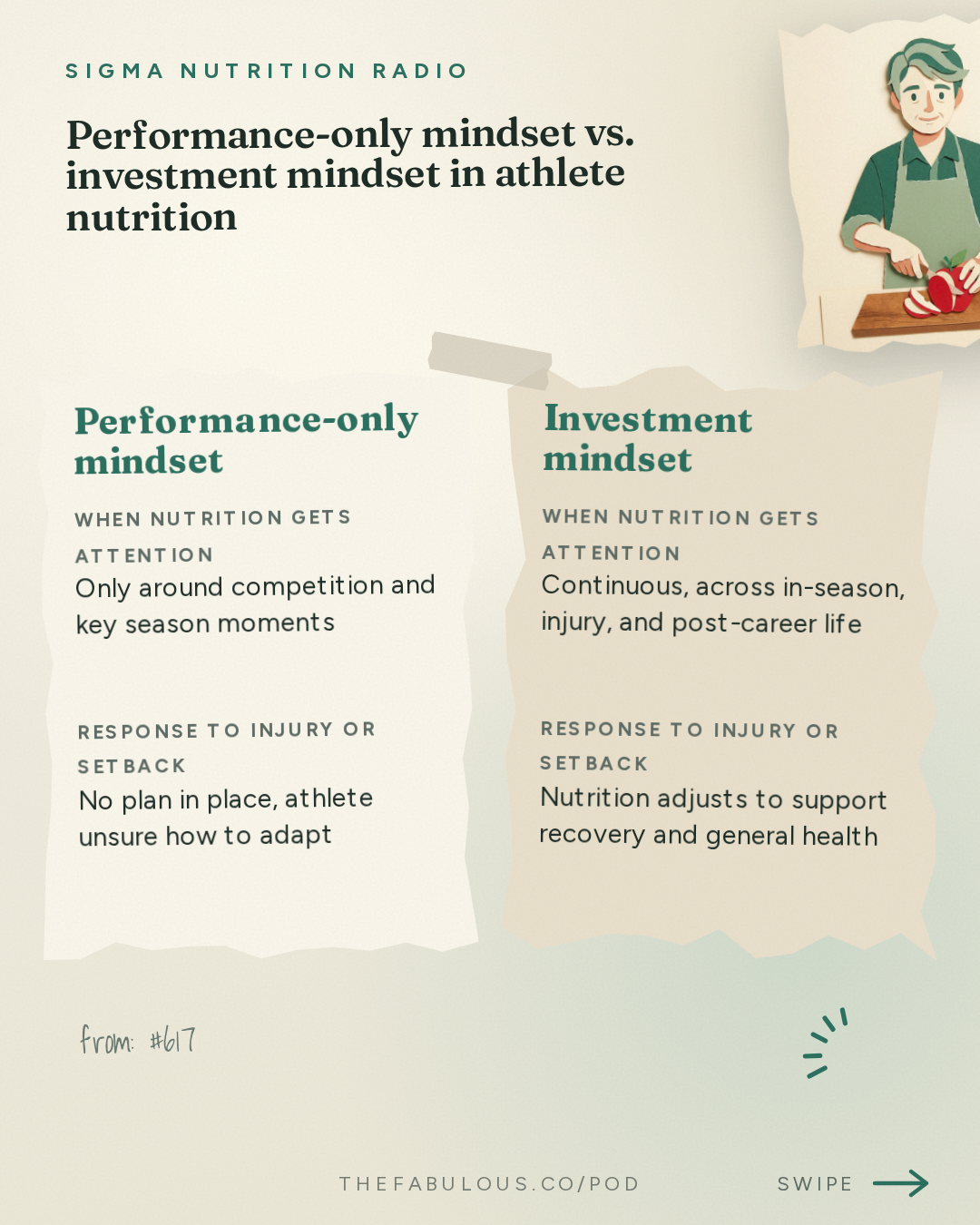
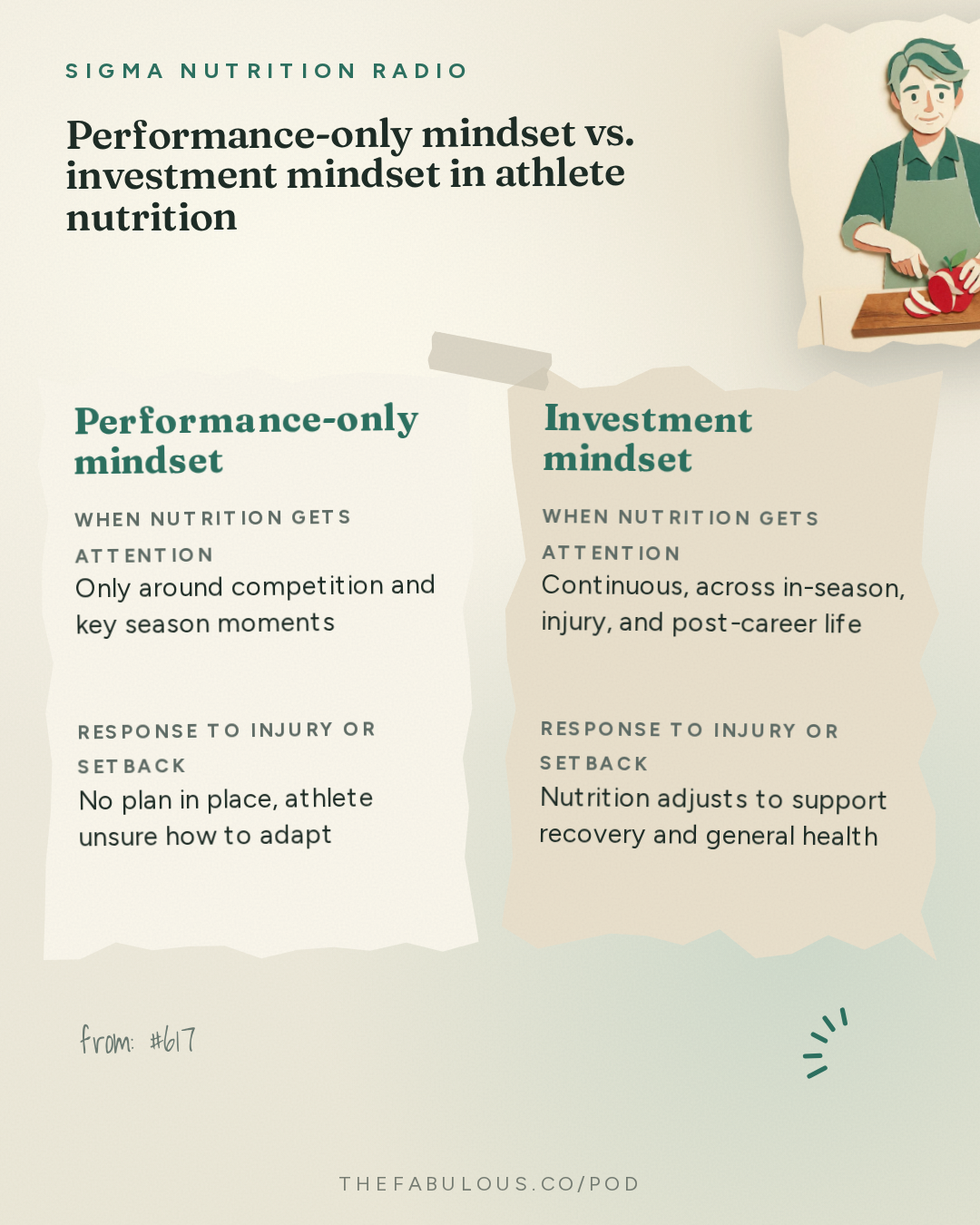
McGuinness starts from a reframe. Nutrition, she says, should not be treated as a tool that only matters when performance is on the line. It should be an investment in health and wellbeing that happens to also support performance (05:36).
"Viewing this as a much more of an investment that provides benefits that's linked to your performance, but also benefits that's linked to your health and just your general wellbeing throughout the day." — Gemma McGuinness [05:36]The distinction sounds almost too simple to matter. But McGuinness has watched what happens when it is missed. Athletes who link their eating only to competition often eat well in season and lose the thread entirely once the season, or the career, ends (08:52).
That collapse is not really about food. It is about identity. Many athletes, McGuinness says, build their entire relationship with nutrition around being an athlete: these are the rules I follow because this is who I am. The trouble comes when that identity is removed, by injury, by retirement, by a scholarship that does not pan out. Without the anchor of competition, the eating pattern has nothing to hold onto (10:50). McGuinness lived this twice. At eighteen, feeling pressure rather than choice, she stepped away from football entirely and spent two years bodybuilding. When she returned to the sport, she promised herself she would simply enjoy it. Old habits crept back anyway. She began a master's degree in performance nutrition at the same time she was playing, and applied every target she learned with precision. The numbers looked right. The experience did not.
"I wasn't really relaxed around food, felt more pressurized." — Gemma McGuinness [15:58]
The fix, for her, was not more discipline. It was time away from the sport entirely, living in Vietnam, exploring interests that had nothing to do with football, and coming back with a different question in hand: what actually brings out the best in me, rather than what am I supposed to do because I am an athlete. That question, applied to clients now, is where her practical framework begins.
Standards that survive a bad week
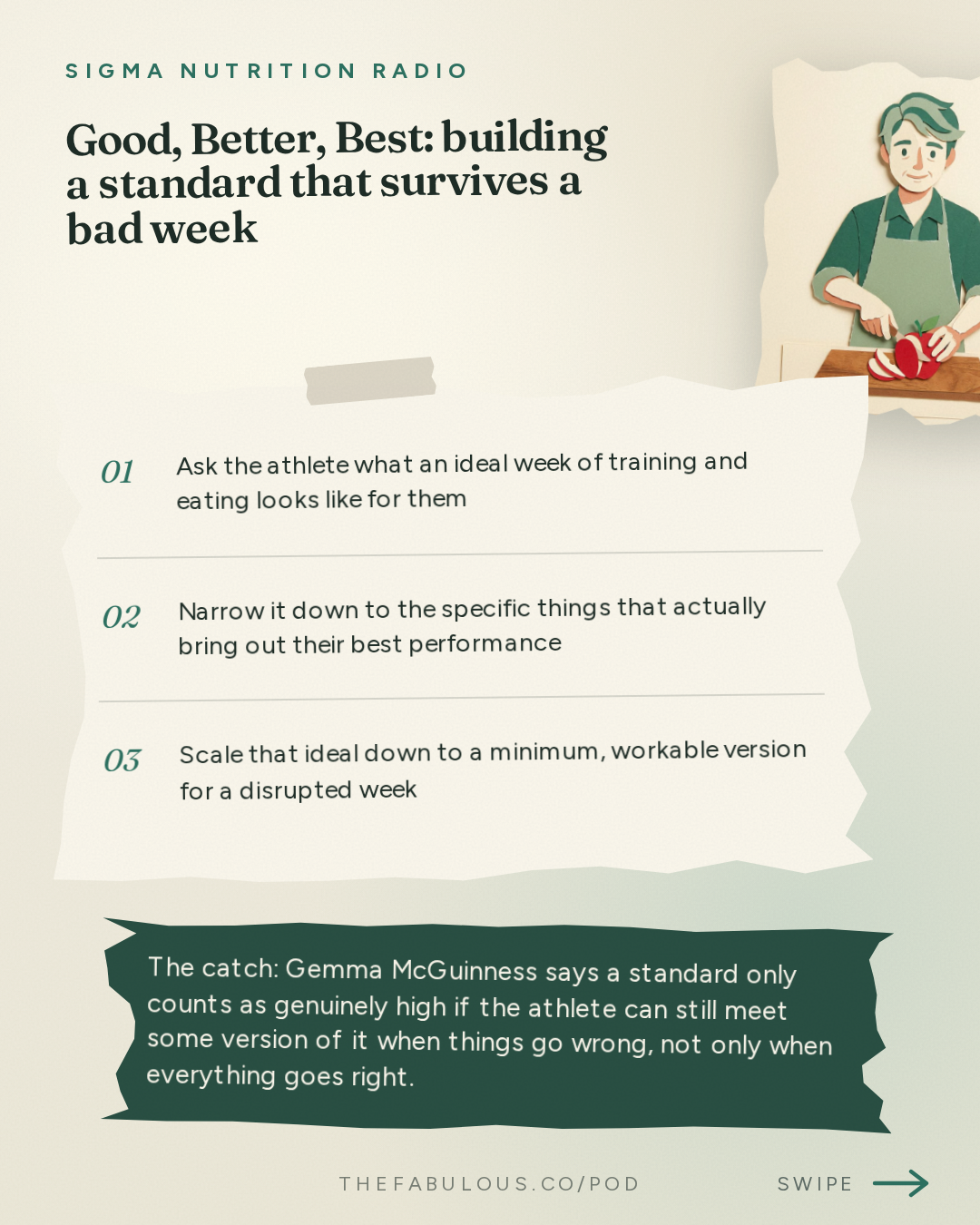
The framework has a name that sounds almost too casual for something built on years of watching plans fail: Good, Better, Best. The idea is to let an athlete define their ideal week, the one where everything goes right, and then deliberately scale it down to a version that still counts as success when things go wrong (22:12). McGuinness poses the test directly.
"If you can't stick to this whenever things go wrong, is that high standards, or is that just a lot of pressure that you're putting on yourself?" — Gemma McGuinness [22:56]
This is the sharpest idea in the conversation, because it reverses a common assumption in sport, that a high standard is defined by its difficulty. McGuinness's version says a standard is only high if it is durable: if it can be met, in some reduced form, during the week an athlete gets injured, or fails an exam, or simply runs out of energy. Crucially, the standard has to come from the athlete, not be handed down. When an athlete sets their own floor, McGuinness has found, they are far more likely to hold themselves to it, because the accountability is internal rather than imposed (23:19).
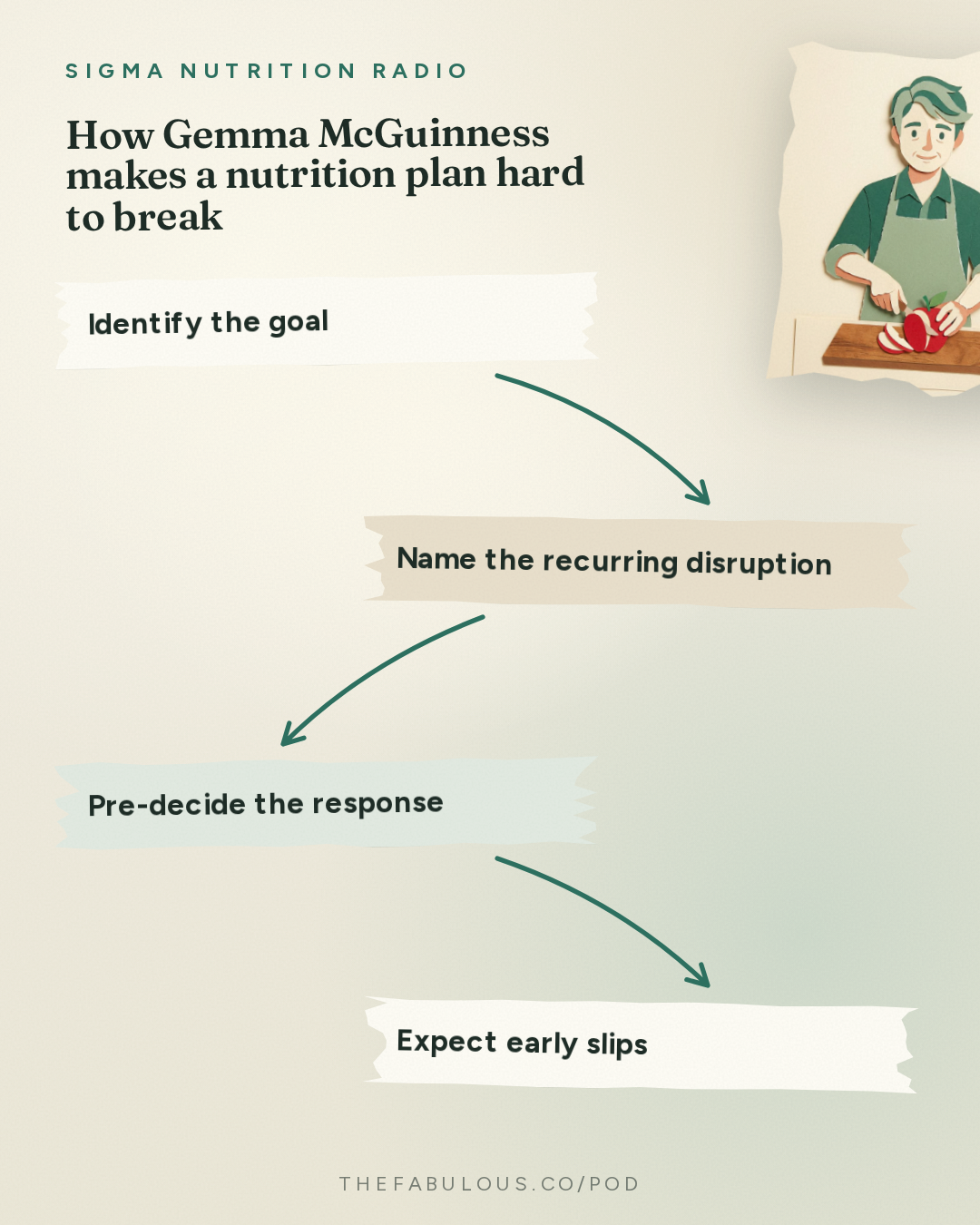
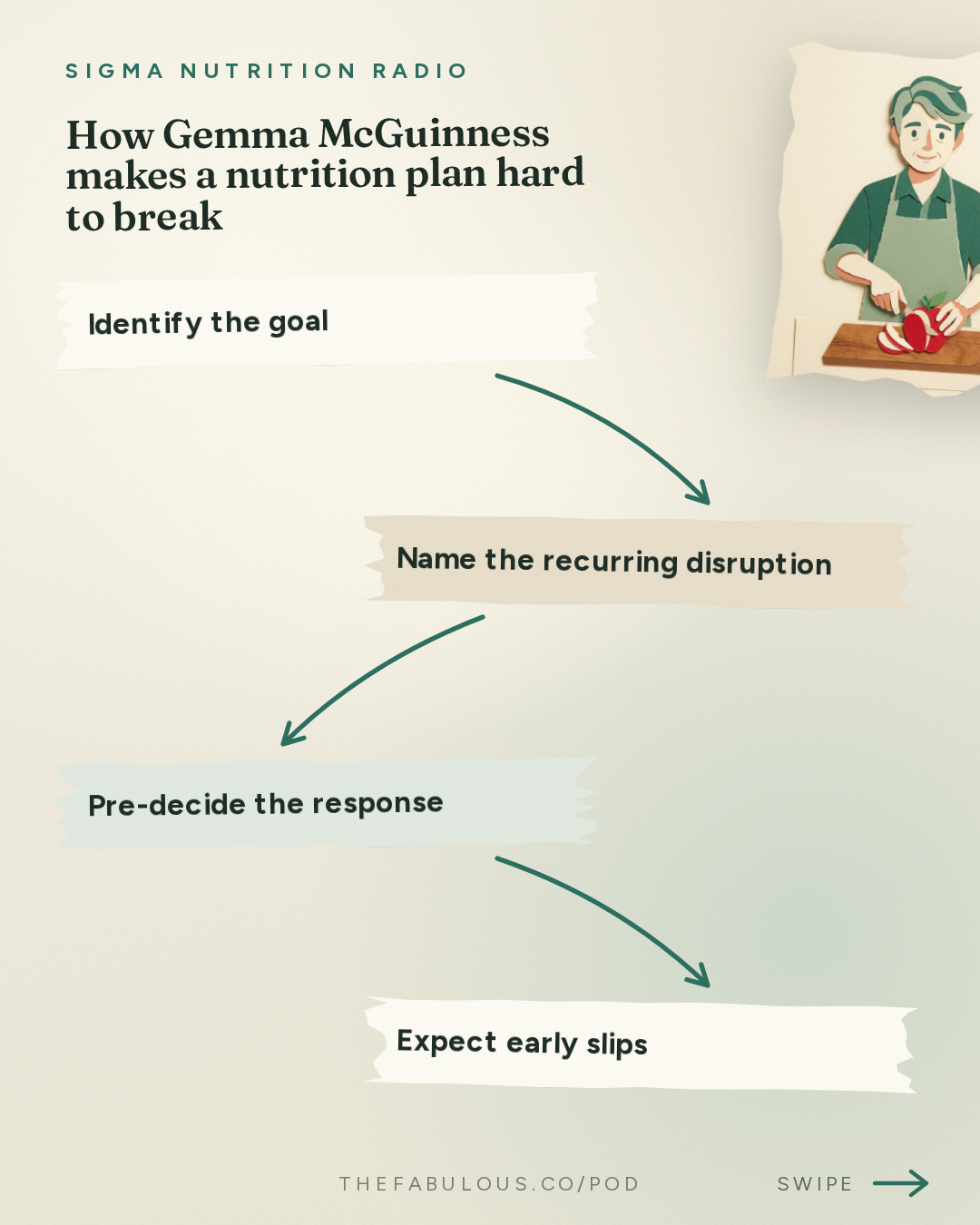
Alongside this sits a second tool borrowed from behavioral psychology: implementation intentions, or if-then planning. McGuinness asks athletes to name the situation that most reliably knocks their nutrition off course, a late game, a stressful exam week, a travel day, and to decide in advance exactly what they will do when it happens again. She is candid that the plan often still fails the first few tries. What changes, she says, is the thinking underneath it, usually within four to six weeks of practicing the habit of noticing and responding (27:09). Reviews matter here too. McGuinness treats a nutrition review the way a coach treats game footage: look first at what went right, the protein added, the pre-training carbohydrate taken, before addressing the one thing that slipped (27:28).
Even with good planning, performance nutrition has a measurement problem that other domains do not share. A client trying to lose weight has scales and tape measures. A client managing blood pressure has a number from a cuff. An athlete on a team, competing in a sport where results depend on teammates, opponents, referees, and luck, has no such clean output. McGuinness ran an informal audit of this problem: across more than 100 clients who filled out a pre-consultation form, the average person listed five different "primary" goals, some of which quietly worked against each other (30:29). Picking one clear outcome, she says, is a challenge in itself.
Her answer is to lean on a single, consistent proxy: energy levels. It is subjective, but it is reliable, easy for an athlete to notice, and quick to shift once nutrition changes take hold (31:10).
"I think in sport, one consistent measure that we can see if nutrition linked to performance is energy levels." — Gemma McGuinness [31:10]Around that anchor she layers softer measures that athletes rarely expect to count as progress: how fast they can plan a week of meals, whether their cooking skills have improved, whether they feel less anxious sitting down to a meal with friends. These are not performance metrics in the traditional sense. But they are evidence that nutrition has stopped being a source of pressure and started being a skill.
The environment around the plan
None of this happens in isolation. McGuinness spends real time on the environment surrounding an athlete, because the same disciplined mindset that builds consistency can, past a certain point, tip into something that no longer serves the athlete at all (35:10). She sees this most often, in her own recent client work and in locker rooms she has been part of, among female athletes for whom strict, disciplined eating was once praised and is now, sometimes, a quiet form of disordered eating. The way out, she argues, is not less structure but more honest reflection: asking whether a rule is still serving the athlete or simply running on inertia.
At the team level, McGuinness points to a single diagnostic question for judging whether an environment is genuinely high performance: how safe does it feel to raise a concern.
"How safe does it feel to raise concerns? So if there are problems, can both the staff and the player or the athlete just openly raise that without feeling judged." — Gemma McGuinness [39:17]
She describes a moment from her final season with the English club Bournemouth's women's team, when the leadership staff asked the playing group a deceptively open question: if you had a blank sheet of paper, and no obligation to copy the men's team or any other team, what would the best possible environment for this squad look like? The players who helped write the standard were the ones who held themselves to it afterward, McGuinness says, because breaking a rule you set yourself feels different from breaking one imposed on you (40:53).
The same logic scales down to something almost mundane: how information gets delivered. McGuinness's clearest piece of advice for practitioners is to abandon the big workshop in favor of small, specific explanations tied to what athletes are already doing, why this morning check-in, why this particular meal timing (43:08).
"Being able to educate, like nuggets of education and being able to create a sense of why for a lot of things, I think is just not recognized enough." — Gemma McGuinness [43:08]It is a modest claim to end on, but it matches everything before it. Standards that bend without breaking, plans built around a real disruption rather than an ideal week, environments where a question can be asked without fear, and explanations sized to the moment rather than the seminar. None of it is complicated. All of it depends on someone deciding, early, that nutrition is not a switch to flip on before competition, but a habit worth keeping when no one is watching the scoreboard at all.
Ask this episode anything
Pod's AI answers from the episode itself, with the minute mark so you can hear it yourself.
Or start with one of these
Ask this episode
Pod's AI listens to the whole episode to answer, and points you to the minute it comes from.
The rest of this answer, and any question after it
Answers come from the episode itself, never from a summary of it.
ContinueKey takeaways
- Treat nutrition as a lifelong investment, not just a performance lever
- A standard only counts as high if it can still be met during a bad week
- If-then planning for common disruptions can shift thought patterns within four to six weeks
- Energy levels are the most reliable subjective sign nutrition is working for athletes
- Psychological safety, feeling free to raise concerns, marks a genuinely high-performance team
The episode in cards

By the numbers
- 100 people athletes whose pre-consultation goal forms McGuinness reviewed
In their words
“Is viewing this as a much more of an investment that provides benefits that's linked to your performance, but also benefits that's linked to your, your health and just your general wellbeing throughout the day.”
“If you can't stick to this whenever things go wrong, is that high standards, or is that just a lot of pressure that you're putting on yourself?”
“I think in sport, one consistent measure that we can see if nutrition linked to performance i- is energy levels”
“How safe does it feel to raise concerns? So if there are problems, can both the staff and the, the player or the athlete just openly raise that without feeling judged”
“Being able to e- ed- educate, like nuggets of education and being able to create a sense of why for a lot of things, I think is just not recognized”
Protocols
-
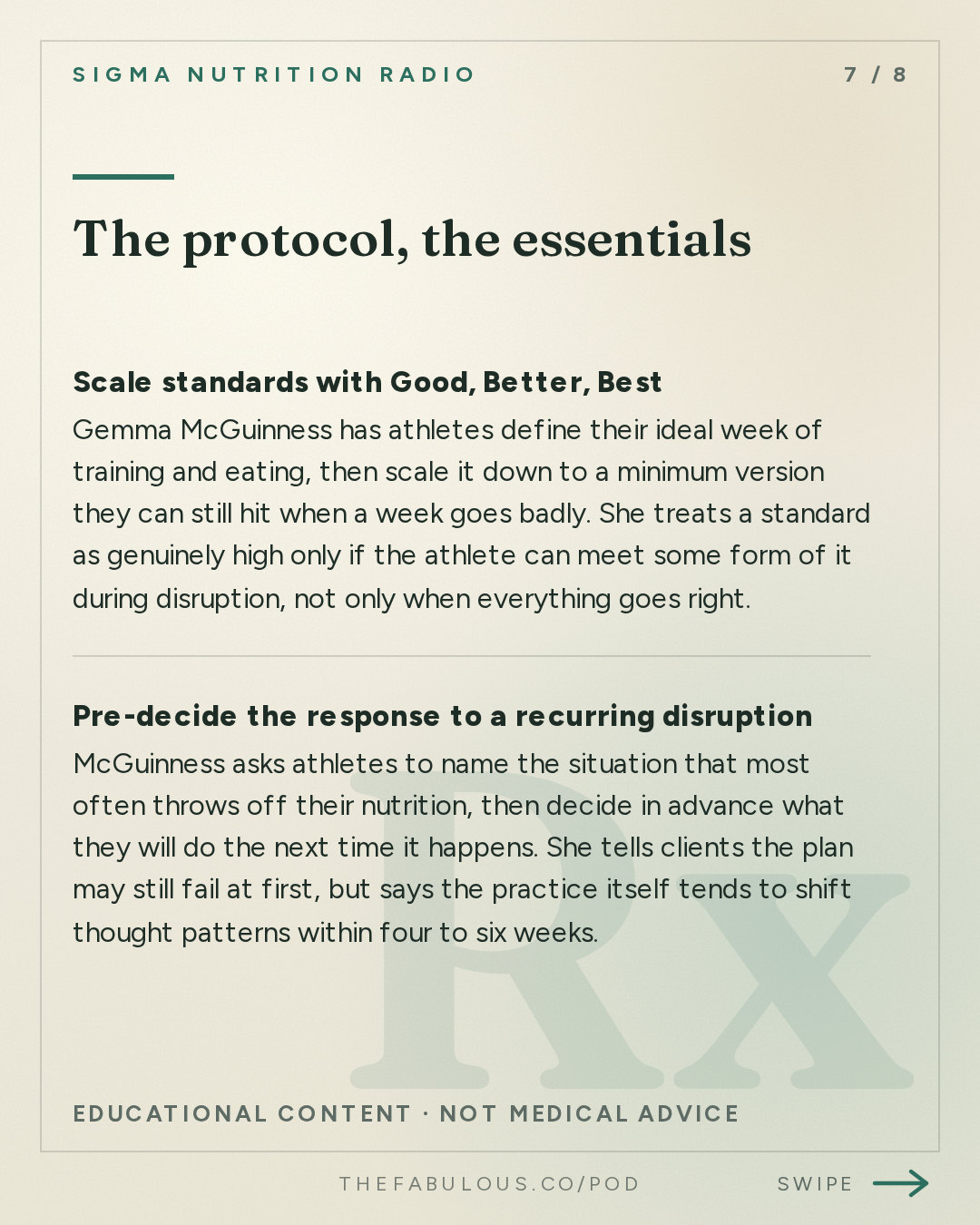
Scale standards with Good, Better, Best
Gemma McGuinness has athletes define their ideal week of training and eating, then scale it down to a minimum version they can still hit when a week goes badly. She treats a standard as genuinely high only if the athlete can meet some form of it during disruption, not only when everything goes right.
Set at the start of a training block and revisited when circumstances change
-
Pre-decide the response to a recurring disruption
McGuinness asks athletes to name the situation that most often throws off their nutrition, then decide in advance what they will do the next time it happens. She tells clients the plan may still fail at first, but says the practice itself tends to shift thought patterns within four to six weeks.
Applied whenever a recurring disruption is identified, reviewed weekly
-
Review the week without judgment
McGuinness reviews an athlete's nutrition preparation the same way a coach reviews game footage, starting with what went well before addressing what slipped. She frames this as building a consistent process rather than chasing a perfect week.
Weekly, after competition
-
Teach in small nuggets, not big presentations
McGuinness delivers short, specific explanations tied to what athletes are already doing, such as why a morning wellness check-in matters, instead of one large workshop. She says this builds a sense of why behind requests and improves buy-in more than formal presentations do.
Ongoing, delivered in small moments rather than scheduled sessions
Questions this episode answers
What does effective athlete nutrition support actually look like in practice?
Performance nutritionist Gemma McGuinness frames nutrition as an ongoing investment in health, not a tool switched on only for competition (05:36). In practice this means flexible standards that scale down during hard weeks, if-then plans for common disruptions, and energy levels tracked as the main measure of progress (22:12, 31:10).
Why do athletes struggle with nutrition after retiring or during injury?
Gemma McGuinness says many athletes tie their eating habits directly to their identity as a competitor, so once the structure of professional sport is removed, the routine has nothing left to anchor it (08:52, 10:50). She recommends helping athletes explore who they are outside their sport before that transition happens (10:50).
What is the Good, Better, Best model in sports nutrition?
It is a standard-setting method described by Gemma McGuinness in which an athlete defines an ideal week, then scales it down to a minimum version they can still meet during a disrupted week (22:12). She argues a standard only counts as high if it survives contact with a bad week, not only a good one (22:56).
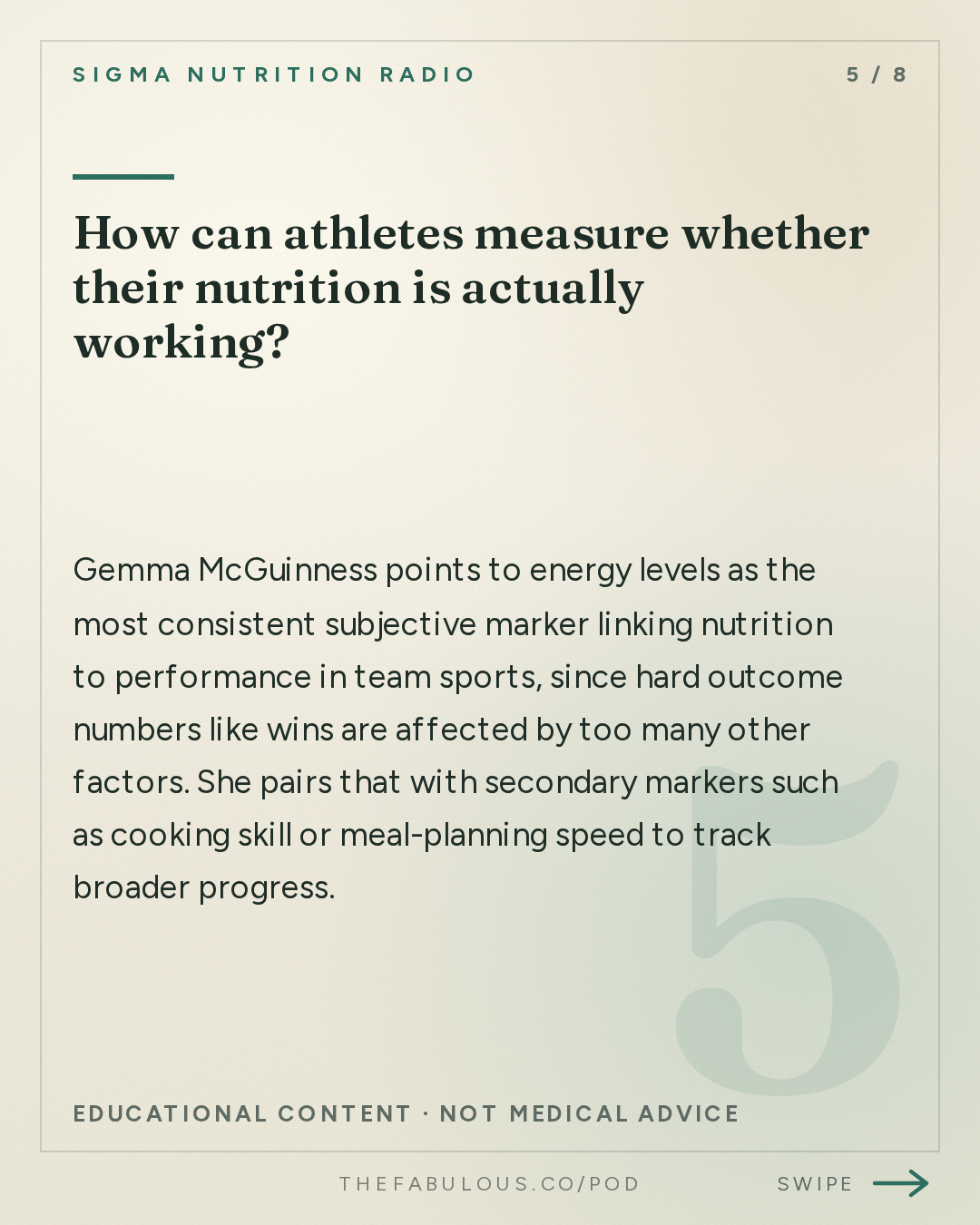
How can athletes measure whether their nutrition is actually working?
Gemma McGuinness points to energy levels as the most consistent subjective marker linking nutrition to performance in team sports, since hard outcome numbers like wins are affected by too many other factors (31:10). She pairs that with secondary markers such as cooking skill or meal-planning speed to track broader progress (32:37).
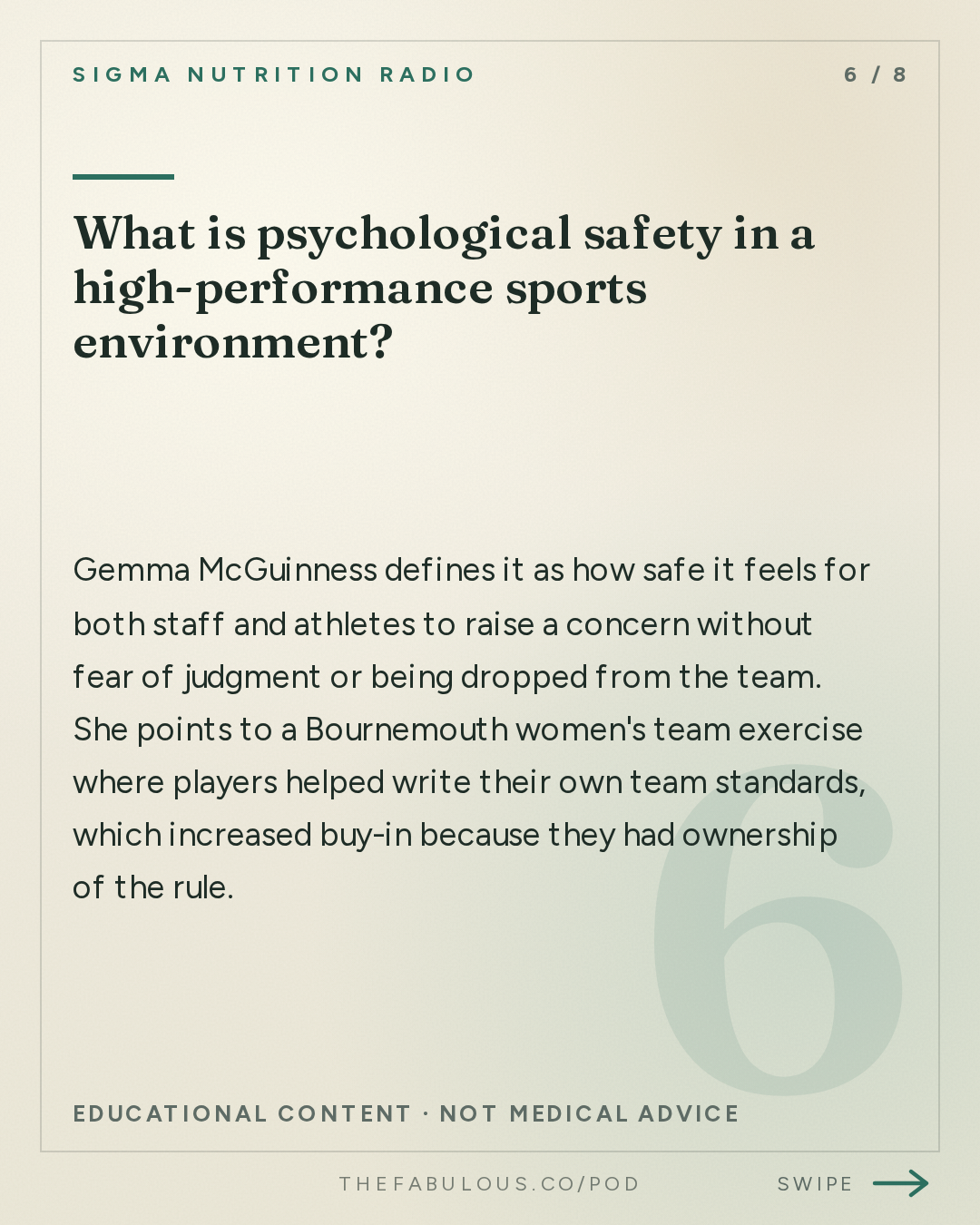
What is psychological safety in a high-performance sports environment?
Gemma McGuinness defines it as how safe it feels for both staff and athletes to raise a concern without fear of judgment or being dropped from the team (39:17). She points to a Bournemouth women's team exercise where players helped write their own team standards, which increased buy-in because they had ownership of the rule (40:53).
What are implementation intentions and how are they used in athlete nutrition?
Implementation intentions are if-then plans where a person decides in advance how they will respond to a specific, recurring situation. Gemma McGuinness has athletes identify their most common nutrition disruption and pre-decide a response, noting that the practice tends to shift thought patterns within four to six weeks even if the plan initially fails (26:40, 27:09).
The full read, in cards
Go deeper
- Implementation intentions research (if-then planning) — general behavioral finding that pre-deciding a response to a specific trigger improves follow-through, applied by McGuinness to athlete nutrition planning
Mentioned
Danny Lennon · Gemma McGuinness · Verus Performance · Davi Nutrition · Bournemouth · Substack
More from this show and category
How to Interpret Testosterone Test Results
A single testosterone number rarely settles the question of whether treatment will help. Physician Austin Baraki says free testosterone, symptom type, and the underlying cause of a low reading (often obesity, poor sleep, or alcohol) matter more than one blood draw, and a 4 to 6 month trial beats a lifelong commitment.
Body Composition Testing: DEXA vs BIA Accuracy
No device on the market actually measures body fat; every scale, scan, or pod only estimates it from indirect signals, and a method proven accurate for a group can still mislead an individual user. Texas Tech professor Grant Tinsley explains why standardizing tests, tracking one device over time, and treating small percentage swings as noise matter more than any single number (12:49, 38:24).
Liking vs Wanting in Food Reward Psychology
Food reward splits into two separate systems: liking, the pleasure a food delivers, and wanting, the pull to eat it, which often runs on autopilot. Nutrition composition alone explains only 20% of why a food is liked (21:59); adding sensory perception explains another 40-60% (22:35), while ultra-processed classification barely moves the needle.
BPC-157 Safety and Clinical Evidence Explained
BPC-157 and similar peptide medications have almost no published human safety data, and most are sold as unregulated 'research chemicals.' Dr. Jordan Feigenbaum, founder of Barbell Medicine, explains the evidence gap, sourcing risks between research-grade chemicals and compounding pharmacies, and why pharmaceutical companies abandoned these compounds despite viral anecdotal enthusiasm.
